As an Amazon Associate, we earn from qualifying purchases. Some links on this site are affiliate links at no extra cost to you. Our recommendations are based on thorough research and editorial judgment.
Hosting Pool Parties in All-Day Shade

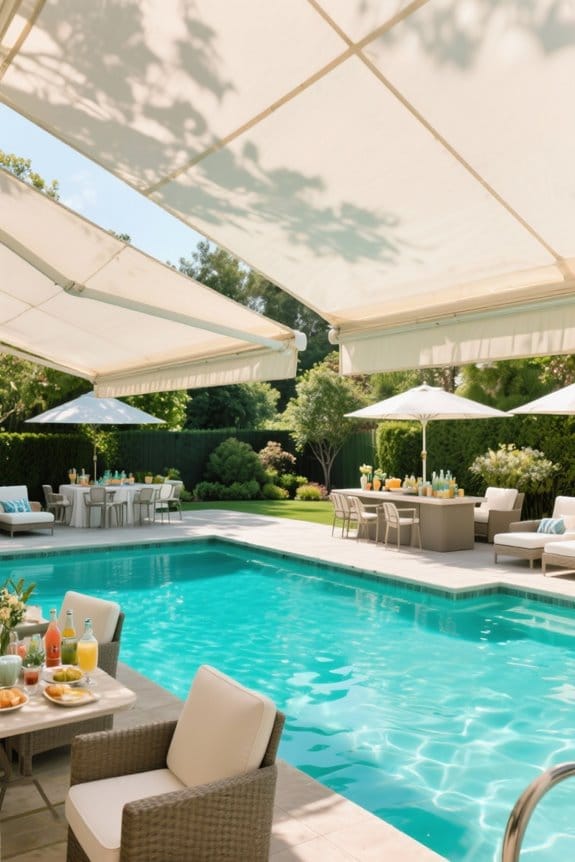
Plan pool placement by mapping sun exposure hourly from 10 a.m. to 4 p.m., position the pool near mature trees or adjacent structures for natural shade, and incorporate adjustable patio umbrellas sized 9 to 11 feet with pivot and tilt functions for flexible coverage. Install durable shade sails or retractable awnings over seating areas using galvanized steel supports, maintain fabric tension, and add privacy screens or tall plants to enhance comfort. Layer these shade solutions carefully for all-day protection, ensuring pool party success. More strategies await for optimizing shade and comfort.
Key Takeaways
- Position the pool to take advantage of natural shade and track sun exposure from 10 a.m. to 4 p.m. for optimal coverage.
- Install adjustable shade sails or pergolas over seating and pool areas to ensure consistent shade throughout the day.
- Use large, weather-resistant patio umbrellas with tilt and pivot features, securing them with sturdy bases to fill shade gaps.
- Incorporate tall plants, fence screens, and climbing vines along poolside perimeters to provide natural, all-day privacy and shade.
- Layer shade solutions, combining built-in structures, portable umbrellas, and natural elements to maintain comfortable shade during pool parties.
Planning Pool Placement to Maximize Shade
You may be interested


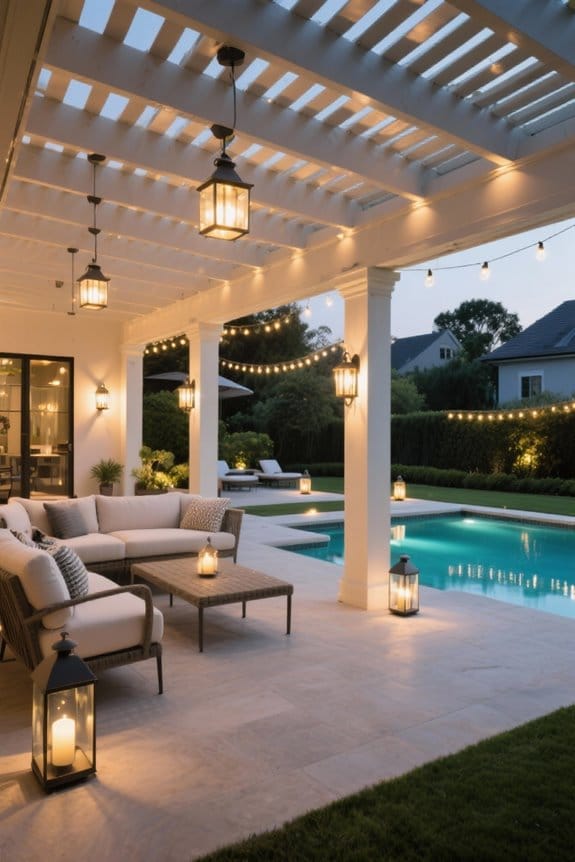
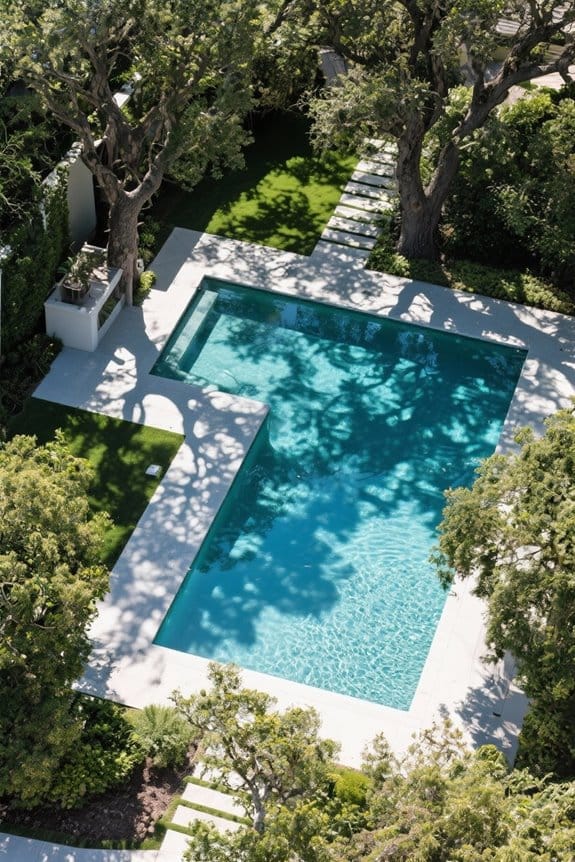
Consistently begin by analyzing the yard’s sun exposure patterns to determine ideal pool placement that maximizes natural shade. Track shadows cast by the house hourly, focusing on peak sun times between 10 a.m. and 4 p.m., to position the pool where shade naturally occurs. Incorporate surrounding vegetation like mature trees or hedges, ensuring they don’t obstruct pool access or safety. Integrate built-in shade structures—pergolas or retractable awnings—with the pool placement to extend shaded zones consistently. Design adjacent outdoor living spaces thoughtfully, situating lounge chairs and seating within these shaded areas for comfort. Account for seasonal sun angle changes when positioning the pool, optimizing shade year-round. Confirm pool orientation facilitates maintenance access while enhancing shade. Use precise measurements during layout planning, and adjust pool depth subtly to align shaded water surfaces, maximizing user comfort during pool parties. For enhanced durability and UV protection in constructed shade solutions, consider using high-density polyethylene fabric with reinforced edges.
Choosing the Right Patio Umbrellas for Comfort

After optimizing pool placement for natural shade, enhance shaded areas by selecting patio umbrellas designed for adjustable coverage. Choose models that pivot and tilt to block sunlight from various angles during the day, ensuring consistent comfort. Opt for umbrellas with weather-resistant materials like polyester or acrylic, which offer durability and effective UV protection essential for a summer pool party. Select a size between 9 to 11 feet in diameter to provide ample coverage for seating and lounging zones, accommodating multiple guests comfortably. Secure umbrellas with sturdy bases made from concrete or steel, considering sufficient weight to prevent tipping in windy conditions. Finally, incorporate shade ideas by choosing colorful patterns or designs that complement the theme, enhancing the festive atmosphere while maximizing functionality and comfort. Consider umbrellas with features like a crank lift and tilt mechanism for easier and more flexible operation throughout the event.
Recommended Products

100% POLYESTER FABRIC -- Blissun patio umbrella is made of 100% polyester, waterproof and UV resistant, long lasting, easy to clean.

ATTENTION: Due to different screen display, there may be a little color difference from image

☀️𝐀𝐮𝐭𝐨-𝐓𝐢𝐥𝐭 𝐂𝐫𝐚𝐧𝐤 𝐒𝐲𝐬𝐭𝐞𝐦: Designed with an easy auto-tilt function. 𝐍𝐨 𝐩𝐢𝐧𝐜𝐡𝐢𝐧𝐠, 𝐄𝐚𝐬𝐲 𝐭𝐨 𝐬𝐞𝐭. Keep turning the crank handle when the outdoor umbrella is fully open, you'll get the tilted shade and enjoy the all-day outdoors;
Installing Shade Structures Over Seating Areas
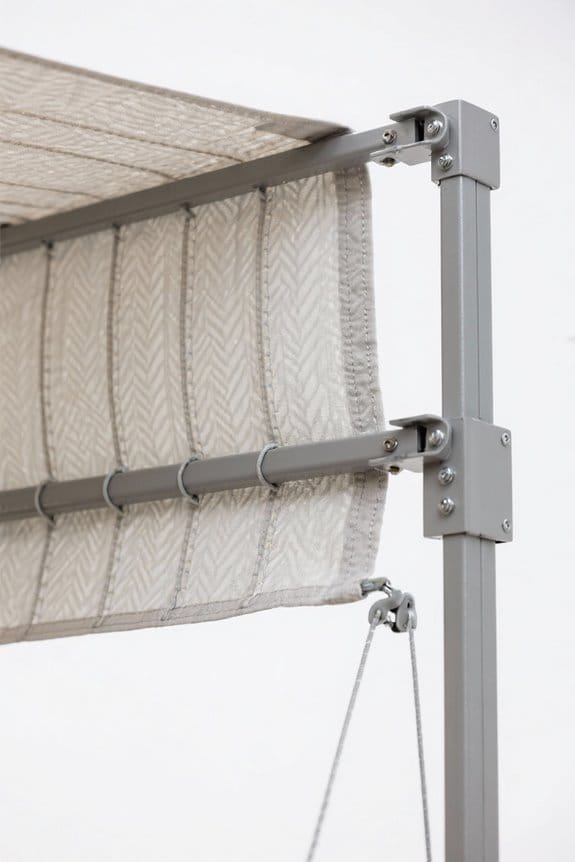
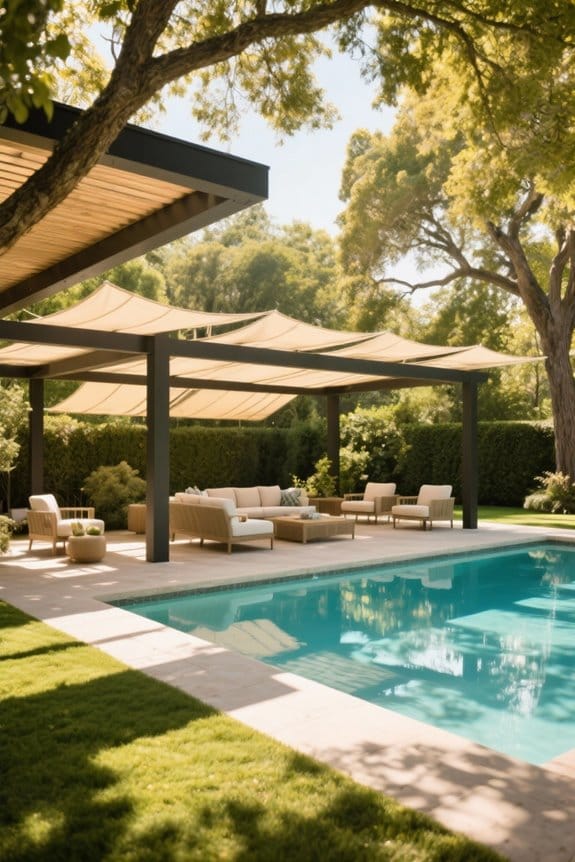
Installing shade structures over seating areas requires careful planning to maximize UV protection and comfort. Begin by selecting durable, weather-resistant fabrics for patio umbrellas or sun sails, making certain they block a minimum of 98% UV exposure. Position shade structures to cover all seating areas precisely, considering sun angles throughout the day. Use sturdy supports such as galvanized steel poles or heavy-duty wall mounts, securing anchors with appropriate hardware like expansion bolts or lag screws. Maintain fabric tension with adjustable hardware to prevent sagging; tighten straps during installation and regularly inspect fasteners for wear. Arrange patio umbrellas with weighted bases to keep stability during wind fluctuations. Add potted plants adjacent to structures for enhanced ambiance, but avoid relying solely on vegetation for shade. Follow manufacturer guidelines strictly to guarantee safety and durability while creating effective, all-day shaded seating zones. Also, ensure that the setup includes readily accessible safety equipment to provide immediate assistance in case of pool emergencies.
Using Fence Screens and Plants for Natural Shade
While natural shade takes time to develop, use heavy-duty fence privacy screens and strategic plantings to create immediate and lasting sun protection around the pool. Install durable fence screens made of UV-resistant materials to block sunlight and debris, enhancing privacy and reducing maintenance. Plant tall shrubs or fast-growing climbing vines along the fence line, spacing them 3 to 5 feet apart, to gradually increase shade coverage. Combine evergreen and deciduous plants to guarantee year-round shade adaptability and privacy. Maintain plants with regular pruning and watering, monitoring growth to prevent overcrowding that could compromise air circulation. Employ trellises or supports for climbing vines to optimize vertical coverage. This intentional integration of fence screens and plants establishes a shaded, private environment, ideal for both poolside comfort and aesthetics during gatherings. Additionally, using energy-efficient outdoor equipment can complement the natural shade by reducing overall energy consumption. Energy efficiency of devices like pool cleaners contributes to a more sustainable pool environment.
Recommended Products

Premium Quality: The UPGRADE privacy screen for fences is made from 170 GSM non-recycled High-Density Polyethylene (HDPE). This ensures lasting durability, reliable privacy protection, and excellent weather resistance. A high-density composition makes it a dependable solution for outdoor privacy needs.

Quality Material: experience ideal privacy with these balcony screen privacy fence covers; They are made from HDPE material that offers an exceptional shading rate of around 80%; Create your own personal haven while allowing breeze and light to pass through, ensuring your outdoor activities remain discreet
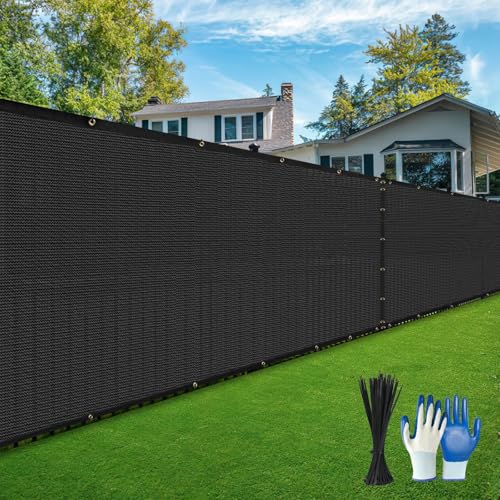
High Quality--- This privacy screen fence is made of high-density polyethylene HDPE material, it's durable and breathable, and with a dark green color it can provide about 90% UV protection and visibility blockage.
Incorporating Privacy Screens for Balcony Pools
Balcony pool owners should prioritize incorporating privacy screens to maximize comfort and seclusion during gatherings. Select privacy screens at least 6 feet tall to guarantee complete coverage, blocking neighbor views and creating an intimate atmosphere. Use materials like bamboo or high-density plastic for durability and aesthetic harmony. Mount screens securely to balcony railings using stainless steel brackets and weather-resistant fasteners, guaranteeing stability against wind. Consider retractable privacy screens to adjust shaded areas and sunlight exposure dynamically. Position screens to also reduce debris from adjacent trees, minimizing pool maintenance. Regularly inspect mounts and screens for wear, tightening fittings as necessary to maintain privacy during balcony pool parties. Follow these steps precisely to enhance comfort, privacy, and the overall usability of balcony pool spaces. Additionally, choosing privacy screens made from high-density polyethylene ensures durability and UV resistance, complementing shade sails for an all-day shaded environment.
Creative DIY Shade Cloth Ideas for Pools
Several types of UV-resistant shade cloth materials provide both sun protection and temperature control for pool areas. Choose shade cloths with 70-90% density, balancing shade and filtered light. Measure the pool and covered patio dimensions accurately before cutting fabric. Attach shade cloths to PVC pipes or sturdy frames, securing edges with grommets and zip ties to withstand wind. Place umbrellas around seating areas for additional localized shade. Arrange shade cloths above the pool to reduce water temperature and minimize debris. Ascertain tension is even to prevent sagging. During pool parties, adjust or remove sections easily if needed. Regularly inspect connections for wear and replace fasteners as required. This method offers an affordable, customizable solution, enhancing both comfort and design without complex installation. Selecting shade cloth made from high-density polyethylene (HDPE) can improve durability and airflow, preventing overheating and extending product lifespan.
Adding Sun Sails for Stylish Sun Protection
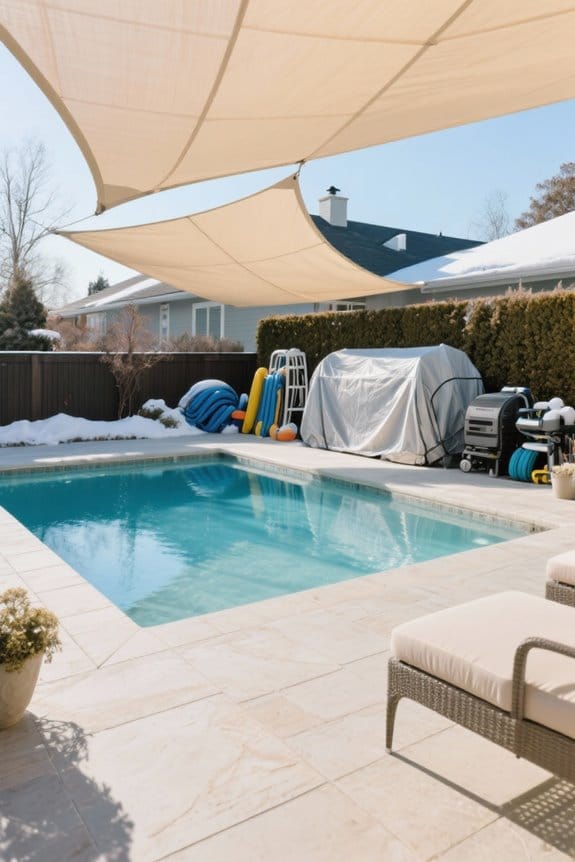
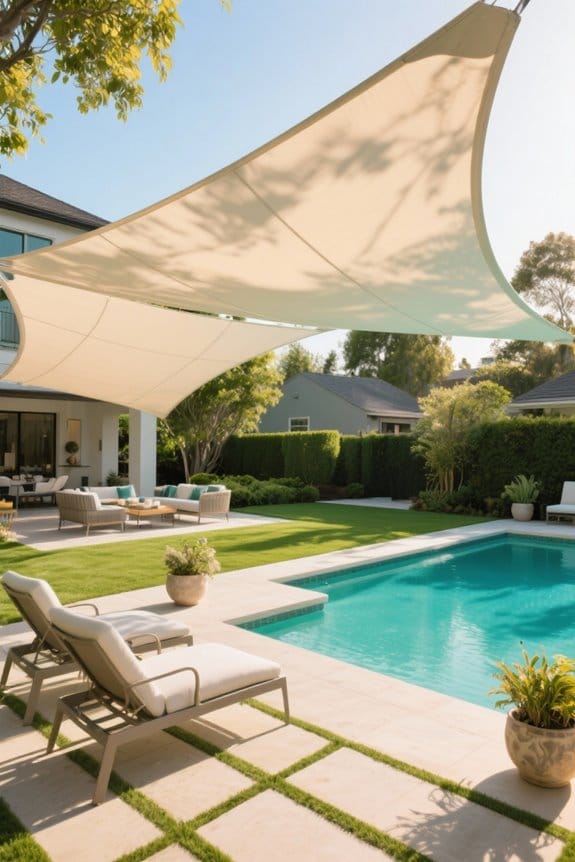
Sun sails provide a robust and visually appealing method to shield your pool area from intense sunlight. Select high-density polyethylene fabric sun sails for durable, UV-resistant performance. Measure the pool’s length and width precisely, then choose custom or standard sun sails sized 10 to 20 feet per side to guarantee ample coverage. Install stainless steel mounting hardware at sturdy overhead structures or secure posts, maintaining tension to avoid sagging. Position the sails strategically to create stylish shading that cools both swimming and lounging zones, enhancing comfort during your summer party. Check anchor points regularly for wear, and adjust tension seasonally to prevent fabric damage from wind or rain. Use multiple sails to cover extensive areas, optimizing shade without compromising airflow. This approach also reduces pool debris and helps maintain ideal water temperatures. For lasting performance, ensure you follow installation guidelines carefully to maintain fabric integrity and secure tension over time.
Recommended Products

High-Quality Construction: Made with 185 gsm high-density polyethylene (HDPE) shade fabric; features well-stitched seams and sturdy stainless steel D-rings in each corner for lasting durability

【Precision-Curved Measurement】This shade sail features edges with precisely calculated radians to ensure a tight, neat fit after installation. The intentional curve maximizes tension and prevents sagging in the center, delivering a professional and streamlined appearance.

【About Installation】Please refer to the diagrams before purchasing. To ensure you buy the correct shade sail, you need to leave 0.5-1 ft of space for accessories to avoid buying an oversized shade
Combining Shade Solutions for All-Day Coverage
Leverage existing natural shade from adjacent structures by mapping sun exposure patterns throughout the day, then arrange portable patio umbrellas to fill coverage gaps. Position umbrellas strategically around lounging areas, ensuring a minimum eight-foot radius for effective shade. Incorporate tall plants or fence screens along pool perimeters to enhance privacy while providing consistent shade solutions. Install adjustable sun sails overhead, setting tension cables securely to adapt coverage as the sun moves. For water lounging, deploy floating umbrellas in shallow zones to create comfortable, shaded spots. Layer various shade solutions to maximize overall coverage, reducing sun exposure without overcrowding the space. Regularly check for wear on fabrics and hardware, replacing worn parts promptly to maintain safety and function. This combined approach guarantees versatile, all-day shade for guest comfort during pool parties. Utilizing shade canopies made of high-density polyethylene (HDPE) ensures durability and excellent UV protection for prolonged outdoor use.
Recommended Products

Premium Material - Shade sail is made from 185GSM new high-density polyethylene material, the shade fabric is recycling which could protect our environment. UV treated to block 95% harmful rays to protect our family. Effectively decrease the temperature in covering area.

【UV Protection & Cooling】Made of 100% brand new High Density Polyethylene material and eliminate the use of splicing fabrics.Blocks up to 95% of harmful UV rays and direct sunlight exposure."Breathable" fabric allows air to pass freely and achieve a certain degree of cooling.

【About Installation】If you want a proper sun shade sail, you need to leave 0.5-1 feet of space for accessories. Please understand that due to the elasticity of the HDPE fabric material, our shade sail for outdoor has a tolerance of ±4 inch.
Frequently Asked Questions
What Is the Best Time to Host a Pool Party?
The ideal timing for hosting a pool party is during warmer months, typically May to September, on weekends. Weather considerations favor midday to late afternoon, balancing guest availability and enhancing seasonal themes for maximum enjoyment and attendance.
How to Host a Pool Party When You Don’t Have a Pool?
Why let a silly pool stop the fun? They deploy inflatable pool options, backyard water games, and alternative cooling activities like sprinklers, all cleverly shaded by outdoor shade solutions—because who needs permanence when spontaneity splashes just fine?
How Cold Is Too Cold for a Pool Party?
Pool temperature guidelines suggest below 70°F is too cold for guest comfort levels, with weather considerations like air temperature and wind chill affecting enjoyment. Safety precautions include monitoring conditions and using heaters to maintain a safe, pleasant environment.
What Not to Do at a Pool Party?
At a pool party, one should avoid neglecting noise control, compromising food safety, ignoring guest etiquette, and overlooking thoughtful entertainment planning. These missteps undermine enjoyment and safety, disrupting the event’s overall harmony and success.