As an Amazon Associate, we earn from qualifying purchases. Some links on this site are affiliate links at no extra cost to you. Our recommendations are based on thorough research and editorial judgment.

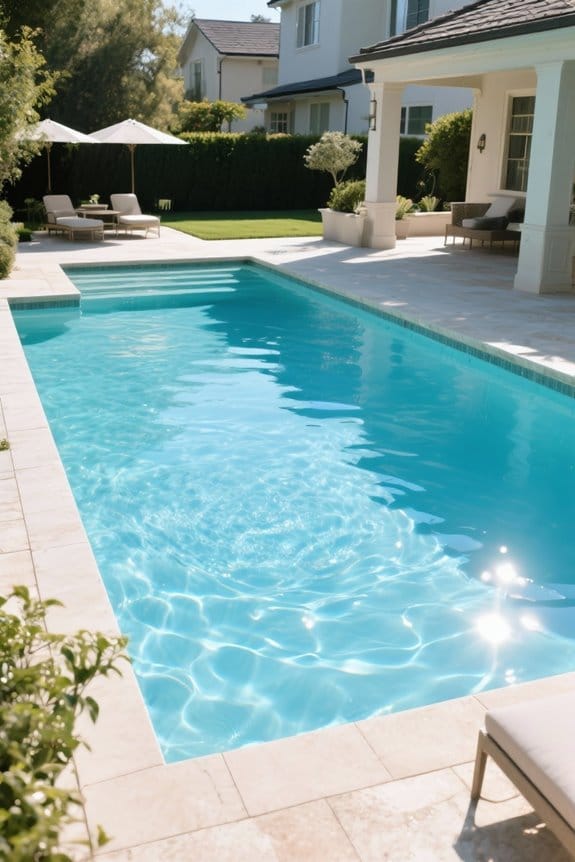
Case Studies: Shaded Pools Around the World

Explore tropical resorts using palm clusters to shade 50% of lounging areas, combined with weather-resistant canopies and retractable motorized systems. Inspect urban decks for corrosion-resistant tensile fabric canopies, adding solar panels, and verify track clearance 1–2 feet above decks for free movement. Integrate native trees strategically to maximize shade during peak sun, pruning regularly to prevent debris. Choose UV-blocking fabrics for sails and pergolas with corrosion-resistant hardware. Follow these protocols rigorously to enhance pool comfort and efficiency; additional insights await beyond this overview.
Key Takeaways
- Tropical resorts use palm trees and weather-resistant canopies to shade 50% of pool lounging areas while preserving scenic views.
- Urban pools incorporate tensile fabric canopies with solar panels and motorized retraction for sustainable, adaptable shading solutions.
- Retractable shading systems with sunlight sensors and smartphone controls enhance user convenience and extend year-round pool usability.
- Natural foliage, like native trees and bamboo screens, is strategically placed to provide organic shade and support pool area biodiversity.
- Pergolas with corrosion-resistant materials and adjustable features offer durable, climate-resistant shade while ensuring structural stability and safety.
Tropical Resort Shade Designs
You may be interested


Begin by evaluating the pool perimeter to identify ideal locations for natural shade elements such as mature palm trees or large canopies, ensuring they cast shadows during peak sunlight hours between 10 a.m. and 4 p.m. Install palm trees strategically to maximize shaded pools, verifying canopy spread covers at least 50% of lounging areas. Incorporate thatched or fabric canopies anchored securely with weather-resistant materials, positioning them to avoid obstructing scenic views. Deploy retractable shade systems, selecting durable motorized models rated for tropical climates, allowing guests to adjust shade as needed. Monitor shadow patterns daily for seasonal shifts, trimming foliage to optimize coverage. Balance natural and artificial shade elements to reduce solar heat gain, enhancing energy-efficient pool temperature control. Maintain structures regularly, inspecting for corrosion or UV damage, ensuring uninterrupted comfort within shaded pools. Utilize high-density polyethylene fabric in fabric canopies to block up to 95% of UV rays, thereby enhancing protection for poolside users.
Urban Pool Canopy Innovations
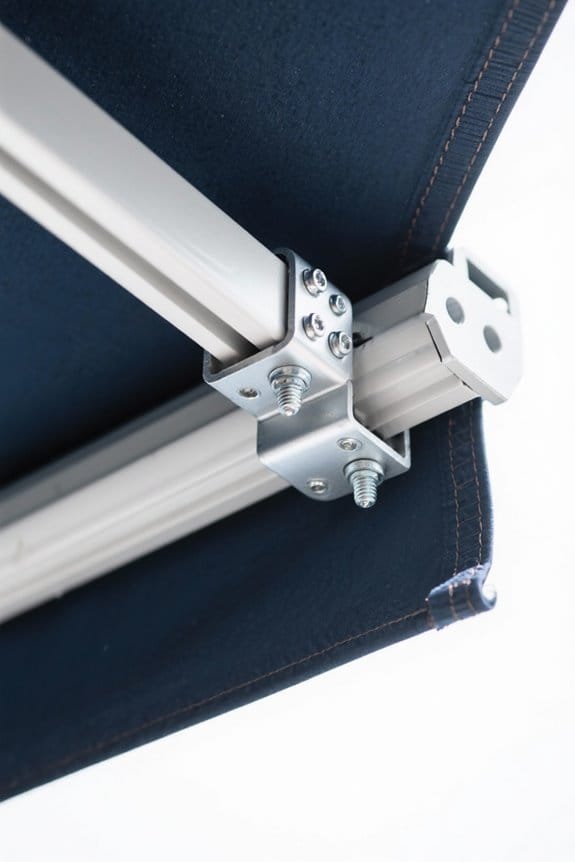
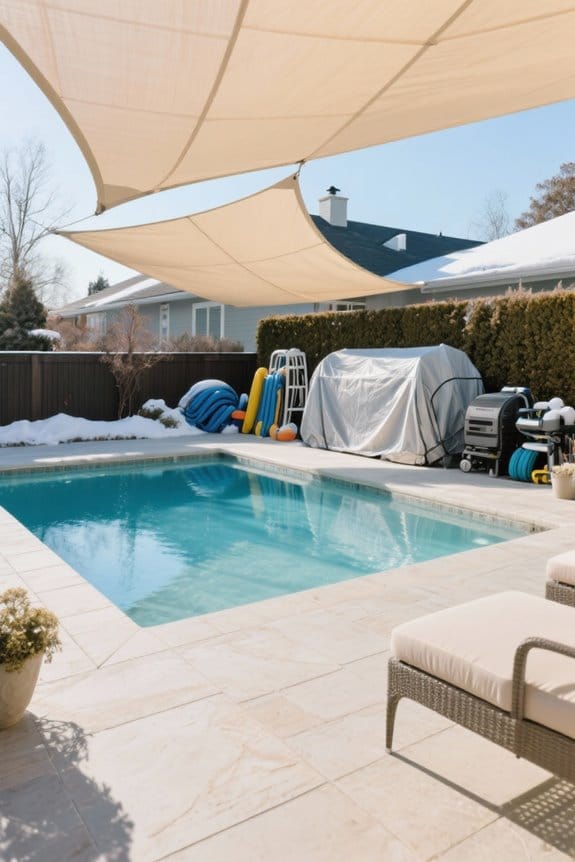
Although urban spaces present unique challenges for shading, analyze the pool deck to identify ideal mounting points for tensile fabric canopies or retractable awnings that withstand wind loads up to 40 mph. Select corrosion-resistant hardware, and guarantee structural supports align with load-bearing elements. Incorporate materials like high-tensile polyester fabric with UV inhibitors for durability. Install solar panels atop canopies to power pool facilities, enhancing sustainability. Examine successful models among pools around the world, such as Marina Bay Sands SkyPark’s elevated shaded pools and 1 Hotel Brooklyn Bridge’s combination of plantings with overhead canopies. Calculate wind pressure effects, secure tensioning cables correctly, and verify all fasteners with torque wrenches. Test canopy retraction systems regularly to avoid mechanical failures. Follow these steps to optimize user comfort and extend swimming seasons, improving energy efficiency and reducing water evaporation in urban pool environments. Regular maintenance, including inspecting fabrics for damage and cleaning, is as crucial for canopies as it is for pool vacuum bags to ensure longevity and performance.
Recommended Products

【UV Protection & Cooling】Made of 100% brand new High Density Polyethylene material and eliminate the use of splicing fabrics.Blocks up to 95% of harmful UV rays and direct sunlight exposure."Breathable" fabric allows air to pass freely and achieve a certain degree of cooling.

SUN PROTECTION: Waterproof material provides UPF 50+ sun protection

UV PROTECTION: Woace retractable wave shade sails offer 95% UV protection and 90% shade for your garden, creating a cooler space. They are designed to provide a peaceful and comfortable outdoor environment that encourages you to relax and enjoy the outdoors without worry.
Pergolas and Lattice Structures in Pool Areas
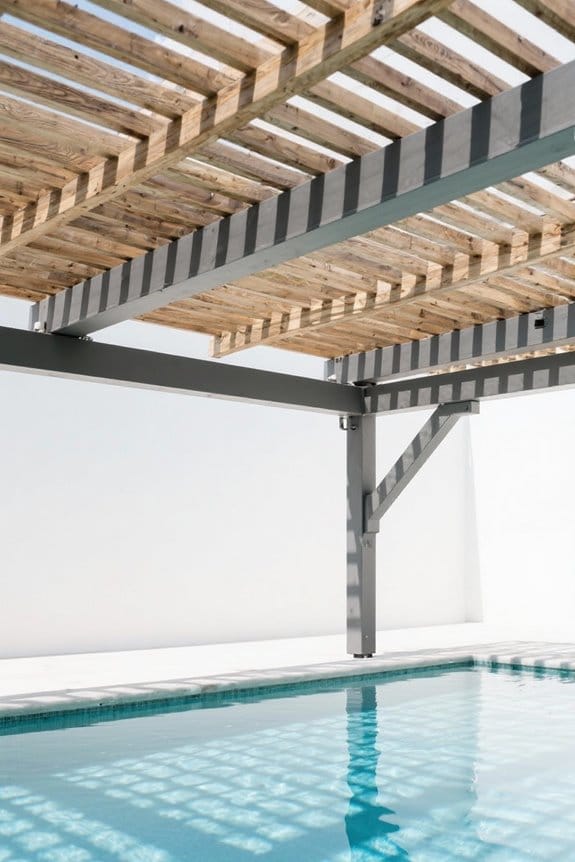
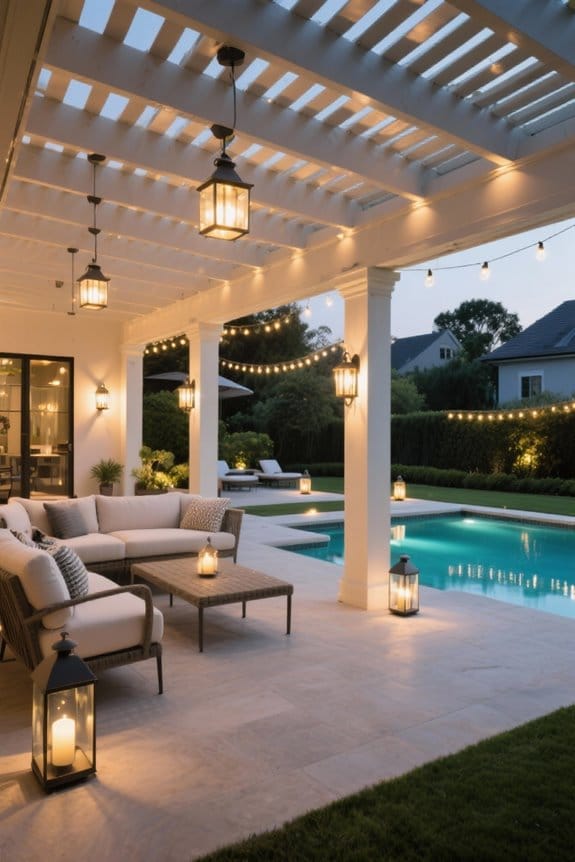
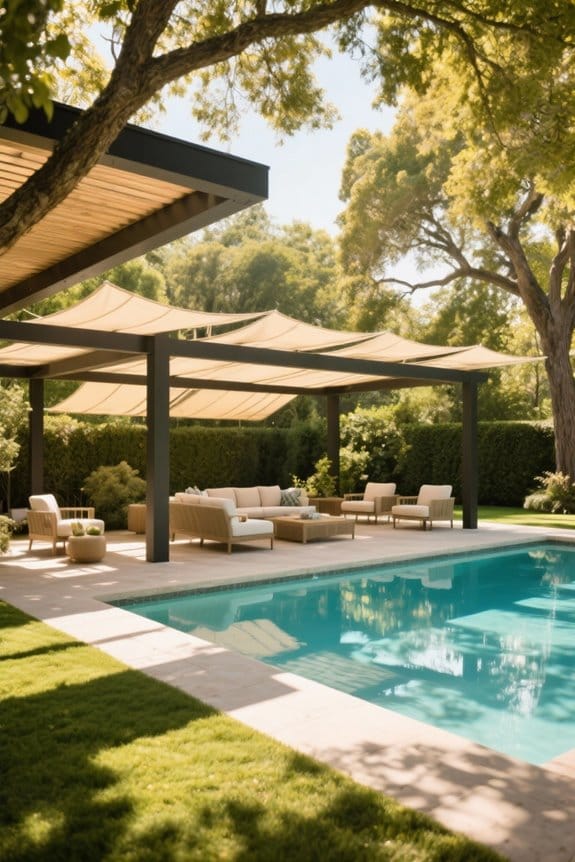
Shift focus from tensile canopy installations to integrating pergolas and lattice structures for shade solutions. Select pergolas made from wood, aluminum, or vinyl according to climate resistance and maintenance needs. Position structures to optimize shade coverage during peak sun hours, measuring angles between 30 to 45 degrees. Incorporate lattice panels on at least two sides, securing with stainless steel brackets for durability. Introduce climbing plants for additional cooling, training vines through lattice gaps to promote evapotranspiration without obstructing airflow. For adjustable shade, install pergolas with slats or retractable canopies, using motorized controls for ease of operation. Regularly inspect hardware and clean components to prevent corrosion from pool chemicals. Ascertain shaded areas comply with local safety standards to reduce UV exposure risks. Such structured shade enhances comfort and safety, preventing sun-related health issues around pools. To ensure long-term effectiveness, regularly inspect and maintain pergola components similar to how shade sails are maintained.
Recommended Products

【Easy to Install】The sun shade sail comes with a simple installation kit and includes installation instructions, making it easy to set up in your patio, garden, or backyard without the need for professional help.

Ideal Use - The outdoor sun shade sail has many uses: over a patio, lawn, garden, backyard, pool, deck, courtyard, park, carport or any other outdoor area to keep you cool in summer. You can conveniently carry it in the original bag or most backpacks since it is lightweight and compact

Durable & Heavy-Duty Material: Crafted from 200GSM high-density polyethylene (HDPE) with reinforced binding and grommets, this sun shade cloth offers exceptional durability for outdoor use. Its permeable design allows rainwater to pass through easily, preventing water accumulation and sagging. Resistant to tearing and mild weather, it provides reliable sun shade and light wind protection season after season
Integration of Natural Foliage for Sun Protection
When integrating natural foliage for sun protection around pools, select native tree and shrub species suited to local climate conditions and soil types, ensuring minimal irrigation and maintenance requirements. Position trees strategically to maximize shade during peak sunlight hours, typically between 10 a.m. and 4 p.m. Choose species with dense canopies to reduce ambient temperatures near pools by several degrees, enhancing swimmer comfort. Incorporate shrubs that provide under-canopy cover, supporting biodiversity and improving water filtration. Use drip irrigation systems with timers to enhance water delivery and avoid overwatering. Monitor foliage health monthly, addressing pest infestations or nutrient deficiencies promptly. Prune branches regularly to prevent debris accumulation in pools and preserve aesthetic appeal. Document plant growth, adjusting shading strategies as necessary to maintain ideal protection and energy-efficient pool environments. For optimized sun blocking and temperature control, consider installing green shade cloths as complementary artificial shading alongside natural foliage.
Use of Retractable Shading Systems
Complement natural foliage by installing retractable shading systems to enhance pool area versatility. Select motorized retractable shading systems equipped with sensors to automatically adjust for sunlight intensity and weather changes. Mount durable tracks precisely 1 to 2 feet above the pool deck perimeter, ensuring unobstructed extension and retraction of shades. Use corrosion-resistant materials like aluminum frames and UV-blocking fabric rated for 95% UV protection. Integrate controls with poolside keypads or smartphone apps for instant adjustments. Regularly inspect mechanical components, lubricate moving parts quarterly, and recalibrate sensors biannually to maintain peak functionality. In severe weather, deploy shades fully to protect pool surfaces and reduce heat gain, thereby improving energy efficiency in adjacent spaces. This system extends pool usability during peak sun hours and light showers, combining performance with modern design to enhance comfort and aesthetics simultaneously. Choosing fabric with a high UPF rating ensures optimal protection and durability under intense sunlight conditions.
Recommended Products

【Premium Sun Shade Fabric】Yoolax outdoor blind is made of premium 5% openness fabric to enhance outdoor comfort. It can not only filter light and block 99% harmful UV rays effectively, but also windproof, waterproof and fire-prevention. With the stainless wire guide system, the wind resistance of these motorized outdoor shades reach level 5, making it a perfect choice for porch, pergola, and patio.

COOLING SHADE COVERAGE: Enjoy a more comfortable outdoor space with this patio awning featuring breathable fabric that helps reduce heat buildup while creating reliable sun protection for patios, decks, balconies, windows, doors, and other outdoor shades for patio areas.

COOLING SHADE COVERAGE: Enjoy a more comfortable outdoor space with this patio awning featuring breathable fabric that helps reduce heat buildup while creating reliable sun protection for patios, decks, balconies, windows, doors, and other outdoor shades for patio areas.
Sustainable Materials for Pool Shading
Select sustainable materials that balance durability, environmental impact, and maintenance needs for pool shading structures. Use bamboo for lightweight, sturdy supports, ensuring lengths between 2 to 3 meters to optimize stability. Integrate recycled plastics like high-density polyethylene (HDPE) in canopy fabrication, verifying UV resistance ratings above 50 to prolong lifespan. Incorporate green roofs or living walls with native plants, arranging vegetation to provide natural cooling and support local biodiversity. Install reclaimed wood components, treating surfaces with weatherproof sealant every 12 months to prevent decay. Consider shade structures with integrated solar panels sized at a minimum of 200 watts, connecting them to pool circulation systems for renewable energy benefits. Monitor all materials for wear quarterly, replace damaged parts promptly, and maintain documentation for environmental compliance and ongoing performance evaluation. Regular monitoring of pool water quality using chlorine test strips is also essential to ensure the sustainability of pool environments.
Recommended Products

【About Installation】If you want a proper sun shade sail, you need to leave 0.5-1 feet of space for accessories. Please understand that due to the elasticity of the HDPE fabric material, our shade sail for outdoor has a tolerance of ±4 inch.

【UV PROTECTION & BREATHABLE】☂ The shade sail is made of High Density Polyethylene fabric, which provides excellent shade to protect you from the sun.It can effectively block harmful UV rays from the sun, preventing your skin from being damaged by the sun. Permeable fabric allows air to pass freely so you can stay cool.

Ultimate Safety: The baby swim float has an adjustable safety seat at the bottom to prevent slipping out. The dual air chambers and side widening design provide excellent buoyancy and stability. The reticulated area between the two chambers of the baby floaties provides a safe playing area
Cultural Influences on Pool Shade Architecture
Although cultural contexts vary widely, analyze regional architectural traditions to inform pool shade design choices effectively. In Mediterranean settings, implement pergolas and retractable awnings, positioning them to block intense midday sun while preserving airflow. For Japanese-inspired shaded pools, integrate natural elements like bamboo screens and strategically placed trees, ensuring organic shade without obstructing views. Tropical designs demand large cantilevered roofs and thatched structures; select materials per local building codes and climate resilience standards. Utilize shade sails made from UV-resistant fabric, tensioning them correctly to avoid sagging or wind damage, maintaining openness to the landscape. Incorporate lush landscaping, planting palms or flowering species at measured intervals (3-5 meters apart) to form natural shaded zones. Inspect shading elements regularly for wear or damage, replacing components systematically to sustain functionality and aesthetic integrity. Prioritizing fabrics with UPF protection of 50+ ensures long-lasting durability and effective shielding from harmful UV rays in outdoor pool environments.
Modern Shade Technologies for Outdoor Pools
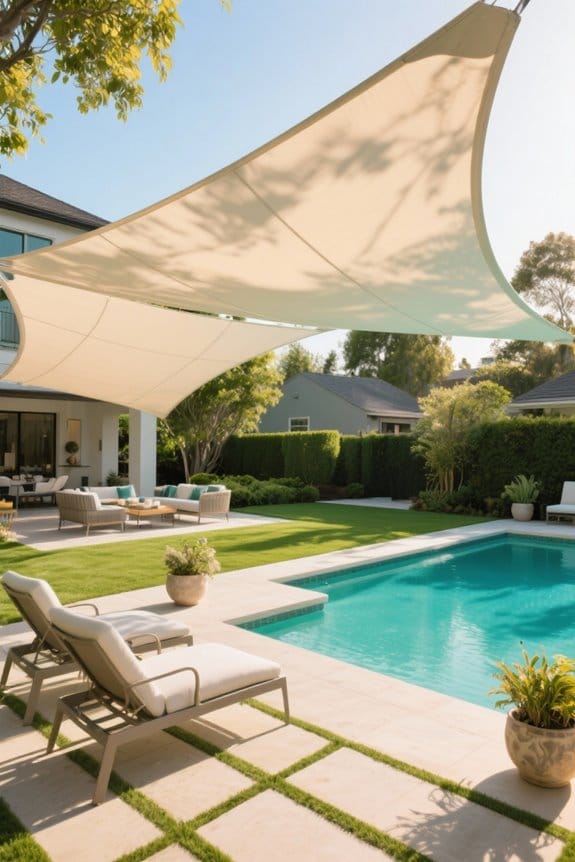
Integrate retractable awnings by anchoring them securely to stable structures, verify track alignment for smooth extension and retraction. Incorporate tensile fabric canopies by measuring pool perimeter accurately, install tension cables with appropriate turnbuckles, and guarantee fabric maintains a 3-5% pre-stress to prevent sagging. Install automated shading systems by connecting light sensors calibrated to detect lux levels above 50,000, program motor speeds between 0.15–0.25 m/s for quiet operation, and test responsiveness thoroughly. When adding pergolas with integrated shade, fasten support beams using corrosion-resistant brackets, space slats 10–15 cm apart for ideal sunlight filtration, and reinforce joints with stainless steel inserts. Consider solar canopies by aligning photovoltaic panels at a 30° angle to maximize exposure, route wiring to power pool equipment efficiently, and conduct system load tests. Employ these modern shade technologies for outdoor pools to enhance pool design functionality and longevity. To complement shading installations, use weather-resistant materials to ensure durability and low maintenance in outdoor environments.
Recommended Products

Material: Crafted from 185 GSM HDPE, blocking up to 95% of harmful UV rays while allowing airflow. Durable stitched edges and 304 stainless steel D-rings ensure strength and longevity

High-Quality Protection: Crafted from 185 gsm high-density polyethylene (HDPE) shade fabric; blocks up to 95% of harmful UV rays and direct sunlight exposure; strong stitched seams and durable stainless steel D-rings in each corner for added longevity.

High-Quality Construction: Made with 185 gsm high-density polyethylene (HDPE) shade fabric; features well-stitched seams and sturdy stainless steel D-rings in each corner for lasting durability
Enhancing Poolside Comfort Through Design
When designing poolside comfort, position shade structures—such as pergolas, cantilevered roofs, or retractable awnings—to optimize coverage during peak sunlight hours between 10 a.m. and 4 p.m. Integrate natural shade by planting deciduous trees strategically, allowing seasonal light variation while enhancing aesthetics. Install adjustable shade structures that adapt to sun angles, reducing pool surface temperatures by 5–10°F to increase comfort. Ascertain umbrella bases are weighted securely to prevent tipping in wind, and verify pergola roofing materials provide at least 70% UV blockage. Space seating at least 3 feet from pool edges to facilitate shade coverage and movement. Monitor shading effectiveness throughout the day, repositioning retractable awnings as needed. This precise approach maximizes usability and supports longer swim sessions, improving overall poolside enjoyment. Additionally, ensure that all electrical installations near shaded pool areas comply with local codes to maintain safety and avoid penalties.
Year-Round Pool Usage Enabled by Strategic Shading
Plan shading elements to extend pool usability across all seasons, focusing on structures like pergolas, shade sails, and retractable awnings. Install adjustable shade systems to tailor coverage in response to changing weather and sunlight angles, enhancing comfort and water temperature control. Incorporate solar-reflective materials to minimize overheating and reduce evaporation, maintaining consistent water levels for shaded pools. Position trees or landscaping strategically to create natural shade during peak sunlight hours, balancing light and shadow throughout the year. Monitor water temperature regularly to confirm shading effectiveness, adjusting or adding elements as necessary. Employ measurable shading coverage of approximately 40-60% during summer months for ideal heat reduction, while allowing sunlight penetration in cooler seasons. With precise implementation, shaded pools support year-round swim activities, lower maintenance costs, and enhance environmental sustainability, making them practical and comfortable investments for any climate zone. Selecting shade sails made from durable high-density polyethylene fabric that blocks at least 95% of UV rays can significantly improve the effectiveness of your shading strategy.
Frequently Asked Questions
What Is the Most Famous Pool in the World?
Coincidentally, the most famous pool in the world is the Infinity Pool at Marina Bay Sands. Among luxurious celebrity pools, its rooftop location and breathtaking skyline views make it an iconic symbol of opulence and exclusivity worldwide.
Are Infinity Pools Real?
Infinity pools are real structures designed with precise engineering to create infinity illusions, where water appears to merge with the horizon. These pools use a lowered edge allowing continuous water flow, enhancing visual perception of boundlessness and luxury.
What Is the Most Photographed Swimming Pool in the World?
A shimmering edge seemingly melting into Singapore’s skyline defines the most photographed swimming pool—Marina Bay Sands. This iconic infinity pool marks a significant Instagram milestone, capturing luxury’s essence amid urban splendor and boundless horizons.
What Was the Biggest World Pool in History?
The biggest world pool in history is the San Alfonso del Mar resort pool in Chile. Its historic innovations include advanced filtration, seawater use, and temperature control, showcasing exceptional engineering and design in large-scale aquatic structures worldwide.