As an Amazon Associate, we earn from qualifying purchases. Some links on this site are affiliate links at no extra cost to you. Our recommendations are based on thorough research and editorial judgment.


10 Best Pool Filter Sands for Crystal‑Clear Water (Expert Picks)

Measure your filter tank diameter and depth, then select #20 silica sand (0.45–0.55 mm), buy 50 lb bags, calculate bag count for 12–18 inches bed depth. Wear N95 respirator and gloves, use a clean funnel to pour sand, keep laterals intact and stop three inches above them, backwash with multiport valve until discharge runs clear, monitor PSI for rises over 8–10 psi, check for channeling or cracked laterals, continue for product comparisons and installation tips.
Key Takeaways
- Choose high-purity #20-grade silica sands (0.45–0.55 mm) for optimal dirt trapping and crystal-clear water.
- Top expert picks include U.S. Silica Mystic White II, AquaQuartz, Aqua Joe Premium, Palmetto, and Play22.
- Verify silica content ≥95% and angular grain shape for better filtration and longer media life.
- Install to the manufacturer-specified depth above the laterals, then rinse and backwash until clear before regular use.
- Monitor filter PSI and backwash regularly; replace sand every 3–7 years or when flow and clarity decline.
Aqua Joe Premium Filter Sand for Pools and Spas (50 lbs)

Aqua Joe Premium Pool & Spa Filter Sand, Natural Silica, 50 Lb Bag - Above Ground & Inground...
- High-Quality Filtration: 50 pounds of pre-washed, kiln-dried natural silica sand for pool filter captures dirt, leaves, hair, and debris without clogging or clumping
- Universal Compatibility: Pool sand works with all residential and commercial sand filter systems for above-ground and in-ground pools
- Long-Lasting Performance: This pool sand for filter promotes smooth water flow, extends filter life, and reduces maintenance needs for season long filtration
You may be interested
Choose Aqua Joe Premium Filter Sand if you need a ready-to-use, 50 lb bag of natural silica for residential or commercial sand filters. Measure your filter tank capacity. Calculate required sand by consulting manufacturer specs, usually 50 pounds per standard 18-inch tank, confirm liters or kg where needed. Pour sand slowly, avoid dumping. Use a funnel or scoop, protect laterals and return pipe, guarantee even bedding depth of several inches before startup. Rinse until the runoff clears. Perform backwash and inspect the pressure gauge, if pressure stays high check for clumping and clean laterals. Store bag sealed, keep dry.
Best For: Homeowners and pool service pros who need a ready-to-use 50 lb bag of natural silica sand compatible with most residential and commercial sand filters.
Pros:
- Pre-cleaned and ready to use, saving prep time.
- Universal compatibility with above-ground and inground sand filter systems.
- Promotes smooth water flow, extends filter life, and reduces seasonal maintenance.
Cons:
- Requires correct measurement and careful pouring to avoid damaging laterals/return pipe.
- Must be rinsed and backwashed before use and can clump if exposed to moisture during storage.
- A single 50 lb bag may be insufficient for larger filter tanks, requiring multiple bags.
Pool Filter Sand, Pure Silica Formula, 50 lbs

OptiFlow Pool Filter Sand, Premium Filtration with Pure Silica Formula, 50 Lbs - Swimming Pool...
- High-Power Filtration: Unique pure silica formula effectively traps dirt and debris, ensuring your pool water remains crystal clear and sparkling clean, providing a...
- Optimal Shape: The angular grains in OptiFlow are designed to enhance filtration efficiency, providing longer-lasting performance and ensuring maximum filtration for a...
- Low-Maintenance: With its unique composition, OptiFlow promotes better water flow, reducing the need for frequent backwashing and conserving water for efficient...
Select this 50 lb pure silica pool filter sand when you need high-power, angular-grain filtration for residential or commercial systems. Measure 50 lb per filter, follow specs, connect a 1.5-inch multiport valve. Pour sand evenly, maintain 12–18 inches above lateral assembly, avoid compacting, check for fines that clog laterals. Vacuum debris first, then run a quick 3-minute rinse cycle. If pressure rises over 10 psi, backwash two minutes, inspect laterals, plan sand replacement every five years. Use with Hayward, Pentair, and Sta-Rite filters, for in-ground and above-ground setups. Expect angular grain consistency, US-made quality, and verify batch ID on delivery.
Best For: Homeowners and commercial pool operators seeking high-efficiency, low-maintenance filtration using a US-made pure silica sand for standard sand filters (in-ground or above-ground).
Pros:
- High-power angular-grain silica provides improved dirt trapping and consistent filtration.
- Reduces backwashing frequency and promotes better water flow for easier maintenance.
- Versatile compatibility with major brands (Hayward, Pentair, Sta-Rite) and standard multiport valves.
Cons:
- Heavy 50 lb bags are cumbersome to handle and bulky to store.
- Must be installed correctly (pour evenly, avoid compacting, maintain 12–18″ above laterals) to prevent lateral clogging from fines.
- Requires periodic replacement (about every five years) and may need inspection/backwash if pressure rises.
U.S. Silica Mystic White II Pool Filter Sand (2 Pack, 50 lb)

U.S. Silica 2 Pack Mystic White II Sand for Above Ground and Inground Pool Filter Pumps, 50 Lb...
- 50-pound bag of quality angular-shaped sand provides maximum entrapment of solids, optimizing your pool's filtration abilities
- Effectively removes leaves, moss, oil, cosmetics, gum, and others to leave you with clean, clear pool water
- Stops clogging with a specially-graded formula that ensures a uniform flow rate within the filter
Install U.S. Silica Mystic White II, two 50 lb bags per filter.
Pour measured sand to manufacturer depth, typically 12–18 inches in 24-inch tanks, use funnel and level.
Attach multiport valve, set to backwash, run two to three minutes.
Check flow, inspect laterals and standpipe, replace sand if fines exceed 1% or turbidity stays above 0.5 NTU.
Compatibility spans aboveground and inground systems, fits any standard pool filter.
Expect superior capture of dirt, leaves, oil, cosmetics and insects, angular grains maximize entrapment and reduce clogging during prolonged cycles.
Store bags dry, handle with gloves and dust mask, avoid inhalation.
Best For: Homeowners and pool maintenance professionals needing a high-purity, easy-to-install silica sand replacement for standard aboveground or inground pool filters.
Pros:
- Superior filtration that captures dirt, leaves, oil, cosmetics and insects for clearer water.
- Angular grain shape maximizes entrapment and reduces clogging during prolonged cycles.
- Compatible with standard pool filter systems and sold in convenient 50 lb bags for easy handling.
Cons:
- Heavy 50 lb bags can be awkward to lift and pour—may require two people or tools.
- Produces silica dust; gloves and a dust mask are recommended to avoid inhalation and skin irritation.
- Sand will eventually degrade (fines/turbidity) and requires replacement when performance drops.
Palmetto Pool Filter Sand (50 lbs)
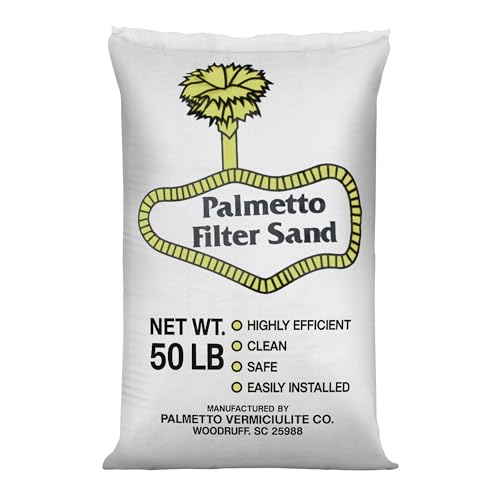
Palmetto Swimming Pool Filter Sand for Above Ground and Inground Pools, Natural Silica, 50 Lb Bag...
- Crystal Clear Pool Water: Effectively captures leaves, dirt, dust, sunscreen oil, hair, and other small particles, ensuring your pool remains pristine and inviting all...
- Superior Purity: Undergoes a rigorous washing and screening process, providing the purest 20-40 Sieve pool filter sand available; High-quality filtration means cleaner...
- Safe & Natural Composition: Soft, clean, and free from chunks or harsh additives; Meets the standards for most pool filter pump brands, ensuring safe operation and a...
Use Palmetto Pool Filter Sand for 50 lb residential and commercial sand filter pumps. Measure filter tank diameter, and prepare 18 in area. Empty tank, remove old media, inspect laterals and multiport valve for cracks, replace worn parts promptly. Pour one 50 lb bag carefully. Rinse new 20-40 sieve sand, use garden hose and sieve basket, avoid dust entering plumbing, stop when clear. Expect reduced backwashing frequency. Monitor filtration for leaves, oil, hair weekly, test clarity with 25 cm disc, troubleshoot cloudy water by checking sand depth. Replace bag yearly or sooner if efficiency drops. Trust robotics screening quality.
Best For: Homeowners and pool service professionals needing a reliable, high-quality 20–40 sieve sand for residential or commercial sand filter pumps.
Pros:
- Provides superior filtration of leaves, dirt, oil, hair and small particles for clearer water.
- High-purity, robotics-screened 20–40 sieve sand that’s soft, clean, and compatible with most filter brands.
- Long-lasting performance that can reduce backwashing frequency and maintenance time.
Cons:
- 50 lb bag is heavy and may be difficult to lift or pour without help.
- Limited coverage per bag (fills ~18 sq in at 3 in depth), so larger tanks require multiple bags.
- Requires rinsing before use and annual replacement or sooner if efficiency declines.
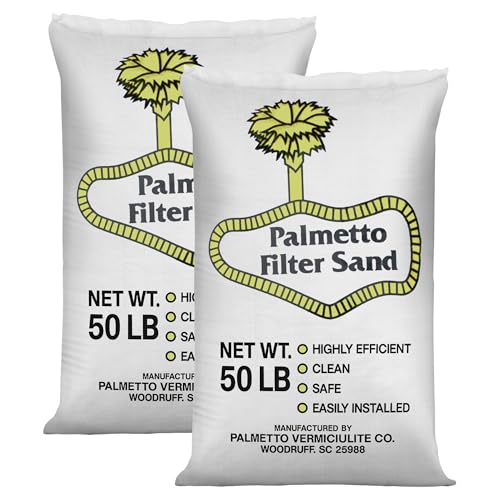
Palmetto 2 Pack Pool Filter Sand (50 lb)
Palmetto 2 Pack Swimming Pool Filter Sand, 50 lb Bag – Natural Silica for Residential & Commercial...
- Crystal Clear Pool Water: Effectively captures leaves, dirt, dust, sunscreen oil, hair, and other small particles, ensuring your pool remains pristine and inviting all...
- Superior Purity: Undergoes a rigorous washing and screening process, providing the purest 20-40 Sieve pool filter sand available; High-quality filtration means cleaner...
- Safe & Natural Composition: Soft, clean, and free from chunks or harsh additives; Meets the standards for most pool filter pump brands, ensuring safe operation and a...
Determine whether the Palmetto 2 Pack Pool Filter Sand suits your filter needs, weigh the 50 lb bags before handling. Inspect the filter tank. Measure depth carefully, each bag covers 18 square inches to three inches depth, plan for even layering across the media bed. Rinse new sand if grit appears. Use common tools, funnel sand slowly into the standpipe, avoid clogging, monitor for dust and contaminants during fill. Backwash the filter immediately. Expect removal of leaves, dirt, sunscreen oil, hair, and fine particles, verify turbidity improvements with visual inspection and a test kit. Replace sand every few years.
Best For: Home and light-commercial pool owners who need a reliable, pure 20–40 sieve sand solution for replacing or refilling sand filter media.
Pros:
- Effectively captures leaves, dirt, oils, hair and fine particles for clearer water.
- Pure, well-washed 20–40 sieve sand (no additives or chunks) for safe, consistent filtration.
- Produced with advanced screening/robotic processes for long-lasting, uniform media.
Cons:
- Each 50 lb bag only covers 18 sq in to a 3 in depth, so multiple bags may be required for most filters.
- Heavy 50 lb bags can be awkward to lift and pour without assistance or tools.
- New sand can produce dust/grit during filling and typically requires rinsing and immediate backwash.
Pool Filter Sand 50 Pounds All Natural

Pool Filter Sand 50 Pounds All Natural
- Filtration: #20 Grade AquaQuartz pool sand uses a 100% natural sand that filters out debris like insects, leaves, oils, dirt, dust, hair, and algae freom pool water.
- Safe and Effective: The sand will not solidify overtime, helping prevent clogging and channeling for effective water filtration.
- Easy Maintenance: The sand backwashes easily and evenly to remove trapped contaminants without clumping so the filter remains clear and efficient to use.
Choose #20 Grade AquaQuartz sand, 50-pound bags, if you want a 100% natural, low-maintenance filtration media. Measure your filter tank volume, then add sand to the specified depth, typically 18 inches. Backwash the filter for three to five minutes, observe clear discharge, stop when water runs clear. Replace laterals if you notice channeling, test for pressure spikes above 10 psi. Rinse new sand after installation, remove fines, prevent clogging and reduce algae accumulation. Inspect monthly, backwash when pressure rises, and replace sand every three to five years. Store unopened bags dry, avoid contamination, handle with gloves when loading, safely.
Best For: homeowners and pool service professionals seeking a 100% natural, low‑maintenance sand media for standard swimming pool sand filters.
Pros:
- Filters a wide range of debris (leaves, insects, oils, dirt, hair, algae) for clear water.
- #20 Grade AquaQuartz provides consistent, non‑clumping filtration that backwashes evenly.
- Low upkeep and easy backwashing help reduce long‑term maintenance costs.
Cons:
- 50-lb bags are heavy to handle and may require gloves and help when loading.
- Sand typically needs replacement every 3–5 years to maintain optimal performance.
- Incorrect installation or improper sand grade/depth can cause channeling or pressure issues.
Play22 20-Grade Pool Filter Silica Sand (50 lb)
Sale


Play22 20 Grade Pool Filter Sand - Pool Sand, 50 Pound Bag Silica Sand for Pool Filter, Non...
- Effective Filtration: Pool filter sand removes dirt, dust, and debris from pool water, ensuring clear and clean water for swimming.
- Long-Lasting: High-quality, can last for 2-5 years, depending on usage and maintenance, making it a cost-effective solution.
- Easy to Clean: Pool filter sand is designed for easy cleaning and maintenance, allowing for simple backwashing and rinsing to restore its filtering capabilities.

Pick Play22 20-grade silica sand when you need a durable, cost-effective filtration medium for aboveground or inground pools. Buy a 50-pound bag. Pour 50 lb into a sand filter following manufacturer instructions, level the bed, remove air. Backwash, rinse thoroughly. Expect filtration to remove dirt, dust, and debris, producing clear water when pressure stays ideal. Replace every 2-5 years. Resist chemical corrosion, maintain sanitizer balance, test pH weekly, check pressure for channeling and skimming. Clean with simple backwashing cycles. Note grain size balances flow rate and particle capture, consult Play22 specs, act quickly if you observe reduced flow immediately.
Best For: homeowners with aboveground or inground pools who want an affordable, durable silica sand that provides reliable filtration and easy maintenance.
Pros:
- Effective at removing dirt, dust, and debris to keep water clear.
- Durable and chemically resistant; typically lasts 2–5 years with proper care.
- Easy to maintain—simple backwashing/rinsing and cost-effective to replace.
Cons:
- Requires replacement every 2–5 years and proper installation (bed leveling, air removal) to avoid channeling.
- Not suitable for filters designed specifically for DE or cartridge media without modification.
- Regular monitoring of filter pressure and pool chemistry (pH/sanitizer) is necessary to maintain performance.
Aqua Natural Sugar White Sand 10lb Substrate for Aquariums and Terrariums

Aqua Natural Sugar White Sand 10lb Substrate for aquascaping, Aquariums, vivariums and terrariums
- Triple washed and kiln dried - this is one of the cleanest aquarium sands available, no toxins, no foreign matter, 100% natural sand
- 0.5 - 1mm in size - it has a dense composition and zero fines so does not blow around in your tank
- Ethically and sustainably sourced under license in New Zealand
Assess your tank’s needs, measure substrate depth to 1–2 cm, and calculate coverage for a 10 lb bag. Rinse equipment thoroughly. Use a fine mesh sieve and bucket to confirm triple washed, kiln dried sand, removing fines. Spread evenly across. Aim for 1 to 2 cm depth across substrate, gently level with a ruler or aquarium spatula to avoid compaction. Monitor pH. Expect neutral to slightly alkaline readings, adjust with crushed coral or buffers, test daily during cycling. Note aesthetic. Enjoy off-white sugar texture, compatible with plants and décor, ethically sourced in New Zealand, suitable for aquariums and terrariums.
Best For: Aquarists and terrarium keepers seeking a clean, natural-looking, low-fines sugar white sand substrate for shallow-layer aquascapes and vivariums.
Pros:
- Triple-washed and kiln-dried for exceptional cleanliness and minimal dust/fines.
- Natural off-white color (0.5–1 mm grain) brightens tanks and pairs well with plants and décor.
- Ethically sourced from New Zealand and versatile for aquariums, vivariums, and terrariums.
Cons:
- A 10 lb bag covers only shallow depths (recommended 1–2 cm), so may be insufficient for larger tanks.
- Not nutrient-rich for heavy planted tanks—additional root tabs or substrate additives may be needed.
- Neutral to slightly alkaline pH tendency may require buffering for soft-water or acid-loving species.
U.S. Silica Mystic White II Pool Filter Sand (50 lb)

U.S. Silica Mystic White II Sand for Above Ground and Inground Pool Filter Pumps, 50 Lb...
- High-Quality Filtration: U.S. Silica Mystic White II Pool Filter Sand provides superior filtration for above ground and inground pools; This bag contains 50 pounds of...
- Convenient Packaging: Also available in packs and bags, making it easy to store and handle; Ideal for use with sand pool filter pumps, ensuring thorough cleaning of pool...
- Effective and Reliable: Consistent-sized pool filtration solution captures and removes dirt, dust, leaves, insects, moss, oil, cosmetics, gum, and other debris, ensuring...
If you maintain an above-ground or inground sand filter, and you need a high-purity, angular 50 lb media that reduces channeling, U.S.
Choose a 50 lb bag. Pour sand to manufacturer depth, typically 12 to 18 inches, measure with a tape, level evenly. Avoid coarse aggregate or fines. Backwash using pump model number and pressure gauge, run until effluent is clear, usually three to five minutes. Test water chemistry, add stabilizer if needed, and record pressure readings for future troubleshooting. Inspect later for channeling or blinding. Rely on U.S. Silica’s century expertise, expect durable performance, check ratings 4.7/5, replace annually or when flow drops considerably.
Best For: Homeowners and pool service techs with above-ground or inground sand filters who want a high‑purity, angular 50 lb media that helps reduce channeling and improves filtration performance.
Pros:
- High-purity, angular silica sand engineered to maximize solid entrapment and reduce channeling.
- Standard 50 lb bag size compatible with most sand pool filter systems and easy to measure to manufacturer depth.
- Strong brand history and high customer ratings (4.7/5), indicating reliable performance.
Cons:
- 50 lb bags are heavy to lift and pour, which may be difficult for some users without assistance.
- Not suitable for filter systems that require alternative media types (e.g., DE or cartridge filters).
- Needs proper installation, regular backwashing, and eventual replacement (commonly annually or when flow drops), adding maintenance time and cost.
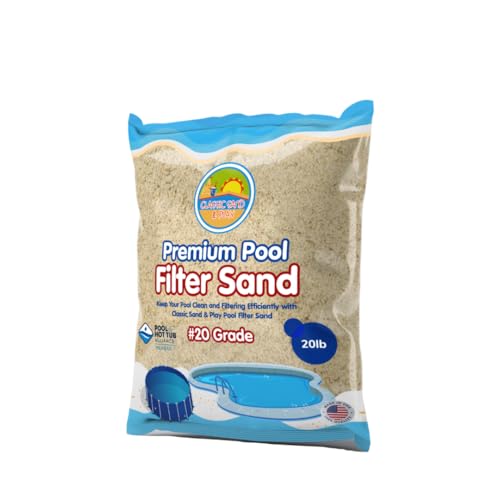
CLASSIC SAND & PLAY Pool Filter Sand, 20 lb (#20 Grade)
CLASSIC SAND & PLAY Swimming Pool Filter Sand for Above & Inground Pools, 20 lbs, Supports...
- Premium Pool Pump Sand – Designed to enhance the cleanliness and appearance of your inground pool, our filter sand is compatible with all pool sand filtration systems...
- Residential or Commercial Pools – Classic Sand & Play pool sand is compatible with all sand filters for above and inground pools in commercial or residential spaces...
- Clean, Efficient, and Clump Resistant – This silica filter sand provides smoother, cleaner operation and effectiveness with no harsh chemicals, chlorines, or additives...
Choose CLASSIC SAND & PLAY when you need pre-washed, kiln-dried #20 Grade silica for residential or small commercial sand filters. Measure one cubic foot per 10-inch filter. Pour sand into the filter tank carefully. Use a funnel, scraper, 50 lb sacks, wear gloves and safety goggles for dust control. Avoid overfilling, please. Fill to manufacturer depth, typically 18–24 inches from laterals, adjust for 10-inch or 12-inch laterals accordingly. Backwash after initial fill, then rinse. Expect improved debris capture, lower head pressure, extended media life, and fewer clogs based on 195 reviews averaging 4.7 stars. Troubleshoot cloudiness by checking pH, sand compaction, and multiport valve seal integrity.
Best For: Homeowners and small commercial operators needing pre-washed, #20 grade silica sand to refill or maintain residential and smaller sand filter systems.
Pros:
- Pre-washed and kiln-dried for consistent, impurity-free filtration that won’t affect pool pH.
- Compatible with all sand filtration systems and improves debris capture, reduces head pressure, and extends media/filter life.
- Positive user feedback (4.7★ from 195 reviews) indicating reliable performance and fewer clogs.
Cons:
- Sold in 20 lb bags, which may require multiple bags for full-size or commercial filter fills.
- Requires careful handling (use funnel, gloves, goggles) to control dust during pour.
- Improper fill depth or compaction can cause cloudiness or reduced performance, so correct measurement and backwash/rinse steps are necessary.
Factors to Consider When Choosing Pool Filter Sand
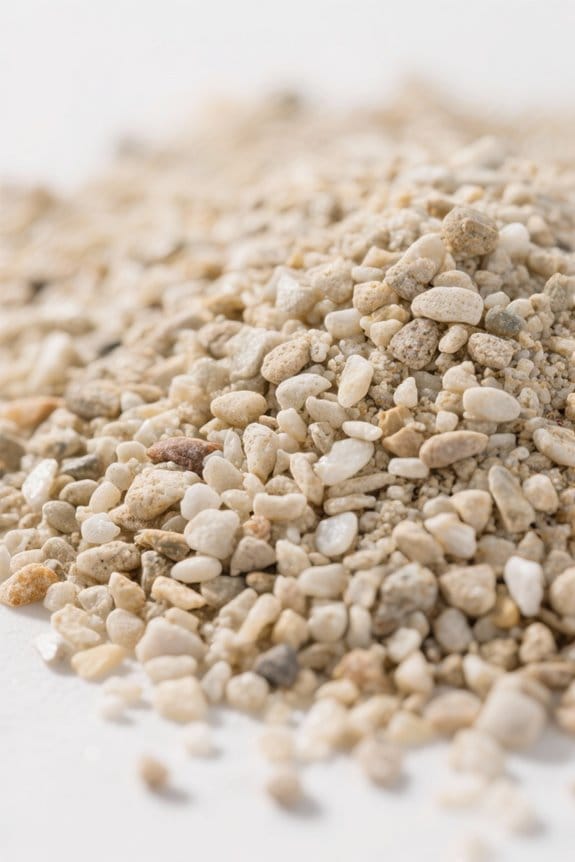
Check grain size and grade first, measure 0.45–0.55 mm (#20 grade) with calipers, confirm uniform granules. Inspect silica type and purity, require ≥95% silica in 20 lb bags, test for fines during backwash. Match sand to your filter model, replace every 5–7 years or on rising pressure.
Grain Size & Grade
Start by confirming you’re using #20 grade silica sand, 0.45–0.55 mm, for standard pool filters. Choose angular grains. Measure sieve sizes, verify uniform 0.45–0.55 mm distribution across samples with calipers or laboratory sieves. Avoid mixed grain sizes. Expect finer grains to filter smaller particulates but anticipate faster clogging, schedule backwashes accordingly. Maintain consistent grade. Inspect for impurities, high-purity material reduces biological growth and maintenance, replace sand if contaminants exceed acceptable limits. Prevent channeling. If flow drops markedly, test head pressure with a manometer, remove and regrade sand, inspect lateral assembly for blockage. Record measurements. Log grain size distribution, backwash frequency, pressure readings, and replacement dates in maintenance software or paper logs for trend analysis. Consult manufacturer specs. Adjust sand depth per model manual now.
Sand Type (Silica)
Many pool technicians specify #20 silica sand, 0.45–0.55 mm, for standard sand filters, using angular grains for ideal surface area and particle capture. Choose angular grains. Use silica sand as primary media, it’s standard for trapping dirt, debris, and organic matter efficiently. Follow sieve grading. Specify a 20-40 sieve range, confirm particle size distribution during purchase, and inspect bags for consistent grading procedures regularly. Monitor pressure gauge differentials. Backwash when pressure rises 6–8 psi above baseline, use the multiport valve, and note reduced flow or channeling issues. Expect silica sand to last two to five years depending on pump runtime, water chemistry, and maintenance; replace samples sooner if crushing, polishing, clogging, or loss of fines indicates reduced trapping efficiency and higher operating costs thereafter.
Purity and Cleaning
Because impurities shorten filter life, inspect delivered silica sand bags immediately, verify 20–40 sieve grading and 99%+ SiO2 purity. Open a bag on a flat surface, use a 5 lb scoop and sieve for sampling. Collect a 200 g sample, rinse with DI water, let settle, dry at 105°C for two hours. Check grains under a 10x magnifier; look for dark particles and fine dust. Run a sieve analysis per ASTM C136, record retained percentages on 20, 40, 60 sieves, anomalies. Avoid sand with additives, test pH by mixing 10 g with 100 mL distilled water, measure. If impurities exceed 0.5%, reject batch, contact supplier with photos, lot number, and COA attached for replacement. Backwash frequency will decrease with clean 99%+ SiO2 sand, monitor pressure gauge weekly for clogs.
Filter Compatibility
After you verify sand purity and grading, check overall filter compatibility against your system’s specifications and maintenance plan, confirm 20–40 sieve sizing and 99%+ SiO2 before loading. Consult your filter manual, match media depth and tank volume to manufacturer tolerances. Use universal-grade sands for residential and commercial systems when you want simplified cross-use and stocking. Inspect product labels for pre-cleaned, ready-to-use designation, avoid rinsing if manufacturer advises immediate fill. Verify chemical neutrality, ascertain the sand won’t alter pH or buffering capacity during circulation. Cross-reference sand with specific filter brands, note any warranty or installation restrictions. Prepare for troubleshooting: if pressure rises quickly, backwash longer, check for grain fines or incorrect sieve sizing, replace media as directed. Document media type and date for future service.
Longevity and Durability
When you select filter sand, aim for high-purity 20–40 mesh SiO2 with angular grains to maximize a 2–5 year lifespan and resist chemical corrosion. Choose angular grains, buy from reputable suppliers, check silica purity percentage on the bag. Inspect the filter pressure gauge monthly, and record PSI readings with a log sheet to spot clogs or media breakdown. Replace sand every 2–5 years, depending on pool load, chemical exposure, and media inspection findings. Use a flashlight and inspection rod to verify grain integrity, look for cementing or fines accumulation, and flag rapid degradation. Test water chemistry weekly with a DPD test kit, adjust stabilizer and chlorine to avoid aggressive conditions. Keep spare media and a compatible multiport valve gasket on hand for emergencies periodically.
Backwash and Flow
Procedure: manage backwash and flow by monitoring the multiport valve position, recording starting PSI, measuring pump flow, and timing each cycle precisely. Inspect sand size, use 0.45–0.55 mm angular silica for ideal trapping, replace if rounded. Backwash at manufacturer flow rates, typically 10–12 gpm per square foot, monitor PSI rise and turbid discharge. Stop immediately if sand elutes, check lateral assembly, note air in pump and vibration. Measure pump flow with a calibrated flow meter, record gallons per minute, adjust valve positions accordingly precisely. Expect smoother backwash with high‑purity silica, lower clumping reduces maintenance frequency seasonally and costs. If flow drops despite backwashing, probe for channeling, replace upper 2–3 inches of sand, regrade bed carefully. Document each cycle, log PSI, flow, elapsed time accurately.
Frequently Asked Questions
Can I Reuse Pool Filter Sand in Landscaping or Garden Beds?
Absolutely, you’d have more sand than a desert—yes, you can reuse it. Remove sand with a shovel, dump into a mesh sieve, rinse with a hose. Test for oil or chlorine, use a pH meter, discard if contamination remains. Spread 1-2 inches in paths, mix one part sand to three parts topsoil for beds. Store dry in sealed bags, label pool source, monitor plants weekly, flush beds if salts accumulate.
Is Filter Sand Safe for Saltwater or Mineral Pools?
Yes, you’re able to use filter sand in saltwater. Confirm sand is 0.45 to 0.55 mm, and choose 20 to 40 mesh silica. Rinse thoroughly before loading the filter. Set media depth to 35 cm, install underdrain laterals, torque multiport valve to spec, and monitor. Expect slightly faster attrition with salt systems. Replace sand every five years or when head loss exceeds 0.3 bar, backwash at 40 L/min per m2.
How Should I Safely Dispose of Contaminated or Chemically-Treated Filter Sand?
Like a white flag, treat contaminated filter sand as hazardous waste, don’t toss it. Contact local hazardous waste facility. Bag samples in 5‑gallon HDPE pails with tight lids, label chemical and concentration. Use NIOSH respirator, nitrile gloves. If filter pH is high, neutralize with 10% citric acid, test with pH meter. Do not dump to drains. If refused, hire EPA‑registered hazmat hauler, obtain manifest immediately.
Are There Respiratory or Long-Term Health Risks From Handling Silica Filter Sand?
Recognize risk, don’t inhale respirable crystalline silica, it causes silicosis and raises your lung cancer risk. Wear an N95 or P100, fit-test it, use HEPA vacuuming and local exhaust, wet sand to suppress dust. Limit tasks to two hours, rotate workers to reduce cumulative exposure. Monitor air with a NIOSH sampler or portable analyzer, act if levels exceed 0.05 mg/m3 eight-hour TWA. Get spirometry and chest imaging for repeated exposure.
Can Children or Pets Play in Leftover Pool Filter Sand Without Harm?
Like dust in the wind, don’t let kids or pets play in leftover silica sand. Contain area with 6-foot perimeter, wear N95 respirator, gloves, safety goggles, and use a broom or shop vacuum with HEPA filter. Remove visible sand using shovel, 5-gal bucket, then double-bag in heavy-duty plastic. Test residual dust with a damp cloth, if cloth shows residue, rinse area with water, collect runoff, repeat. Dispose at hazardous facility.