As an Amazon Associate, we earn from qualifying purchases. Some links on this site are affiliate links at no extra cost to you. Our recommendations are based on thorough research and editorial judgment.

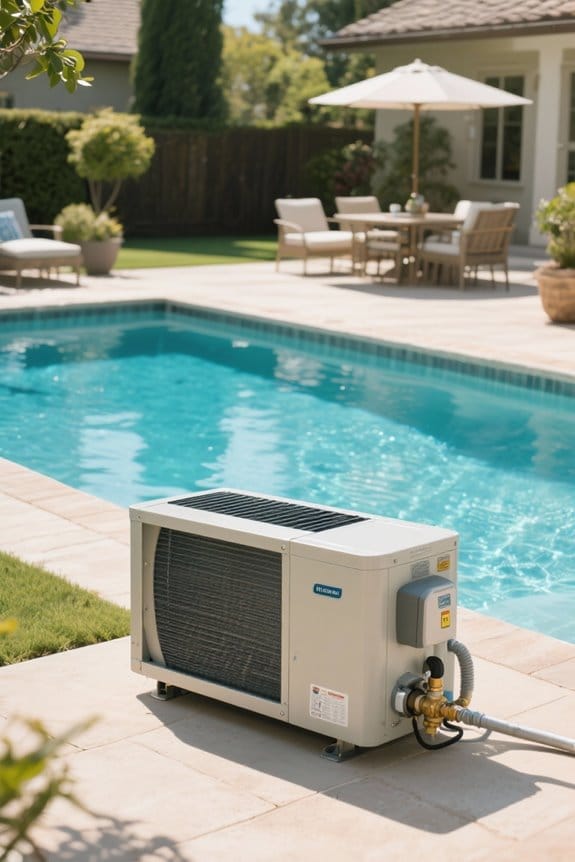
The 10 Best Gas Pool Heaters of 2026 — Fast Heating and Top Efficiency

Choose a heater sized 125,000–400,000 BTU, match gas line diameter to output, inspect regulators and 1‑1/2″ to 2‑1/2″ plumbing. Install models like Hayward W3H135FDN, Hayward W3H150FDN, Raypak PR156AENC, Raypak P‑R266A‑EN‑C, or Pentair MasterTemp 125, level the pad, orient vents, and wire to 120V service. Verify cupro‑nickel or copper heat exchanger, test ignition spark and flame pattern, troubleshoot low pressure or pilot faults, you’ll continue for model setup steps for efficiency tuning, diagnostics, and maintenance guidance.
Key Takeaways
- Prioritize BTU capacity matching pool volume; 100–150k BTU for small/medium pools, 250–400k BTU for large or combined pool-and-spa systems.
- Choose low-NOx, high-efficiency models (Hayward H-Series, Pentair MasterTemp) for faster heat-up and lower operating costs.
- Cupro-nickel or polymer header heat exchangers resist corrosion in salt or mineral-rich water for longer lifespan.
- Verify proper gas line sizing, venting, and level pad installation; professional installation prevents performance and safety issues.
- Factor annual maintenance needs—burner cleaning, heat-exchanger flushing, and diagnostics—to preserve efficiency and warranty coverage.
Raypak 014784 PR156AENC 150000 BTU Natural Gas Heater
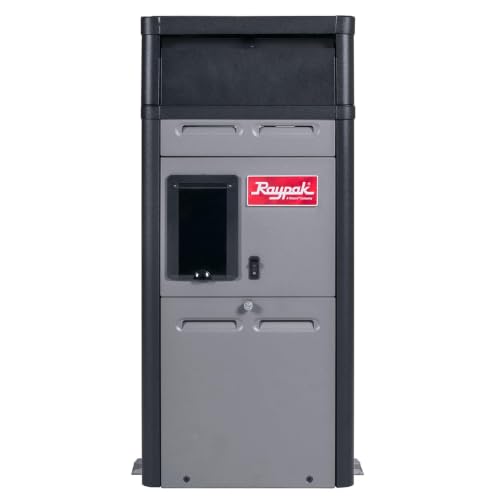
Raypak 014784 PR156AENC 150000 BTU Natural Gas Heater
- Part Number: 014784 | Model Number: P-R156A-EN-C
- Allows you to extend your swim season, open your pool earlier and close it later.
- Perfect choice for above-ground pools and spas
You may be interested


Choose the Raypak 014784 PR156AENC when you need a robust, 150,000 BTU natural gas heater for above-ground pools and spas. Mount the unit on a level floor mount, leaving clearance per manual. Check voltage selection, set 120V or 240V accordingly, verify elevation 0-4999ft. Inspect corrosion-resistant polymer headers, measure 27.5 by 27 by 12 inches, confirm 100 pound support. Connect gas line and controls, test for leaks and correct manifold pressure. Prime heater, initiate ignition sequence, monitor flame pattern and fault codes. Plan seasonal service, replace serviceable components proactively, extend swim season confidently. Keep manual and warranty documents accessible always.
Best For: Homeowners with above‑ground pools or spas who need a durable, high‑output (150,000 BTU) natural gas heater to extend the swimming season.
Pros:
- High 150,000 BTU output provides fast, reliable heating for above‑ground pools and spas.
- Corrosion‑resistant polymer headers and serviceable components improve durability and maintainability.
- Floor‑mount design with standard electrical options (120V or 240V) and straightforward seasonal servicing.
Cons:
- Relatively heavy (100 lbs) and bulky (27.5 x 27 x 12 in.), may require careful placement and support.
- Requires proper gas connection, voltage selection, leak testing, and possible professional installation.
- Moderate customer rating (3.5/5) and model first available in 2015 — may lack newest features.
Hayward W3H135FDN H-Series Pool/Spa Heater, 135k BTU, Natural Gas Model

Hayward W3H135FDN H-Series Pool Water Heater/Spa Heater, 135k BTU, Natural Gas Model
- Powerful 135,000 BTU Heating for Faster Warm-Ups: Enjoy warmer, more comfortable water quickly thanks to industry-leading hydraulic performance and fast speed-to-heat...
- Durable Cupro-Nickel Heat Exchanger for Long-Term Reliability: This above ground pool heater is built with a robust cupro-nickel heat exchanger designed to resist...
- Energy-Efficient & Low NOx for Clean, Eco-Friendly Operation: This gas heater features low-emission combustion technology that meets clean air quality standards, helping...
Inspect your pool system for saltwater or aggressive chemistry, and prioritize the W3H135FDN for corrosion resistance and longevity. Measure inlet and outlet piping, confirm 2-inch PVC or copper connections. Verify hydraulic specifications and flow rates, expect faster speed-to-heat with the 135,000 BTU design specs verified. Install dedicated gas line per code, size fittings and check pressure. Use the intuitive electronic panel to set temperature, run diagnostics, monitor ignition cycles and fault codes. Expect low NOx emissions, confirm local air compliance requirements. Rely on cupro nickel heat exchanger for saline resistance, inspect for deposits, flush and troubleshoot with pressure gauges.
Best For: Homeowners with saltwater or aggressive-chemistry pools who need a durable, high-capacity (135,000 BTU) natural gas heater that delivers fast warm-up and corrosion resistance.
Pros:
- Durable cupro-nickel heat exchanger offers superior saline and corrosive-chemistry resistance for longer life.
- Industry-leading hydraulic performance and 135k BTU output provide faster speed-to-heat.
- Intuitive electronic control panel simplifies temperature setting, diagnostics, and fault monitoring; low NOx emissions meet clean-air standards.
Cons:
- Higher upfront installation cost likely due to required dedicated gas line sizing and professional hookup.
- Still requires regular inspection/maintenance (flush, check for deposits) in aggressive or saltwater systems.
- 135k BTU capacity may be overkill for smaller pools, potentially reducing efficiency if oversized.
Raypak 014779 PR106AENC 105000 BTU Natural Gas Pool Heater
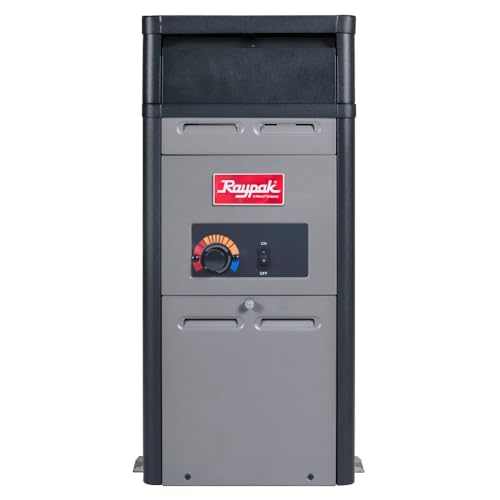
Raypak PR106AENC 105,000 BTU Natural Gas Pool Heater for Above Ground Pool and Spa Elevations...
- Polymer headers prevent rust stains on your pool or spa surface
- All-Copper-Fin-Tube Heat Exchanger; Made from a single piece of extruded copper
- Delivers uninterrupted heating performance regardless of falling leaves, wind, airborne debris, rain, downdrafts, updrafts, sleet, snow, etc
Assess your site and pool size, note that the Raypak 014779 PR106AENC delivers 105,000 BTU of natural gas heat for medium to large pools. Place unit on level pad, leave 18 inches clearance. Connect 3/4 inch gas with shutoff and 1 inch union, pressure test to 10 inches WC manifold outlet. Inspect polymer headers, prevent rust staining on pool surfaces. Verify All-Copper-Fin-Tube single-piece heat exchanger, clear fins, maintain 0.25 inch clearance from piping connections, measure with calipers periodically. Service annually, check ignition, flame pattern, BTU output, clean exchanger, monitor for leaks, troubleshoot inconsistent heating immediately.
Best For: Homeowners with medium to large outdoor pools who want a reliable, high-output natural gas heater (105,000 BTU) that resists rust staining and performs in adverse weather.
Pros:
- Robust 105,000 BTU output and All-Copper-Fin-Tube single-piece heat exchanger for dependable, efficient heating.
- Polymer headers minimize rust stains on pool/spa surfaces and reduce corrosion concerns.
- No fan required and designed to operate reliably in wind, rain, sleet, snow, and other challenging conditions.
Cons:
- Requires proper installation: level pad, 18″ clearance, 3/4″ gas connection with shutoff/1″ union and pressure testing—can add installation complexity/cost.
- Needs annual service (ignition, flame pattern, BTU check, exchanger cleaning) and periodic inspection for leaks or inconsistent heating.
- Natural gas operation may be overkill for small pools and incurs ongoing fuel costs and utility dependency.
Raypak 266,000 BTU Digital Electronic Ignition Natural Gas Pool Heater

Raypak 266,000 BTU Digital Electronic Ignition Natural Gas Pool Heater
- Built to withstand various weather conditions, perfect solution for environments requiring efficiency, convenience and versatility.
- Intermittent spark ignition pilot safety controls. Pilot only comes on when there is a call for heat.
- Space-age material means the heater won't retain residual heat after it is turned off, allowing it to be installed without the use of costly metal heat sinks.
Identify this Raypak P-R266A-EN-C as your pick when you’re heating large, high-volume pools requiring 266,000 BTU output. Inspect the unit. Check model number P-R266A-EN-C and part 009217, confirm natural gas hookup, verify clearance and venting per manual. Install on a level pad. Use the intermittent spark ignition system, test pilot activation under load, monitor digital controls for error codes and flame signal. Expect fast heat. Leverage space-age material construction to avoid residual heat buildup, omit bulky metal heat sinks, reduce maintenance in harsh weather. Use for pools and spas. Service annually, troubleshoot ignition faults, replace controls if persistent promptly.
Best For: Homeowners or facility operators heating large, high‑volume pools or spas who need a 266,000 BTU, durable, digital-ignition natural gas heater.
Pros:
- High 266,000 BTU output ideal for fast heating of large pools and spas.
- Digital electronic intermittent spark ignition improves efficiency by activating only when heat is needed.
- Weather‑resistant, space‑age materials reduce residual heat buildup and lower maintenance (no bulky metal heat sinks).
Cons:
- Large fuel demand can mean higher natural gas costs compared with smaller units.
- Requires proper clearance, venting, and level pad installation per manual (may complicate placement).
- Needs annual service and can require control or ignition component replacement if persistent faults occur.
Master Temp Gas Pool Heater, 250,000 BTU, Model (Natural)

Master Temp Gas Pool Heater, 250,000 BTU, Model (Natural)
- HEATING CAPACITY: Powerful 250,000 BTU natural gas heater designed for efficient pool and spa heating
- COMPACT DESIGN: Space-saving unit with rotating digital display for flexible installation options and easy monitoring
- PERFORMANCE FEATURES: Pre-mixed gas combustion technology ensures consistent heating and optimal fuel efficiency
Choose the Master Temp 250,000 BTU natural gas heater when you need rapid heating for large residential or light commercial pools. Mount it compactly. Place the unit within 24 inches of a service wall, level it, and run 1.5 inch gas piping. Use the rotating digital display. Set temperature to 80°F with digital controls, watch diagnostic lights for ignition faults, consult manual code E01 for sensors. Expect efficient combustion. Service the copper heat exchanger annually, flush with 1.5 gpm, inspect for corrosion, replace gaskets when leaks appear. Proceed with installation checklist. Keep venting clear, use 3 inch PVC vent.
Best For: Homeowners or light-commercial operators who need a compact, high-capacity natural gas heater for rapid heating of large residential or light commercial pools and spas.
Pros:
- Efficient 250,000 BTU pre-mixed combustion for fast, consistent pool/spa heating.
- Compact, durable construction with a copper heat exchanger and rust-resistant housing.
- User-friendly rotating digital display and controls with diagnostic indicator lights.
Cons:
- Requires substantial installation clearances, specific venting (3″ PVC) and 1.5″ gas piping, which may increase installation complexity and cost.
- Annual maintenance (flushing at 1.5 gpm, corrosion inspection, gasket replacement) needed to preserve performance.
- High-capacity unit may be overkill for small pools and less fuel-efficient at very low load conditions.
Hayward Universal H-Series 400,000 BTU Natural Gas Pool and Spa Heater for In-Ground Pools and Spas

Hayward Pool Heater for Inground Pools Universal H-Series 400,000 BTU (Natural Gas Pool Heater) Pool...
- EASY TO USE: Intuitive inground pool heater control panel enables easy operation and maintenance. The digital LED display helps maintain pool water temperature while...
- MULTIPLE COVERAGE OPTIONS FOR POOLS AND SPAS: This gas pool heater and pool and spa heater suits in-ground pools and spas up to 1200 sq ft with a natural gas connection...
- ENERGY SAVING AND BUILT TO LAST: Efficiently designed pool heater for inground pools helps deliver consistent hot water for swimming pools, reduce pump run time for...
Consider the Hayward W3H400FDN if you manage large in-ground pools or combined pool-and-spa systems needing rapid recovery, it delivers 400,000 BTU output and suits pools over 30,000 gallons. Inspect mounting location, level the pad, align gas line and 2-inch PVC return piping precisely. Install per manual, connect natural gas with correct regulator sizing, test pressure and leak-free fittings before startup. Use front-panel-only access, open the cabinet, remove fasteners, and access controls quickly. Verify cupro nickel heat exchanger condition during maintenance, flush scale buildup, replace anode if corrosion appears. Confirm low-NOx compliance, record serials, and test ignition controls, document results.
Best For: Managers or owners of large in-ground pools or combined pool-and-spa systems (over ~30,000 gallons) who need fast recovery and reliable commercial-grade heating.
Pros:
- 400,000 BTU output for rapid recovery on large pools and pool-spa combinations.
- Durable cupro-nickel heat exchanger resists corrosion from unbalanced water chemistry, extending lifespan.
- Energy-conscious hydraulic design and low-NOx emissions reduce pump runtime and meet air-quality requirements; front-panel access simplifies servicing.
Cons:
- Overkill for smaller pools (under ~30,000 gallons) and not cost-effective for residential-sized systems.
- Requires precise installation: level pad, 2″ PVC return, correct gas regulator sizing and pressure testing—can add installation complexity/cost.
- Routine maintenance (flushing scale, monitoring heat exchanger/anode) needed to prevent premature issues.
Hayward Universal H-Series 250,000 BTU Natural Gas Pool and Spa Heater (W3H250FDN)

Hayward Pool Heater for Inground Pools Universal H-Series 250,000 BTU (Natural Gas Pool Heater) Pool...
- EASY TO USE: Intuitive inground pool heater control panel enables easy operation and maintenance. The digital LED display helps maintain pool water temperature while...
- MULTIPLE COVERAGE OPTIONS FOR POOLS AND SPAS: This gas pool heater and pool and spa heater suits in-ground pools and spas up to 750 sq ft with a natural gas connection...
- ENERGY SAVING AND BUILT TO LAST: Efficiently designed pool heater for inground pools helps deliver consistent hot water for swimming pools, reduce pump run time for...
Fit the Hayward W3H250FDN when you need 250,000 BTU output for large in-ground pools or combined pool‑spa systems, it’s built for high‑capacity heating and continuous spa override. Install on level concrete pad, maintain 2-inch clearance to combustibles. Connect 2-1/2 inch PVC return and 2-1/2 inch suction lines, verify flow rates and prime pump, use Hayward control pad to set temperature. Service the cupro nickel heat exchanger regularly, inspect for corrosion or scaling. Monitor hydraulic performance metrics, reduce circulation pump run time to save energy, troubleshoot low output by checking gas pressure, ignition and venting. Comply with low-NOx standards, document.
Best For: Owners of large in-ground pools or pool‑spa combinations who need high‑capacity, efficient natural‑gas heating with low‑NOx emissions.
Pros:
- Delivers 250,000 BTU for fast, reliable heating and continuous spa override for combined systems.
- Durable cupro‑nickel heat exchanger resists corrosion from unbalanced water chemistry, extending life.
- Industry‑leading hydraulic design reduces circulation pump run time for energy savings and lower operating cost.
Cons:
- Requires proper installation: level concrete pad, 2″ clearance to combustibles, and adequate gas supply.
- Needs 2‑1/2″ return and suction plumbing, verified flow rates and pump priming—more complex plumbing/setup.
- Regular maintenance and inspection of the heat exchanger and hydraulic system are necessary to prevent scaling/corrosion.
Pentair MasterTemp 125 Propane Pool and Spa Gas Heater (EC462025)

Pentair EC462025 MasterTemp 125 125,000 BTU Compact Energy Efficient Swimming Pool and Spa Propane...
- High-performance, affordable heater with premium features
- 82% energy efficiency is highest in class
- 1-1/2 in. Plumbing connection -- ideal for smaller bodies of water, including aboveground pools, spas and inground pools up to 15,000 gallons
Install the Pentair MasterTemp 125 (EC462025) on small pools and spas, mount it near the pump for shortest run. Position heater within 6 feet of pump, align 1-1/2 inch plumbing, secure. Connect propane supply, check regulator pressure, purge air, then light using the digital display controller prompts. Expect rapid heating for pools up to 15,000 gallons, note 82% efficiency overall. Rely on pre-mixed combustion technology for consistent rise, adjust temperature via controller, monitor diagnostics. If ignition fails, verify gas valve, pilot sensor, and displayed error codes. Schedule annual inspection, clean chamber, check venting, replace seals for peak performance.
Best For: homeowners with small pools or spas (up to 15,000 gallons) who want a compact, affordable propane heater with fast warm-up and simple controls.
Pros:
- Compact 1-1/2″ plumbing design ideal for small/aboveground pools and spas.
- High 82% energy efficiency and pre-mixed combustion for rapid, consistent heating.
- Easy-to-use digital display/controller and generally affordable price point.
Cons:
- Requires a propane supply, regulator checks, and proper venting—adds installation complexity.
- Must be mounted close to the pump (within ~6 feet) and may not suit larger systems.
- Needs annual inspection/maintenance and can require troubleshooting if ignition or sensors fail.
Raypak 105,000 BTU Swimming Pool and Spa Heater – Propane
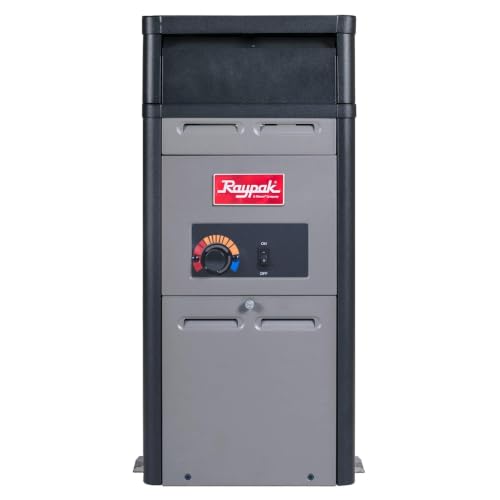
Raypak 105k BTU Above Ground Pool & Spa Heater, Propane Gas, Polymer Header, Copper Tubing, Analog...
- 105k BTU Above Ground Pool & Spa Heater, Propane Gas, Polymer Header, Copper Tubing, Analog Control, 0-1999 ft. elevation
Choose the Raypak 105,000 BTU propane heater when you need powerful, compact heating for above-ground pools, small in-ground pools, or spas. Mount the unit 27.5 inches high in your equipment pad, align flue and vent, secure with anchor bolts. Connect 1/2 NPT gas line at 4 5/8 inches off ground level, use proper fittings, check for leaks with soap solution. Plug the 120v 3-prong cord, or convert to 220v if needed, follow electrical codes. Set the analog thermostat dial precisely, wait for temperature stabilization, monitor for ignition failures. Troubleshoot ignition by checking gas pressure, thermostats, and wiring connections daily.
Best For: Homeowners with above-ground pools, small in-ground pools, or spas who need a compact, high-output propane heater.
Pros:
- 105,000 BTU output delivers fast heating in a compact 27.5″ × 12″ × 24″ package.
- Designed for easy installation on equipment pads with simple 120V 3-prong power (convertible to 220V).
- Simple analog thermostat for straightforward temperature control.
Cons:
- Requires propane supply and proper 1/2″ NPT gas connection and leak-checking (plumbing expertise recommended).
- Not ideal for large in-ground pools — sized for above-ground, small in-ground, and spas.
- Must be correctly mounted, vented, and may need electrical conversion or professional servicing for ignition troubleshooting.
Hayward Universal H-Series 150,000 BTU Natural Gas Pool & Spa Heater (W3H150FDN)
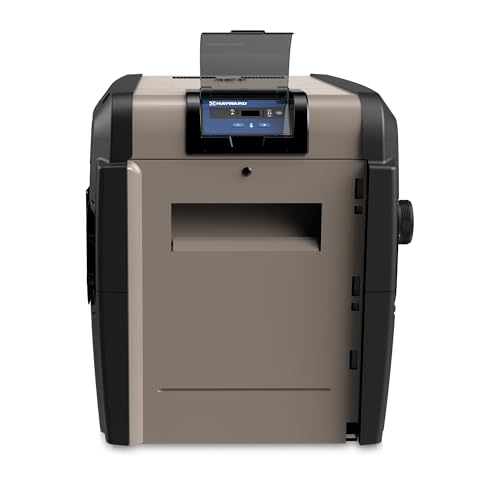
Hayward Pool Heater for Inground Pools Universal H-Series 150,000 BTU (Natural Gas Pool Heater) Pool...
- EASY TO USE: Intuitive inground pool heater control panel enables easy operation and maintenance. The digital LED display helps maintain pool water temperature while...
- MULTIPLE COVERAGE OPTIONS FOR POOLS AND SPAS: This gas pool heater and pool and spa heater suits in-ground pools and spas up to 450 sq ft with a natural gas connection...
- ENERGY SAVING AND BUILT TO LAST: Efficiently designed pool heater for inground pools helps deliver consistent hot water for swimming pools, reduce pump run time for...
Assess your pool system, prioritize corrosion resistance for mineral-rich or unbalanced water, the W3H150FDN fits those needs. Install on in-ground pools using 150,000 BTU natural gas. Connect to properly sized 1½-inch PVC return and 2-inch gas supply, confirm pressure and flow meet local codes. Verify venting and low-NOx compliance for air-quality. Service via front-panel-only access and control pad, inspect burner, pilot, and cupro-nickel exchanger for corrosion. Expect reduced circulation pump run time, save on energy. Troubleshoot ignition faults: check gas valve voltage, thermocouple continuity, and control-pad error codes, replace failed components. Keep water chemistry balanced to protect the exchanger.
Best For: Homeowners with in-ground pools or spas in mineral-rich or low-NOx areas who want a durable, energy-efficient 150,000 BTU natural gas heater with strong corrosion resistance.
Pros:
- Durable cupro-nickel heat exchanger resists corrosion and premature failure from unbalanced or mineral-rich water.
- Energy-saving hydraulic design reduces circulation pump run time and operating costs.
- Front-panel-only access and intuitive control pad simplify operation, service, and maintenance.
Cons:
- Requires proper water chemistry maintenance to protect the exchanger and avoid premature damage.
- Must be installed with correctly sized 1½” PVC return and 2″ gas supply and meet local pressure/venting codes, adding installation complexity.
- Natural gas, in-ground only—unsuitable for above-ground pools or users without a natural gas connection.
Factors to Consider When Choosing a Gas Pool Heater
Check heater size and BTU output, match pool volume to 150,000 BTU, plan for 20–30 BTU per gallon.
Compare fuel costs, natural gas $1.20–$2.00/therm versus propane, confirm 3/4″ gas line, choose stainless or cupro-nickel exchangers.
Inspect efficiency ratings (80–95%), estimate operating cost, check for pilot failures or exchanger leaks, schedule maintenance every 6–12 months.
Heater Size & BTU
Although you’ll factor pool volume and climate first, size the heater to match your heating goals precisely, using BTU ratings as the primary metric. Calculate your pool’s gallonage: measure length, width, depth. Select a heater that supplies roughly 30,000 to 60,000 BTUs per 10,000 gallons for expected heating speed and efficiency. Consider a 150,000 BTU unit for average pools, or 250,000+ BTU for larger in-ground pools. Factor climate and swim season, increase BTU in colder regions to maintain setpoint and recovery rate. Avoid oversizing, monitor short cycling, match pump flow and heat exchanger capacity. If temperatures lag, troubleshoot by checking flow rate, burner operation, and venting, then recalibrate BTU selection. Install per manufacturer specs, verify clearances, test recovery time, document performance for seasonal adjustments.
Fuel Type & Cost
One, decide whether natural gas or propane fits your site, budget, and storage constraints. Check local utility rates, note $/therm or $/gal values, compare annual BTU consumption estimates. Prefer natural gas if you have a gas line, 199,000–399,000 BTU heaters run cheaper per cycle. Choose propane if off-grid, install ASME-rated 500-gallon tanks or 120-lb cylinder arrays, plan delivery logistics. Calculate cost using heater input BTU, hours per week, and local fuel price, include ignition cycles and standby losses. Inspect line sizing, use 1¼–2″ steel or CSST piping for high-BTU runs, verify regulator specifications. Troubleshoot low flame by checking pressure, change regulator, inspect orifices and solenoid valves for blockage. Record monthly usage to reassess fuel choice annually. Consult technician if pressure or delivery issues persist.
Heat Exchanger Material
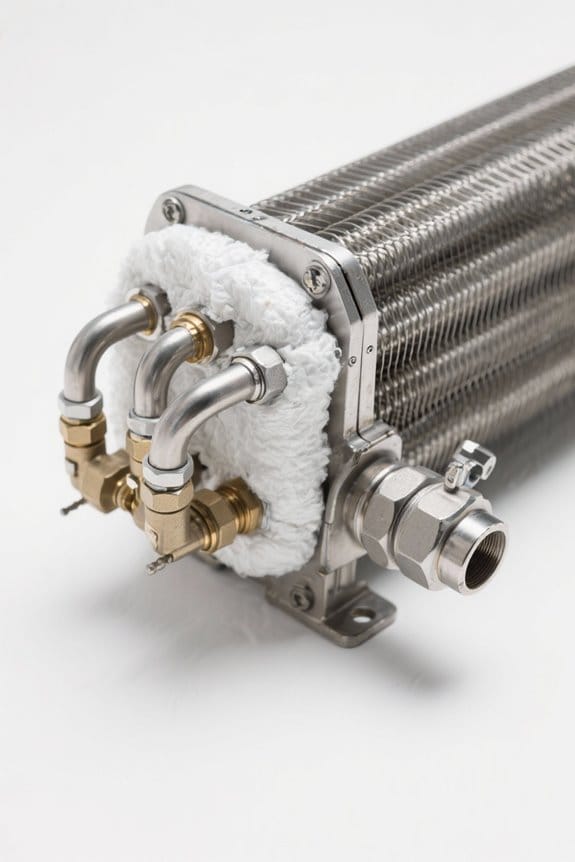
Inspection starts with identifying whether your heater uses cupro-nickel, all-copper, or polymer-header construction. Check model plate and record serial number. Weigh sample documentation, measure inlet/outlet tube diameters in millimeters using calipers, note 1.5–2.0-inch connections. Inspect for corrosion, pitting, or polymer delamination. Prefer cupro-nickel for salt or harsh chemistries, it resists electrolytic attack, expect decades of service. Choose all-copper for peak thermal transfer, monitor sacrificial anodes and schedule annual acid testing. Select polymer-header units if rust stains concern you, verify UV-rated polymers, confirm manufacturer pressure limits, and note maximum operating pressure. Test in wind and rain, run a 30-minute heat cycle while logging inlet/outlet thermocouple readings. Troubleshoot flow issues, check pump PSI, install 50-mesh strainer, replace corroded tubes promptly to avoid heat-transfer loss. Document material choice.
Efficiency & Operating Cost
Record heater BTU rating and model number immediately. Record fuel type, combustion system details, and hydraulic layout to compare real-world efficiency across competing models. Compare energy efficiency numbers, prioritize pre-mixed combustion or optimized hydraulic designs for reduced gas consumption per hour. Track local gas prices, use $/therm or $/MMBtu metrics. Estimate seasonal load, calculate hours per day at target temperature, then multiply by BTU input and fuel cost. Look for energy-efficient components, like low-NOx burners and stainless heat exchangers. Expect operating cost variance, model A may heat faster, while model B uses less gas over long seasons. Monitor outdoor temperature, colder nights increase required BTUs and run time. Include projected maintenance-free service life when calculating annual cost, efficient parts extend lifespan and reduce replacements.
Installation & Maintenance
When preparing for installation, measure clearances and gas run length, verify inlet pressure, and confirm electrical compatibility with your panel. Mount on a level pad. Select models labeled for above-ground or compact in-ground use, note flue orientation, and confirm 120V versus 220V requirements. Bring a manometer and pipe wrenches. Verify inlet pressure with a manometer at the regulator, expect 10–12 inches WC for natural gas or 11–13 for propane. Check electrical cord configuration. Prioritize models with removable panels, corrosion-resistant stainless steel heat exchangers, and user-friendly analog or digital thermostats for easy maintenance. Schedule annual inspections and clean burners. Replace anodes, inspect gaskets, and flush the exchanger annually, record runtime hours, and note performance drift. Call a certified technician if irregular flame patterns appear immediately.
Frequently Asked Questions
What Are Typical Installation and Labor Costs for Gas Pool Heaters?
Expect installation and labor to range $1,000–$3,500.
Measure run length, fuel type, electrical upgrades, then budget for gas line, permits.
Hire a certified HVAC or pool pro today.
Allocate 4–8 hours for a straight swap, longer for new pad or complex venting.
Expect you’ll pay extra for pad, pressure test, permits.
Order 100 lb regulator, 3/4-inch CSST or 1-inch iron, and PVC.
Troubleshoot pilot, thermostat, or vent blockage issues safely.
Do Gas Pool Heaters Require Special Ventilation or Clearance Around the Unit?
Yes, provide ventilation and clearance now. Mount heater with 24-inch front clearance, 12-inch sides, 36-inch top, install Type B venting and connector properly sealed. Don’t block combustion air, check louvers. Inspect venting for backpressure, if pilot outages or soot occur, check gas pressure and draft with manometer. Maintain 3-foot clearance from combustibles always. Install CO detector near equipment, test, if alarm triggers, shut gas off, call licensed HVAC technician promptly.
How Loud Are Gas Pool Heaters When Operating, in Decibels or Typical Terms?
Expect 60–85 dB at 1 meter during startup, which is noticeably loud. Stand 3–6 feet away, use a calibrated sound level meter like Extech 407730, log peaks and steady-state readings for complaints and baseline data. Expect steady operation around 50–65 dB at 3 meters, it’s moderate. Inspect burner, pilot assembly, and combustion blower, tighten panels, replace bearings if intermittent spikes exceed 85 dB during diagnostics. Add acoustic blankets or relocate.
What Routine Maintenance Tasks Are Needed and How Frequently Should They Be Performed?
Inspect the burner, heat exchanger monthly, check soot and corrosion.
Clean the combustion chamber and vent every 3 months, use a wet/dry vac.
Test ignition and safety switches quarterly.
Replace sacrificial parts yearly, check gas pressure with a manometer, adjust to spec (5–11 inWC).
Inspect venting and PVC lines monthly, don’t ignore cracks.
Service control board, thermistor and flow switch annually, troubleshoot error codes using the manual, replace faulty relays.
Can Gas Pool Heaters Be Converted Between Natural Gas and Propane Fuels?
Yes, confirm model compatibility, it’s required before starting conversion now. Turn off gas supply at the meter, shut electrical power at breaker, verify zero pressure with manometer reading. Install manufacturer’s kit, swap orifice size to 0.75mm for propane. Adjust regulator from 7 inches WC to 11 inches WC, replace pressure sensing valve if unstable during startup. Test flame with combustion analyzer, correct CO over 50 ppm, call tech if unsure.