As an Amazon Associate, we earn from qualifying purchases. Some links on this site are affiliate links at no extra cost to you. Our recommendations are based on thorough research and editorial judgment.

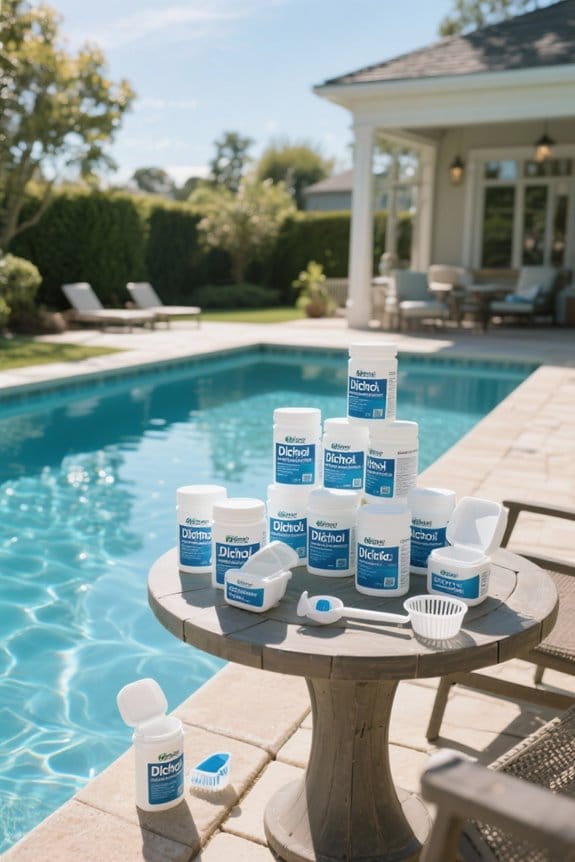
10 Best Dichlor Pool Shocks of 2026 — Fast-Acting, Stabilized Chlorine for Crystal-Clear Water

Choose stabilized dichlor packets like Leslie’s Chlor Brite or Doheny’s Di‑Chlor, 1 lb. Dose 1 lb per 12,000 gal maintenance, 1 lb per 10,000 gal for shock. Pre‑dissolve in a plastic bucket, wear gloves and eye protection. Run filter 2–4 hours, test with DPD kit, confirm free chlorine 3–5 ppm. If cloudiness or algae persists, reapply shock, check pH and calcium hardness, adjust accordingly. Continue for more comparative charts, dosing tables, and troubleshooting guidance ahead.
Key Takeaways
- Prefer stabilized dichlor shocks for regular maintenance—they dissolve quickly and include UV stabilizers to protect chlorine from sunlight.
- Top dichlor options include Leslie’s Chlor Brite and Doheny’s Di‑Chlor Shock/Granular for fast, stabilized chlorination without calcium buildup.
- Choose calcium-free dichlor for saltwater or liquid-chlorine pools to avoid hardness and residue issues.
- Follow manufacturer dosages—typical dichlor dosing is about 1 lb per 12,000 gallons for weekly maintenance.
- Always test water, wear PPE, store products cool and dry, and wait until chlorine levels are safe before swimming.
HTH Pool Care Shock Advanced Calcium Hypochlorite (6 Pack)
Sale


HTH 52036R Pool Care Shock Advanced, Swimming Pool Chemical - Cal Hypo Formula, Prevents Bacteria...
- BENEFITS: Stay all clear for cannonballs; This fast-dissolving, convenient 4-in-1 formula kills bacteria and algae, reduces chlorine odor and irritation, and quickly...
- FEATURES: Multi-functional shock treatment for weekly use to solve 90% of pool water problems within 24 hours and restore crystal clarity
- VISIBLY BRILLIANT SPARKLE: This Cal Hypo based formula sanitizes without adding cyanuric acid (CYA) to prevent overstabilization or chlorine lock

You may be interested
Choose this Cal-Hypo shock if you manage a busy public or home pool requiring weekly, fast-acting sanitization. Buy HTH 6-pack, 1 lb units, 96 oz total, fast-dissolving Cal-Hypo pucks. Test with HTH 6-Way Test Strips twice weekly, measure free chlorine, pH, cyanuric acid absence, alkalinity. Dissolve recommended dose in a bucket, pour around deep end with pump running, avoid undissolved granules on vinyl. Expect clarity within 24 hours, solves about 90% of problems; compatible with salt systems, prevents chlorine lock by excluding CYA. If cloudiness persists, retest, raise free chlorine 3–5 ppm, shock again at night, run filter continuously.
Best For: Ideal for busy home or public pools needing a weekly, fast-acting shock treatment that clears water quickly without adding cyanuric acid.
Pros:
- Fast-dissolving 4-in-1 formula that kills bacteria, eliminates algae, reduces chlorine odor, and restores clarity (works on ~90% of problems within 24 hours).
- Does not add cyanuric acid (prevents overstabilization/chlorine lock) and is compatible with vinyl-lined and saltwater pools.
- Convenient 6-pack of 1 lb units (96 oz total) for regular weekly maintenance.
Cons:
- Must be dissolved in a bucket and poured into the deep end with the pump running; undissolved granules can damage vinyl or cause cloudiness.
- Because it’s unstabilized (no CYA), pools in intense sun may require more frequent dosing to maintain free chlorine.
- Requires routine testing and water balancing (use HTH 6-Way Test Strips twice weekly) to ensure optimal results and avoid repeat shocking.
Leslie’s Chlor Brite Pool Shock Granular Stabilized Sodium Dichlor Sanitizer (12 x 1 lb Bags)
Sale
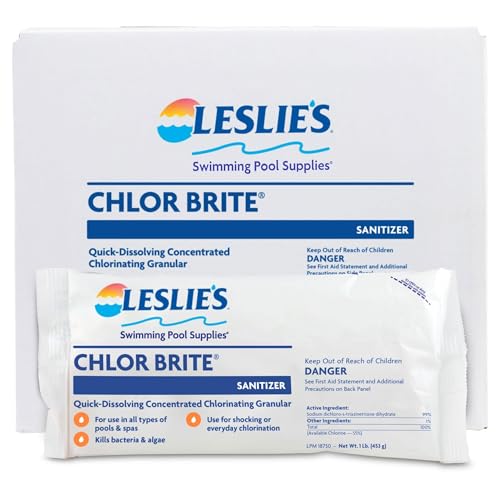
Leslie's Chlor Brite Pool Shock for Swimming Pools, Spas, and Hot Tubs - Granular Stabilized Sodium...
- 99% Sodium Dichlor granular chlorine dissolves rapidly, ensuring fast and effective sanitization for pools and spas.
- Ideal for both routine chlorination and super chlorination, suitable for all pool and spa types, including saltwater systems.
- Provides 55% available chlorine to kill bacteria and algae, keeping your water clear and safe.
Select Leslie’s 12 x 1 lb Chlor Brite packs if you need concentrated, stabilized dichlor for regular maintenance and periodic superchlorination. Measure pool volume, use test kit, calculate doses, add 3 oz per 10,000 gallons for routine maintenance. Dissolve in a bucket of water if needed, or broadcast granules around return jets for fast dissolution and distribution. Use 21 oz per 10,000 gallons for shock treatments, wait 24 hours to reenter, and confirm free chlorine levels under 5 ppm. Compatible with salt systems, spas and hot tubs, 99% sodium dichlor, 55% available chlorine, includes UV stabilizer to prevent degradation.
Best For: Pool and spa owners who need a concentrated, fast-dissolving stabilized dichlor shock for routine maintenance and periodic superchlorination.
Pros:
- Fast-dissolving stabilized sodium dichlor (55% available chlorine) provides quick, effective bacteria and algae kill without bleaching.
- Contains UV stabilizer (cyanuric acid) so chlorine lasts longer in sunlight and is compatible with salt systems, spas, and hot tubs.
- Convenient 12 × 1 lb bags make dosing for routine use (3 oz/10,000 gal) and shock treatments (21 oz/10,000 gal) easy.
Cons:
- Repeated use adds stabilizer (cyanuric acid), which can build up over time and require management or dilution of pool water.
- Must be handled carefully (protective gear, avoid inhalation/skin contact) and fully dissolved or broadcast properly to prevent localized damage.
- Not safe for immediate reentry after shocking—wait ~24 hours and confirm free chlorine is below recommended levels (under 5 ppm).
Doheny’s Di-Chlor Shock – 12 – 1 lb. Bags
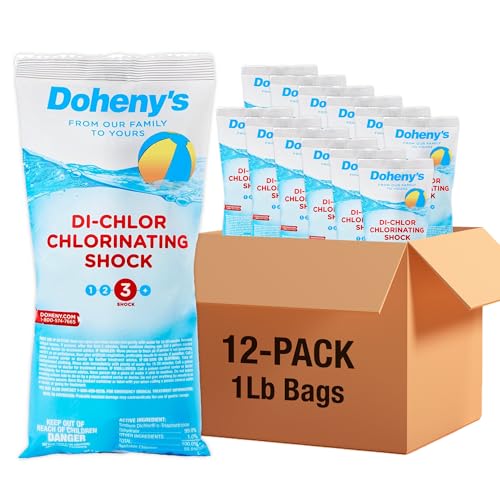
Doheny's Di-Chlor Shock | 100% Professional-Grade | Calcium-Free Pool Sanitizing and Shock Treatment...
- Calcium-Free Chlorine Shock for Pools: Leaves behind no residue/clouds in your swimming pool; great for salt- and liquid-chlorine-based pools
- Fast-Acting Shock for Swimming Pools: Fast-dissolving granular formula destroys contaminants quickly while sanitizing and preventing algae growth
- Recommended Dosage: 1 pound pouch of Di-Chlor pool chlorine shock per 10,000 gallons of water
Use Doheny’s Di-Chlor Shock when you maintain a saltwater or liquid-chlorine pool, it’s calcium-free and stabilized. Wear gloves. Measure 1 pound per 10,000 gallons, use a precision scale or premeasured 1 lb. pouches for accuracy. Broadcast granules. Dissolve in a bucket of water if needed, pour around return jets while pump circulates, avoid dosing near skimmer. Test chlorine. Confirm free chlorine rises to target range, recheck pH and cyanuric acid, adjust with muriatic acid if pH exceeds 7.6. Troubleshoot cloudiness. If residue appears, backwash filter, run clarifier, verify product fully dissolved, repeat shock dosing at half rate 24 hours.
Best For: Pool owners with saltwater or liquid‑chlorine systems who want a fast‑acting, calcium‑free, stabilized granular shock in convenient 1 lb. pouches.
Pros:
- Fast‑dissolving, granular formula that sanitizes quickly and leaves no calcium residue or cloudiness.
- Calcium‑free and stabilized (56% available chlorine), safe for saltwater and liquid‑chlorine pools.
- Comes in ready‑to‑use 1 lb. pouches for accurate dosing (1 lb per 10,000 gallons) and easy handling.
Cons:
- Adds stabilizer (cyanuric acid), so repeated use raises CYA and requires monitoring/management.
- Must be handled carefully (wear gloves), avoid dosing near skimmer, and never mix with other chemicals.
- Can cause temporary cloudiness or residue if not fully dissolved; may require backwashing/clarifier and repeat half‑rate shock.
Doheny’s Di-Chlor Granular Chlorine 50 lb Pool Sanitizer, Shock & Algaecide

Doheny's Di-Chlor Granular Chlorine | Pro-Grade 3-in-1 Pool Sanitizer, Shock & Algaecide...
- Multi-Purpose Swimming Pool Chlorine: 3-in-1 formula sanitizes, shocks, and eliminates algae for a clean and healthy pool.
- Fast-Dissolving & Residue-Free: Calcium-free granular chlorine won’t cloud water and leaves your pool crystal clear.
- Easy Dosage: Add 1 lb per 10,000 gallons to maintain proper chlorine levels and keep water safe.
Keep a 50 lb bucket of Doheny’s Di-Chlor on hand if you manage multiple or larger residential pools. Store in a cool, dry bin. Measure 1 lb per 10,000 gallons, use a plastic scoop, wear gloves and goggles. Broadcast granules evenly, avoid clumps. If clouding occurs, check calcium hardness, inspect pump basket, backwash or clean filter, then retest. Log each dose immediately. For algae, double shock to 2 lbs per 10,000 gallons, run pump 24 hours, brush surfaces. Seal buckets, keep dry, ventilated, and labeled. Buy 50 lb buckets or 2-packs, rotate stock by date, discard expired product safely.
Best For: Pool owners or service professionals managing multiple or larger residential pools who need a fast-dissolving, multi-purpose stabilized chlorine in bulk.
Pros:
- Multi-purpose (sanitizer, shock, algaecide) with fast-dissolving, calcium-free formula for clear, residue-free water.
- High available chlorine (56%) and easy dosing (1 lb per 10,000 gallons) for straightforward maintenance.
- Available in large 50 lb buckets (or 2-packs) — convenient and cost-effective for multiple pools or frequent use.
Cons:
- Large 50 lb packaging is bulky and may be excessive for single-small-pool owners or difficult to store/handle.
- Contains stabilized chlorine (sodium dichloro), which contributes cyanuric acid over time and may require monitoring.
- Requires careful storage and safety precautions (keep dry, sealed, gloves/goggles when handling) and can require extra dosing (double shock) for algae.
Doheny’s Super Pool Shock 68% Cal-Hypo Granular Pool Shock, 24 x 1 lb Bags

Doheny's Super Pool Shock | Pro-Grade Chlorine Shock, Quick-Dissolving, Fast-Acting 68% Cal-Hypo...
- Fast-Acting Pool Shock: Instantly boosts chlorine levels to eliminate algae and contaminants, keeping your pool crystal clear.
- Pro-Grade Cal Hypo Shock: Made with 68% calcium hypochlorite and 65% available chlorine for powerful, long-lasting pool maintenance.
- Convenient & Easy to Use: Pre-measured 1lb bags ensure quick, hassle-free application—no measuring needed.
Choose Doheny’s Super Pool Shock if you manage high-demand commercial or backyard pools needing rapid, heavy-duty chlorination, its 68% calcium hypochlorite delivers concentrated, fast-acting oxidization. Use one pre-measured 1 lb bag per 10,000 gallons, pour slowly with gloves and goggles, dissolve in a bucket. For spring openings or heavy algae, dose 2-3 bags, wait 1-2 hours between additions, retest with a DPD kit. Rinse equipment promptly, store remaining bags in a cool, dry bin. If chlorine spike persists, run pump and filter for 12 hours, backwash cartridge or DE filter as needed. Note pH adjustments, add sodium carbonate sparingly.
Best For: Pool owners and commercial operators who need a fast, heavy-duty chlorination boost for heavily used or algae-prone pools.
Pros:
- Pre-measured 1 lb bags for quick, no-measure dosing and reduced handling errors.
- High-strength 68% calcium hypochlorite delivers fast oxidation to kill algae and contaminants.
- Made in the USA by a trusted, family-owned brand with pro-grade formulation.
Cons:
- Raises calcium hardness and can affect water balance; may require pH/alkalinity adjustment.
- Corrosive/irritant — requires PPE, careful dissolving, and proper storage in a cool, dry bin.
- Not stabilized chlorine (no cyanuric acid), so frequent use may need additional maintenance and testing.
HTH Pool Care Shock Advanced (Cal Hypo) 1 lb – 12 Pack

HTH 52037R Pool Care Shock Advanced, Swimming Pool Chemical - Cal Hypo Formula, Prevents Bacteria...
- BENEFITS: Stay all clear for cannonballs; This fast-dissolving, convenient 4-in-1 formula kills bacteria and algae, reduces chlorine odor and irritation, and quickly...
- FEATURES: Multi-functional shock treatment for weekly use to solve 90% of pool water problems within 24 hours and restore crystal clarity
- VISIBLY BRILLIANT SPARKLE: This Cal Hypo based formula sanitizes without adding cyanuric acid (CYA) to prevent overstabilization or chlorine lock
Ideal for pool owners who need a Cal-Hypo shock that sanitizes without adding cyanuric acid, preventing overstabilization. Measure one pound per 10,000 gallons, use a digital or kitchen scale accurately. Pre-dissolve in a bucket of pool water, wear nitrile gloves and goggles, pour slowly while pump runs continuously. Test with HTH 6-Way Test Strips before and after, log free chlorine, pH. Expect 90% issue resolution within 24 hours, if algae remains brush vigorously, vacuum, repeat shock at half dose. Store unopened packs in a cool dry area, keep away from organics, discard clumped units, follow MSDS and disposal rules.
Best For: Pool owners who want a fast‑dissolving calcium hypochlorite shock that sanitizes and clears water without adding cyanuric acid.
Pros:
- Fast-dissolving 4-in-1 formula that kills bacteria/algae and restores crystal clarity within 24 hours.
- Does not add CYA, preventing overstabilization or chlorine lock—good for regular maintenance and saltwater pools.
- Sold in convenient 1 lb packs for accurate dosing and weekly use; compatible with vinyl-lined pools.
Cons:
- Requires careful handling (pre-dissolve, wear nitrile gloves and goggles) and safe storage away from organics.
- Sunlight will deplete unstabilized chlorine faster, so more frequent dosing/testing may be necessary.
- Clumped or degraded units must be discarded and persistent algae may require repeat shocks and manual brushing/vacuuming.
Clorox Pool & Spa Shock XTRABLUE Plus (6-Pack)

Clorox® Pool&Spa™ Shock XTRABLUE® Plus, Kills Bacteria & Algae in Swimming Pools, Swim-Ready in...
- 6 in 1 Formula: Kills bacteria and algae to maintain a clear swimming pool. Our algae-fighting formula prevents algae for crystal-clear water. Destroys contaminants to...
- Swim-ready in 15 minutes: Fast dissolving formula works quickly so you can treat and swim in just 15 minutes.
- Compatibility: This product is safe for all swimming pool surfaces, including vinyl, plaster, fiberglass, and tile.
Target this shock if you want a fast, swim-ready dichlor that treats weekly and after heavy use. Measure 1 lb per 12,000 gallons, pour into a plastic bucket, dissolve with pool water, avoid metal tools. Circulate pump and filter for 2 hours, run cartridge or sand filter at normal flow, monitor turbidity. Use a chlorine test kit or DPD tablets, confirm free chlorine reaches 2–4 ppm before allowing swimmers. Apply at dusk or night, lower stabilizer loss, prevent UV degradation, repeat weekly or after storms. If cloudiness persists, backwash filter, clean skimmer baskets, retest and shock again, notify support.
Best For: Home pool owners who want a fast-dissolving, swim-ready dichlor shock for weekly treatment and after heavy use or storms.
Pros:
- Fast-dissolving, swim-ready formula (treat and swim in about 15 minutes).
- 6-in-1 action: kills bacteria and algae, clears cloudy water, and supports filter performance.
- Compatible with all common pool surfaces (vinyl, plaster, fiberglass, tile) and sold in a convenient 6-pack.
Cons:
- Requires careful handling (dissolve in a plastic bucket, avoid metal tools) and accurate dosing (1 lb per 12,000 gallons).
- May require additional filter maintenance if cloudiness persists (backwash, clean skimmer baskets).
- Ongoing weekly use or post-storm treatments required to maintain results; not a one-time solution.
Dichlor Pool Chlorinating Granules for Pools and Spas (2 lbs)
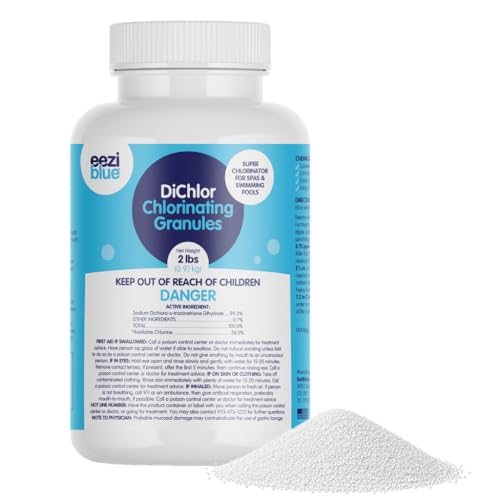
Dichlor Pool Shock, Sodium DiChlor Chlorine Granules for Swimming Pool
- FAST-DISSOLVING DICHLOR POOL SHOCK - Sodium dichlor chlorine granules sanitize swimming pools, hot tubs, and spas, eliminating bacteria and organic contaminants for...
- 56% AVAILABLE CHLORINE - Premium 56% Sodium Dichloro-s-Triazinetrione Dihydrate delivers a powerful, consistent dose of stabilized chlorine that resists sunlight loss.
- CALCIUM-FREE GRANULAR CHLORINE - Dissolves rapidly with no residue, keeping hard-water pools sparkling clean without cloudiness or scale.
Wear chemical-resistant gloves and safety goggles, then place the 2 lb container on a flat surface. Put sample on a calibrated digital scale, tare zero, confirm package weight as 2.0 pounds. Measure 56% active sodium dichloro granules, note EPA Reg. No. 3525-107-102852 on label, and document batch number. Add 2.0 pounds slowly into five gallons of pool-grade water, stir with fiberglass paddle. Allow rapid dissolution, avoid splashing, test free chlorine and cyanuric acid with a photometer after ten minutes. For algae or heavy use, apply 1.5x shock dose per manufacturer chart, retest after four hours. Store sealed, dry, inquire.
Best For: Home pool and spa owners who need a quick-dissolving, stabilized 56% sodium dichloro granular sanitizer for routine chlorination and shock treatments.
Pros:
- 56% active stabilized formula (sodium dichloro) provides reliable sanitizing and algae control while dissolving quickly and leaving no calcium residue.
- Calcium-free formulation and EPA-approved (Reg. No. 3525-107-102852) for safe, effective use in pools, spas, fountains, and water features.
- Compact 2 lb size is convenient for spot treatments and trying product without buying large quantities; strong user satisfaction (4.8/5).
Cons:
- Stabilized chlorine contains cyanuric acid, so repeated use can raise CYA levels and require monitoring and adjustment.
- Must be handled with care (gloves, goggles) and not mixed with other chemicals; improper use can cause irritation or hazardous reactions.
- Small 2 lb container may be inefficient or more expensive per pound for large pools or frequent shock treatments.
In The Swim Sodium Dichlor Chlorine Shock Granules for Hot Tubs and Spas (5 lb)
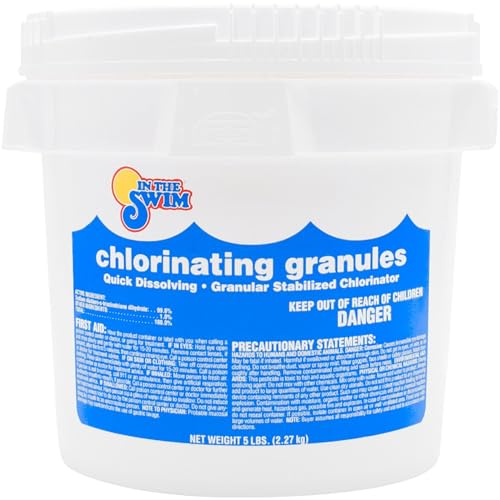
In The Swim Sodium Dichlor Chlorine Shock Granules for Sanitizing Hot Tubs and Spas – Fast...
- Versatile: Granular chlorine with the ability to be used in all types of swimming pools, spas, fountains, and water features.
- Powerful Sanitizer: Sodium Dichlor shock removes bacteria, breaks down organic contaminants, and eliminates algae.
- Calcium-Free Formula: Perfect for hard water areas—keeps pool water sparkling clean and crystal clear.
Choose In The Swim sodium dichlor for hot tubs, a calcium-free, fast-dissolving 56% chlorine granule. Measure precisely. Use a digital scale, add 3 oz per 10,000 gallons for routine chlorination. For shock, increase dosage. Apply 21 oz per 10,000 gallons, dissolve in a bucket, wear rubber gloves and goggles. Test water before returning bathers. Check free chlorine, total chlorine, and pH with a digital test kit, maintain pH 7.2–7.8 and target FC level. Avoid adding granules directly to the spa. If cloudiness persists, repeat shock, inspect filter cartridge, run pump 8–12 hours, and backwash or replace cartridge as needed.
Best For: Homeowners and hot tub/spa owners who need a fast-dissolving, calcium-free chlorine shock for routine sanitizing and superchlorination.
Pros:
- Fast-dissolving, pH-balanced sodium dichlor (56% available chlorine) that works for routine dosing and shock treatments.
- Calcium-free formula ideal for hard-water areas to help keep water clear without adding calcium hardness.
- Versatile for use in pools, spas, fountains and water features; clear dosing guidelines for routine (3 oz/10,000 gal) and shock (21 oz/10,000 gal).
Cons:
- Requires careful measuring and handling (use a digital scale, dissolve in a bucket) and personal protective equipment (rubber gloves and goggles).
- Not suitable for people who prefer non-chlorine sanitizers or who want to avoid adding chlorine to their water.
- Improper use (adding granules directly) or inadequate filtration can lead to cloudiness and may require repeat shocking and filter maintenance.
HTH Swimming Pool Salt Shock Stabilized Chlorinator (5 x 12 oz Packets)
Sale

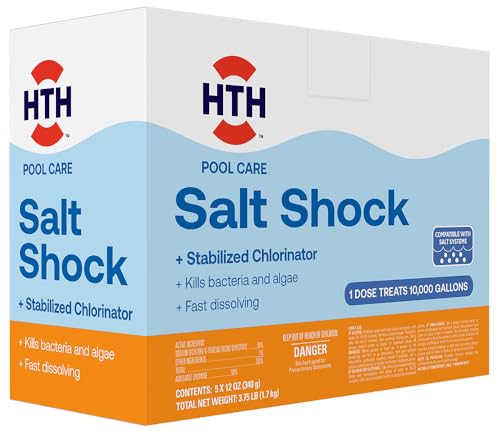
HTH 52047 Swimming Pool Care Salt Shock, Stabilized Chlorinator, 1 dose Treats 10000 gallons, 5x12oz...
- IDEAL FOR SALTWATER POOLS: This dichlor based product contains 56% available chlorine and works best with salt chlorine generators. Let this concentrated formula remove...
- EASY TO USE: Shock weekly to prevent 90% of pool water problems, based on the most common pool problems. Prevention is better than cure! This product does not damage your...
- FEATURES: Power-packed convenience; HTH 52047 Swimming Pool Care Salt Shock is your go-to solution for maintaining water clarity. With its fast-dissolving 5x12oz packets...
Use HTH’s 5 x 12 oz Salt Shock if you maintain a saltwater pool and need rapid, weekly oxidizing treatment. Add one 12 oz packet per 10,000 gallons, pour dissolved packet evenly around pool perimeter, run pump for 8 hours. Test and balance twice weekly with HTH 6-Way Test Strips, adjust pH to 7.2–7.6, stabilize if cyanuric acid is low. For algae removal, increase to two packets per 10,000 gallons, brush surfaces, backwash filter after 24 hours. Troubleshoot: if chlorine remains low, check generator output, clean salt cell, reapply shock as needed. Record dosages and dates in log today.
Best For: Saltwater pool owners who want a fast‑dissolving, weekly oxidizing shock to keep water clear and prevent common problems.
Pros:
- Fast‑dissolving, easy weekly application — one 12 oz packet treats up to 10,000 gallons for quick clarity.
- Formulated for saltwater systems and safe for all pool surfaces and chlorine generators.
- Helps prevent algae/contaminants and reduces routine maintenance time when used with regular testing.
Cons:
- Stabilized formula can raise cyanuric acid (CYA) over time, requiring monitoring and possible dilution.
- One packet only treats up to 10,000 gallons, so larger pools need multiple packets.
- Requires running the pump ~8 hours and occasional backwash/brush for algae, so not entirely hands‑off.
Factors to Consider When Choosing a Dichlor Pool Shock
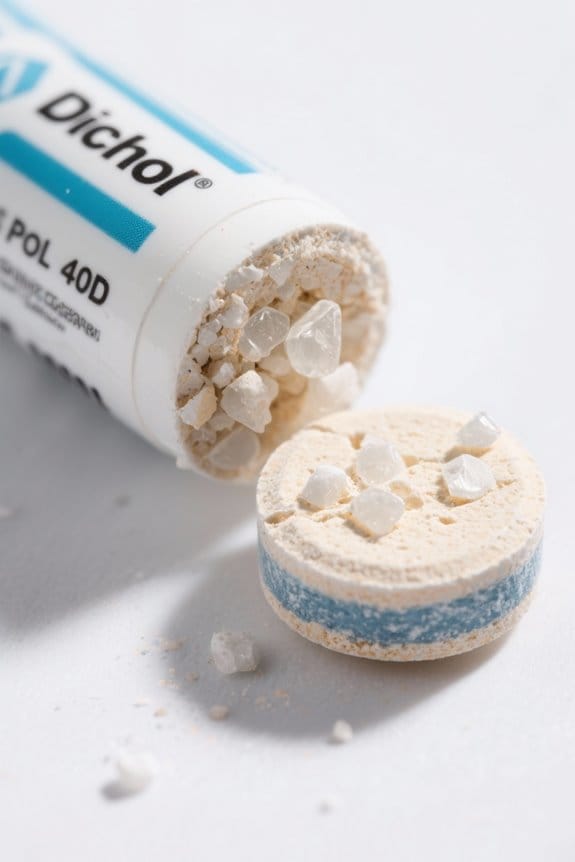
Check the chlorine concentration, read the percentage label, measure required grams per 10,000 gallons with a digital scale. Consider stabilizer (CYA) contribution, limit additions to about 30 ppm per shock, test using a Taylor FAS-DPD kit. Pick calcium-free for plaster, calcium-based for soft water, pre-test dissolving in one gallon, reduce dose if cloudiness appears.
Chlorine Concentration
Confirm the dichlor’s available chlorine percentage on the container, typically 56% for routine shocks, note concentration before dosing.
Use a digital scale, zero it before weighing.
Calculate dosage, apply 1.0 ounce per 1,000 gallons at 56%, increase proportionally for higher concentrations and larger pools.
Pre-dissolve in a clean bucket if needed, use a plastic scoop and stir rod.
Pour slowly, circulate with pump and return jets, monitor free chlorine with a DPD test kit every 15 minutes.
Avoid adding near skimmer, keep pump running during and after application.
Expect rapid dissolution for sodium dichlor, troubleshoot cloudy water by brushing, running filter, backwashing when pressure rises 8–10 psi above baseline.
Record measurements and test results daily, precisely.
Scale chlorine concentration selection to pool volume, consult labeling and wear goggles, gloves, and a respirator if handling concentrated products.
Stabilizer (CYA) Content
Measure CYA immediately with a quality cyanuric acid test kit, for example Taylor K-2006 or LaMotte, and record the reading. Test now, use the kit per instructions, sample from elbow-depth, avoid surface skimming. If reading falls between 30 and 50 ppm, proceed with dichlor shock dosing as labeled, note that dichlor adds stabilizer. If reading exceeds 50 ppm, stop, do not add more stabilized chlorine, you’ll risk chlorine lock. To correct high CYA, plan a partial drain and refill, calculate percent replacement based on current ppm, use the formula, aim to dilute to the 30–50 ppm range. Retest weekly, document changes, maintain sanitizer residuals, and troubleshoot persistent high CYA by increasing water replacement. Keep records, consult a pro if you see unexplained CYA spikes.
Calcium Vs Calcium-Free
Decide whether to use calcium or calcium-free shock based on your pool’s calcium hardness and scaling history. Test hardness with a Taylor test kit. If hardness exceeds 400 ppm, choose calcium-free dichlor, add 1 lb (454 g) per 10,000 gallons as a starting dose, retest in 24 hours. If hardness is under 200 ppm, use calcium hypochlorite for rapid chlorine boost, follow product label, avoid overdosing. Use a LaMotte kit for follow-up, measure CYA, pH, and chlorine, monitor for cloudiness or white scaling. If you see cloudiness, reduce calcium input, backwash the filter, run pump 8–12 hours, scrub surfaces with brush. Prevent chlorine lock by avoiding excessive calcium, test frequently, keep records with pen and log book. Consult a pro if problems persist quickly.
Dissolving Speed
Once you’ve chosen calcium or calcium-free shock based on hardness, examine dissolving speed to optimize contact time and pool downtime. Measure doses precisely. Use a calibrated 1-quart plastic scoop, add 1.5 ounces per 1,000 gallons near return jets, run pump for ten minutes. Check clarity after 15 minutes. If cloudiness persists, inspect pump, clean skimmer basket, backwash or vacuum, retest free chlorine and pH with digital test kit. Replace shock if residue forms. Prefer rapid-dissolving granular dichlor, which disperses quickly, minimizes calcium buildup, and often permits swimming fifteen minutes post-treatment. Document doses and outcomes. Train staff, store shock in a cool, dry chemical bin with desiccant, label containers, and wear NIOSH-approved respirator during handling. Report persistent sanitizer failure to manufacturer for batch testing immediately.
Pool Type Compatibility
Confirm your pool type before selecting dichlor shock. Check product labels for “calcium-free” to protect saltwater systems from haze. Measure TDS and current stabilizer levels with a digital tester, note ppm, record values, then consult manufacturer guidance for compatibility. Use dichlor marked for spas when treating hot tubs. Verify container instructions for small-volume dosing, carry a calibrated syringe or scale, avoid overdosing that raises combined chlorine. Avoid products that add cyanuric acid if your pool already shows high CYA. If cloudiness appears after treatment, test calcium, pH, and alkalinity, run filter 24–48 hours, backwash and retest. Follow manufacturer limits for stabilizer-free dichlor to prevent chlorine lock. Contact pool professional if uncertain, provide water test results, equipment model numbers, and maintenance actions for tailored advice.
Dosage and Coverage
Check pool type and recent water tests before dosing. Measure accurately, use 3 ounces per 10,000 gallons for routine chlorination, note dichlor contains about 56% available chlorine by weight. Apply 21 ounces per 10,000 gallons for superchlorination shocks immediately. Select packaging that fits your dosing routine, 1-pound bags treat defined volumes, or use pre-measured packets to simplify application today. Calculate gallons, account for size, recent tests, and usage frequency. Use a digital scale or pre-measured scoop, if readings are low, add supplementary doses, then retest after two hours interval. If cloudiness persists, check stabilizer, pH, and filter performance immediately. Circulate water for at least four hours with pump running, wait until free chlorine returns to safe levels per label, wear gloves and goggles always.
Packaging and Cost
Because you’ll buy for differing needs, weigh package size against price per ounce, storage space, and how often you shock the pool. Choose between 1 lb bags, pre-measured pouches, and bulk 25–50 lb boxes. Calculate cost per ounce, divide total price by ounces, compare units, prioritize lower unit cost for frequent maintenance. Buy pre-measured pouches to eliminate measuring errors and save application time. Check expiration date, record lot number, then store in a cool, dry area away from sunlight. When buying bulk, secure sealed containers and a locking scoop. If product degrades, test free chlorine with a DPD kit, document results, replace stock within recommended shelf life. Plan purchases by seasonality, buy larger packs before high-use months, and maintain inventory logs for efficiency regularly.
Frequently Asked Questions
Are Dichlor Shocks Safe for Fish and Koi Ponds?
Don’t use dichlor shocks in fish or koi ponds. Choose non-chlorine oxidizer, potassium monopersulfate or oxygen, dose 1 to 2 g per 100 L. Avoid stabilized chlorine, it’ll kill bacteria. Measure ammonia and nitrite with digital photometer or strips, if above 0.02 mg/L perform 25 percent water change. Use aeration, run air pumps. Monitor dissolved oxygen with DO meter, inspect fish for lethargy or gasping, cut dosing if stress appears.
How Should I Dispose of Unused Dichlor Shock Properly?
It won’t explode, but act cautiously. Gather chemical-resistant gloves, goggles, a sealed HDPE container (1-2 gallon), label and date it. Don’t pour it into drains. Neutralize small quantities by diluting ten-to-one with tap water, add sodium thiosulfate powder at 1 g per liter, stir and test until free chlorine reads zero. Contact local hazardous-waste facility for larger volumes, transport in upright sealed secondary containment. Keep MSDS and emergency contacts handy.
Can Dichlor Be Used in Saltwater Pools Without Issues?
Yes, you can use dichlor in saltwater pools. Measure free chlorine to 1–3 ppm with a DPD test kit, monitor ORP with a probe. Dissolve 1 lb in 2 gallons. Broadcast around the perimeter while the pump and filter run four hours at normal flow. Test cyanuric, keep it under 70 ppm. If CYA is high, drain 10–30%, refill, you’ll retest after 24 hours, troubleshoot lock if residuals remain low.
Do Dichlor Shocks Affect Pool Liner or Vinyl Durability?
Like guard dog, check you won’t see dichlor damage vinyl. Measure 1 lb per 10,000 gallons with a scale, dissolve in bucket, wear gloves. Rinse residues thoroughly, avoid placing granules on liner seams. Use a DPD test kit, verify free chlorine under 10 ppm before allowing swimmers. If discoloration appears, stop dosing immediately, photograph evidence. Inspect with magnifier for cracking, consult liner manufacturer, document batch numbers for warranty claims.
Are There Shipping or Airline Restrictions for Dichlor Pool Shock?
Acknowledge restrictions, they’re applicable to dichlor shipments. Check IATA, DOT and FAA rules before booking, follow hazmat class guidance, carry the latest SDS, note state/province variations. Use UN‑approved packaging only. Limit passenger carriage to small quantities, usually one kilogram or less per passenger, verify with airline, confirm exceptions. Include emergency contact info. If shipment is rejected, document photos, repack using compliant materials, consult your carrier’s dangerous goods officer, notify shippers.