As an Amazon Associate, we earn from qualifying purchases. Some links on this site are affiliate links at no extra cost to you. Our recommendations are based on thorough research and editorial judgment.

The 10 Best Alkalinity Increasers for Pools — Keep Your Water Balanced and Crystal Clear

Pick ARM & HAMMER tablets, Solvay or Pool Mate sodium bicarbonate bags for TA control. Measure pool volume with tape, calculate gallons, then aim for 80–120 ppm TA. Add 1.5 lb sodium bicarbonate per 10,000 gallons at return jets, use a bucket and gloves. Retest with a Taylor test kit after four hours, expect pH rise, aerate or add muriatic acid if pH exceeds 7.8. Check SDS and storage, and continue for more comparisons and troubleshooting.
Key Takeaways
- Choose products like ARM & HAMMER tablets, Solvay bicarbonate, Pool Mate, In The Swim, and HTH for reliable alkalinity increases.
- Dose sodium bicarbonate: ~1.5 lb per 10,000 gallons raises total alkalinity about 10 ppm.
- Granular increasers should be dissolved or broadcast near return jets; tablets added per chlorine tab and retested after 24 hours.
- Retest alkalinity and pH four hours after granular dosing (24 hours for tablets) and adjust with acid or aeration if needed.
- Store chemicals sealed, dry, and separate from acids; follow SDS and label instructions for safe handling and accurate dosing.
ARM & HAMMER Clear Balance Swimming Pool Alkalinity & pH Maintenance Tablets (24 Count)

ARM & Hammer Clear Balance, One Step Alkalinity & pH Maintenance Tablets for Swimming Pools & Spa...
- CRYSTAL CLEAR WATER MADE EASY: This box of ARM & HAMMER Clear Balance contains 24 tablets; your pool’s summer bestie for maintaining ideal alkalinity and pH levels, the...
- BALANCED ALL SEASON LONG: Supports balanced pH, alkalinity, and chlorine levels for clarity and comfort, so water feels easier on skin and doesn’t sting eyes, even...
- POWERED BY ARM & HAMMER BAKING SODA: A pure, natural, and trusted ingredient that helps support stable pH levels and aids in protecting pool surfaces from corrosion

You may be interested
Use these ARM & HAMMER alkalinity tablets if you manage a residential or small commercial chlorine-tab chlorinated pool, and you need a simple, measured way to stabilize total alkalinity (TA) and pH. Remove one ARM & HAMMER Clear Balance tablet per chlorine tablet, drop into skimmer or floater. Measure TA with a test kit, aim for 80–120 ppm, retest after 24 hours. Carry a digital TDS meter and pool test strips, log readings on maintenance sheet. Store tablets in resealable container, keep dry at ambient temperature. Troubleshoot cloudy water by checking cyanuric acid, chlorine, calcium hardness. Replace as needed.
Best For: Pool owners or caretakers of residential or small commercial chlorine-tab chlorinated pools who want an easy, measured way to maintain total alkalinity and pH.
Pros:
- Maintains alkalinity and pH reliably using pure ARM & HAMMER baking soda to optimize chlorine performance and protect surfaces.
- Convenient tablet form (24 count) eliminates measuring and mess; resealable container for easy storage.
- Helps produce clearer, more comfortable water (better for skin/eyes) and can reduce need for additional chemicals.
Cons:
- Designed specifically for chlorine-tab systems; not suitable as a standalone solution for non-chlorine or alternative sanitation systems.
- Requires regular testing (TA/pH) and monitoring — you must retest after 24 hours and keep logs for proper dosing.
- Won’t fix all water problems (e.g., high cyanuric acid, calcium hardness, or other chemistry issues) and may need complementary treatments.
In The Swim Solvay Bicar Sodium Bicarbonate Alkalinity Up, 50 lbs.

In The Swim Solvay Bicar Sodium Bicarbonate Alkalinity Up, 50 lbs.
- Use when total alk. drops below 80 ppm.
- Keeps your pH and Chlorine from becoming unstable Granular form, easier to apply into your water
- Compatible with pool, spa, and hot tub
Homeowners and service techs managing medium to large pools will find this granular 50 lb Solvay bicarbonate ideal, especially when total alkalinity falls below 80 ppm and you need a stable, chlorine-friendly buffer. Measure your pool volume precisely. Dose 1.5 pounds per 10,000 gallons to raise alkalinity about 10 ppm, using calibrated scale. Weigh on a digital scale. Broadcast granules slowly near returns, run pumps to prevent clumps, maintain circulation, monitor skimmer baskets. Retest after each dose. If alkalinity overshoots, correct with muriatic acid cautiously, use PPE and small incremental doses, and record. Allow four hours circulation before swimming.
Best For: Homeowners and service technicians managing medium to large pools, spas, or hot tubs who need to raise total alkalinity reliably and maintain pH/chlorine stability.
Pros:
- Granular 50 lb bag provides long-lasting supply for frequent or large-volume dosing.
- Dosage is straightforward (1.5 lb per 10,000 gallons ≈ +10 ppm), making corrections predictable.
- Helps stabilize pH and chlorine levels and is suitable for pools, spas, and hot tubs.
Cons:
- Risk of overshooting alkalinity — correction requires careful, incremental muriatic acid use and PPE.
- Requires proper application (broadcast slowly, run pumps) and monitoring to avoid clumping or skimmer issues.
- Swimming should be delayed until 4 hours of circulation after application.
Pool Mate 20-Pound Premium Alkalinity Increaser (Sodium Bicarbonate)
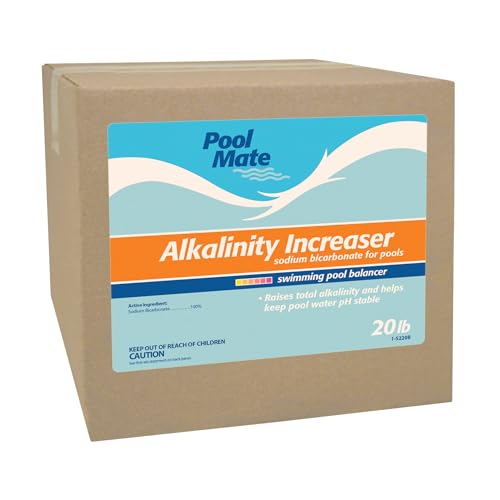
Pool Mate 20-Pounds Premium Alkalinity Increaser for Swimming Pools, 100% Sodium Bicarbonate
- Sodium bicarbonate for pools
- Raises total alkalinity and helps keep pool water pH stable
- Maintain total alkalinity in the range of 60 to 120
Choose Pool Mate 20‑pound alkalinity increaser if you manage medium to large pools and need precise, incremental TA control. Measure current TA with a digital test kit. Calculate dose using 11 ounces to raise 10 ppm per 5,000 gallons, adjust for your exact volume. Wear gloves and eye protection. Broadcast product around perimeter with a plastic scoop, run pump for six hours, retest TA and pH. Expect TA between 60 and 120 ppm. If TA overshoots, dilute by partially draining pool or aerate with waterfall jets to lower alkalinity slowly. Protect equipment and plaster by maintaining stable TA. Confirm.
Best For: Pool owners or maintenance professionals managing medium to large pools who need precise, incremental control of total alkalinity.
Pros:
- Raises total alkalinity predictably (11 oz raises TA by 10 ppm per 5,000 gallons) for accurate dosing.
- Helps stabilize pH and protects equipment and plaster from corrosion and damage.
- Easy to apply (broadcast around perimeter) and compatible with standard pump circulation.
Cons:
- Can only raise alkalinity; lowering TA requires draining, aeration, or other steps if you overshoot.
- Requires careful calculation by pool volume and retesting (risk of overshoot if miscalculated).
- Must handle with gloves and eye protection and run the pump for several hours after application.
In The Swim Alkalinity Increaser for Swimming Pools (50 Pounds)
Sale


In The Swim Alkalinity Increaser for Swimming Pools - Raises Alkalinity and Balances pH Levels in...
- In Swim Alkalinity Increaser maintains pH and chlorine levels.
- Prevents pH swings, maintaining stable water chemistry.
- High pH causes skin rashes; low pH stings eyes.
Test alkalinity and pH with a digital tester and test strips, record baseline levels before adding any chemicals. Measure pool volume, note gallons. Use In The Swim Alkalinity Increaser, 100% sodium bicarbonate, available in a 50 pound bag. Add 1.5 pounds per 10,000 gallons to raise alkalinity ten ppm. Target total alkalinity between 90 and 120 ppm, adjust dosage incrementally, retest after four hours or overnight. Avoid overcorrection, monitor pH and chlorine stability. If pH rises too high causing skin rashes, lower pH using muriatic acid or sodium bisulfate per manufacturer instructions. Store the bag dry and sealed properly.
Best For: Home and commercial pool owners who need an easy-to-use, cost-effective product to raise and stabilize total alkalinity and help maintain balanced pH and chlorine levels.
Pros:
- Raises total alkalinity reliably with a clear dosage (1.5 lbs per 10,000 gallons = +10 ppm).
- 100% sodium bicarbonate formulation — non-corrosive and safe for regular use.
- Large 50 lb bag provides long-lasting supply for routine maintenance.
Cons:
- Only raises alkalinity (and can raise pH); does not lower pH — requires acid for overcorrection.
- Risk of overcorrection if dosed improperly; requires retesting after 4 hours or overnight.
- Needs dry, sealed storage to prevent caking and loss of effectiveness.
HTH Alkalinity Up for Swimming Pools (5 lb)
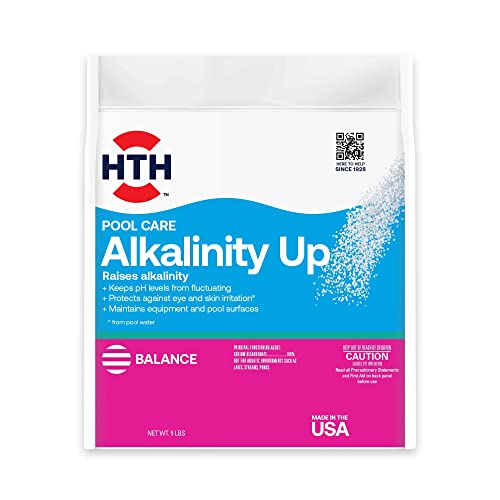
HTH 67060 Swimming Pool Care Alkalinity Up, Raises Alkalinity, Swimming Pool Chemical Stabilizes pH...
- BENEFITS: Raise the total alkalinity level to ensure healthy swimming pool water and happy swimmers
- COMPATIBILITY: Pool care chemical works with all swimming pools
- RAISES ALKALINITY LEVELS: Keeps total alkalinity and pH levels in range in swimming pool water
Use HTH Alkalinity Up (5 lb) when your pool’s total alkalinity falls below 60 ppm, it delivers controlled, measurable increases. Test with HTH 6‑Way Test Strips weekly. Measure desired alkalinity between 60 and 120 ppm, add product gradually, dissolve near return jets. Use a pump and pump circulation while dosing. Start with one pound per 10,000 gallons increments, retest after four hours, adjust as needed. Compatible with all pool types, including vinyl and plaster. Monitor pH, since alkalinity changes can shift pH, use muriatic acid or sodium bisulfate to correct. Maintain records, prolong equipment life, troubleshoot cloudy water promptly.
Best For: Pool owners and maintenance personnel who need a reliable product to raise and stabilize total alkalinity for all types of swimming pools.
Pros:
- Raises total alkalinity in controlled, measurable increments (start with 1 lb per 10,000 gal) to maintain 60–120 ppm.
- Helps stabilize pH and prolong the life of pool surfaces and equipment (pumps, filters, heaters).
- Compatible with all pool types and works with routine testing (use HTH 6‑Way Test Strips weekly).
Cons:
- Increasing alkalinity can shift pH, so you may need muriatic acid or sodium bisulfate to correct pH after dosing.
- Requires dissolving near return jets and running the pump during dosing; retest after ~4 hours, which takes time and monitoring.
- Overdosing or improper application can lead to imbalances or cloudy water, so careful measurement and record‑keeping are necessary.
Pool Mate Premium Alkalinity Increaser (10 lb) — Sodium Bicarbonate

Pool Mate 10-Pounds Premium Alkalinity Increaser for Swimming Pools, 100% Sodium Bicarbonate
- Sodium bicarbonate for pools
- Raises total alkalinity and helps keep pool water pH stable
- Maintain total alkalinity in the range of 60 to 120
For plaster or vinyl pool owners, keep a 10-lb, 100% sodium bicarbonate handy. Measure total alkalinity with a reliable test kit, target 60 to 120 ppm, note baseline. Add 11 ounces per 5,000 gallons to raise alkalinity 10 ppm. Dissolve measured Pool Mate sodium bicarbonate in a bucket, pour slowly into pool returns while pump runs. Re-test alkalinity after four hours, adjust with small doses if reading lies outside range. Use a scoop, calibrated scale, and gloves, monitor for high bicarbonate causing pH drift, aerate if necessary. Prevent equipment corrosion and plaster damage by maintaining proper alkalinity levels regularly.
Best For: Pool owners with plaster or vinyl pools who need an easy, measured way to raise and stabilize total alkalinity (target 60–120 ppm).
Pros:
- Effectively raises total alkalinity and helps stabilize pH using predictable dosing (11 oz per 5,000 gal = +10 ppm).
- 100% sodium bicarbonate — simple, safe chemistry that prevents equipment corrosion and plaster damage when levels are maintained.
- Easy to apply: dissolve in a bucket and pour into returns while pump runs; compatible with routine pool maintenance.
Cons:
- Adds bicarbonate which can raise pH over time (may require aeration or pH adjustment).
- Risk of overcorrection if measurements or dosing are inaccurate—requires careful testing and small follow-up doses.
- Requires handling precautions (use gloves, scoop/scale) and repeat testing after ~4 hours to confirm results.
Pool Mate 25 lb Alkalinity Increaser (Sodium Bicarbonate)
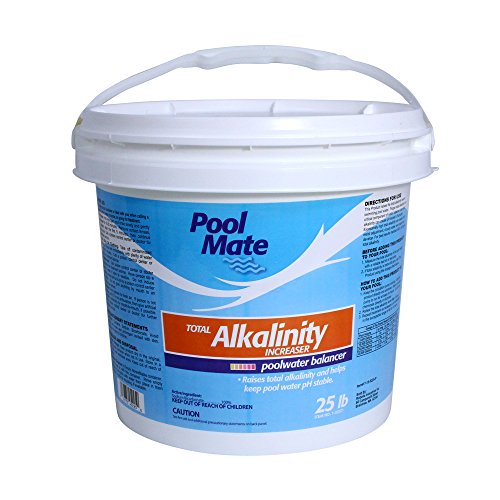
Pool Mate 25-Pounds Premium Alkalinity Increaser for Swimming Pools, 100% Sodium Bicarbonate, Made...
- Sodium bicarbonate for pools
- Raises total alkalinity and helps keep pool water pH stable
- Maintain total alkalinity in the range of 60 to 120
Select Pool Mate 25 lb Alkalinity Increaser when you need precise, large-scale alkalinity adjustments for residential or commercial pools. Measure your pool volume. Calculate dosage using 11 ounces to raise total alkalinity by 10 ppm per 5,000 gallons, adjust proportionally for your volume. Use a clean bucket. Pre-dissolve measured sodium bicarbonate in warm water, pour slowly around pool perimeter with pump running to guarantee distribution. Test alkalinity and pH. If alkalinity overshoots, dilute via partial drain, or reduce pH with muriatic acid carefully, monitor equipment corrosion signs frequently. Store bag dry. Follow manufacturer handling instructions; wear gloves, goggles always.
Best For: Pool owners or maintenance professionals who need a bulk, precise way to raise and stabilize total alkalinity in residential or commercial pools.
Pros:
- Simple, predictable dosing (11 oz raises TA 10 ppm per 5,000 gal) for easy calculations and large-scale adjustments.
- Made of 100% sodium bicarbonate and manufactured in the USA.
- Helps stabilize pH and protect equipment and plaster when used correctly.
Cons:
- Can slightly raise pH as well, requiring additional pH adjustment if needed.
- Risk of overshooting alkalinity (may require partial drain or careful acid use to correct).
- Requires safe handling (gloves/goggles) and dry storage; must be pre-dissolved and distributed properly to avoid localized deposits.
Pool Mate 25 lb Premium Alkalinity Increaser (Sodium Bicarbonate)
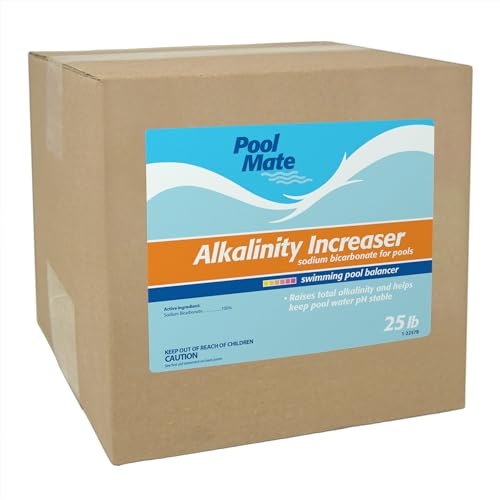
Pool Mate 25-Pounds Premium Alkalinity Increaser for Swimming Pools, 100% Sodium Bicarbonate
- Sodium bicarbonate for pools
- Raises total alkalinity and helps keep pool water pH stable
- Maintain total alkalinity in the range of 60 to 120
Determine whether you manage a 5,000–20,000 gallon residential pool, since Pool Mate 25 lb contains 100% sodium bicarbonate. Test alkalinity with a reliable kit. Measure dosage precisely, remember 11 ounces raises alkalinity 10 ppm per 5,000 gallons. Weigh 11 ounces on a kitchen scale. Broadcast evenly while pump runs, pre-dissolve in a bucket to prevent clumping on plaster or vinyl. Retest after four hours. Target 60–120 ppm TA, add additional 11 ounce increments per 5,000 gallons until in range, record readings. If you overshoot, lower TA slowly. Use acid cautiously, add near return, monitor pH and TA with kit.
Best For: homeowners with 5,000–20,000 gallon residential pools who need a simple, reliable way to raise and stabilize total alkalinity using 100% sodium bicarbonate.
Pros:
- Raises total alkalinity predictably (11 ounces → +10 ppm per 5,000 gallons) for easy dosing and repeatable results.
- Helps stabilize pH and reduce equipment corrosion and plaster damage when TA is kept in the 60–120 ppm range.
- 100% sodium bicarbonate (no additives), easy to broadcast or pre-dissolve and safe for most pool surfaces when used as directed.
Cons:
- Can overshoot alkalinity if not measured carefully; lowering TA requires slow, careful acid addition and monitoring.
- Requires accurate weighing (11 oz increments) and retesting (after ~4 hours) — more effort than single-dose products.
- 25 lb bag is heavy to handle and can clump if not pre-dissolved, risking localized buildup on plaster or vinyl.
Clorox Pool&Spa Alkalinity Increaser for Swimming Pools, 5 lb
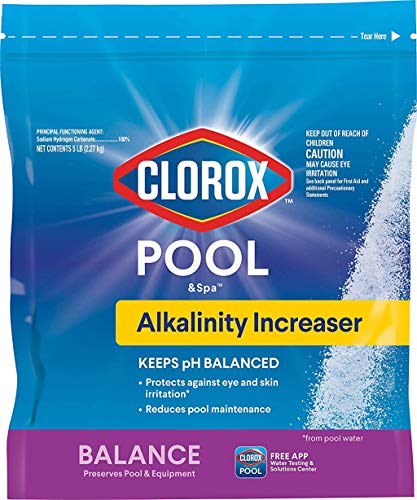
Clorox® Pool&Spa™ Swimming Pool Alkalinity Increaser, Keeps pH Balanced, 5LB (Pack of 1)
- For Raising Total Alkalinity: The Alkalinity Increaser helps maintain balanced pH levels in your pool water. Proper alkalinity levels reduce the need for frequent...
- Improves Swimmer Comfort: This product plays a crucial role in enhancing swimmer comfort by preventing eye and skin irritation caused by unbalanced pH. It helps prevent...
- Protects Pool Equipment from Corrosion: By keeping your pool's pH level balanced, this product helps prevent equipment corrosion, allowing you to spend less time...
Use Clorox Pool&Spa Alkalinity Increaser when you manage a residential or freshly refilled pool and need reliable, rapid total alkalinity control. Measure current TA with a test kit or app, record ppm, and calculate dose. Add 1 pound per 10,000 gallons to raise TA about 10 ppm, broadcast granules across deep water, don protective gloves and goggles. Run pump 6–8 hours, retest pH and TA using the Clorox Pool App for dosage confirmation. If pH drifts above 7.8, add acid incrementally, wait two hours between adjustments. For equipment care, avoid overdosing, monitor calcium hardness and cyanuric acid and metals.
Best For: Home pool owners (including freshly refilled pools) who need a fast, easy way to raise and stabilize total alkalinity to maintain balanced pH and swimmer comfort.
Pros:
- Raises total alkalinity rapidly (about 10 ppm per 1 lb per 10,000 gallons) for quick correction.
- Helps maintain balanced pH to reduce skin/eye irritation and protect pool equipment from corrosion.
- Compatible with all pool types and supported by the Clorox Pool App for testing and dosage guidance.
Cons:
- Can cause pH to drift upward, which may require incremental acid additions and retesting.
- Possibility of overdosing if dosages aren’t calculated correctly; requires PPE (gloves/goggles) during application.
- Does not address other water chemistry issues (calcium hardness, cyanuric acid, metals) that may also need treatment.
Clorox Pool & Spa Alkalinity Increaser for Swimming Pools (16 lb)

Clorox Pool & Spa Swimming Pool Alkalinity Increaser, Keeps pH Balanced, 16LB (Pack of 1)
- For Raising Total Alkalinity: The Alkalinity Increaser helps maintain balanced pH levels in your pool water. Proper alkalinity levels reduce the need for frequent...
- Improves Swimmer Comfort: This product plays a crucial role in enhancing swimmer comfort by preventing eye and skin irritation caused by unbalanced pH. It helps prevent...
- Protects Pool Equipment from Corrosion: By keeping your pool's pH level balanced, this product helps prevent equipment corrosion, allowing you to spend less time...
Identify whether you need to raise total alkalinity by 40–120 ppm, because this 16 lb Clorox product treats medium-sized pools and stabilizes pH for saltwater and chlorine systems. Measure pool volume in gallons, use a test kit or digital photometer, record current TA and pH. Calculate dosage using label guidelines, add 1 lb per 10,000 gallons for about 10 ppm, adjust proportionally. Wear goggles and gloves, broadcast granules around deep end while pump runs. Re-test after four hours, shock or backwash if turbidity increases. Use the Clorox Pool App for personalized dosing and troubleshooting. Document results and schedule maintenance.
Best For: Homeowners with medium-sized pools (including saltwater or chlorine systems) who need to raise total alkalinity by 40–120 ppm and stabilize pH for easier maintenance and more comfortable swimming.
Pros:
- Raises total alkalinity effectively and helps stabilize pH, reducing frequency of adjustments and improving swimmer comfort.
- Compatible with saltwater and liquid chlorine systems and suitable for new or freshly refilled pools.
- 16 lb size treats medium pools and paired with the Clorox Pool App offers personalized dosing and troubleshooting.
Cons:
- Requires accurate pool volume measurement and testing (TA and pH) to dose correctly; risk of over- or under-treatment if measured poorly.
- Can temporarily increase turbidity; may require shocking or backwashing and waiting several hours before re-testing.
- Handling precautions (goggles, gloves) needed and the 16 lb bag may be excessive for small pools.
Factors to Consider When Choosing an Alkalinity Increaser for a Pool
Check the product form and delivery method, measure 1–2 tablespoons per 1,000 gallons, and confirm dust-free granules.
Read the SDS and ingredient list, favor sodium bicarbonate for steady alkalinity, expect pH shifts and retest after four hours.
Match dosage to pool size, add with a clean bucket, stir, monitor with test strips, reduce rate if cloudy.
Form and Delivery Method
Consider product-form choices—granular sodium bicarbonate and slow‑dissolve tablets—when planning application for a given pool, measure out 1.5 pounds of granular per 10,000 gallons to raise total alkalinity (TA) about 10 ppm, and note tablets usually come pre‑measured for continuous feed in a chemical floater or feeder. Choose granular for precise dosing, measure with a scale, broadcast evenly around perimeter, brush to aid dissolution, retest after 4 to 6 hours. Use tablets for convenience, place in floater or feeder, monitor residuals, replace per label intervals. Store resealable containers dry, label bulk drums, use PPE when handling dust. Troubleshoot slow change by checking circulation, running pump longer, raising temperature slightly, or dissolving granules in a bucket before adding. Record adjustments, note times, and remeasure TA daily.
Chemical Composition
While choosing a product, prioritize 100% sodium bicarbonate for predictable alkalinity adjustment, avoid blends unless label lists exact percentages. Read the Safety Data Sheet and product label before handling, put on chemical-resistant gloves and goggles, work outdoors or near a dispenser. Test alkalinity with a reliable test kit or digital meter, record current total alkalinity and pH values. Choose pure sodium bicarbonate to avoid introducing unknown stabilizers, accept labeled stabilizers only when exact percentages are given. Measure using a calibrated scoop and scale, keep the scale to 0.1 ounce accuracy for repeatable dosing. If alkalinity won’t hold, troubleshoot by checking cyanuric acid, calcium hardness, and filter performance, backwash or clean cartridge, retest after 24 hours. Document changes, log results, and schedule weekly testing thereafter.
Dosage Per Volume
After documenting current alkalinity and pH, calculate the required dose based on your pool volume. Measure volume using pool dimensions and a calculator, record gallons precisely. Add 1.5 pounds of sodium bicarbonate per 10,000 gallons to raise alkalinity about 10 ppm. For smaller pools, add 11 ounces per 5,000 gallons for a 10 ppm increase, adjust proportionally. Use a kitchen scale or digital luggage scale for solids, wear gloves and goggles, use plastic scoop or measuring cup for tablets. Broadcast granular product around pool while pump circulates, or dissolve in a bucket for faster dispersion. Test alkalinity and pH after each treatment with a test kit or digital tester, troubleshoot cloudy water by checking calcium and filtration. Maintain 60 to 120 ppm, follow label.
Pool Size Compatibility
Measure your pool volume precisely using length, width, and average depth, then record gallons to the nearest 100 with a calculator. Note gallons per the skimmer sticker or calculate manually, include swim-up ledges and deep end slope. Consult product labels that state pounds per 10,000 gallons, use a digital scale or premeasured bags, match dosage precisely to your volume. Avoid under-treating, which causes low alkalinity and unstable chemistry, and avoid over-treating which raises total alkalinity excessively. Select product size based on calculated gallons, choose bulk 10 to 20 lb containers for pools over 30,000 gallons, buy smaller bags for spas. Target alkalinity between 60 and 120 ppm, verify with a test kit or electronic tester, recalibrate meters before measuring. Adjust dose and retest hourly.
Effect on Ph Stability
Procedure: test total alkalinity and pH with a calibrated digital tester or DPD test kit, record ppm. Adjust alkalinity first. Add a measured alkalinity increaser, typically raising TA about 10 ppm per dose, follow product label. Retest after circulation. Use the pump for eight hours, then sample at mid-depth and test with your digital meter. Avoid overshooting TA. If pH remains unstable despite proper TA, check cyanuric acid, water temperature, and total dissolved solids, troubleshoot accordingly. Document readings and schedule routine checks. Maintain TA between 60 and 120 ppm to minimize pH swings, protect heaters, liners, and chlorine effectiveness. Consult product SDS if uncertain. Record doses, pool volume, and temperature, use that history to calculate future increments and prevent repetitive dosing errors. Track trends.
Ease of Application
Decide whether you want tablets, granular powder, or liquid concentrate before you buy. Choose tablet packs if you prefer premeasured dosing, use a skimmer float or dispenser, avoid spills. Measure granular products with a calibrated scoop, calculate dosage by gallons, for example add 1.5 ounces per 10,000 gallons. Pre-dissolve when recommended, use a plastic bucket and stir with a nonmetallic paddle to prevent reactions. Apply liquid concentrate directly at the deepest point, pour slowly while pump circulates at normal flow, monitor pH and TA. Look for products that dissolve within 10 minutes, if clumping occurs, strain through mesh or contact manufacturer with batch code. Follow clear dosage charts on labels, keep a digital TDS meter and test strips handy, retest after four hours daily.
Packaging and Storage
Read the label and handle packaging before you move any product into storage. Check resealable bags first. Weigh larger packages, note 1 lb or 5 kg sizes, use a kitchen scale for accuracy. Affirm clear dosage labeling. Keep durable, moisture-resistant containers like sealed plastic bins with silica gel packs and a hygrometer to monitor humidity. Use a labeled scoop. Dispense granules with a 1/4 cup scoop, if clumping occurs, break up with a plastic spatula. Store heavy bags low. Label dates and opened-by initials, rotate stock, discard product past manufacturer shelf-life to avoid dosing errors. Seal any tears immediately. Store chemicals separately from acids, keep in a ventilated cabinet, maintain 50-70% relative humidity range if possible. Inspect monthly, note bulging bags or discoloration immediately.
Cost per Treatment
Calculation: weigh your pool volume, then convert gallons into 5,000-gallon units for dosing. Multiply units by 11 ounces to estimate the alkalinity increaser needed per 10 ppm adjustment. Check product label, confirm granular or tablet form, note price per pound or per tablet. Use a kitchen scale or postal scale for small batches, wear gloves and goggles when handling chemicals. Compare per-treatment cost by dividing package price by required ounces, factor in 25 or 50-pound bulk discounts. Record seasonal frequency, estimate treatments per month during summer, calculate average monthly spend. Troubleshoot underdosing by testing with a digital TDS meter and alkalinity test kit, then add incremental doses. Keep logs, include date, amount, batch number.
Frequently Asked Questions
Can Bicarbonate Alkalinity Increasers Harm Nearby Lawn or Garden Runoff?
See bicarbonate as white dust, can harm nearby plants if concentrated runoff reaches roots. Test soil pH with a meter, probe 3 inches, record pH 6.5–7.5, flag alkalinity above 120 ppm. Rinse spills with hose and sprinkler, dilute residues promptly. Watch lawn 24–72 hours, apply gypsum 1 lb per 100 sq ft for sodicity, you retest weekly. If garden pH rises, leach with 1 inch irrigation, don’t wait, contact extension.
How Long After Adding Can People Safely Swim?
Wait fifteen minutes minimum after dosing before you test. Run the pump and filter two hours, keep returns on, then test with a liquid kit. Confirm total alkalinity and pH after circulation. Target 80–120 ppm alkalinity, pH 7.2–7.8, verify free chlorine above 1.0 ppm before admitting swimmers in. If cloudy water, rising gauge, or failed tests, don’t allow swimming, backwash sand filters, clean cartridge, vacuum debris, retest and inspect pump.
Are These Products Safe for Use in Saltwater Pools?
Yes, you’re safe using increasers in saltwater pools with bicarbonate.
Measure 1.4 lb per 10,000 gallons to raise TA 10 ppm, use a scale.
Broadcast powder near the deep end while the pump circulates.
Run pump four hours, keep chlorinator off, then retest TA and pH.
If pH spikes, add muriatic acid in small increments, measure with a calibrated pH meter.
Wear gloves and goggles, troubleshoot cloudiness by checking hardness.
Do Alkalinity Increasers Affect Pool Heater or Plumbing Components?
Yes, they can. For example, a tech raised alkalinity from 70 to 120 ppm, causing scale on a copper exchanger. Measure with a Taylor kit, record results. Add sodium bicarbonate at 1 lb per 10,000 gallons for a 10 ppm rise, adjust slowly, retest pH. Inspect anodes and gauges. If pressure climbs over 10 psi, you’ll shut pump, isolate heater, backwash, descale exchanger with 5% muriatic solution, follow PPE daily.
How Should Leftover Powder Be Legally Disposed of or Recycled?
Dispose leftover powder as hazardous waste only. Contact your municipal hazardous waste facility, provide product name, CAS number, and estimated weight in grams. Don’t dump it on soil or drains. Wear nitrile gloves, safety goggles, and an N95 respirator, transfer powder to labeled polyethylene drum securely. Seal lids tightly, tag drums with contents. Transport upright, secure drums with straps, keep chain-of-custody paperwork, recycle only if vendor issues written reuse certification.