As an Amazon Associate, we earn from qualifying purchases. Some links on this site are affiliate links at no extra cost to you. Our recommendations are based on thorough research and editorial judgment.

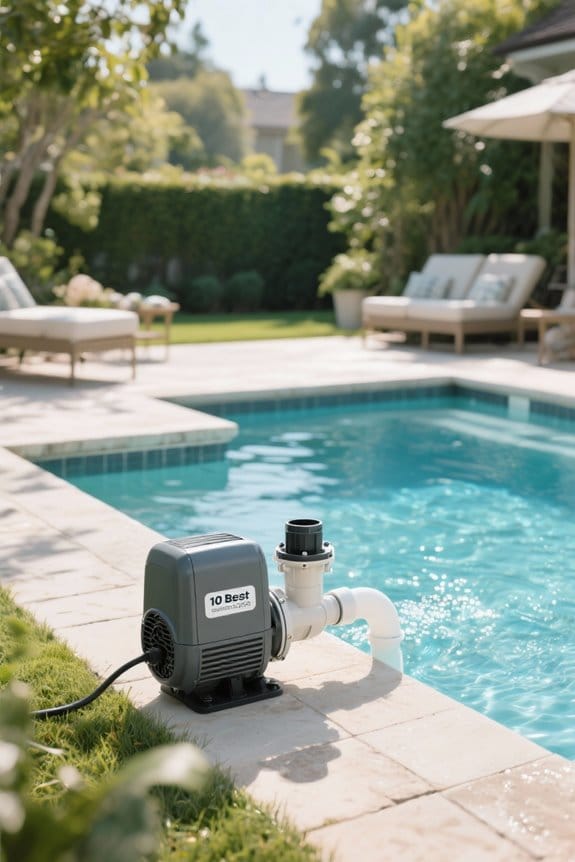
10 Best Inground Pool Pumps of 2026 — Quiet, Energy-Efficient Picks for Every Pool

Choose variable‑speed or dual‑speed pumps, match horsepower to your volume. Install a 2.5HP permanent‑magnet pump for large pools, expect ~10,500 GPH at 2″ unions, wire 220–240V with GFCI. Use Hayward W3SP2607X10 or VIVOHOME 2.0HP for your mid‑size systems. Prime self‑priming pumps, monitor seal temperatures, replace mechanical seals on cavitation or overheating, log RPM and amps regularly. Compare noise, head, flow curves, strainer capacity, and energy savings, follow clearance and maintenance specs, continue for model‑specific setup.
Key Takeaways
- Prioritize variable‑speed pumps for maximum energy savings, quiet operation, and programmable run times across different pool sizes.
- Match pump flow and head to your pool’s size and plumbing to ensure efficient circulation and proper filter performance.
- Look for permanent‑magnet motors and low RPM operation for the quietest, most energy‑efficient performance.
- Confirm electrical requirements (115V/230V, dedicated circuit, GFCI) and compatibility with existing fittings for easier installation.
- Factor long‑term costs: higher upfront for variable‑speed often yields 60–80% energy savings and lower maintenance needs.
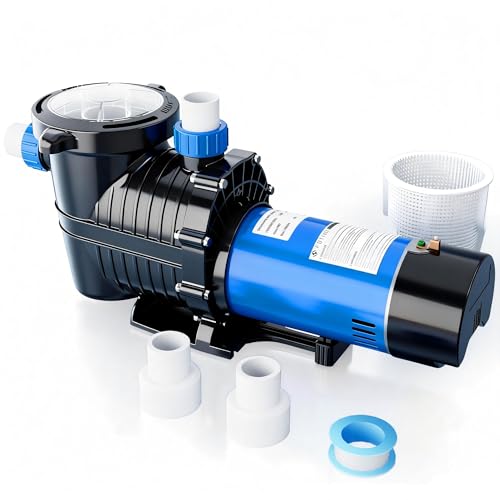
VIVOHOME 2.0HP Self-Priming Pool Pump (115V/230V, 6800 GPH)
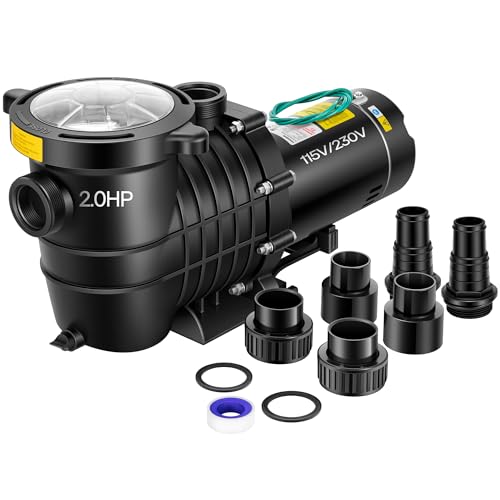
VIVOHOME 2.0HP In/Above Ground Pool Pump, 115V/230V 6800GPH Self-Priming
- 2.0 HP DUAL VOLTAGE PUMP: Delivering up to 6800 GPH, this high-flow pool pump provides strong circulation for in/above-ground pools; The self-priming impeller lowers...
- UPGRADED DURABLE COMPONENTS: Built with a stainless steel shaft and 316 mechanical seal, this 2 HP pool pump ensures lasting reliability; Fiberglass-reinforced plastic...
- USER-FRIENDLY BUILD: The extra-large strainer basket captures more debris to maintain strong flow; The transparent lid allows easy viewing; Built-in thermal overload...
You may be interested
Choose the VIVOHOME 2.0HP self-priming pump if you need high flow, reliable priming, and commercial-grade components. Mount the 2.0 HP unit near the pool, align 1.5″, 2″, or 1.25″-1.5″ fittings, tighten unions. Fill the housing with water before startup, close the drain plug, refill until water overflows to prime the seal. Connect to 115V or 230V supply, engage automatic thermal overload protector, verify IP55 rating for wet locations. Inspect the 316 stainless steel mechanical seal, replace if leaking, check impeller noise for clogging. Clean the extra-large strainer basket regularly, use included adapters, consult manual for torque specs and troubleshooting.
Best For: Homeowners or pool technicians who need a high-flow, durable self-priming pump for in-ground or above-ground pools, spas, or irrigation systems that demands reliable commercial-grade components.
Pros:
- 6800 GPH 2.0 HP motor with self-priming design delivers strong flow and reliable priming for faster system startup.
- Commercial-grade construction (316 stainless mechanical seal, corrosion-proof shaft, reinforced thermoplastic body) and IP55 rating for durability in wet conditions.
- Tool-free unions, extra-large detachable strainer basket, and see-through lid make installation and routine maintenance easy.
Cons:
- Not intended for storable (seasonal/inflatable) pools, limiting use for some portable pool owners.
- Requires correct 115V/230V wiring selection and an initial fill/priming step before startup to avoid motor damage.
- Mechanical seal may require replacement if leaking over long-term heavy chemical exposure, adding potential maintenance cost.
FOTING Dual-Speed 2HP In/Above Ground Pool Pump (3170/7000 GPH, 230V) with 1.5″ & 2″ NPT Connectors
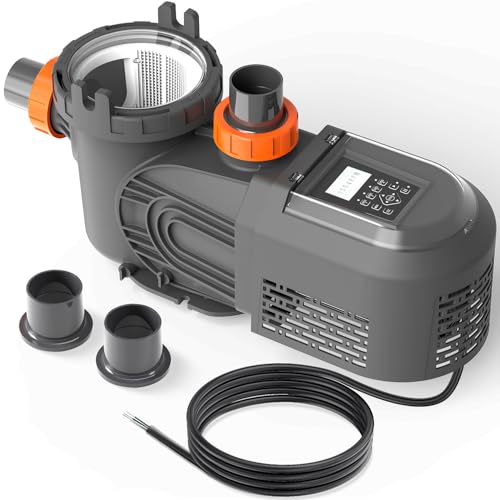
FOTING In/Above Ground Pool Pump, Self Primming Pool Pump High Flow 1.5" & 2" NPT Inlet Connectors...
- 【2HP 230V Power Motor】Equipped with a robust copper wire motor, FOTING 2HP in/above ground pool pump delivers exceptional efficiency and performance, making pool...
- 【Dual Speed for 3170/7000GPH】With a dual speed of high and low mode, you can customize pump performance to your pool size and filtration requirements to optimize...
- 【Thermal Overload Protection】FOTING 2HP self primming swimming pool pump provides robust and reliable performance with thermal overload protection that prevents motor...
Consider the FOTING Dual-Speed 2HP pump if you manage medium to large pools and need dual-mode flexibility. Install it on 230V circuits, mount close to pool equipment. Select 1.5″ or 2″ NPT connectors, use included PVC adapters and waterproof tape. Prime the self-priming motor before startup, verify drain plug is closed. Switch speeds with the simple button, choose High for 7000 GPH rapid filtration or Low for 3170 GPH energy-saving operation. Monitor temperature, use thermal overload protection to prevent motor burnout. Clean the removable filter basket under the transparent lid, drain before servicing, expect roughly 3000 hours service life.
Best For: Pool owners or maintenance professionals managing medium to large above-ground or inground pools who need flexible, high-flow filtration with energy-saving options.
Pros:
- Dual-speed motor (High up to 7000 GPH, Low up to 3170 GPH) for powerful filtration or energy-saving quieter operation.
- Self-priming design with removable filter basket and transparent lid for easy servicing.
- Includes 1.5″ & 2″ NPT connectors, 4 PVC adapters and waterproof tape plus professional customer support for straightforward installation.
Cons:
- Requires 230V circuit and proper installation, which may need an electrician.
- Estimated service life of ~3000 hours may be shorter than some commercial-grade pumps.
- Needs regular priming and filter cleaning; improper maintenance can reduce performance.
2.5HP Variable Speed Pool Pump for Inground and Above-Ground Pools
Sale

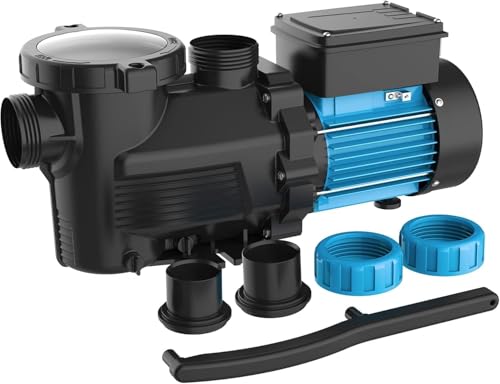
Varpoolfaye 2.5HP Variable Speed Pool Pump for Inground & Above-Ground Pools, Permanent Magnet...
- 【Powerful Circulation for Medium & Large Pools】This variable speed pool pump delivers strong, consistent water flow for residential in-ground and above-ground pools...
- 【Energy-Efficient Performance with Quiet Operation】 The permanent magnet motor provides smoother, quieter operation while helping reduce daily energy consumption...
- 【Smart Variable Speed Control for Everyday Use】Adjust pump speed and set automatic timer schedules based on your pool’s circulation needs. High-speed operation...
Match this 2.5HP variable speed pump to installations where energy savings and high flow matter most. Measure electrical supply, confirm 220-240V/60Hz. Install on skimmer or return, expect peak flow 10,567 GPH at high speed for rapid turnover. Use the included adapters, fit 2 in or 2.5 in ports to match plumbing, tighten unions. Engage variable speeds, run low-speed filtration for daily circulation, switch to high speed for vacuuming and backwashing. Rely on permanent magnet motor, enjoy quiet operation, anticipate up to 80% reduced energy, maintenance costs. Check safety features, test overload and anti-dry spin protections before leaving unattended.
Best For: Homeowners and commercial pool operators who need high-flow, energy-efficient circulation for inground or above-ground pools, spas, or aquaculture systems and can supply 220–240V power.
Pros:
- High flow (up to 10,567 GPH) with variable speeds for fast turnover and tailored daily filtration.
- Permanent magnet motor for quiet, stable operation and up to ~80% reduced energy and maintenance costs versus single-speed pumps.
- Oversized filter basket, weather-protective removable rain cover, and included 2″ / 2.5″ adapters simplify maintenance and installation.
Cons:
- Requires 220–240V/60Hz electrical supply—won’t work on standard 120V residential circuits without electrical changes.
- Higher upfront cost and more complex setup/programming compared with single-speed pumps.
- May need careful plumbing fit and union tightening; adapters limited to 2″ and 2.5″ ports (may not suit all legacy plumbing without extra fittings).
In/Above Ground Self-Priming Pool Pump, 1.5 HP 5400 GPH with Timer
BOMGIE In/Above Ground Pool Pump, High Flow Powerful Self Priming Pool Pump with Timer,1.5 HP...
- Integrated Timer for Effortless Operation: Say goodbye to the hassle of external timers. With our pool pump, just plug it in, set your schedule once, and let it handle...
- Customize Your Pool Pump Schedule: Our pump comes equipped with a built-in 24-hour programmable timer, giving you full control over pump activation. Choose from nine...
- User-Friendly Operation and Easy Maintenance: This above-ground pool pump features a standard 1-1/2" NPT inlet and outlet, allowing for seamless hose connection. Designed...
Identify this pump as ideal for medium-sized inground pools needing high flow and automated daily cycles. Install it on a solid pad, place the 1-1/2 NPT fittings, tighten with thread tape. Position the 35.1-pound unit within 25.5 x 12.4 x 8.3 inches clearance, align inlet and outlet accurately. Prime and test operation using the clear basket cover, check for leaks, replace seals if necessary. Program the 24-hour timer with nine slots, set start time, choose 2-to-24 hour cycles, verify automatic shutoff. Monitor motor heat, and use two-year warranty and customer service for troubleshooting, return within 30 days if needed.
Best For: Ideal for medium-sized inground pools that need high flow (5400 GPH) and automated daily circulation.
Pros:
- High-flow 1.5 HP pump delivering 5400 GPH for effective circulation and clearer water.
- Built-in 24-hour programmable timer with nine time slots (2–24 hours) for automated daily cycles.
- Self-priming design with 1-1/2″ NPT fittings, spacious filter basket and transparent cover for easy maintenance and inspection.
Cons:
- Designed for medium residential pools — may be undersized for large or commercial pools.
- 115V electrical requirement and motor heat monitoring may require proper circuit setup and ventilation.
- Occasional seal/leak checks and potential part replacement required over time; 30-day return window and two-year warranty limit long-term return options.
2 HP 6900 GPH Self-priming Above Ground/Inground Pool Pump with Strainer Basket

Oswerpon 2HP Above/In Ground Pool Pump, 115V/230V 6900GPH Self Priming
- POWERFUL POOL PUMP - The Oswerpon Pool pump body is constructed with commercial-grade reinforced thermoplastic material, ensuring corrosion resistance and guaranteeing...
- SAFETY CERTIFICATION - We consistently prioritize product safety standards. Our swimming pool pump products are all UL-certified, meeting international safety standards...
- DUAL VOLTAGE POOL PUMP - This 2HP pump seamlessly accommodates input voltages of 115V/230V, operating at full power. Additionally, voltage adjustment buttons are...
Select this 2 HP, 6900 GPH self-priming pump when you need high-flow filtration for medium-to-large inground or above-ground pools. Mount level. Connect power, choose 115V or 230V via integrated buttons, verify grounding and UL certification before energizing. Fill with water first. Install provided 1.5-inch connectors or 2-inch adapters, tighten unions, confirm drain plug and transparent strainer cover are secure. Inspect basket. Expect 6900 GPH flow, 3450 r/m motor speed, 55.7 FT max head, monitor motor temperature under 104°F. Troubleshoot humming. If noise or overheating occurs, check seals, refill pump, verify IP55 sealing, test automatic overload reset, replace impeller if damaged.
Best For: Homeowners with medium-to-large above-ground or inground pools who need a high-flow, durable self-priming pump for regular filtration and spa/irrigation use.
Pros:
- High performance: up to 6900 GPH (67.37 GPM) with 2 HP motor and 55.7 ft max head for strong circulation.
- Durable, weather-resistant construction: commercial-grade reinforced thermoplastic body, pure copper motor, IP55 sealing and UL certification.
- User-friendly: dual-voltage (115/230V) selectable, includes multiple adapters and oversized transparent strainer basket for easy maintenance.
Cons:
- Must be filled with water before first use and kept primed to avoid seal/impeller damage.
- Not recommended for use with storage tanks; limited to pool/spa/irrigation applications.
- 2 HP motor may require appropriate wiring/circuit capacity and can increase energy use compared with smaller pumps.
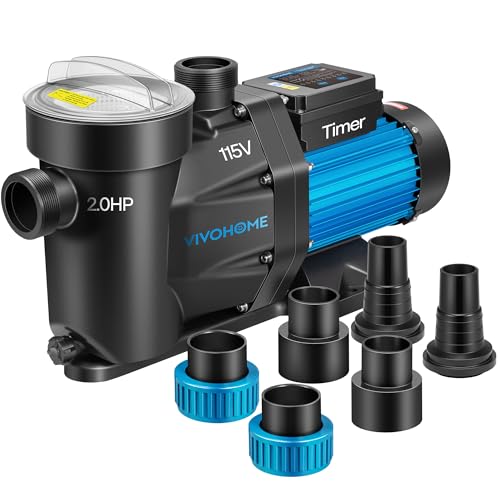
VIVOHOME 2.0 HP Self-Priming Swimming Pool Pump (7140 GPH) with Timer and Strainer Basket
Sale
VIVOHOME Self Primming in/Above Ground Swimming Pool Pump w 1.25'' & 1.5" & 2.0'' Unions Energy...
- 2 HP HIGH-FLOW POOL PUMP: Keep your pool crystal clean with 7,140 GPH water flow and 52.5 ft max head — ideal for in/above-ground pools; The self-priming impeller...
- SMART TIMER WITH RAIN COVER: Choose from 9 timer settings (2–24 hours) — daily repeat or single cycle; Schedule off-peak operation to cut energy costs; The included...
- DURABLE & SALTWATER-READY: Commercial-grade thermoplastic body stands up to heat (122℉) and chemical wear, ideal for saltwater pools; Leak-proof mechanical seal...

Use this VIVOHOME 2.0 HP pump when you need 7,140 GPH capacity for large inground pools. Install it on flat concrete, secure feet and align unions. Prime the volute by filling through the transparent cover, verify drain plug is closed, avoid dry-run damage. Program the dual-mode timer for 2 to 24-hour cycles. Use PTFE tape on female and slip unions, choose 1.5-inch or 2-inch PVC fittings, torque per manufacturer guidance. Empty the large removable strainer basket regularly. Check motor thermal protection, inspect copper-wound 2 HP DOE motor for overheating, and confirm UL cord integrity before startup. You troubleshoot bearings.
Best For: Homeowners with large inground pools who need a high‑capacity, energy‑savvy pump with programmable scheduling and heavy‑duty construction.
Pros:
- High performance — 2.0 HP DOE motor with up to 7,140 GPH and 52.5 ft max head for large pools and strong circulation.
- Built‑in dual‑mode programmable timer (2–24 hr cycles) to automate operation and reduce energy costs.
- Durable, corrosion‑resistant thermoplastic body, copper‑wound motor with thermal protection, IPX5 rating and UL‑certified cord for safety and longevity.
Cons:
- Requires proper installation (flat concrete pad, secured feet, correct union sealing and priming) — more complex than plug‑and‑play units.
- Needs regular maintenance (emptying the large strainer basket, checking drain plug and seals) to avoid clogs and dry‑run damage.
- Oversized for small pools — 2 HP and 7,140 GPH may be excessive and less energy‑efficient for small systems.
Hayward W3SP2307X10 MaxFlo XL Pool Pump, 1 HP

Hayward W3SP2307X10 MaxFlo XL Inground Pool Pump, 1 HP
- HAYWARD INGROUND POOL PUMP: This pump delivers high performance and reliability for entry-level inground pools, with advanced hydraulics to improve efficiency, keeping...
- EASY INSTALLATION: Pool pumps for inground pools with quick setup via 1.5" x 2" union connections; this self-priming inground pool pump fits new construction or replacing...
- SIMPLE MAINTENANCE: This pool pump filter has an extra-large basket to extend time between cleanings, a see-through strainer cover to monitor when the basket needs...
For owners replacing an older MaxFlo, prioritize this 1 HP Hayward pump for straightforward retrofit installations. Shut power at the breaker. Mount the W3SP2307X10, align 1½” PVC unions, apply Teflon tape, tighten with a wrench until snug, check for plumb. Inspect the clear strainer cover. Rotate the lid less than a ¼ turn to seal, verify O-ring seating, replace basket if debris blocks flow. Prime pump following manufacturer steps. Expect reduced energy draw due to advanced hydraulics, monitor amp draw with a clamp meter, compare to previous MaxFlo readings. Troubleshoot persistent air by inspecting suction lines and basket seal.
Best For: Homeowners with an existing Hayward MaxFlo system who want a straightforward, energy-efficient 1 HP retrofit pump.
Pros:
- Advanced hydraulics improve energy efficiency and priming ability compared with prior MaxFlo models.
- Direct compatibility with original MaxFlo fittings for easy retrofit installations.
- Clear strainer cover with quick-seal lid and heavy-duty motor for reliable, easy maintenance.
Cons:
- Single-speed 1 HP design may not deliver the energy savings of a variable-speed pump for all setups.
- Requires correct priming and good suction-line seals; persistent air leaks can reduce performance.
- Physical fit and plumbing alignment must be checked (unions, plumb) during installation to avoid leaks.
Hayward W3SP2607X10 Super Pump Pool Pump, 1 HP
Sale


Hayward Pool Pump Inground Pools Super Pump 1 HP (W3SP2607X10 replacement for SP2607X10 pump for...
- The Hayward Super Pump Single-Speed 1 HP Pool Pump sets the industry standard for efficiency and dependability and is part of the world's best-selling medium-head pump...
- This Hayward pool pump features a heavy-duty, high-performance motor and airflow ventilation that delivers quieter, cooler, more efficient operation
- The extra-large debris basket on this swimming pool pump provides added leaf-holding capacity for less frequent maintenance
Consider the Hayward W3SP2607X10 if you maintain a medium-head inground pool and need a reliable 1 HP pump that balances flow and energy. Inspect motor vents, confirm airflow ventilation reduces noise, heat. Empty the extra-large debris basket monthly, measure leaf volume in liters, monitor strainer pressure gauges regularly. Use swing-away hand knobs, remove strainer cover without tools. Access internals using the service-ease design, unbolt four 4-bolt fasteners, inspect seals, impeller, and volute clearance. Listen for vibration, tighten mounting bolts, verify shaft alignment. Expect 1 HP performance for medium-head pools, troubleshoot low flow by checking impeller blockage or motor overheating.
Best For: Homeowners with a medium-head inground pool who need a reliable, serviceable 1 HP pump that balances flow and energy efficiency.
Pros:
- Industry-standard efficiency and dependability with a heavy-duty motor and airflow ventilation for cooler, quieter operation.
- Extra-large debris basket reduces frequency of cleaning and holds more leaves.
- Service-ease design: swing-away hand knobs for tool-free cover removal and quick 4-bolt access for simple servicing.
Cons:
- 1 HP rating may be insufficient for high-head or very large pool systems.
- Requires regular maintenance (e.g., monthly basket emptying and strainer/pressure monitoring).
- May need troubleshooting for low flow or overheating if impeller clogs or seals wear.
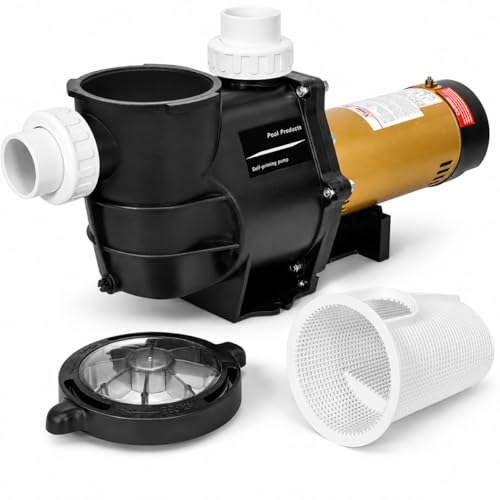
XtremepowerUS 2HP Variable Speed In-Ground Swimming Pool Pump (2″ Inlet, 230V)
XtremepowerUS 2HP In-Ground Swimming Pool Pump Dual Speed High Flow 2" Inlet 230V High Flo 2-Speed...
- Perfect for in-ground swimming pools, hot tubs, spas etc. It's robust construction and weather-resistant materials ensure it performs reliably in various climate...
- Enhanced Flow Rate: Impressive transfer rate of 5850GPH and QMax of 366L/min (97 GPM), ensuring quick and efficient water movement. High performance motor with built-in...
- Thermal Safety Feature: Thermally protected motor sustains a maximum water temperature of 40°C (104°F), providing durability and extended life. The Pool pump is thermal...
Install the XtremepowerUS 2HP variable-speed pump when you need high flow and energy savings. Mount the 230V, 60Hz unit on a level pad, secure connections to a dedicated breaker, ground properly. Use 2-inch inlet plumbing or NPT adapters for 2 and 3, align piping, avoid strain on fittings. Switch speeds between 3,450rpm and 1,720rpm to optimize cycles, expect 7.5 amps high, 2.1 amps low, monitor. Check thermal protection and UL A/C certification, don’t exceed 40°C water, service motor if thermal trips persist. Clean the removable debris basket, inspect seals and impeller during seasonal maintenance, record QMax 97 GPM flow.
Best For: Homeowners with in-ground pools who want high-flow circulation and energy savings from a compact, 230V variable-speed pump.
Pros:
- High-efficiency 2HP motor delivers up to 5,850 GPH (QMax 97 GPM) for fast, effective circulation.
- Two-speed operation (3,450 / 1,720 rpm) and low-current draw (7.5A high, 2.1A low) help reduce energy use and running costs.
- Durable design with thermal motor protection, UL A/C certification, removable debris basket, and versatile 2″ / 3″ NPT plumbing options.
Cons:
- Requires 230V supply and a dedicated breaker, which may need electrical upgrades for some homes.
- Motor is limited to two preset speeds rather than fully variable programmability.
- Maximum recommended water temperature is 40°C (104°F), limiting use in very hot conditions or some specialty applications.
LANCHEZ In/Above Ground Self-Priming Pool Pump (Dual Speed, 2 HP, 6600 GPH, 230V)

LANCHEZ In/Above Ground Pool Pump, Self Primming (Dual Speed, 2 HP, 6600 GPH, 230V, 1.5" & 2" NPT...
- Dual Speed - Powerful 2-speed motor (3,450RPM/1,720RPM) for effective water circulation, operating on 230V and 60Hz with 7.5/2.1 Amps
- High Flow Rate - Impressive transfer rate of 6600GPH and Max head 69FT, ensuring quick and efficient water movement
- Overheat Protection - Thermally protected motor sustains a maximum water temperature of 122°F, providing durability and extended life
Match this pump to inground pool systems requiring high-flow, dual-speed operation, you’re targeting owners who need 6600 GPH at 2 HP with 230V reliability. Install it near the filter. Mount on a level pad, align 1.5″ or 2″ NPT plumbing, use PVC cement. Prime before starting. Fill the strainer pot, verify drain plug inserted, confirm water level above skimmer to prevent cavitation. Check wiring. Connect 230V, guarantee 7.5/2.1 amp supply, use proper conduit and a GFCI breaker per code. Monitor temperature. Use low speed for circulation, high speed turnover, expect 3,450 RPM, 6,600 GPH, stop if motor trips protection.
Best For: Pool owners with inground systems who need a high-flow, dual-speed 2 HP (230V) pump capable of ~6,600 GPH for efficient circulation and turnover.
Pros:
- Dual-speed operation (3,450 RPM high / 1,720 RPM low) for energy-saving circulation and high-flow turnover when needed.
- Thermally protected motor and robust max head (69 ft) for durability and reliable performance.
- User-friendly maintenance with a removable debris basket, see-through lid, and 1.5″ & 2″ NPT adapter options.
Cons:
- Requires 230V supply and proper conduit/GFCI breaker — may need professional electrical installation.
- Must be primed and never run dry (risk of damaging mechanical seals/impeller) — adds installation care.
- Motor limited to max water temperature of 122°F, making it unsuitable for higher-temperature spa applications.
Factors to Consider When Choosing an Inground Pool Pump
Assess pump type and speed, choose single, dual, or variable-speed motors, check 1–3 HP ratings.
Calculate flow rate in GPH from pool volume and turnover time (8–12 hours), match pump curve to system head.
Choose motor HP from TDH/GPH, check noise (dB) and vibration, fix suction cavitation.
Pump Type & Speed
When choosing a pump type and speed, weigh single-speed, dual-speed, and variable-speed motors against your pool’s volume and usage patterns. Prioritize variable-speed for long run-times, nightly. Select dual-speed when you need occasional high circulation, switch to low for nightly filtration and energy-saving modes during winter periods. Avoid constant high RPMs, and overheating. Expect single-speed pumps like the Hayward Super Pump to deliver robust performance but higher energy bills over time, estimate annually. Check motor compatibility, wiring, seals beforehand. Install a VFD or controller with variable-speed units, set schedules, monitor amperage and troubleshoot noisy bearings or cavitation promptly immediately. Document settings for winterization, service records. Favor variable-speed to reduce energy costs up to 80%, log runtimes, inspect shaft seals, and replace failing capacitors promptly immediately.
Flow Rate & GPH
Calculate required GPH based on your pool volume, aim to circulate the entire volume every eight hours. Measure your pool capacity in gallons, divide by eight hours to get required GPH, round up to nearest hundred. Choose a pump rated at or above that GPH, for larger pools select models above 6,000 GPH or pumps with waterfall/spa capability. Install variable- or dual-speed pumps, program low-speed for daily filtration and high-speed for cleaning. Check the pump’s maximum head lift, confirm it overcomes your plumbing elevation and resistance. Troubleshoot low flow by inspecting clogged skimmer baskets, closed valves, and air leaks in suction lines. Replace damaged impellers, re-prime the pump, retest flow, and document performance. Monitor energy use, adjust speeds to balance clarity and operating costs.
Motor Power (HP)
One rule: match motor horsepower to your pool volume and plumbing restrictions, typically between 1.0 and 2.5 HP for inground setups. Select a motor based on pool gallons, for example 20,000–30,000 gal pools often need 1.5–2.0 HP to achieve target circulation. Measure plumbing diameter and length, note 1.5-inch vs 2-inch pipe, account for fittings and valves that increase head. Calculate required flow in GPH, remember some pumps can exceed 10,000 GPH at low head, check pump curves. Inspect mechanical seals and impeller alignment, address cavitation, noisy bearings, or reduced suction immediately. Verify total dynamic head (TDH) with a gauge, compare to pump performance charts before purchase. Match HP to minimize wear, extend service life. Consult manufacturer specs and local codes when sizing motors, record.
Energy Efficiency & Cost
Because energy costs drive long-term ownership expenses, choose a pump with efficiency and control features that match your pool’s runtime and hydraulics. Install a variable-speed pump, reduce energy up to 80%. Select models with high-efficiency motors like ECM permanent magnet, improve flow at lower wattage. Use dual-speed settings for cleaning and daily filtration. Verify ENERGY STAR or local efficiency certifications, log runtime hours, calculate monthly kilowatt-hour impact for savings. Expect higher upfront cost, plan budget and ROI timelines. Measure head loss in feet, match pump curve to skimmer and main drain, avoid oversizing. Check installation clearances and prefilter strainers monthly. For troubleshooting, log RPM, volts, and amperage, compare to nameplate, inspect impeller, replace seals if leaking. Document savings annually, adjust schedules for chemical demand.
Noise & Vibration
When evaluating noise and vibration, inspect the impeller for cavitation, measure RPM with a tachometer, and log decibels. Listen carefully. Check dual-speed settings, run low-speed filtration at 900–1,200 RPM, note vibration reduction in g-force or qualitative terms. Measure motor mount integrity. Use an accelerometer like a PCB Piezotronics model, record m/s² at motor base, compare readings under various loads. Reduce horsepower if noise exceeds thresholds. Inspect isolators, replace worn mounts, add neoprene pads, test again targeting 40–60 dB during normal operation. Address cavitation immediately. If you detect cavitation, adjust suction line, lower RPM, clean impeller, remeasure decibels and vibration after each adjustment. Document performance over 30 days. Compare manufacturer noise curves, request third-party acoustic reports, consult installers for damping solutions specific to your model.
Materials & Durability
Inspect pump housing for material type, corrosion, and impact damage. Verify commercial-grade reinforced thermoplastic construction, measure wall thickness at least 3–5 mm with calipers, note any hairline cracks near mounting flanges. Check motor nameplate for “Cu” or “copper” windings. Confirm pure copper windings, 1.5 kW nominal rating, thermal protection present, run a 30-second no-load spin test. Inspect mechanical seal materials, prioritize 316 stainless and FKM rubber. Verify IP rating like IP55 or IPX5 with handheld tester, note ingress at cable glands. Use oversized filter baskets, remove debris with gloved hand and eye protection. Choose transparent covers, inspect for cracks, replace O-ring within 0.5 mm tolerance after a 3-minute pressure check. Document serial number, model, installation date, and maintenance steps in service log with photos now.
Frequently Asked Questions
What Warranties Cover Labor and Parts for These Pumps?
Measure twice, cut once: manufacturers’ warranties typically cover parts, not labor.
Check pump label for model, serial, HP, date, then document term and exclusions.
Contact dealer for extended labor plans, you’ll get written confirmation.
Inspect coverage for motor stator, seal kit, capacitor, 1.5-inch unions, variable-speed drive.
If motor hums, note amperage, record error codes.
File claims fast, attach photos, estimates, installer invoices, follow RMA steps for parts and labor now.
How Is Pump Noise Measured and Compared Objectively?
Measure pump noise, you’re using a calibrated sound meter.
Place the meter at 1 meter, or 3 feet, on-axis from the volute, apply A-weighting setting.
Log overall dBA, and record octave-band spectra on analyzer.
Run FFT and background subtraction, isolate bearing noise, check for cavitation signatures, follow ISO 3744 procedures.
Compare measurements to manufacturer specs, don’t to baseline ambient.
If readings exceed limits, tighten mounts, replace bearings, contact factory immediately, don’t wait.
Are These Pumps Compatible With Saltwater Chlorination Systems?
Yes, they’re compatible with saltwater chlorination systems. Install 1½-inch PVC return, set pump for 30–50 GPM, and place the chlorinator cell after the filter. Use dielectric unions and corrosion-resistant clamps. Check TDS, free chlorine, pH weekly, inspect the cell every 3–6 months for calcium, and replace per manufacturer guidelines. Watch for air leaks, cavitation, flow reduction. Record pressure (PSI), amperage, flow, then adjust variable-speed settings to maintain specified chlorine production.
Do Variable-Speed Pumps Reduce Pool Chemical Consumption?
Yes, expect lower chemical use with variable-speed pumps. Set your circulation to 8 to 12 hours at 60 to 70 percent speed, for 1.5 turnovers, monitor FC. Adjust pump curves, log RPM, don’t ignore. If chlorine drift persists, test salt chlorinator output, inspect skimmer flow at 40 to 50 GPM, clean cartridge or DE filter, recalibrate ORP probe, increase circulation to 10 hours, and log chemical changes for fourteen days.
Can These Pumps Integrate With Smart Home or Pool Automation Systems?
Yes, they integrate; treat pump as nervous core. Install variable-speed Pentair IntelliFlo or Hayward MaxFlo VS, include Wi‑Fi module, follow wiring diagrams. Mount controller adjacent to electrical panel, don’t block vents. Connect 120/240V supply, run Cat5/Cat6 to automation hub, set IP, forward ports, test connectivity. Use protocols like RS‑485, Modbus, or cloud APIs, map device IDs, sync schedules. If failure occurs, check phase, verify ground, replace cables under 100m, and document.