As an Amazon Associate, we earn from qualifying purchases. Some links on this site are affiliate links at no extra cost to you. Our recommendations are based on thorough research and editorial judgment.


The 10 Best Non‑Chlorine Pool Shocks of 2026 — Gentle on Skin, Tough on Algae

Choose potassium monopersulfate-based shocks like Rx Clear or In The Swim, dose 1 lb per 10,000 gallons, stir in a five-gallon plastic bucket with a plastic paddle, then broadcast evenly around the pool perimeter, avoid skimmer intake. Test pH and adjust to 7.2–7.6, check filter pressure and backwash if cloudy, repeat dose for persistent combined chlorine. Wear nitrile gloves and goggles, store below 77°F, and continue for product comparisons and troubleshooting tips and maintenance guidance.
Key Takeaways
- Prioritize potassium monopersulfate (MPS) formulas for powerful oxidation without added chlorine, safe for skin and eyes when used per instructions.
- Choose fast-dissolving, swim-ready products that clear contaminants within 10–15 minutes and minimize downtime.
- Verify compatibility with your sanitizer (bromine or chlorine) to avoid chemical interactions and ensure ongoing disinfection.
- Look for clear dosing guidance (usually ~1 lb per 10,000 gallons) and products that handle algae while reducing chloramine odor.
- Evaluate safety features: sealed packaging, PPE recommendations, storage below 77°F, and clear spill/disposal instructions.
SpaGuard Enhanced Spa Shock 6lbs

SpaGuard Enhanced Spa Shock 6lbs
- SpaGuard Enhanced Shock (6 lb)
- Multi-Purpose shock with four functions in one: Shocks, Clarifies, Flocculent and pH Buffer
- Restores Spa Water Sparkle and Removes Unpleasant Odors
You may be interested
Identify this shock as the choice for spa owners who need a single, multi-function treatment, precisely measured. Read label and wear gloves, goggles. Measure 6 lb package, prepare dosing for 250-500 gallon spas, calculate dose per manufacturer, use floater or manual feed. Dissolve in bucket, avoid adding granules. Add dissolved solution to circulating water, run pump 30-60 minutes, monitor pH, ORP, and turbidity, record and log readings. Test pH and sanitizer with strips or meter. Troubleshoot cloudy water by adding clarifier dose, check cartridge filters, backwash or clean, inspect skimmer weekly. Note ozone and ionization compatibility, perform regular maintenance.
Best For: Spa owners who want a single, precisely measured, multi-function shock treatment to sanitize, clarify, flocculate, and buffer pH in 250–500 gallon chlorinated or brominated spas.
Pros:
- Multi-purpose formula (shock, clarifier, flocculent, pH buffer) reduces need for multiple products.
- Compatible with chlorinated or brominated spas and with ozone or ionization systems.
- Comes in a 6 lb package for a straightforward measured dose and consistent treatment.
Cons:
- Product is a chemical—must read label and use gloves and goggles when handling and dissolving.
- Requires proper dissolution, pump run time (30–60 minutes), and monitoring of pH/ORP/turbidity for best results.
- May not fix heavy cloudiness alone—clarifier dose, filter cleaning/backwash, or cartridge maintenance may still be needed.
HTH Pool Shock (Calcium Hypochlorite) – 6 Pack
Sale


HTH 52036R Pool Care Shock Advanced, Swimming Pool Chemical - Cal Hypo Formula, Prevents Bacteria...
- BENEFITS: Stay all clear for cannonballs; This fast-dissolving, convenient 4-in-1 formula kills bacteria and algae, reduces chlorine odor and irritation, and quickly...
- FEATURES: Multi-functional shock treatment for weekly use to solve 90% of pool water problems within 24 hours and restore crystal clarity
- VISIBLY BRILLIANT SPARKLE: This Cal Hypo based formula sanitizes without adding cyanuric acid (CYA) to prevent overstabilization or chlorine lock

Prioritize this HTH Cal Hypo shock if you need fast, heavy-duty weekly oxidation for large or problem pools. Add one pound (one pouch) per 10,000 gallons, dissolve in a bucket with pool water, pour around perimeter, run pump 8–12 hours, test with HTH 6-Way Test Strips, adjust pH to 7.2–7.6, repeat dosing weekly or after heavy bather load. Use protective gloves and goggles, avoid mixing with acids or stabilized chlorine, store dry. If cloudiness persists after 24 hours, brush walls, vacuum, shock again at 1.5× dose, check CYA to prevent chlorine lock. Monitor salt systems compatibility, follow manufacturer warranty.
Best For: pool owners who need fast, heavy-duty weekly oxidation and shock treatment for large or problem pools to kill bacteria and eliminate algae.
Pros:
- Fast-dissolving, 4-in-1 formula that quickly kills bacteria, removes algae, reduces chlorine odor, and restores water clarity.
- Does not add cyanuric acid (CYA), preventing overstabilization and chlorine lock.
- Compatible with all pool types (including vinyl-lined and saltwater systems) and sold as convenient 1 lb pouches for easy dosing.
Cons:
- Strong oxidizer — requires protective gloves/goggles and careful handling; do not mix with acids or other chlorine products.
- Can cause temporary cloudiness; may require brushing, vacuuming, and a repeat 1.5× dose if clarity isn’t restored within 24 hours.
- Weekly or heavy dosing can be harsh on some pools/equipment if water balance (pH 7.2–7.6) and CYA aren’t monitored closely.
HTH Spa Non Chlorine Shock Oxidizer for Spas and Hot Tubs (2.25 lbs)
Sale

HTH Spa 86135 Non Chlorine Shock Oxidizer, Spa & Hot Tub Chemical Clears Cloudy Water, 2.25 lbs
- BENEFIT: Relax into fresh, clean water with this shock oxidizer; Clears cloudy water
- ELIMINATES ODOR: Reduces odor-causing ammonia, chloramines, and other contaminants
- NON-CHLORINE: Shock for spas and hot tubs without the harsh effects of chlorine
Choose HTH Spa 86135 when you need fast cloudy-water clearing in bromine or chlorine systems without chlorine shock. Measure 1 tablespoon. Dissolve in a bucket, add to spa after filter run, repeat if cloudiness persists. Read label. Note 2.25 lbs container, 3.04 x 3.04 x 9.53 inches packaging, UPC 073187861351, ASIN B09K111PZR for reorders. Use with bromine. Maintain regular HTH Spa routine, check levels before dosing, follow label directions. Expect odor reduction. It oxidizes chloramines and ammonia, troubleshoot by shocking again if combined chlorine remains high. Retain warranty contact. Document dates and amounts for tracking and support. Call support.
Best For: spa and hot tub owners using bromine or chlorine systems who need a fast, non-chlorine method to clear cloudy water and reduce odors.
Pros:
- Clears cloudy water and oxidizes chloramines/ammonia for fresher-smelling spa water.
- Non-chlorine formula is gentler than chlorine shock and is suitable for sensitive users.
- Compatible with both bromine and chlorine systems and easy to use (dissolve a tablespoon in a bucket).
Cons:
- Not a sanitizer—doesn’t replace routine chlorine or bromine maintenance.
- May require repeat dosing if combined chlorine remains high or cloudiness persists.
- Small 2.25 lb container may require frequent repurchase for larger or frequent-use spas.
Rx Clear Chlorine-Free Swimming Pool Shock (Potassium Monopersulfate), 1 lb Bags — 6 Pack
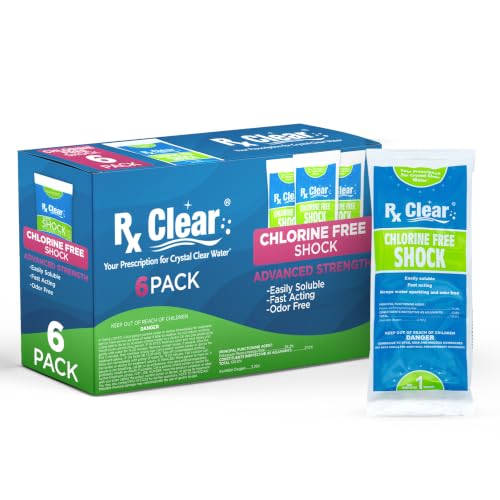
Rx Clear Chlorine-Free Pool Shock | Non-Chlorine Oxidizing Treatment (MPS) | 36.2% Potassium...
- NON-CHLORINE OXIDIZING FORMULA: Contains 36.2% potassium monopersulfate designed to break down non-living organic materials such as oils, lotions, and residue as part of...
- SUPPORTS WATER CLARITY & BALANCE: Helps maintain overall water clarity and supports consistent pool conditions without significantly impacting existing chlorine levels
- IDEAL FOR LOW-SUNLIGHT POOLS: Suitable for pools with limited direct sunlight where additional oxidation support is beneficial for ongoing maintenance
Opt for this 36.2% potassium monopersulfate shock when you run an indoor or shaded pool and need a non-chlorine oxidizer.
Measure 1 lb bag per 10,000 gallons, using a scale.
Dissolve granules in a plastic bucket, stir with a pool brush, pour slowly around perimeter, avoid skimmer.
Wait ten minutes, then test pH with a handheld digital meter.
Expect swim-ready status in 10 minutes, if free chlorine remains stable, otherwise troubleshoot with shock retest.
Address cloudy water by running pump 24 hours, backwash filter, add clarifier, monitor ORP measurements.
Store unused bags sealed in a cool, dry place indoors.
Best For: Swimmers and pool owners of indoor or shaded pools who need a non-chlorine oxidizer to maintain clear water without adding chlorine or irritating chemicals.
Pros:
- Chlorine-free formula (36.2% potassium monopersulfate) that oxidizes contaminants without raising chlorine levels or causing irritation.
- Quick-dissolving granular form with simple dosing (1 lb per 10,000 gallons) and swim-ready in about 10 minutes under normal conditions.
- Gentle on eyes and reduces chemical smell, suitable for pools where avoiding harsh chemicals is a priority.
Cons:
- Not a sanitizer—does not replace chlorine or bromine, so additional disinfectant must be maintained to kill pathogens.
- Requires careful measuring, pre-dissolving in a plastic bucket, and avoiding the skimmer during application.
- May not resolve heavily contaminated or severely cloudy water alone; additional treatment (running pump, backwashing, clarifier) and troubleshooting may be needed.
AquaDoc Non‑Chlorine Spa Shock Oxidizer for Hot Tub (Chlorine‑Free, Bromine Compatible)

AquaDoc Non Chlorine Hot Tub Shock - 32oz - Enhanced Spa Shock to Assist Bromine and Chlorine - Spa...
- Quick Dissolving Hot Tub Shock - Say goodbye to gross stuff in your hot tub. Enhanced non-chlorine shock gives your Chlorine and Bromine a boost, making your sanitizer...
- Non-Chlorine Shock helps reduce chlorine smell - Whether it is hot tub or spa, our product not only saves you from chloramines which can bring that heavy chlorine smell...
- Enhanced Chlorine Free Shock Complements Bromine & Chlorine - Our Non chlorine shock for hot tub and spa saves you from the shock. It helps reduce the chemical smell of...
Identify whether you’re a bromine-based hot tub owner seeking reduced chlorine smell and faster oxidizing recovery. Test water with a digital TDS and bromine test kit. Add 1 oz of AquaDoc per 100 gallons, dissolve-free, pour into running jets. Run pump for 15 minutes, then retest bromine and combined chlorine, record results. Use a floatable dispenser for maintenance dosing, watch for cloudy water as a sign of organics overload. If irritation persists, shock again at the same dose, check filter cartridge and clean with hose and filter cleaner. Contact AquaDoc support for batch or quality issues and warranty details.
Best For: Bromine‑based hot tub and spa owners who want to reduce chlorine smell, speed oxidizing recovery, and simplify shock dosing.
Pros:
- Quick‑dissolving, no pre‑dissolve application — simply add 1 oz per 100 gallons and run jets for 15 minutes.
- Chlorine‑free oxidizer that reduces chloramines and organic buildup, improving sanitizer effectiveness and water comfort.
- Made in the USA with customer support and compatibility with bromine or chlorine systems.
Cons:
- Not a sanitizer—won’t replace regular bromine/chlorine; requires continued sanitizer maintenance.
- Can show cloudy water if organics overload; may need extra shocks and filter cleaning to clear.
- May require repeat dosing or troubleshooting (filter cleaning) if irritation or high combined chlorine persists.
Aquadoc Non-Chlorine Spa Shock for Hot Tub (5 lb)

Aquadoc Non-Chlorine Spa Shock for Hot Tub - Chlorine Free Treatment & Enhanced Shock to Assist...
- Quick Dissolving Hot Tub Shock - Say goodbye to gross stuff in your hot tub. Enhanced non-chlorine shock gives your Chlorine and Bromine a boost, making your sanitizer...
- Non-Chlorine Shock helps reduce chlorine smell - Whether it is hot tub or spa, our product not only saves you from chloramines which can bring that heavy chlorine smell...
- Enhanced Chlorine Free Shock Complements Bromine & Chlorine - Our Non chlorine shock for hot tub and spa saves you from the shock. It helps reduce the chemical smell of...
Use this 5 lb Aquadoc non-chlorine shock if you run a bromine or chlorine hot tub often and want to cut odor. Measure 1 tbsp per 500 gallons, wear gloves, use scoop. Pour near return jets, run pump 15 minutes, then test pH and sanitizer levels with strips. No pre-dissolving required, avoid adding to skimmers. If cloudiness persists, shock at 1 tbsp per 250 gallons, clean filter. Aquadoc is made in the USA and backed by customer support. Store sealed, in a dry chemical cabinet at room temperature, keep away from acids and children, label container clearly, periodically inspect.
Best For: Hot tub and spa owners who regularly use chlorine or bromine and want a fast, easy way to reduce odors and oxidize contaminants.
Pros:
- Boosts the efficiency of chlorine and bromine sanitizers and helps eliminate chloramine-related odors.
- Quick-dissolving, no pre-dissolving required, easy one-tablespoon-per-500-gallon dosing and straightforward application near return jets.
- Made in the USA with quality assurance and customer support backing.
Cons:
- Not a sanitizer itself—must be used alongside chlorine or bromine to maintain proper sanitation.
- Improper dosing can cause cloudiness (may require shocking at higher dose and cleaning the filter).
- Requires safety precautions (wear gloves, keep away from acids and children, avoid adding to skimmers).
In The Swim Chlorine-Free Pool Shock (24 x 1 lb Bags)
Sale

In The Swim Chlorine-Free Pool Shock - 24 x 1 Pound Bags
- Non-Chlorine Alternative: Use chlorine-free pool shock-oxidizer weekly to eliminate non-living matter, keeping your above ground or in-ground swimming pool water clean...
- Proper Water Balance: Quickly dissolves to provide fast results without raising or altering pH levels
- Reduce Chlorine Usage: Enhances the effectiveness of the existing chlorine in the pool, reducing the need for extra chlorine in your swimming pool
Choose this shock if you want fast, chlorine-free oxidation that won’t change your pool’s pH. Use one 1 lb bag per 10,000 gallons, dissolve in a 5-gallon bucket with pool water, stir with a plastic paddle. Add solution to deep end with pump running, run filter 8–12 hours, backwash cartridge or DE as needed. Test with a digital test kit and verify free oxygen levels, maintain weekly dosing, reduce chlorine additions accordingly. If water clouds, brush surfaces, vacuum, increase filtration time, retest after 4 hours. Store unopened 24 x 1 lb bags in a cool, dry, labeled container securely.
Best For: Pool owners who want a fast‑acting, chlorine‑free oxidizer that clears non‑living contaminants, minimizes skin/eye irritation, and won’t alter pool pH.
Pros:
- Fast‑dissolving, quick oxidation for improved water clarity without changing pH.
- Compatible with chlorine, salt, mineral, and bromine systems and usable in pools, spas, and hot tubs.
- Reduces skin/eye irritation and can enhance existing chlorine effectiveness, lowering overall chlorine use.
Cons:
- Not a sanitizer—doesn’t provide a chlorine residual, so it cannot fully replace routine sanitizer maintenance.
- Requires handling steps (dissolve in a 5‑gal bucket, stir with a plastic paddle) and extended filtration (8–12 hours) after use.
- May cause temporary cloudiness requiring brushing, vacuuming, and additional filtration; proper storage of unopened bags is necessary.
In The Swim Chlorine-Free Pool Shock (6 x 1 lb Bags)
Sale
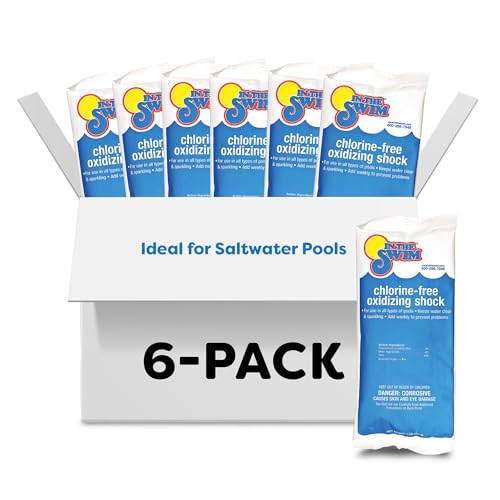
In The Swim Chlorine-Free Pool Shock - 6 x 1 Pound Bags
- Non-Chlorine Alternative: Use chlorine-free pool shock-oxidizer weekly to eliminate non-living matter, keeping your above ground or in-ground swimming pool water clean...
- Proper Water Balance: Quickly dissolves to provide fast results without raising or altering pH levels
- Reduce Chlorine Usage: Enhances the effectiveness of the existing chlorine in the pool, reducing the need for extra chlorine in your swimming pool
Consider In The Swim Chlorine-Free Pool Shock if you maintain salt or mineral systems and need a weekly non-chlorine oxidizer. Measure 1 lb per 5,000 gallons. Dissolve in a bucket using a plastic scoop, stir with a nylon brush, avoid metal tools to prevent contamination. Broadcast slowly around perimeter. Run pump 8–12 hours after application, check chlorine residuals with a DPD test kit, adjust sanitizer if levels change. Use for spas, in-ground, above-ground pools. Expect reduced eye and skin irritation, enhanced chlorine efficacy, minimal pH drift, troubleshoot cloudy water by backwashing, testing stabilizer (CYA) levels. Store sealed, cool, dry.
Best For: swimmers and pool owners using salt or mineral systems who want a weekly, non-chlorine oxidizer to reduce chlorinated shock usage and minimize eye/skin irritation.
Pros:
- Fast-dissolving, non-chlorine oxidizer that enhances existing chlorine efficacy without raising pH.
- Compatible with salt, mineral, bromine, and standard chlorine pools, spas, and hot tubs.
- Minimizes skin and eye irritation and reduces the need for extra chlorine.
Cons:
- Not a sanitizer—won’t replace chlorine for killing live contaminants, so regular sanitizer monitoring is still required.
- Requires pre-dissolving in a bucket and care (avoid metal tools) plus running the pump 8–12 hours after application.
- May be insufficient alone for heavy organic loads or severe water clarity issues; additional treatments/backwashing may be needed.
HTH Pool Shock (Cal Hypo) Shock Treatment, 1 lb (12 Pack)

HTH 52037R Pool Care Shock Advanced, Swimming Pool Chemical - Cal Hypo Formula, Prevents Bacteria...
- BENEFITS: Stay all clear for cannonballs; This fast-dissolving, convenient 4-in-1 formula kills bacteria and algae, reduces chlorine odor and irritation, and quickly...
- FEATURES: Multi-functional shock treatment for weekly use to solve 90% of pool water problems within 24 hours and restore crystal clarity
- VISIBLY BRILLIANT SPARKLE: This Cal Hypo based formula sanitizes without adding cyanuric acid (CYA) to prevent overstabilization or chlorine lock
Identify pools prone to algae and rapid chlorine decay as the ideal candidates for this Cal Hypo shock. Test water with HTH 6-Way Test Strips, balance pH 7.2–7.6 and alkalinity 80–120 ppm before shocking. Add one 1 lb shock per shock event, open outdoors, wear gloves and goggles, broadcast granules around deep end, run pump 8–12 hours. Use weekly for maintenance, or treat heavy algae, wait 24 hours, retest for free chlorine. Note compatibility with vinyl-lined and saltwater pools, no cyanuric acid added, troubleshoot persistent cloudiness with flocculant, follow label directions precisely. Call HTH support if unusual reactions occur.
Best For: Pools that are prone to algae growth and rapid chlorine decay, and owners who regularly test and maintain water balance.
Pros:
- Fast-dissolving 4-in-1 formula that kills bacteria and algae and restores crystal clarity.
- Does not add cyanuric acid (CYA), avoiding overstabilization or chlorine lock.
- Suitable for all pool types, including vinyl-lined and saltwater systems.
Cons:
- Must be handled outdoors with gloves and goggles and requires careful dosing and circulation (pump 8–12 hours).
- May require repeat treatment and retesting (especially for heavy algae) and occasional use of flocculant for persistent cloudiness.
- Requires regular water testing and balancing (pH 7.2–7.6, alkalinity 80–120 ppm) for safe/effective use.
Doheny’s Chlorine-Free Oxidizing Shock (12 lb)
Sale

Doheny's Chlorine-Free Oxidizing Shock | Fast-Dissolving | Removes Chloramines & Boosts Free...
- Non-Chlorine Oxidizing Pool Shock: Powerful oxidizer that eliminates chloramines and boosts free chlorine levels for a cleaner, fresher pool.
- Fast-Dissolving Formula: Quick-acting granular shock breaks up chloramines to effectively oxidize spent chlorine cells.
- Easy Dosage: Use 1 lb per 10,000 gallons for optimal water clarity and sanitation.
If you deal with frequent swim sessions or high bather loads, use Doheny’s 12 lb Chlorine-Free Oxidizing Shock to break chloramines quickly and restore clarity.
Measure your pool volume, then dose 1 lb per 10,000 gallons, distribute 1 lb bags around deep water, avoid adding to skimmer directly.
Use a bucket and stir, confirm full dissolution with pump running, wait 15 minutes before swimming as labeled.
Expect potassium monopersulfate to oxidize organics, it reduces chloramines and elevates free chlorine demand temporarily.
If cloudiness persists, repeat dose after retesting, check circulation pump, clean cartridges or backwash sand/DE filters, log dates.
Best For: Pool owners with frequent swim sessions or high bather loads who need a fast, chlorine-free oxidizer to break chloramines and quickly restore water clarity.
Pros:
- Fast-dissolving potassium monopersulfate formula that effectively breaks up chloramines and organic contaminants.
- Safe to swim just 15 minutes after application for quick turnaround between uses.
- Convenient 12 x 1 lb bags for easy, per-dose distribution (dose 1 lb per 10,000 gallons).
Cons:
- Not a sanitizer—doesn’t replace routine chlorine/bromine maintenance.
- Can temporarily elevate free-chlorine demand and may require retesting and repeat dosing if cloudiness persists.
- Requires proper handling (do not add directly to skimmer) and full dissolution with the pump running for best results.
Factors to Consider When Choosing a Non-Chlorine Pool Shock

Check oxidizer type and active ingredient strength before treatment, use peroxide, potassium monopersulfate, or stabilized formulations. Measure active concentration in percent or g/L, time dissolution in minutes, confirm sanitizer compatibility and pH impact with a calibrated pH meter. Record dose per 10,000 gallons, wear goggles and gloves, troubleshoot cloudy water by retesting pH, adjusting alkalinity, or backwashing the filter.
Oxidizer Type
When selecting an oxidizer, prioritize potassium monopersulfate-based shocks, note label concentration (typically 35–90% active), and verify compatibility with your stabilizer. Wear chemical-resistant gloves and a mask. Measure dose precisely, for example 1 lb per 10,000 gallons, dissolve in a 5-gallon bucket of pool water, stir with a plastic paddle. Broadcast granules evenly around perimeter, avoid dump near skimmer, run pump for 2–4 hours to circulate. Test water clarity after 15 minutes, expect immediate improvement and safe swimming in 10–15 minutes with fast-dissolving formulas. If cloudiness persists, vacuum or backwash, recheck filter pressure with a gauge. If granules settle undissolved, stop pump, brush area, scoop debris, repeat dissolution procedure. Record treatment in maintenance log, note date, product name, and dosage, include water temperature and model.
Active Ingredient Strength
Measure the active strength listed on the product label, note the percent active and any stabilizer compatibility warnings. Compare percent active to standard 36.2% potassium monopersulfate. Calculate dose using pool volume in gallons, a digital measuring cup, and the manufacturer dosing chart. Adjust frequency when usage or bather load increases. Expect faster oxidation with higher strength, often restoring clarity within about ten minutes under ideal conditions. Use a pool test kit and turbidity meter to verify results. If you notice residual organics or continued odor, increase dosage incrementally, document changes with a logbook and camera. Wear nitrile gloves, safety goggles, and mix in a well-ventilated area. Consult MSDS and contact manufacturer technical support with product lot number for troubleshooting, sample analysis, and replacement advice.
Dissolution Speed
Confirm pool volume and water temperature, then ready a digital measuring cup, thermometer, stirring rod, turbidity meter, and nitrile gloves. Add measured fast-dissolving shock to deep end, dissolve time can be almost instantaneous on contact, expect visible clarity changes. Stir gently with rod for two minutes, if granules persist, stop skimming and continue gentle circulation for five minutes. Test turbidity at intervals, most quick-dissolving products act within 10 to 15 minutes, permitting safe swim shortly after treatment when readings normalize. Note odor reduction, quick dissolution minimizes chemical smell around the pool, improving user comfort. Address clumping by pre-dissolving one kilogram in three liters of warm water, filter backwash if cloudiness persists. Record time, product lot, and observation for future dosing accuracy and note temperature.
Sanitizer System Compatibility
Inspect product labels, verify active ingredient percentages (typically 20–40% potassium monopersulfate), and note recommended pH and dosing. Check compatibility with your sanitizer: bromine, saltwater (electrolytic), or traditional chlorine systems. Read manufacturer specifications, confirm ppm targets, and record recommended grams per 10,000 gallons with a digital scale. Use protective gloves, eye protection, and a plastic scoop when handling shock, then dissolve according to label in a plastic bucket. If you use bromine, select formulations that target chloramines and reduce odor for better swimmer comfort. For saltwater pools, confirm non-corrosive additives and compatibility with chlorine generator cells. Troubleshoot cloudy water by measuring residual oxidizer with a DPD test kit, then repeat dose if monopersulfate reads low. Always follow manufacturer guidelines to avoid efficacy issues, and report.
Ph Impact
When you add non-chlorine shock, wear gloves and goggles, use a plastic scoop or digital scale. Test pH and alkalinity first. Use a digital pH meter or Taylor test kit, record pH, record total alkalinity in ppm, and note temperature. Dose per manufacturer instructions. Follow grams or ounces per 10,000 gallons, for example 150 g (5.3 oz), adjust for pool volume. Expect minimal immediate pH change. If pH leaves 7.2–7.8 within 24 hours, adjust alkalinity with sodium bicarbonate, 1 lb per 10,000 gallons raises TA ~10 ppm. Re-test pH after two hours. Keep records, and if drift persists, consult a pro, noting non-chlorine shocks typically lack cyanuric acid and don’t raise pH. Repeat monitoring weekly, or after heavy rain, bather load spikes, or extended sun exposure.
Safety and Handling
Anyone handling non‑chlorine shock should wear proper PPE and work deliberately, because these oxidizing powders can irritate skin and eyes. Wear nitrile gloves and ANSI Z87.1 goggles. Measure dosing carefully, use 1 lb per 10,000 gallons as a typical starting guideline, adjust per label. Work outdoors or with cross-ventilation. Store containers sealed, in a cool dry closet below 77°F, keep moisture and sunlight away to prevent caking. Keep products locked away from children and pets. Follow manufacturer instructions step-by-step, if cloudiness or high combined oxidant persists, retest pH and shock dosage, troubleshoot accordingly. Avoid mixing with chlorine or acids. Carry a powdered spill kit, sweep up material with a plastic scoop, dispose per label and local hazardous waste rules. Report exposures, seek medical attention immediately.
Cost and Packaging
Compare unit price per pound, note package weight, label dosage in pounds per 10,000 gallons, and calculate doses. Read the package weight, record ounces or pounds, and use a calculator like a phone app. Measure pool volume with a tape measure, gather pool pump manual, confirm gallons precisely. Divide package pounds by labeled dose to find number of treatments per bag. Check multi-pack pricing, compare per-dose cost, factor in occasional shipping fees and expedited handling. Inspect product label for granules per cup, verify dosing scoops and stir rod presence. Anticipate clumping, seal tears, bring desiccant packs and a replacement scoop for troubleshooting. Recalculate cost per treatment after shipping plus spoilage.
Frequently Asked Questions
Are Non‑Chlorine Shocks Safe for Pets Who Drink Pool Water?
An ounce of prevention is worth a pound of cure, yes, MPS shocks are safe for pets. Keep pets away during mixing. Use a pool test kit and ORP meter, target oxidizer below 5 ppm, and maintain pH 7.2‑7.8 before reentry. Wear nitrile gloves, don’t eyeball measurements. If ingestion occurs, watch for vomiting, call your veterinarian, bring the product label and concentration data. Backwash filter, retest, repeat only if safe.
How Should I Dispose of Leftover Non‑Chlorine Shock Safely?
Dispose leftover non‑chlorine shock safely, don’t pour it down storm drains. Use the original container, seal the lid and tape the cap, then take it to HHW. If your container’s damaged, transfer measured 1 cup portions to HDPE jugs, label contents clearly. Wear nitrile gloves and safety goggles, avoid inhalation, use a NIOSH‑approved respirator if dusty. For small amounts, neutralize with pool dechlorinator per instructions, test pH before disposal.
Can Non‑Chlorine Shocks Be Shipped Internationally Without Restrictions?
Like threading a needle, yes, you’ll ship them. Check the SDS, confirm UN classification, and contact the carrier for acceptance rules. Consult IATA, IMDG, or ADR provisions before packing. Label with UN number, state net weight in grams, use UN‑rated inner containers and absorbents. Provide the SDS and emergency contact information. If carrier rejects shipment, document refusal, repackage to compliance, or arrange hazardous transport contractor pickup. Expect permits and paperwork.
Will Non‑Chlorine Shock Damage Pool Solar Covers or Heaters?
Expect no damage in normal use, generally. Rinse covers with fresh water after dosing, measure sanitizer ppm, use peroxide-based shocks at manufacturer rates specified. Don’t let concentrated powder contact PVC surfaces. Monitor heater heat exchanger for scale or oxidation, inspect panels and tubing for discoloration, record anomalies immediately. Keep pH between 7.2 and 7.6 post-shock. If staining or warping appears, document photos, contact manufacturer, test residual oxidizer using DPD kit.
How Can I Tell if I Overdosed My Pool With Non‑Chlorine Shock?
Contrast calm and alarm: answer, check your pool.
Use an oxidizer test kit or ORP meter, log ppm and pH, note temperature, cyanuric acid, and total alkalinity readings.
If oxidizer exceeds 10 ppm, don’t ignore it.
Run pump nonstop, backwash or clean filter, aerate, dilute with fresh water.
If persistent, neutralize with sodium bisulfite per label.
Retest after 4 to 24 hours, log results with photos, call a pool pro.