As an Amazon Associate, we earn from qualifying purchases. Some links on this site are affiliate links at no extra cost to you. Our recommendations are based on thorough research and editorial judgment.

10 Best Pool Water Test Strips of 2026 — Accurate, Easy-to-Read Picks

Choose reliable strips like JNW 7‑in‑1, Newpol 7‑in‑1, LaMotte Insta‑Test 4 Plus, Clorox My Pool Care, EASYTEST, or a 162‑pc bulk kit. Test twice weekly, dip for 2 seconds, wait 15 seconds, compare to chart, target free chlorine 1–3 ppm, pH 7.2–7.6, alkalinity 80–120 ppm, hardness 150–400 ppm, verify with a digital pH meter, replace strips after 90 days or inconsistent results, follow manufacturer troubleshooting and keep log and adjustment notes for full comparisons online.
Key Takeaways
- Prioritize strips with proven accuracy for free chlorine, pH, alkalinity, and cyanuric acid to ensure reliable pool and spa safety readings.
- Choose easy-to-read color charts or digital apps and test under consistent lighting to minimize subjective color-matching errors.
- Buy packs sized for your testing frequency—bulk kits (150–162 strips) give better long-term value for frequent testing.
- Follow manufacturer dip times and read windows, and store strips sealed, dry, and cool to preserve accuracy up to 90 days after opening.
- For critical decisions, cross-check strip results with a calibrated pH meter or digital colorimeter, or send samples for lab confirmation.
JNW 7-in-1 Pool and Spa Test Strips (100 Count)
Sale

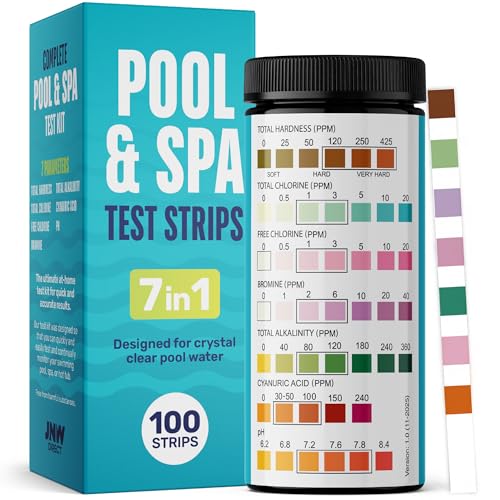
JNW 7-in-1 Pool Test Strips, 100 Quick & Accurate Test Strips for Pool Water, Spa Test Strips for...
- AFFORDABLE 7-IN-1 POOL TESTING KIT: Our 100 pool test strips provides an affordable, all in one pool water testing kit for various chemicals including Free Chlorine...
- QUICK & EASY: Simplify your pool and spa testing with our easy pool testing strips. Just dip our hot tub test strips into the water for 2 seconds, wait for 30 seconds...
- ACCURATE & RELIABLE: Our swimming pool test strips deliver highly precise readings, ensuring the safety and cleanliness of your pool or hot tub water. Utilize our pool...
You may be interested

Choose JNW if you’re a budget-conscious DIY pool owner who needs fast, routine chemical checks. Dip the strip. Hold in water for exactly 2 seconds, remove, then lay flat without touching pads, start timer. Wait 30 seconds. Match colors to the chart for Free Chlorine, Bromine, pH, Alkalinity, and Hardness, record values in log. Test twice weekly. Store strips sealed, away from moisture and light, use within 90 days after opening, replace container cap immediately. Consult the included eBook. If readings seem inconsistent, rinse sample cup, retest, check expiration, and verify water temperature is between 60–80°F before trusting results.
Best For: Budget-conscious DIY pool and spa owners who need quick, routine checks of chlorine/bromine, pH, alkalinity, and hardness.
Pros:
- Affordable 7-in-1 testing with 100 strips for frequent use.
- Fast and easy: dip 2 seconds, wait 30 seconds, match to color chart.
- Complimentary eBook and recommended twice-weekly testing help maintain balanced water.
Cons:
- Strips must be stored sealed and used within 90 days of opening to remain accurate.
- Readings can be affected by moisture, light, temperature (best 60–80°F) and may require retesting.
- Not as precise as lab analysis for borderline or complex chemical issues.
162 Pcs 7-Way Hot Tub Pool Test Strips – Accurate Readings in 15 Seconds
Sale
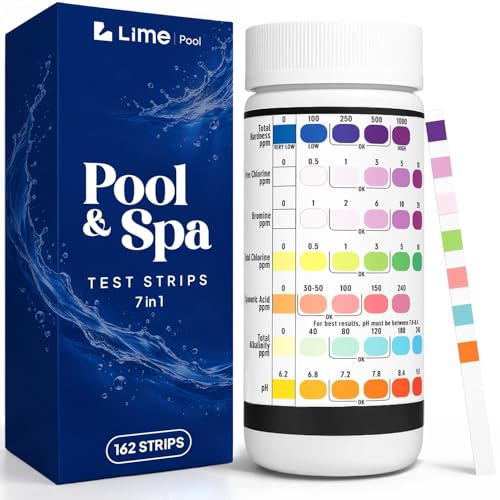
LIME POOL 162 Pcs 7-Way Hot Tub, Spa & Pool Test Strips - Accurate Readings in 15 Seconds
- LAB-TESTED ACCURACY – Our pool test strips are rigorously tested for precision, delivering ±3% accuracy. If in doubt, compare results with a certified lab test before...
- 7 IN 1 – Easily check Total Hardness (TDS), Free Chlorine, Bromine, Total Chlorine, pH, Alkalinity & Cyanuric Acid—all with one easy-to-use strip.
- PROPERLY USE FOR THE BEST RESULT - Dip in the water for 2 seconds, then hold the strips horizontally for 45 seconds. Don't shake off the water or let the colors. Then...
Ideal for families and pool service professionals who need bulk, lab-tested accuracy, this 162-piece 7-way strip kit measures TDS, free chlorine, bromine, total chlorine, pH, alkalinity, and cyanuric acid with ±3% accuracy. Dip two seconds promptly. Hold horizontally for forty-five seconds, avoid shaking, and read colors clearly against bright natural daylight. Don’t touch pads. Store sealed in a cool, dry place, and always discard strips ninety days after opening. Use within two years. Expect lab-tested ±3% accuracy across TDS, free and total chlorine, bromine, pH, alkalinity, and cyanuric acid; cross-check near limits, adjust sanitizer and stabilizer levels carefully.
Best For: Ideal for families and pool/spa service professionals who need an affordable bulk supply of lab-tested 7-way test strips to quickly monitor water balance and sanitizer levels.
Pros:
- Lab-tested ±3% accuracy across 7 important parameters (TDS, free/total chlorine, bromine, pH, alkalinity, cyanuric acid).
- Bulk 162-piece pack is cost-effective for families and service pros who test frequently.
- Simple, fast procedure — dip 2 seconds, hold horizontally and read color change for quick results.
Cons:
- Must be read in natural daylight and held horizontal for the recommended time (45s), which can be inconvenient in low light.
- Strips must be kept dry, lid sealed, and discarded within 90 days of opening, limiting long-term storage.
- Slight potential for reduced accuracy near critical limits; cross-check with other methods before major chemical adjustments.
7-in-1 Pool Test Strips (150 Pack) for Swimming Pools & Hot Tubs
Sale

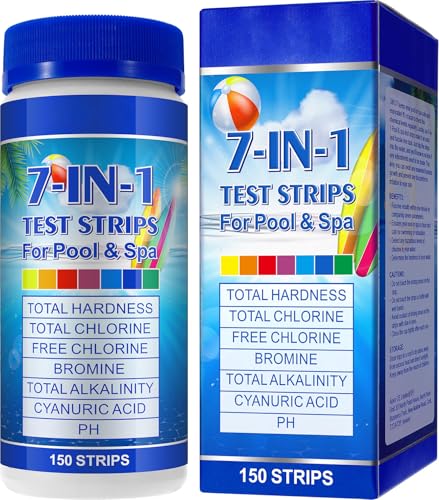
Pool Test Strips 7-in-1 (150Pcs)| Hot Tub Test Strips for Swimming Pool & Spa | Pool Water Testing...
- Convenient Testing: Quickly and easily test your pool water with just a simple dip of the strip into the water for 2 seconds.
Grab a test strip, dip it into pool water for 2 seconds, then remove and hold it horizontally. Use strips from the 7-in-1, 150-pack box. Test Free Chlorine, Bromine, pH, Alkalinity, Hardness, and two additional indicators, matching colors to the manufacturer chart. Test twice weekly, or after heavy use. Calibrate expectations by testing adjacent samples, compare readings within two minutes, discard strips exposed to humidity. Use sanitized tweezers and a shaded surface for color matching. Adjust chlorine with granular chlorine or liquid stabilizer dosages, follow ppm guidelines, retest after 30 minutes. Store unopened strips in a dry, airtight container.
Best For: Pool and hot tub owners who want an affordable, fast, and easy way to monitor multiple water parameters regularly.
Pros:
- Quick 2-second dip test with 7-parameter results for comprehensive monitoring.
- Large 150-strip pack offers excellent long-term value and reduces frequent repurchasing.
- Suitable for pools, saltwater pools, spas, and hot tubs with simple color-chart matching.
Cons:
- Color matching can be subjective and affected by lighting or user error, reducing precision versus digital meters.
- Strips are sensitive to humidity and must be stored/handled carefully to avoid invalid results.
- Not a substitute for professional lab testing for borderline or complex water chemistry issues; retesting is often required after treatment.
LaMotte Insta-Test 4 Plus Water Test Kit (Free Chlorine, Bromine, Alkalinity, pH, Total Hardness)
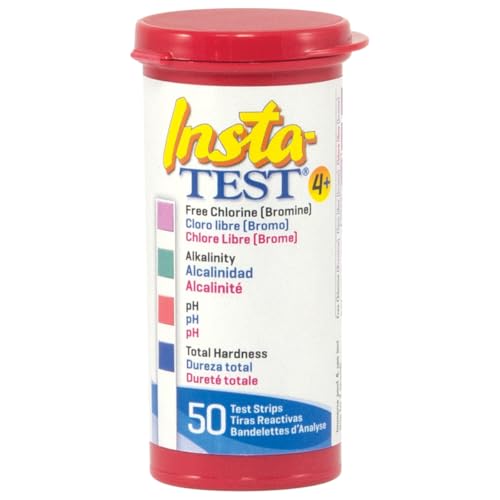
LaMotte Insta-Test 4 Plus, Free Chlorine, Bromine, Alkalinity, pH, Total Hardness Testing
- Chlorine, Bromine, Alkalinity, pH, Total Hardness.
- The Insta-TEST 4 Plus pool and spa strip measures Chlorine 0-10 ppm, Bromine 0-20 ppm, Total Alkalinity 0-240 ppm, pH 6.2-9.0, and Total Hardness 0-800 ppm.
- The test strip is a 1-dip method designed to match the way strip users actually test water
Use the LaMotte Insta-Test 4 Plus if you manage a spa or small pool and need rapid, multi-parameter results. Open the PopTop. Remove a strip, avoid touching pads, dip for one second, shake gently, compare colors to the chart within seconds. Record free chlorine and bromine. Interpret chlorine 0–10 ppm and bromine 0–20 ppm ranges, note pH between 6.2–9.0, log alkalinity 0–240 ppm, check total hardness 0–800 ppm. Replace the desiccant liner if damp. If results stray, calibrate with a known standard, test new strips against control solution, discard expired bottles and avoid UV exposure during sampling. Store bottles tightly closed.
Best For: Spa and small pool owners who need fast, easy multi-parameter water checks for free chlorine/bromine, pH, alkalinity, and hardness.
Pros:
- Quick 1‑dip, instant read for five key parameters (free chlorine, bromine, pH, alkalinity, total hardness).
- Comes in a waterproof PopTop bottle with molded desiccant liner to protect strips from moisture and UV.
- Instructions in English, Spanish, and French; 50 strips per bottle for repeated testing.
Cons:
- Test-strip results are less precise than laboratory titration or electronic meters for critical adjustments.
- Requires care (avoid touching pads, replace desiccant, discard expired bottles) to maintain accuracy.
- Limited parameter set (no cyanuric acid or combined chlorine measurement).
Newpol 7-in-1 Pool Test Strips for Swimming Pools, Hot Tubs & Spas

Newpol 7-in-1 Pool Test Strips, 100 Strips Water Testing for Swimming Pool, Hot Tub and Spa
- NEWPOL (100strips) 7-IN-1 POOL TEST: each test strip include 7 testing range, Hardness , Free Chlorine, Bromine, Total Chlorine, Cyanuric Acid,Total Alkalinity and pH...
- Super fast & Accurate: Dip the test strip into the water sample for 2 seconds, and hold the strip horizontally for 30 seconds to get an accurate reading, then compare...
- Application & Regularity : Suitable for standard swimming pool, aboveground pool, min pool, inflatable pool, spa, hot tub, and similar water testing. To keep your pool...
Select Newpol 7-in-1 when you manage pools, spas, or hot tubs and need quick, multi-parameter readings. Carry a bottle of 100 strips. Dip a strip into pool or spa water for exactly 2 seconds, then hold it horizontally for 30 seconds. Compare to the color chart immediately. Read results within 30 seconds, record Free Chlorine, Bromine, Total Chlorine, Cyanuric Acid, Total Alkalinity, pH and Hardness. Test twice weekly, increase frequency after heavy use. Store strips dry, keep cap tight, retain the dry bag, use before expiry, discard strips, re-sample mid-depth, contact Amazon for 24-hour support line and one-year warranty.
Best For: Pool, spa, and hot tub owners who want a quick, convenient way to check multiple water parameters regularly with a single test strip.
Pros:
- Tests seven key parameters (Free Chlorine, Bromine, Total Chlorine, Cyanuric Acid, Total Alkalinity, pH, Hardness) for comprehensive readings.
- Comes with 100 strips — convenient supply for frequent (recommended twice-weekly) testing.
- Fast and simple: dip 2 seconds, hold 30 seconds, and read results within 30 seconds.
Cons:
- Color-chart interpretation can be subjective and less precise than digital or lab tests.
- Strips must be stored dry, capped, and used before expiry — improper storage reduces accuracy.
- Provides range-based results, not exact ppm values, which may be insufficient for very precise adjustments.
Hot Tub and Pool 6-in-1 Water Test Strips (100 Pack)
Sale

Hot Tub and Pool Test Strips - 6in1 Quick & Accurate Hot Tub, Spa, Pool Test Strips - 100 Water Test...
- AFFORDABLE 100 6-IN-1 TEST STRIPS: Get more for your money with our pool, spa and hot tub test kit that contains 100 test strips, providing an affordable option for...
- QUICK & EASY TO USE: Testing your pool, spa and hot tub water is very quick and easy with our test strips. Simply dip the strip into the water for 2 seconds, hold strip...
- ACCURATE & RELIABLE: Our pool & hot tub testing kit is highly accurate and reliable, giving you peace of mind that your spa and hot tub water is safe and healthy for use...
Choose the 6-in-1 JNW Direct strips when you maintain small-to-medium hot tubs (around 400 gallons) or residential pools.
Dip one strip for 2 seconds.
Hold the strip horizontally for 30 seconds, then match colors to the included chart under natural light for accuracy.
Test twice weekly for safety, regularly.
Check chlorine, bromine, free chlorine, pH, hardness, and alkalinity from the 100-count bottle to maintain balanced chemistry.
Use the free eBook guide for target ranges.
Avoid wet fingers, reseal cap tightly, keep desiccant inside, store in cool dry darkness, note two-year shelf life.
Use strips within 90 days of opening.
Best For: Homeowners and spa owners maintaining small-to-medium hot tubs (around 400 gallons) or residential pools who want a simple, affordable way to monitor basic water chemistry.
Pros:
- Quick and easy to use (2-second dip, read after 30 seconds) for routine twice-weekly testing.
- 6-in-1 test coverage (chlorine, bromine, free chlorine, pH, hardness, alkalinity) in a 100-count bottle.
- Includes a free eBook and clear storage guidance for reliable, long-term use.
Cons:
- Color-matching strips can be less precise than electronic or lab testing and depend on good natural light.
- Strips must be used within 90 days of opening and have a 2-year shelf life from manufacture.
- Best suited for small-to-medium tubs/pools; may not meet needs for large or professional installations.
AquaChek Salt Test Strips for Salt Water Pools (10 Pack)
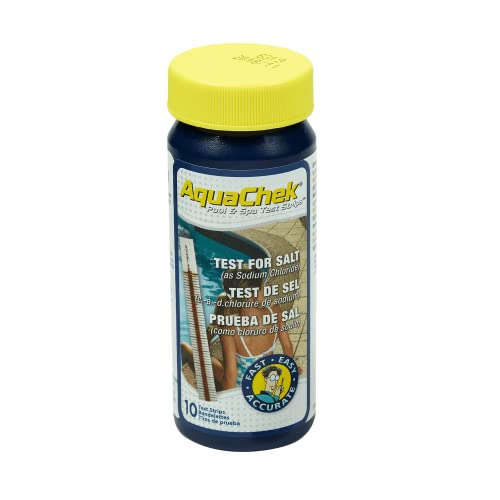
AquaChek Salt Test Strip Titrators for Pools - Salt Water Pool Test Strips for Sodium Chloride...
- WHITE SALT TEST STRIPS: Tests the salt (sodium chloride) levels for pools with salt generator systems; White titrators measure levels from 400 to 7,000 ppm
- AQUACHEK ACCURACY: Using medical industry technology, our test strips offer comparable accuracy to liquid tests; No measuring & counting drops of reagent, leaving less...
- EASY TO USE: Just dip the test strip & remove it; Accurate results in a few minutes; Water chemistry insert & directions included; Test water at least twice a week for...
If you maintain a salt-chlorine generator, these strips give frequent, accurate sodium chloride readings from 400 to 7,000 ppm and are ideal for routine monitoring of automated systems. Dip a strip for two seconds. Remove, wait three minutes, then compare pads to the chart and record salt; don’t average readings across days. Test twice weekly. Use the AquaChek Connect app, enter ppm, get treatment plans and track trends to troubleshoot scaling or low chlorine. Store strips sealed and dry, upright. If results fluctuate, verify sampling depth, avoid surface scum, replace expired strips, and calibrate your generator per manufacturer instructions.
Best For: Pool owners with salt-chlorine generators who need quick, routine sodium chloride monitoring to maintain proper generator performance.
Pros:
- Fast, easy testing (dip 2 seconds, read in ~3 minutes) with medical-grade accuracy comparable to liquid tests.
- Wide measurement range (400–7,000 ppm) suitable for most salt systems.
- Works with AquaChek Connect app for logging results, tailored treatment plans, and trend tracking.
Cons:
- Only measures salt (sodium chloride), not other important water chemistry parameters.
- Kit contains just 10 strips, requiring frequent repurchase for twice-weekly testing.
- Color-match readings can be affected by sampling technique, surface scum, expired strips, or user interpretation.
Clorox Pool&Spa My Pool Care Assistant, 50 Test Strips
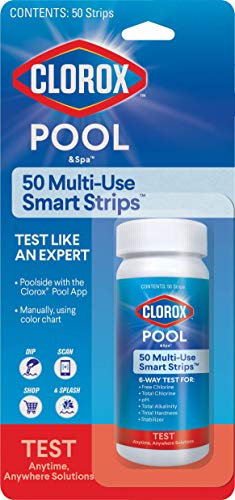
Clorox Pool&Spa My Pool Care Assistant, 50 Test Strips
- Test Like an Expert: Maintain perfectly balanced pool water with 6-Way Multi-Use Test Strips and the complimentary Clorox Pool app. The app gives do-it-yourself pool...
- Instant and Accurate Result: Using our Water Test Strips and the free, easy-to-use app helps troubleshoot common pool problems and receive personalized product...
- Comprehensive Water Test Strips: Our Water Test Strips are used for testing Total Hardness, Total Chlorine, Free Chlorine, pH, Total Alkalinity, and Stabilizer.

Test your pool quickly with these 50 6‑way test strips, ideal for DIY owners wanting digital guidance. Dip a strip at elbow depth, hold 2 seconds, remove, wait 15 seconds, then scan with the Clorox Pool App. Use the app to read Total Hardness, Total Chlorine, Free Chlorine, pH, Total Alkalinity and Stabilizer, follow troubleshooting prompts. Record readings, compare to target ranges: pH 7.2–7.8, free chlorine 1–3 ppm, alkalinity 80–120 ppm, stabilizer 30–50 ppm. Adjust chemicals with measured doses, use test strip repeats after 24 hours, and consult app product recommendations if imbalance persists. Carry spare strips in container.
Best For: DIY pool owners who want quick, digital-guided water testing and personalized product recommendations to keep their pool balanced.
Pros:
- Tests six key parameters (total hardness, total chlorine, free chlorine, pH, total alkalinity, stabilizer) in one strip.
- Quick, easy workflow (dip at elbow depth, hold 2 sec, wait 15 sec) with app scan-to-test for instant, interpreted results.
- App offers troubleshooting, recorded history, and tailored product recommendations for fixes.
Cons:
- Requires a smartphone and the Clorox Pool App to get interpreted results and recommendations.
- Strips must be stored properly and can expire or give inaccurate results if contaminated or exposed to moisture.
- Chemical adjustments may require waiting/retesting (often 24 hours) before retesting, delaying immediate correction.
EASYTEST Pool and Spa Test Strips (150 Pack) — 3-in-1 pH, Total Alkalinity, Free Chlorine & Bromine
Sale

EASYTEST 150Pcs 3-Way Hot Tub, Spa and Pool Test Strips
- AFFORDABLE 150 STRIPS: This water chemical testing kit contains 150 test strips. Enough balanced for your swimming pool, hot tub, spa and other water testing. At least...
- EASY AND FAST TESTING: Just dip in water for 1 seconds; Then take it out, hold the test strip horizontally for 15 seconds; Compare with the color chart on the bottle to...
- HIGH ACCURACY POOL TESTING STRIPS: High-quality fiber paper and no-bleeding pads selected after repeated trials by R&D personnel. No need to shake off excess water and...
Use these EASYTEST strips for routine checks of pH, total alkalinity, free chlorine and bromine in pools, hot tubs, and spas. Dip one strip into the skimmer basket area for 1 second, hold horizontally for 15 seconds, then compare to the bottle color chart under natural daylight. Don’t touch reagent pads with wet fingers, store bottle in a cool dry place, discard after 90 days, note 2-year manufacture expiration. If colors appear faint, check expiration and humidity damage, replace strips. For high chlorine, dilute with fresh water and shock cautiously, for high pH, add muriatic acid per manufacturer instructions.
Best For: Home pool, hot tub, and spa owners who want an easy, affordable way to do routine twice-weekly checks of pH, total alkalinity, and free chlorine/bromine.
Pros:
- 150-strip pack provides long-lasting supply for regular testing.
- 3-in-1 pads test pH, total alkalinity, and free chlorine/bromine quickly in one dip.
- High-quality no-bleed pads for clearer color readings and simple 15-second results.
Cons:
- Color matching is subjective and can be affected by lighting, requiring natural daylight for best accuracy.
- Strips expire 2 years from manufacture and must be discarded 90 days after opening, limiting usable life once opened.
- Does not test other important parameters (e.g., cyanuric acid, total chlorine), so additional tests may be needed for full water chemistry.
JNW 7-in-1 Pool and Spa Test Strips (150 Count)
Sale
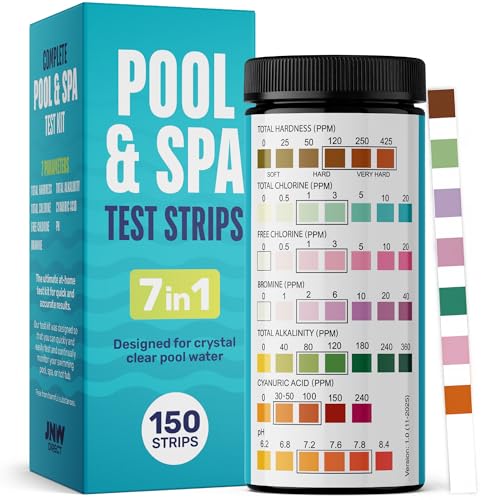
JNW 7-in-1 Pool Test Strips, 150 Quick & Accurate Test Strips for Pool Water, Spa Test Strips for...
- AFFORDABLE 7-IN-1 POOL TESTING KIT: Our 150 pool test strips provides an affordable, all in one pool water testing kit for various chemicals including Free Chlorine...
- QUICK & EASY: Simplify your pool and spa testing with our easy pool testing strips. Just dip our hot tub test strips into the water for 2 seconds, wait for 30 seconds...
- ACCURATE & RELIABLE: Our swimming pool test strips deliver highly precise readings, ensuring the safety and cleanliness of your pool or hot tub water. Utilize our pool...
Pool owners who need fast, multi-parameter checks will find these JNW 7‑in‑1 strips ideal. Dip a strip for 2 seconds at elbow depth, wait 30 seconds, then match colors to the chart. Test at least twice weekly for maintenance. Record free chlorine, bromine, pH, alkalinity, hardness and other readings in a log, note date and time. Store strips dry, away from light. Seal the container after each use, replace within 90 days, and consult the eBook for balancing procedures. If results seem inconsistent, verify technique, check strip expiration, retest with dechlorinated sample, and contact support if needed for help.
Best For: Pool and spa owners who want quick, multi-parameter water checks to maintain safe chemical balance with minimal effort.
Pros:
- Fast, easy testing (dip 2 seconds, read after 30 seconds) that checks free chlorine, bromine, pH, alkalinity, hardness and more.
- Large 150-count supply plus a complimentary eBook for balancing tips — good value for regular testing.
- Highly rated for accuracy and reliability when used correctly; compact, portable container.
Cons:
- Best used within 90 days of opening and must be stored dry and sealed, limiting long-term shelf life after first use.
- Color matching is subjective and can lead to inconsistent readings if technique or lighting is poor.
- Not a substitute for professional lab tests when precise measurements are critical.
Factors to Consider When Choosing Pool Water Test Strips
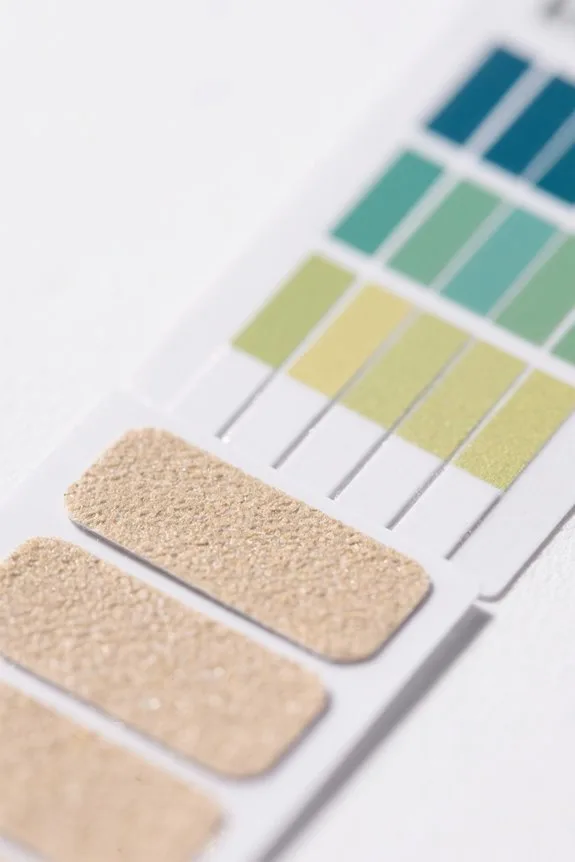
Check the strip’s parameters tested, confirm chlorine (free/total) in ppm, pH, alkalinity (ppm), cyanuric acid, hardness, and bromine. Compare accuracy and precision using manufacturer data, lab-calibrated references, repeated 10 mL samples, note sensitivity range in 0.5–1 ppm increments, and record read time, typically 15–30 seconds, for troubleshooting color bleed or faint pads. Choose strips with clear color charts, foil packaging, easy dip protocols, and replace any inconsistent strips after three tests.
Parameters Tested
When you choose test strips, prioritize ones that measure Free Chlorine, Bromine, pH, Alkalinity, Total Hardness, Cyanuric Acid, and Total Chlorine. Buy 7-in-1 strips, use a calibrated digital pH meter. Dip strips horizontally for manufacturer-specified time, usually two seconds, then wait 15–30 seconds for colors. Record Free Chlorine in ppm, target 1–3 ppm for pools, 3–5 ppm for spas. Check pH, aim for 7.2–7.6, adjust with muriatic acid or sodium carbonate as needed. Measure total alkalinity, maintain 80–120 ppm, add sodium bicarbonate to raise levels, pause and retest. Assess total hardness and cyanuric acid, mitigate scale or sanitizer degradation using sequestrants or dilution. If strips yield unexpected values, rinse in fresh water, test again, verify with a comparator kit or laboratory sample. Test regularly.
Accuracy and Precision
Although accuracy varies, expect quality strips to report within about a ±3% margin of error for critical parameters. Test twice weekly. Use no-bleeding pads, lab-tested strips, and a calibrated colorimeter for cross-checks when readings seem inconsistent, document values. Store strips dry. Keep containers sealed, avoid direct sunlight, maintain 20–25°C storage, and replace strips after the labeled expiration date to preserve accuracy. Act quickly on results. Allow 30–60 seconds reaction time, dip perpendicular for 1–2 seconds, blot excess, then compare under neutral light. Troubleshoot anomalies. If results drift, run a control with reagent-grade water, clean the colorimeter, verify batch lot numbers, and contact manufacturer support. Record pH, free chlorine, total alkalinity, cyanuric acid measurements in a logbook, timestamp each entry, and track trends weekly consistently.
Sensitivity Range
Start by selecting strips with a sensitivity range that covers 0–10 ppm for free chlorine, 0–10 ppm for bromine, pH 6.8–8.4, total alkalinity 0–240 ppm, and hardness up to 400 ppm. Read product specs, compare detection limits, and note ±3% accuracy claims before purchase. Carry a digital color reader, a sample cup, and manufacturer instructions for consistent readings. Dip strips for the exact recommended seconds, remove, wait specified time, then match colors under natural light. Record values, calculate dose changes, and adjust chlorine, alkalinity, or calcium hardness accordingly. Calibrate your color reader monthly, replace expired strips, and discard contaminated bottles. Troubleshoot inconsistent results by testing with control solutions, documenting anomalies, and consulting technical support. Keep spare bottles sealed, store at room temperature, avoid UV.
Ease of Use
Choose strips with a true one-step dip-test, submerge for the manufacturer-specified 2–5 seconds, then withdraw evenly. Rinse hands, grip the strip by the labeled end. Hold the strip level, avoid tilting, prevent reagent mixing. Use a clean sample container, 50–200 mL polypropylene cup works well. Confirm strip container has desiccant, replace cap immediately after removing strips. Read color blocks under natural daylight, avoid fluorescent lamps that shift hues. Look for distinct, non-faded pads, reject strips with smeared reagents. Follow multilingual instructions, check pictograms for sequence and timing. If a pad appears inconsistent, retest with a fresh strip and a fresh sample. Calibrate your reference chart monthly, photograph results for records, and note pool ID, temperature, recent chemical additions, date, tester initials, and time recorded.
Read Time
How long should you wait to read a pool test strip? Dip the strip for 2 seconds, then shake off excess water. Wait 30 to 45 seconds before comparing colors, follow the manufacturer’s timing window on the bottle. Read results within 30 seconds to one minute for best accuracy, don’t exceed the specified timeframe to avoid color drift. Test twice a week using a clean plastic cup or a dedicated sample bottle, label the sample if needed. Compare strips against the color chart under natural daylight, avoid fluorescent or shaded areas that distort hues. If colors look washed out, rinse the cup and repeat the test, make certain hands are dry and free of lotions. Record pH, free chlorine, alkalinity readings immediately, log values digitally.
Storage and Shelf Life
Store test strips in a cool, dry place away from direct sunlight and moisture. Keep them at 10–25°C, ideally in a cabinet with relative humidity below 50%, and use a hygrometer to monitor conditions. Close the polyethylene vial or resealable pouch immediately after each use, remove air, and press the cap firmly to maintain sample integrity. Use desiccant packets provided, replace if they clump, and note manufacture date on the container with a permanent marker. Use strips within 90 days of opening, and note unopened shelf life up to two years from manufacture. Don’t touch reagent pads with wet fingers, or false readings may occur; if a strip appears discolored, discard and test with a new control sample. Record lot, manufacture date, and receipts.
Compatibility With Pool Type
Assess your pool type before testing: identify freshwater, saltwater (salinity in ppm), or above-ground systems, and note spa or hot tub use. Select 6-in-1 or 7-in-1 strips for standard freshwater pools. Buy saltwater-specific strips that list sodium chloride in ppm, confirm range covers 2700–3500 ppm, avoid false chlorine readings. Use strips testing Free Chlorine, pH, alkalinity, total hardness. For spas and hot tubs, choose strips including total hardness, bromine, and sanitizer variants, test at 104°F equivalents. Match strip parameter lists to your pool chemistry requirements. If readings contradict visual inspection, recalibrate with a reference kit, replace expired strips, retest using fresh sample immediately. Document salinity, sanitizer, pH values, and note trends weekly. Replace strips stored improperly, consult manufacturer if readings remain inconsistent after retest.
Value and Quantity
Value matters when you buy test strips, so compare count, price, and parameter coverage before purchasing. Count options range from 50 to 162 strips, choose based on usage. Calculate cost per test by dividing total package price by number of strips, record exact cents per test. Prefer bulk packs like 150 strips, they’ll lower long-term costs for regular users. Check manufacture date and expiry, expect two-year shelf life, open packages should be used within 90 days. Buy extensive kits when you need multiple parameters, they justify higher price with wider monitoring. Use a thermometer, digital TDS meter, and color comparator for cross-checks, troubleshoot inconsistent readings with fresh known controls. Document lot numbers and dates, rotate stock, discard expired strips, repeat testing maintenance schedule.
Frequently Asked Questions
How Should I Store Unused Test Strips for Maximum Accuracy?
Store them sealed immediately. Use an airtight plastic container, include a fresh desiccant pack, keep away from sunlight and heat. Keep them stored at 15–25°C. Refrigerate only if manufacturer allows, monitor humidity with a hygrometer, avoid freezing that ruins reagents. Inspect expiration date and discoloration. If strips look faded or inconsistent, discard them, note lot number, contact manufacturer for replacement. Record storage dates, avoid opening container frequently, you’ll preserve accuracy.
Can Expired Test Strips Still Provide Reliable Results?
Picture a faded strip: don’t rely on expired test strips, they usually won’t provide reliable results. Discard expired strips immediately, use sealed reagent strips stored at 20°C, 40% relative humidity, in original vial with desiccant. Test a control solution, 50 ppm chlorine or 7.4 pH buffer, when in doubt, compare to a calibrated colorimeter (photometer) or titration kit. If readings drift, replace strips, document lot number, and contact manufacturer support.
How Do I Safely Dispose of Used Test Strips?
Bag used test strips in a sealed plastic bag, and don’t place them in household trash. If strips contacted high-chlorine or muriatic acid, double-bag them in a 1-gallon resealable polyethylene bag, label it, avoid recycling collection. Wear nitrile gloves and safety glasses when handling heavily soiled strips, preventing skin or eye irritation. Dispose of gloves and eyewear or decontaminate them with a 0.1% bleach solution, then dry and store tools.
Do Test Strips Detect Cyanuric Acid (Stabilizer) Levels?
Yes, they detect cyanuric acid, like a sundial gauging daylight. Dip a strip two seconds, wait sixty seconds, you’ll match to chart, read cyanuric acid ppm. Use calibrated chart, align under good light. Carry LaMotte 2050 photometer, sample at elbow depth, troubleshoot cloudy results. Replace expired strips, don’t reuse them. If values exceed 100 ppm, dilute by partial drain, refill, recheck after stabilization. Store sealed, avoid moisture.
Are Test Strips Affected by Colored Pool Water or Algae?
Answer: yes, strips can be affected by algae. Collect a 100 mL sample at 18 inches depth, use a clear cup, avoid surface scum. Filter 50 mL through 0.45 µm syringe filter. Dip strip two seconds, remove, keep level, compare to chart within 10 seconds, and check stabilizer. If water’s colored, perform turbidity and chlorophyll tests. Use a spectrophotometer or photometer, calibrate with standards, troubleshoot false high ppm readings quickly.