As an Amazon Associate, we earn from qualifying purchases. Some links on this site are affiliate links at no extra cost to you. Our recommendations are based on thorough research and editorial judgment.

Best Practices for Seasonal Pool Deep Cleaning

Start seasonal pool deep cleaning by adjusting water chemistry to specified ranges—pH 7.2-7.6, alkalinity 80-120 ppm, and chlorine 1-3 ppm—one week before winter closing. Remove all debris using commercial-grade vacuums and leaf blowers. Lower water below skimmer openings to prevent freeze damage, then clean and empty skimmer baskets. In spring, shock the pool after balancing chemicals and inspect filters for backwashing or replacement. Consistent brushing and timely equipment checks maintain clarity. Further guidance clarifies each step’s purpose and timing.
Key Takeaways
- Thoroughly remove debris using leaf blowers or brooms before vacuuming the pool floor and walls.
- Test and balance water chemistry based on the season’s recommended pH, alkalinity, and chlorine levels.
- Clean or backwash filters regularly to support water flow and maintain chemical balance.
- Brush pool surfaces 2-3 times weekly, focusing on corners, ladders, and high-traffic areas to prevent algae.
- Inspect and secure pool covers, ladders, and diving boards to protect equipment and prevent damage during off-seasons.
Winter Pool Maintenance Steps
You may be interested

Begin winter pool maintenance by balancing the water’s chemistry a week before closing. Test and adjust pH to 7.2-7.6, alkalinity to 80-120 ppm, chlorine around 1-3 ppm, and hardness near 200-400 ppm for ideal chemical levels. Thoroughly clean the pool by skimming debris and vacuuming both the floor and walls. Remove and store ladders and diving boards safely to prevent damage. Lower the water level below the skimmer opening, then clean and empty the skimmer baskets to avoid freeze damage. Brush the pool interior to reduce algae growth during winterization. Finally, install a durable winter cover firmly to block sunlight and keep out debris. Maintain this routine precisely to protect equipment and water quality through the off-season, ensuring a smooth reopening. Additionally, regularly inspect and clean your pool pump and filter to prevent clogs and ensure efficient circulation during winter storage.
Spring Pool Opening and Cleaning Techniques
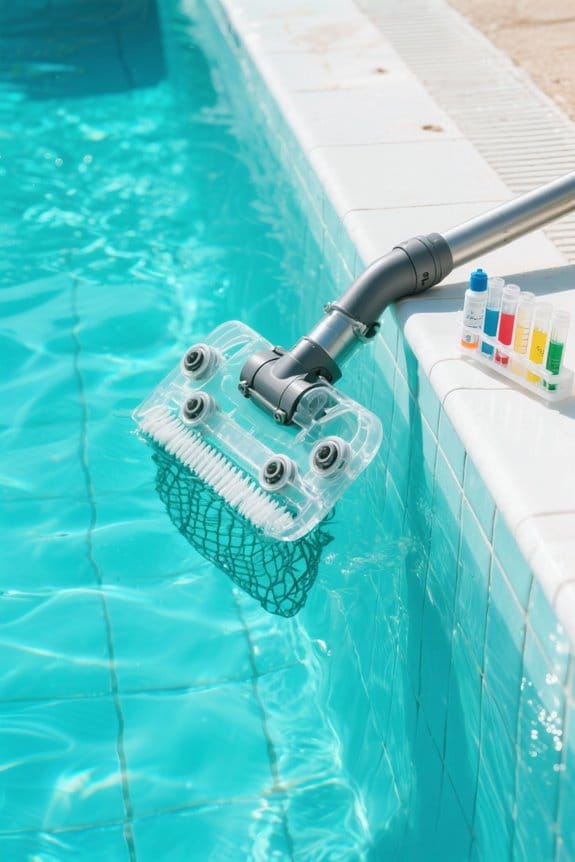
Although reopening the pool after winter may seem challenging, systematically clearing debris from the cover and rinsing it thoroughly before storage prevents mold growth. Skim the pool’s water surface and vacuum the bottom to remove debris and algae buildup. Check the pool’s water level, then balance the water chemistry by testing pH (7.4-7.6) and alkalinity (80-120 ppm). Add necessary chemicals carefully. Perform shock treatments immediately after filling to eliminate bacteria and algae remnants. Clean and inspect the filtration system, backwash sand or DE filters, or replace cartridge filters as needed. Conduct regular maintenance tasks including pump checks and cleaning skimmer baskets. Following these detailed spring pool opening and cleaning techniques guarantees a safer, clearer pool environment, preparing for effective pool maintenance throughout the season. Using a pool vacuum with a high suction power can significantly improve debris removal efficiency during deep cleaning.
Summer Pool Care and Chemical Balancing
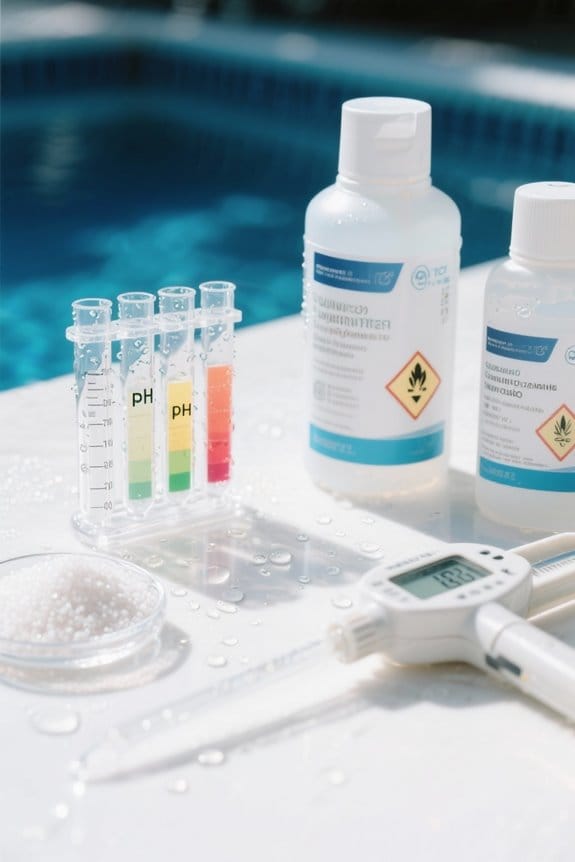
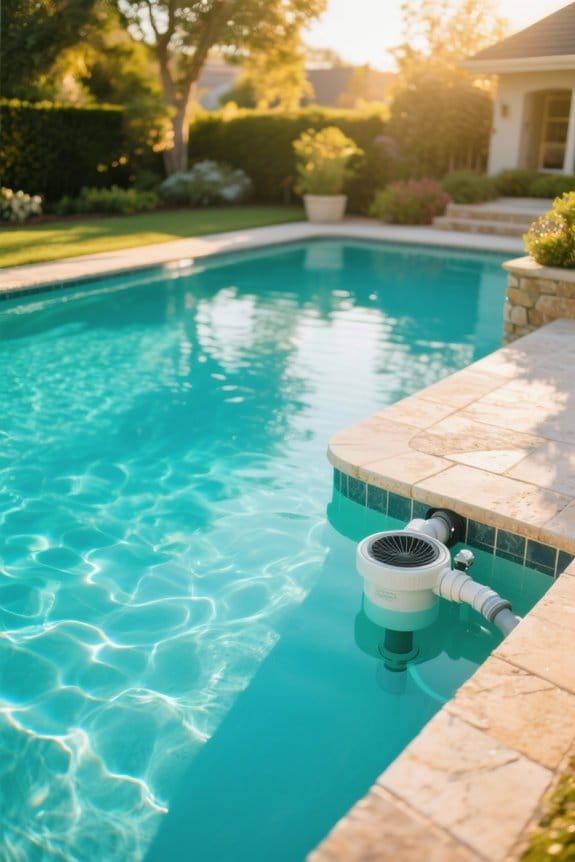
Maintain pool water chemistry by testing at least two to three times weekly, focusing on chlorine levels between 1 and 4 ppm for swimmer safety. Conduct seasonal maintenance by skimming the surface daily to remove debris, keeping the skimmer opening clear to guarantee ideal circulation. Brush the walls and floor two to three times per week, targeting corners and ladders where algae accumulate. Shock the pool biweekly or after heavy use to prevent algae and restore water clarity. Test and balance pH between 7.4 and 7.6, and maintain alkalinity at 80-120 ppm to protect equipment and comfort. Deep clean filters regularly to support water flow. Consistently monitor chemical levels, adjust as needed, and prioritize these steps to guarantee your pool remains safe, clean, and inviting throughout the summer months. For optimal water clarity and hygiene, consider using a pool pump equipped with Hydro Aeration Technology to enhance water circulation and filtration.
Fall Pool Preparation for Winter
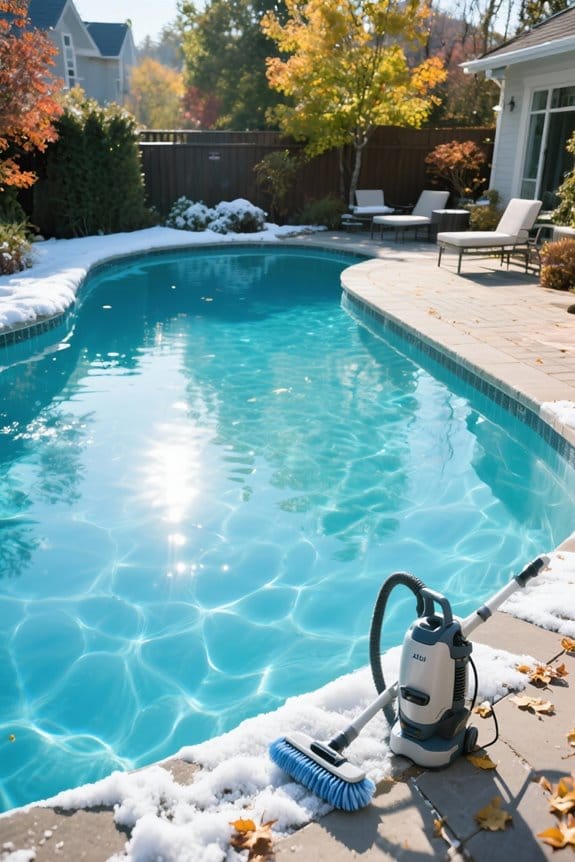
As temperatures drop and usage declines, prioritize removing leaves and debris by skimming the pool surface at least once a week, preventing stains and filter blockages. Lower the water level to just below the skimmer opening to avoid freeze damage and facilitate chemical treatment. Thoroughly clean the pool: brush the walls, vacuum the bottom, and check for needed repairs, addressing any issues before closing. Apply a winterizing kit to balance chemicals and inhibit algae growth. Secure the pool cover tightly, ensuring durability. Throughout winter, monitor the pool cover for tears or sagging, and remove the pool cover only when necessary to inspect and maintain the pool’s condition. Following these steps preserves the pool through colder months, minimizing costly repairs come spring. It is also important to use pool repair kits if cracks or damages are found during cleaning to ensure long-lasting protection before winter sets in.
Essential Tools and Equipment for Deep Cleaning
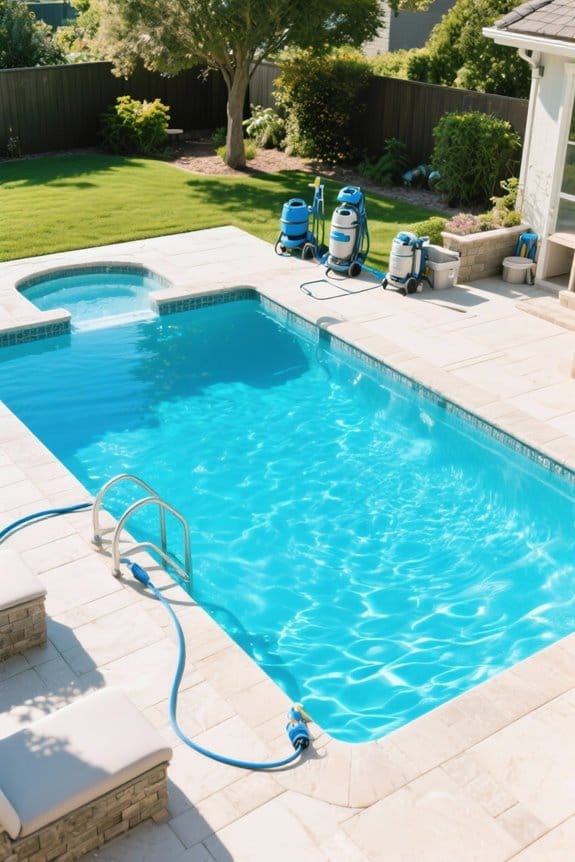
Proper tools and equipment greatly impact the efficiency of seasonal pool deep cleaning. Begin with commercial-grade, hand-held pool vacuums to remove debris from the bottom of the pool and other hard-to-reach areas. Use a leaf blower or broom to clear leaves and dirt from the surface before vacuuming. Select cordless, battery-powered options to avoid tangled cords and improve mobility during cleaning. Employ high-flow, commercial-grade pumps to accelerate debris removal and support the filtration system’s effectiveness. Choose equipment to verify large debris capacities, allowing quick handling of various pool sizes. Follow the pool professional’s advice on specialized leaf vacuums for stubborn foliage underwater, preventing staining. Clean methodically, targeting each pool section, and maintain equipment to extend lifespan, assuring ideal results in every deep cleaning session. For concrete pools, it is crucial to use vacuums with adequate suction power to effectively remove dirt without damaging the pool surface.
Frequently Asked Questions
How Often Should Pool Filters Be Replaced or Upgraded?
Like a guardian tirelessly sifting through waves, pool filters require replacement every 3-5 years, guided by filter lifespan and upgrade signs. Regular filter maintenance, cleaning frequency, and cartridge replacement tips preserve filter pump efficiency and inform upgrade costs.
What Are the Signs of Algae Buildup Beneath the Pool Surface?
Signs of algae buildup beneath the pool surface include surface discoloration, slimy texture, and cloudy water. Additional indicators are foul odor, low chlorine, irregular pH, warm water temperature, poor filtration, and visible debris accumulation.
Can Deep Cleaning Help Prevent Pool Equipment Corrosion?
Like a shield guarding a fortress, deep cleaning bolsters pool equipment corrosion prevention by maintaining chemical balance, enhancing water chemistry, applying protective coatings, and enabling routine inspections—ultimately extending filter longevity, equipment lifespan, and overall pool longevity through seasonal maintenance.
What Eco-Friendly Chemicals Are Effective for Pool Cleaning?
Eco-friendly alternatives like enzyme-based cleaners, biodegradable surfactants, and chlorine alternatives offer effective pool cleaning. Natural pool cleaners such as vinegar solutions, baking soda uses, citrus-based cleaners, and pH balancing products adhere to chemical safety guidelines.
How to Safely Clean a Pool After Heavy Rainfall Flooding?
After heavy rainfall flooding, pool safety requires immediate water removal and debris management. Testing guarantees chemical balance, preventing flooding damage. Surface cleaning and filtration improvement follow, alongside rigorous safety precautions and an updated maintenance schedule to secure pool health.