As an Amazon Associate, we earn from qualifying purchases. Some links on this site are affiliate links at no extra cost to you. Our recommendations are based on thorough research and editorial judgment.
How Shade Affects Children’s Pool Play Duration

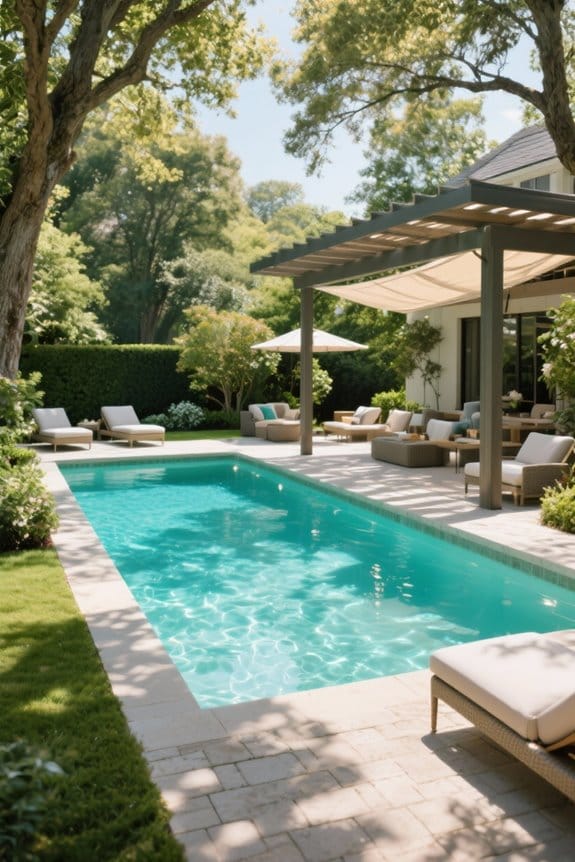
Install UV-resistant shade structures covering at least 50% of the pool surface to lower ambient temperatures by 15 to 20 degrees. Guarantee hydration stations are accessible to prevent dehydration during extended play. Use durable materials like sail shades or cantilevered covers for consistent protection and temperature regulation. Monitor for coverage gaps that cause heat spikes, and schedule regular maintenance checks. These measures reduce UV exposure and heat stress, enabling safe, longer pool play sessions for children. Follow recommended strategies to optimize outdoor water play environments.
Key Takeaways
- Shade structures reduce UV exposure, allowing children to play safely for longer periods in pool areas.
- Lower ambient temperatures under shade increase comfort, extending children’s outdoor pool play duration.
- Consistent shade prevents heat-related illnesses, encouraging prolonged and frequent pool use.
- Combining shade with hydration stations promotes sustained play by reducing dehydration risks.
- Flexible shade solutions like umbrellas enable continuous UV protection, adapting to sun angle changes during playtime.
Health Benefits of Shade During Outdoor Water Play
You may be interested

Start by evaluating the available pool area for shade structure installation, ensuring placement covers at least 50% of the water surface to reduce UV exposure effectively. Install UV-resistant canopies or retractable awnings designed for outdoor play areas, securing them firmly to withstand wind and weather. Monitor ambient temperatures regularly, aiming to lower surrounding heat by 15 to 20 degrees to optimize children’s comfort during pool play. Encourage frequent breaks and provide hydration stations to counteract dehydration risks. Use shade to promote sustained physical activity, as cooler environments reduce fatigue and extend safe playtime. Prioritize materials with high sun protection factor ratings, ensuring thorough children’s safety by limiting direct sunlight exposure during critical peak hours. Implement routine inspections to maintain structural integrity and adjust shade coverage according to shifting sun angles, maximizing health benefits throughout the day. Choosing shade solutions made from high-density polyethylene (HDPE) fabric enhances UV blockage and durability for prolonged outdoor use.
Impact of UV Exposure on Children’s Skin and Safety
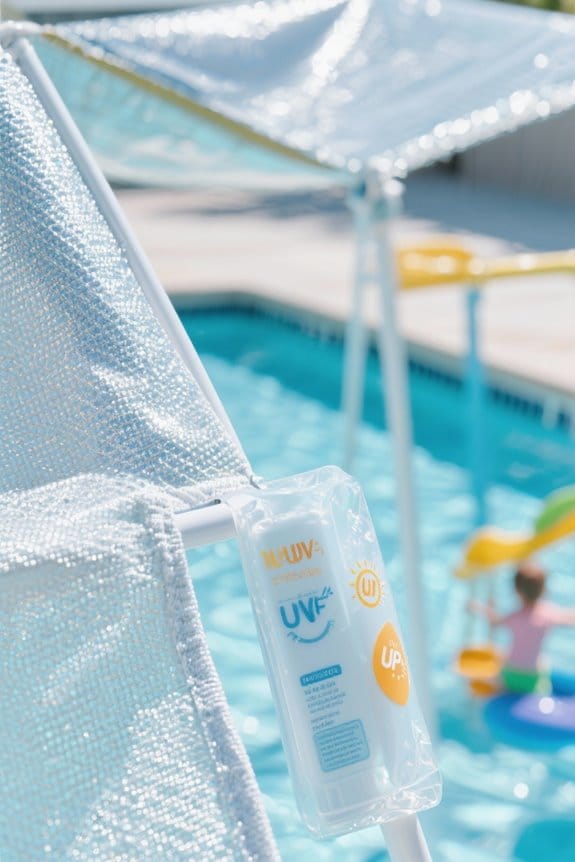
How does ultraviolet (UV) radiation specifically affect children’s skin during pool play? Children’s skin is highly susceptible to UV damage, increasing health risks such as sunburn and, cumulatively, skin cancer. Protect children by minimizing UV sun exposure, since even cloudy or water-reflective conditions transmit harmful rays. Implement shade structures; studies show they reduce UV radiation by up to 50%. Monitor playtime to avoid prolonged exposure, essential for children’s health and playground safety. Apply broad-spectrum sunscreen with SPF 30 or higher every two hours, especially after swimming. Equip children with UV-protective clothing and hats. Recognize that one blistering sunburn doubles melanoma risk, emphasizing prevention. Prioritize strategies addressing both immediate and long-term skin damage. Consistent protective actions guarantee safer pool play, reducing UV influence while allowing children to enjoy outdoor activities responsibly and healthfully. Using high-quality shade sails that block up to 98% UV rays can significantly enhance protection during outdoor play.
How Shade Structures Influence Pool Play Duration
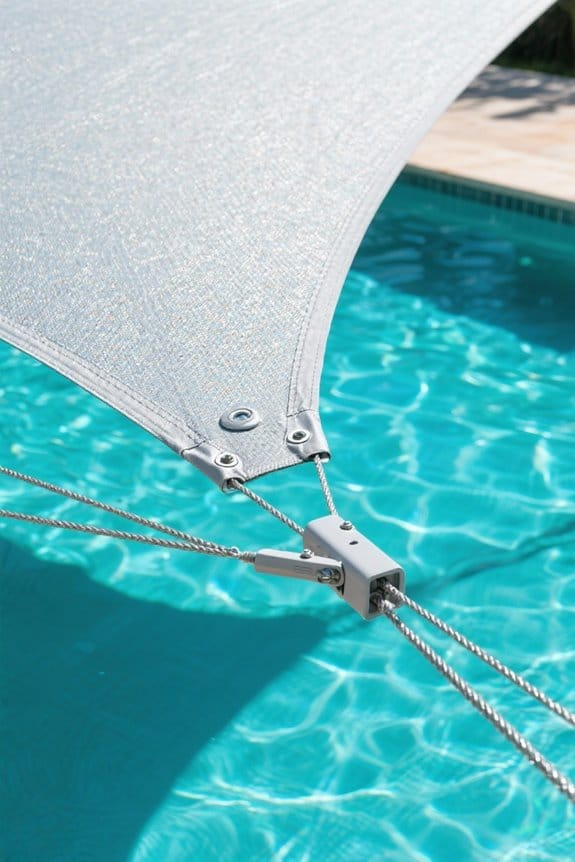
Although children naturally gravitate toward outdoor pool activities, affirm the installation of shade structures to extend their play duration effectively. Position shade elements to reduce ambient temperature by 15 to 20 degrees Fahrenheit and affirm consistent UV protection, thereby minimizing exposure risks. Monitor children’s comfort closely, adjusting shade placement to prevent heat-related illnesses that shorten playtime. Optimize play environments by integrating shade that encourages sustained physical activity without discomfort. Employ durable materials like UV-blocking fabrics or retractable awnings for flexibility and longevity. Regularly inspect structures for wear and maintain cleanliness to preserve effectiveness. Reinforce awareness about children’s health by combining shade installations with hydration and supervision routines. These combined actions create a safer, more comfortable pool environment, directly increasing children’s pool play duration while safeguarding long-term well-being. Selecting high-density polyethylene fabric ensures both durability and effective UV protection in shade structures.
Temperature Regulation and Overheating Prevention in Pools
When managing pool environments, prioritize implementing shade structures to regulate temperature and prevent overheating among children. Position shaded areas to consistently reduce ambient heat by up to 20 degrees, facilitating improved thermal comfort. Monitor poolside temperatures regularly, verify shaded zones are accessible to reduce heat-related illnesses like heat exhaustion and heat stroke. Encourage children to remain within these zones during prolonged play, extending pool play duration safely. Use materials with high UV resistance to maintain shading efficiency. Address potential gaps in coverage promptly to avoid temperature spikes that elevate dehydration risks. Consistently inspect shade structures for wear or damage, preventing compromised overheating prevention. Emphasize children’s health by combining temperature regulation with hydration reminders and scheduled breaks to mitigate thermal stress effectively during pool activities. Additionally, consider integrating solar pool heaters designed for above-ground pools to maintain a comfortable water temperature while managing overall pool environment safety.
Types of Shade Solutions Suitable for Pools
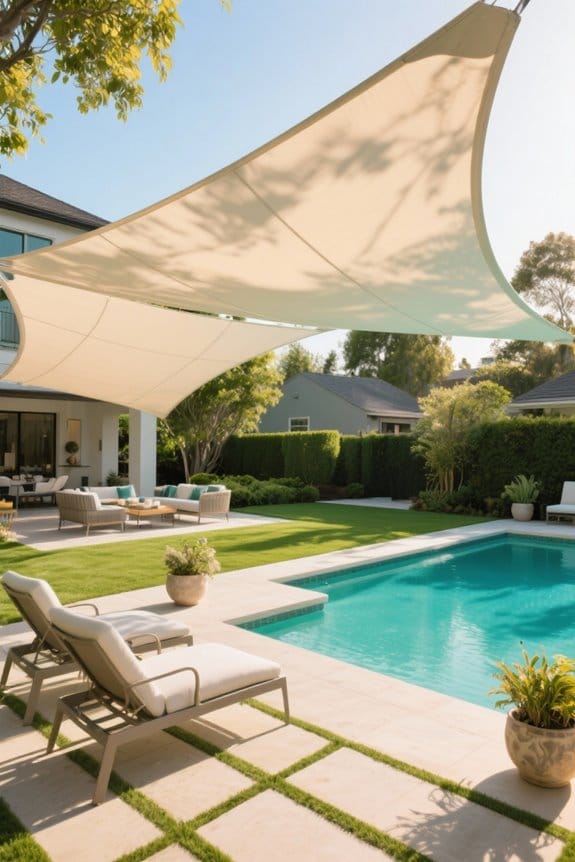
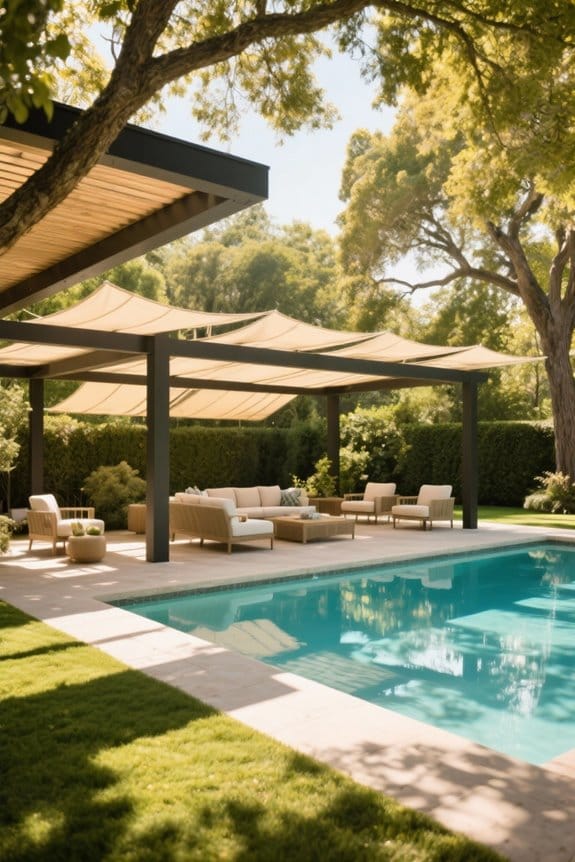
Identify appropriate shade solutions by evaluating pool layout, sun exposure angles, and intended coverage area. Install cantilevered shade structures to maximize poolside coverage without obstructing pathways, enhancing safety and aesthetics. Use sail shades with modern design for flexible coverage that blocks UV rays and reduces temperature effectively. Implement hip roof canopies for extensive shaded zones, protecting swimmers and lounging areas from heat and direct sunlight. Position umbrella shades strategically to allow targeted shading as sun angles shift throughout the day. These shade structures can lower surface temperatures by 15 to 20 degrees, improving the environment for children’s play duration while supporting their health and well-being. Prioritize solutions that align with public health goals, minimizing UV exposure and heat, hence fostering safer playgrounds and pool areas. Selecting shade sails made from HDPE fabric ensures up to 95% UV blockage and breathability, which is beneficial for outdoor pool areas.
Recommendations for Parents and Caregivers
How can parents and caregivers effectively safeguard children during pool play under varying heat and UV conditions? Install shade structures around swimming areas to reduce surface temperatures by approximately 6 degrees, enabling longer playtime in cooler conditions. Schedule swimming sessions during morning or late afternoon to minimize heat and UV exposure. Insist on UV-resistant swimwear, and mandate frequent breaks in shaded zones for enhanced protection. Monitor children’s hydration closely, offering water regularly to prevent dehydration, often unnoticed in active kids. Observe signs of overheating, such as flushed skin or lethargy, and remove children from the pool if necessary. Combine these actions for peak safety, ensuring children’s playtime remains enjoyable and free from heat-related risks. Prioritize these guidelines consistently to maximize protection during outdoor swimming activities. In addition, always keep a USCG-approved ring buoy accessible near the pool to enhance rescue readiness in case of emergencies.
Community and Urban Planning for Shaded Play Areas
Assess local community spaces for existing shade coverage and identify priority areas lacking protection, especially around public pools and playgrounds. Map out “shade deserts” in the urban environment, focusing on lower-income regions vulnerable to heightened UV radiation exposure. Prioritize installing durable shade structures, such as tensile fabric canopies or pergolas with UV-protective coatings, ensuring they provide high-quality shade over play areas. Collaborate with local governments and organizations to secure funding, emphasizing children’s safety and health in climate change resilience frameworks. Integrate vegetation strategically to complement built structures, reducing surface temperatures by approximately 6°F and mitigating urban heat island effects. Monitor installation quality, and schedule regular maintenance checks to sustain shade efficacy. Promote community engagement through educational signage on shade benefits, thereby encouraging longer, safer outdoor play and strengthening public health outcomes.
Frequently Asked Questions
How Long Should Kids Play in the Sun?
Children should limit sun exposure to 1-2 hours during peak summer activities, balancing skin protection with hydration needs. Parental supervision guarantees playing limits, timely sunscreen application, and adherence to health considerations and timing preferences for safe seasonal playtime.
Is It Better to Put a Pool in the Shade or Sun?
Studies show shaded pools reduce UV exposure by 50%, enhancing comfort levels and encouraging longevity play. Pool positioning in shade supports temperature control, lowers water reflection, aligns with family preferences, and boosts outdoor enjoyment despite potentially reduced activity intensity.
How Much Does Shade Reduce UV?
Shade reduces UV exposure by approximately 50%, providing significant skin protection during outdoor activities. This shade benefit mitigates sunburn risk, heat stress, and enhances children’s health, complementing sunscreen effects in high UV index shaded areas.
Why Is Sun Safety Important for Children?
Like a shield against invisible fire, sun safety prevents skin damage and sunburn by reducing UV exposure. Ensuring safe playtime through sunscreen application, protective clothing, hydration, and heat illness prevention supports childhood safety and minimizes long term effects.