As an Amazon Associate, we earn from qualifying purchases. Some links on this site are affiliate links at no extra cost to you. Our recommendations are based on thorough research and editorial judgment.

Setting Up an Outdoor Workspace With Shade

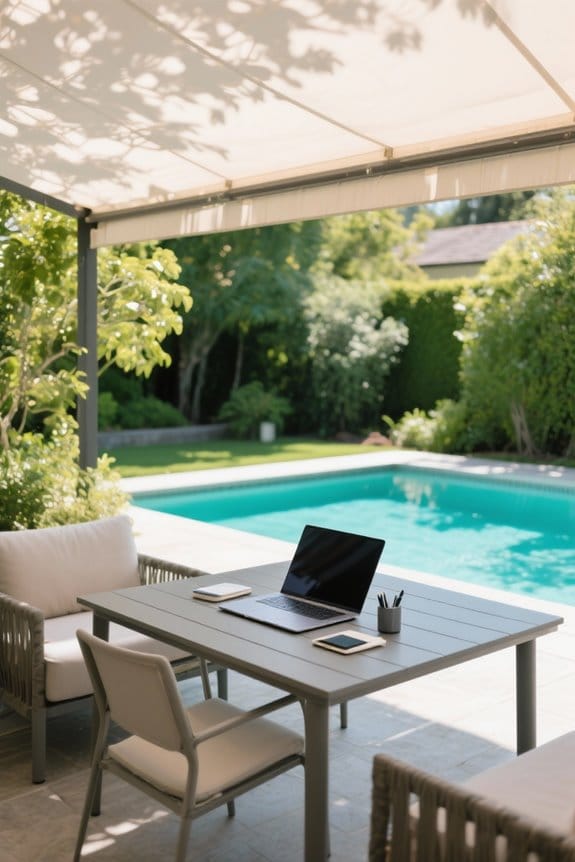
Assess sunlight with a digital light meter during peak hours to identify glare and heat spots. Install shade devices like patio umbrellas with at least a 7-foot canopy or retractable awnings for adjustable cover, using PU-coated, UV-resistant fabrics. Position pergolas spaced 8 to 12 feet apart, add outdoor curtains for glare reduction, and use weather-resistant furniture. Incorporate anti-glare screen protectors and reliable internet setups, securing cables in conduits. Follow these steps to optimize comfort and productivity, and explore further solutions to enhance your outdoor office.
Key Takeaways
- Use digital light meters to measure sun exposure and identify glare times for optimal shade placement.
- Select large patio umbrellas or retractable awnings with UV-resistant fabrics for adjustable, effective sun protection.
- Install pergolas with weather-resistant curtains and combine shade sails for extended coverage and glare reduction.
- Ensure stable power and reliable internet with weatherproof equipment for uninterrupted outdoor work sessions.
- Choose durable, weather-resistant furniture and accessories to maintain comfort and workspace longevity outdoors.
Importance of Shade for Outdoor Workspaces
You may be interested

Begin by evaluating the outdoor workspace for sun exposure levels throughout the day, using a digital light meter to identify high-glare zones near computer screens. Measure lumens and irradiance at different times, noting peak sunlight hours that increase eye strain and reduce productivity. Incorporate shade strategically to block direct sun, maintaining natural light while preventing screen glare. Install adjustable shading devices to balance brightness and comfort, lowering ambient temperatures by up to 20°F for prolonged work periods. Make certain shaded areas protect equipment from UV damage, preserving functionality and lifespan. Regularly monitor sun exposure patterns seasonally, adjusting shade positioning accordingly. Prioritize comfort and visibility, as adequate shade improves focus and reduces physical discomfort during outdoor tasks. Maintain this balance to enhance overall efficiency in the outdoor workspace environment. Using a rectangular patio umbrella with UV-resistant fabric offers durable and effective shade solutions tailored to outdoor work environments.
Selecting the Best Shade Solution for Your Outdoor Office
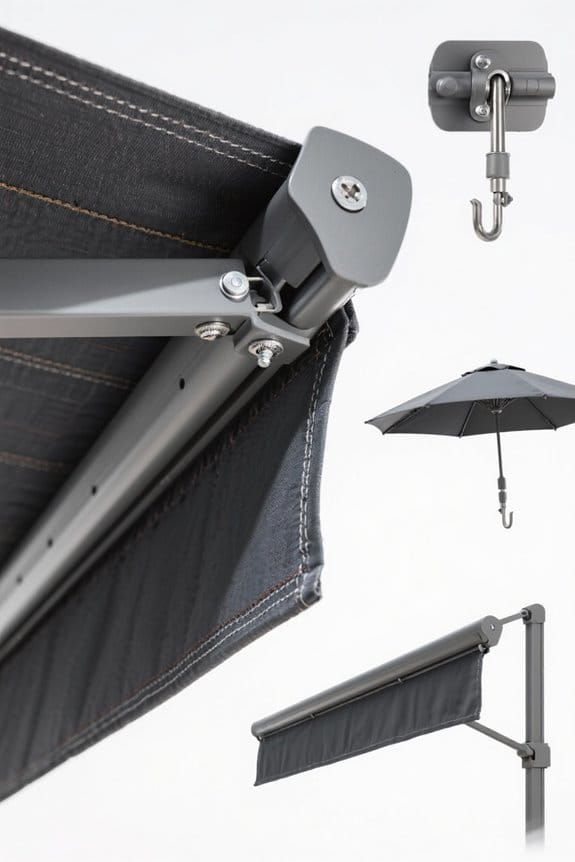
Evaluate how shade can be implemented to optimize comfort and reduce glare, then compare shading options based on technical features and workspace needs. Choose a Patio Umbrella for flexible placement, ensuring a canopy diameter of at least 7 feet to cover your work area effectively. Install Retractable Awnings for adjustable sun protection with manual or motorized controls, allowing quick adaptation to changing light. Attach Shade Sails with tensioned, UV-resistant fabric, covering large spaces and adding modern aesthetics. Add Privacy Screens positioned 5 to 7 feet from your desk to block direct sunlight and decrease distractions, enhancing focus. Prioritize durable materials and easy installation for a Comfortable Outdoor environment. Combining these solutions improves Outdoor office space usability, reduces screen glare, and considerably boosts Productivity in hot or bright conditions. When setting up, consider durability and quality to ensure long-lasting and effective shade solutions.
Recommended Products

100% POLYESTER FABRIC -- Blissun patio umbrella is made of 100% polyester, waterproof and UV resistant, long lasting, easy to clean.

ATTENTION: Due to different screen display, there may be a little color difference from image
Benefits of Retractable Awnings in Outdoor Workspaces
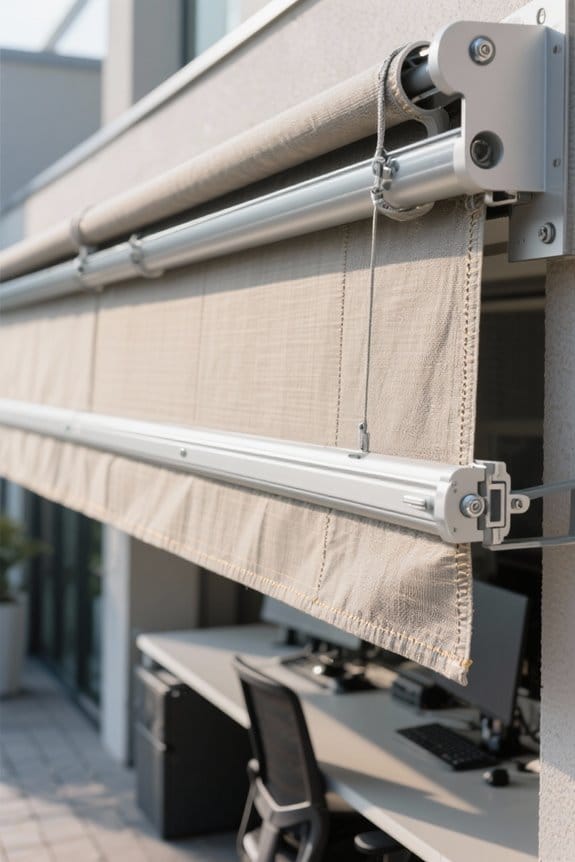
Three key advantages make retractable awnings an essential addition to outdoor workspaces. Install retractable awnings to provide adjustable sun protection, allowing control over shade and direct sunlight as needed. Position awnings strategically to reduce screen glare on laptops and monitors, enhancing visibility and preventing eye strain. Opt for fabrics and materials that maintain comfortable temperatures by reflecting heat and promoting airflow beneath the awning. Choose a retractable awning customizable in size to suit specific workspace dimensions, ensuring full coverage without obstructing movement. Select designs and colors that enhance aesthetics, creating a professional and inviting outdoor environment. Regularly maintain mechanical components to guarantee smooth extension and retraction, and confirm secure installation using appropriate brackets and anchors. Additionally, ensuring proper compatibility and installation of retractable awnings maximizes their effectiveness and longevity. This methodical approach optimizes outdoor workspaces for productivity, comfort, and visual appeal.
Recommended Products

90% UV PROTECTION: Engineered with 220 GSM HDPE fabric, Shade&beyond outdoor shade awning effectively block 90% of harmful UV rays while reducing solar heat gain and maintaining privacy

High-Quality Material: Our retractable side awning is made from 180g/m² high-density polyester fabric with a PU coating, providing excellent waterproof performance and tensile strength. It effectively blocks wind and rain, resists UV rays (UV30+), extends its lifespan, and ensures stable shelter for outdoor activities.

Sunshade & Rain Protection: Beat the heat and stay dry! This 12x10 ft retractable awning is made of durable 280g polyester fabric with a water-resistant PU coating and UV80+ protection, helping to block harmful sun rays while keeping you shaded and comfortable. With fade-resistant color and a sturdy design, it’s built for long-lasting use in your patio, garden, or balcony!
Utilizing Patio Umbrellas and Shade Sails
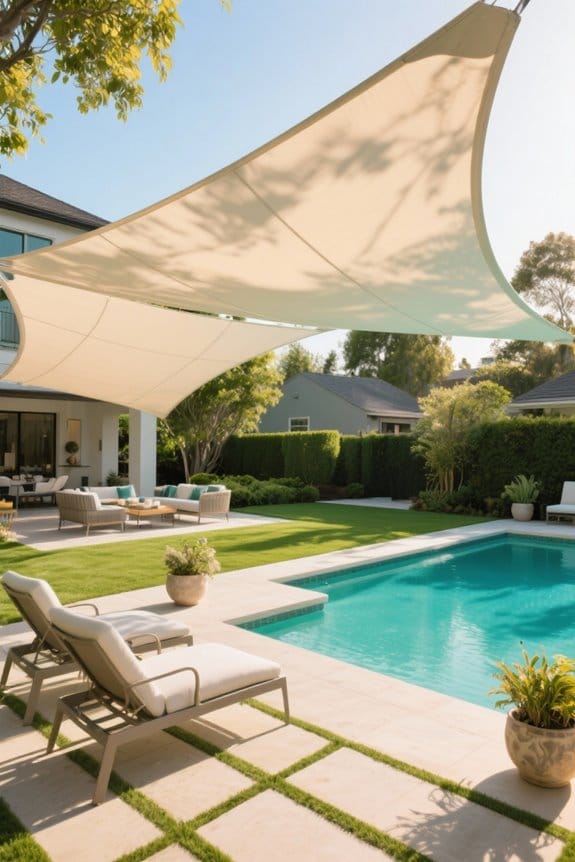
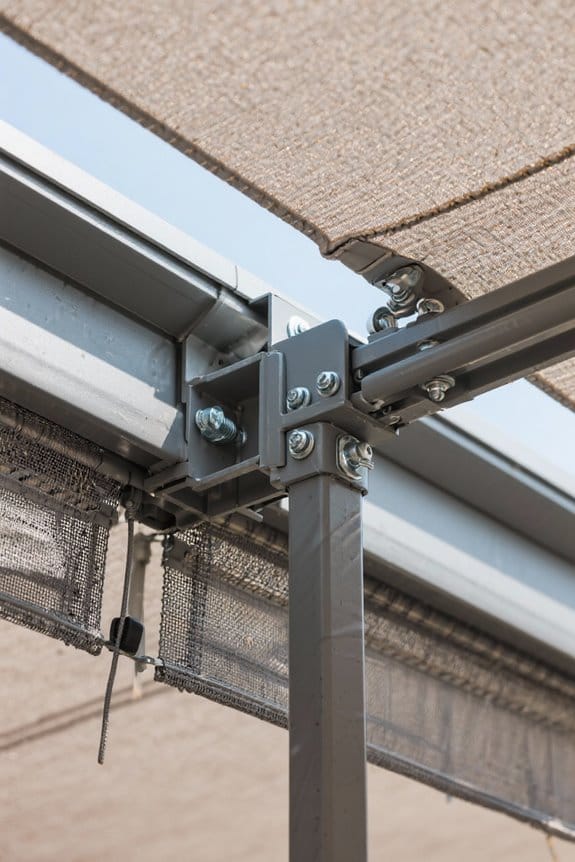
Expand shade options by incorporating patio umbrellas and shade sails, complementing retractable awnings for flexible outdoor workspace coverage. Select patio umbrellas in sizes ranging from 6 to 11 feet, ensuring adequate shade to block the sun while allowing fresh air circulation. Position portable umbrellas with weighted bases to prevent tipping, and rotate them as the sun moves to maintain protection. Install shade sails in triangular or rectangular shapes, anchoring with stainless steel turnbuckles and strong cables for tension. Adjust angles to maximize coverage without obstructing sightlines or airflow. Combine multiple shade sails to extend coverage over large areas, enhancing both comfort and aesthetics. Use these solutions to create flexible outdoor office setups that effectively protect your outdoor workspace from sun exposure and heat, while maintaining ventilation for productive work conditions. Additionally, choosing umbrellas constructed with PU-coated polyester fabric enhances water resistance and UV protection for extended durability.
Recommended Products

【UV Protection & Cooling】Made of 100% brand new High Density Polyethylene material and eliminate the use of splicing fabrics.Blocks up to 95% of harmful UV rays and direct sunlight exposure."Breathable" fabric allows air to pass freely and achieve a certain degree of cooling.

WIND-POWERED, WON'T BLOW AWAY — Unlike beach umbrellas and pop-up beach tents that flip or collapse, the Shibumi Shade floats on the ocean breeze and sails with as little as 3 mph of wind. The breeze that topples a beach umbrella is exactly what keeps this wind-powered beach canopy standing tall.

【About Installation】Please refer to the diagrams before purchasing. To ensure you buy the correct shade sail, you need to leave 0.5-1 ft of space for accessories to avoid buying an oversized shade. In addition, due to the characteristics of this fabric, there may be a tolerance of ±4 inch from the outer edge of one D-ring to the outer edge of the other D-ring
Designing With Pergolas and Outdoor Curtains
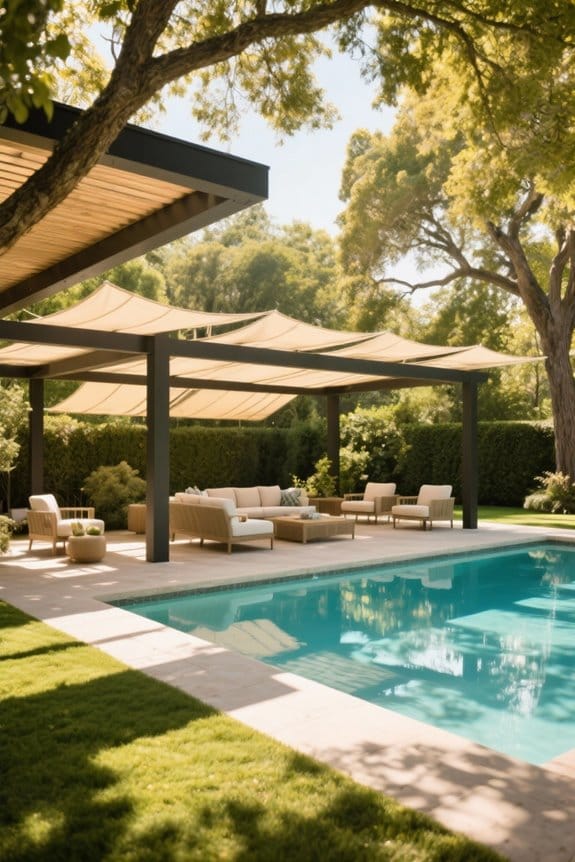
When designing an outdoor workspace, begin by installing a pergola with sturdy posts spaced about 8 to 12 feet apart, guaranteeing structural stability and sufficient coverage. Next, position the pergola to align with the sun’s path, maximizing natural shade and creating a cooler workspace throughout the day. Add outdoor curtains made from weather-resistant fabric to frame the pergola, allowing adjustable light control and privacy. Draw curtains open or closed to reduce glare on screens and documents, enhancing focus. Use the combination of pergolas and outdoor curtains to define personal space clearly, improving comfort without obstructing airflow. This layered approach not only elevates the workspace’s aesthetics but also guarantees practical shade management, making the outdoor area functional and pleasant for extended work periods. For added UV protection and breathability, consider integrating shade sails with high UV blocking capabilities into your design to enhance comfort during sunny days.
Recommended Products

Ready-Made: The package includes 2 panels of Outdoor Curtains and a piece of rope for fixing. The Rustproof grommets & Back Tab at the top and bottom fit standard rods up to 1.6" in diameter.

SET OF 4 PANELS: Package includes 4 panel 54" wide x 84" long outdoor curtain with grommet on the top which would fit most standard curtain rods and add more elegance to your decoration.

Waterproof & Weatherproof: Crafted from durable 100% polyester fabric, these outdoor curtains are designed to withstand rain and snow, providing reliable waterproof protection for your patio, porch, pergola, gazebo and canopy
Creating Privacy With Screens and Bamboo Panels
Frequently, privacy screens serve as the primary barrier to isolate outdoor workspaces, blocking distractions and defining boundaries. Install bamboo panels at least six feet high to guarantee sufficient privacy while enhancing natural shade. Position screens on the side facing neighbors or foot traffic, adjusting angles to reduce sunlight during peak hours and minimize glare. Select materials that maintain airflow; avoid solid panels that trap heat. Use portable privacy screens to create flexible arrangements, enabling repositioning based on daily sun patterns or workspace needs. Secure screens firmly with stakes or weights to withstand wind. Measure your outdoor workspace precisely, allowing at least 3 feet of clearance behind screens for maintenance access. Inspect regularly for damage or loose fittings to maintain effectiveness. Follow these steps to balance privacy, shade, and ventilation efficiently. For additional protection, consider integrating shade sails designed to block harmful UV rays while maintaining airflow and portability.
Choosing Comfortable and Weather-Resistant Outdoor Furniture
Selecting outdoor furniture begins with prioritizing ergonomic chairs engineered to support posture and reduce muscle strain during extended work hours. Choose chairs with lumbar support to maintain spinal alignment, ensuring comfort and productivity. Incorporate weather-resistant tables with stable surfaces large enough for laptops and documents, made from durable materials like aluminum or synthetic wicker. These materials withstand sun, rain, and temperature changes without warping or fading. Opt for water-resistant cushions and seating to maintain comfort and appearance, selecting quick-drying fabrics to prevent mildew. Assess the outdoor spaces carefully, measuring dimensions to fit furniture without crowding. Prioritize durability and practical design, balancing protection against elements with an inviting aesthetic. Follow these guidelines to create a functional, comfortable workspace ready to endure varied weather conditions. Additionally, using chair covers made from 210D or 600D Oxford fabrics can enhance weather resistance and prolong furniture life.
Recommended Products

Packing: Comes with 2 pack of u-shape seat cushions, D16" x W17" x H2" (40 x 43 cm). vacuum-packaged. Please give it 24-48 hours to expand to its proper size

🎁 Packing: Comes with 2 stylish square seat cushions 18.5"x16"x2", vacuum-packaged. Please give it 24-48 hours to expand to its proper size.

PREMIUM WARMTH & COMFORT – Experience unbeatable warmth with OBERMEYER Womens Essentials Warm Outdoor Ski Snowboard Keystone Pants, featuring 60gm Needlepunch insulation for all-day comfort.
Integrating Technology for an Efficient Outdoor Setup
Integrate anti-glare screen protectors on all outdoor devices, measuring screens to guarantee precise fit and maximum visibility improvement. Attach laptop shade hoods to reduce direct sunlight exposure, enhancing screen clarity without straining the eyes. Deploy weather-resistant power sources to maintain steady energy supply, ensuring uninterrupted operation of laptops and other gadgets. Use portable chargers strategically for backup power during extended sessions. Select outdoor-rated equipment to withstand environmental factors, preventing frequent replacements. Establish a reliable internet connection through mesh Wi-Fi networks or long-range extenders, minimizing signal drops across the outdoor workspace. Arrange cables neatly, utilizing weatherproof conduits to avoid damage. Regularly test all technology components before starting work to troubleshoot connectivity or power issues efficiently. Incorporate durable, UV-stabilized materials similar to those recommended for corrosion-resistant outdoor pool ladders to enhance the longevity of your workspace structures.
Protecting Your Outdoor Office From Weather Elements
Begin by installing durable shade solutions such as retractable awnings or patio umbrellas, designed to reduce sun glare on screens and lower ambient temperatures. Next, choose weather-resistant outdoor furniture, including a sturdy table with corrosion-resistant materials, to protect your workspace from rain and humidity. Incorporate drop shades or bamboo screens on open sides to block wind, create a shaded area, and minimize distractions. Employ sturdy canopies or shade sails rated for sun and rain protection, ensuring the workspace remains functional during changing weather conditions. Finally, position portable power sources with weatherproof covers to maintain connectivity, and add insulating floor mats or windbreakers to work efficiently during colder or damp conditions. Follow these steps to safeguard your outdoor office thoroughly from environmental impacts. For added safety and durability, consider furnishings made from rust-resistant materials to withstand various weather conditions.
Frequently Asked Questions
How Can I Prevent Insects in My Outdoor Workspace?
Insects can be prevented by using insect repellents, natural deterrents, and scent products. Installing bug nets, maintaining landscaping barriers, optimizing outdoor lighting, and ensuring regular cleaning reduce insect presence effectively in outdoor workspaces.
What Is the Best Flooring for an Outdoor Office Area?
The best outdoor flooring options include decking for aesthetics and durability, gravel or mulch for affordability and drainage, and eco-friendly tiles for sustainability. Outdoor carpets offer comfort but less durability, while costs vary based on material quality and maintenance.
How Do I Manage Power Supply Safely Outdoors?
Power flows like a river harnessed by dams; managing it outdoors requires weatherproof outlets, outdoor extension cords, surge protection devices, and adherence to outdoor electrical codes. Proper power strip placement, energy-efficient lighting, and generator safety tips guarantee safe, reliable supply.
Can I Use Solar Panels to Power My Outdoor Workspace?
Yes, solar panels can power an outdoor workspace. Their efficiency depends on sunlight exposure, installation requirements, and battery storage solutions. They provide eco friendly energy, complement outdoor charging options, and benefit from energy conservation tips to optimize performance.
What Maintenance Does Outdoor Furniture Require Over Time?
Outdoor furniture requires regular cleaning schedules, weather protection, and rust prevention depending on furniture materials. Address fading issues with UV protectants, employ storage solutions for seasonal care, and promptly perform maintenance to guarantee longevity in varying conditions.