As an Amazon Associate, we earn from qualifying purchases. Some links on this site are affiliate links at no extra cost to you. Our recommendations are based on thorough research and editorial judgment.

Inspiring Backyard Transformations With Sails

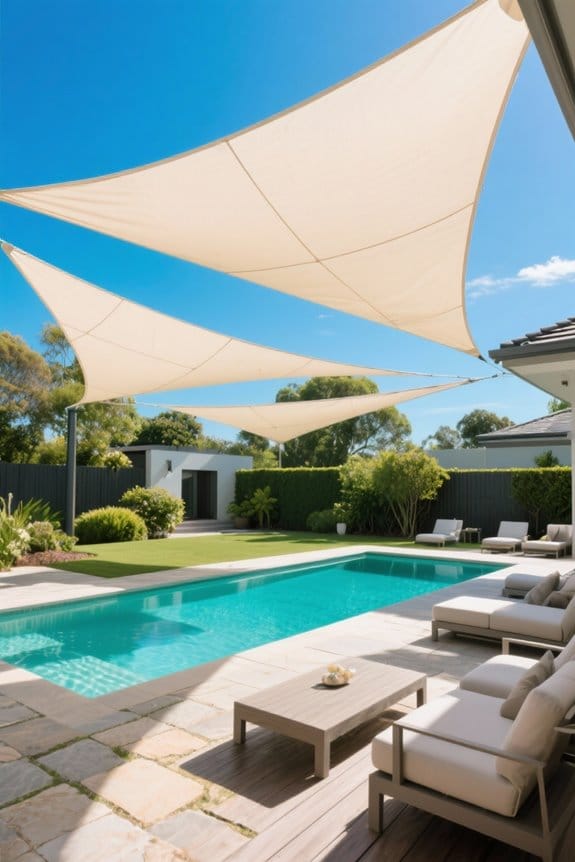
Transform your backyard by installing high-density polyethylene shade sails measured with a laser distance meter for precision. Secure sails with stainless steel turnbuckles and marine-grade cleats to maintain proper tension, preventing sagging and fabric wear. Opt for triangular or overlapping rectangular designs to create layered, dynamic shade zones, or choose twisted hypar sails for sculptural effect. Integrate multi-level arrangements for distinct outdoor areas. Consider poolside or carport sails for functional protection. Explore further techniques to optimize both style and durability.
Key Takeaways
- Layering overlapping rectangular sails creates dynamic, multi-level shaded zones enhancing backyard functionality and visual appeal.
- Triangular and twisted hypar sails add modern, sculptural aesthetics for unique backyard designs.
- Curved shade sails evoke nautical vibes, perfect for stylish, relaxing outdoor areas.
- Custom polygon sails fit irregular backyard layouts, maximizing shade and design flexibility.
- Regular maintenance with tension adjustments and hardware checks ensures longevity and consistent backyard transformation effects.
Benefits of Incorporating Shade Sails in Backyard Design
You may be interested


When incorporating shade sails into backyard design, begin by evaluating the desired coverage area to confirm effective UV protection—shade sails block up to 95% of harmful UV rays. Measure the outdoor space accurately, noting anchor points such as walls or posts, confirming secure attachment with stainless steel hardware like turnbuckles and snap hooks. Select quality fabric rated for UV protection and durability to transform outdoor environments efficiently. Opt for colors and shapes that complement existing landscaping, enhancing aesthetics while creating functional zones. Position shade sails to maintain airflow and natural light, avoiding fully enclosed spaces to prevent heat buildup. Utilize shade sails as flexible shade solutions that reduce ambient temperatures, improve comfort, and lower energy costs. Follow manufacturer specifications closely during installation to confirm longevity and consistent UV protection in your outdoor space. Regular inspections and maintenance are essential to ensure continued sun safety.
Timeless Style With Triangular Shade Sails
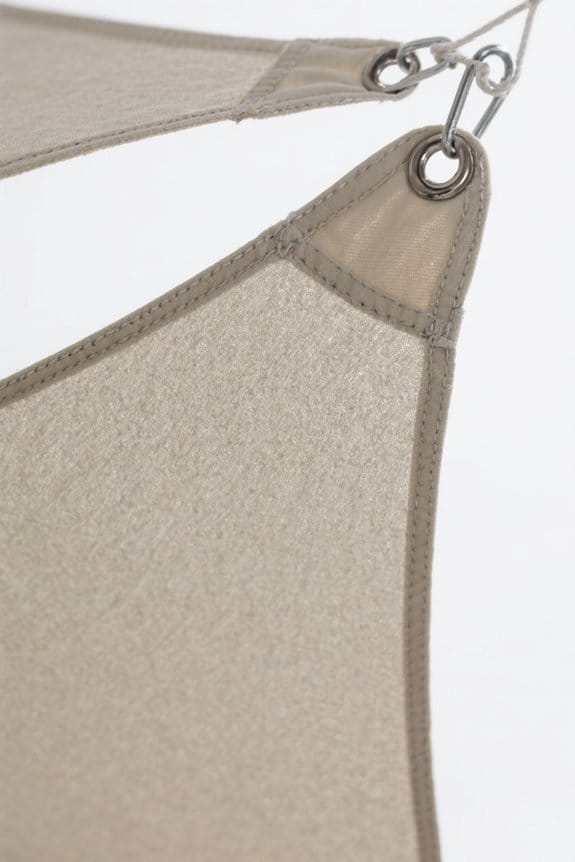
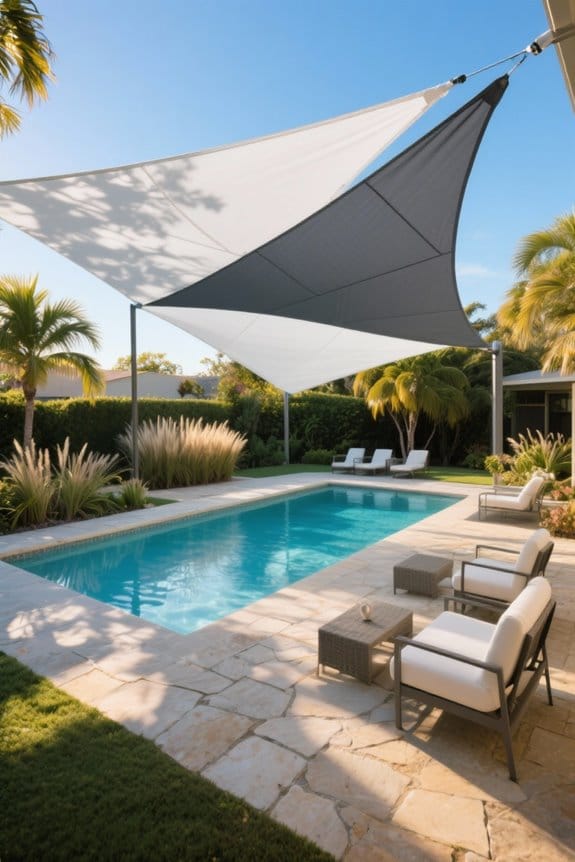
Select triangular shade sails for a modern, streamlined look that suits smaller patios and confined outdoor areas. Measure the patio dimensions precisely, then choose triangular sails that fit while allowing a slight tilt for proper water drainage. Secure mounting points using heavy-duty anchors or stainless steel pad eyes, ensuring tension to avoid sagging. Use shade structures made of high-density polyethylene fabric to block up to 95% of harmful UV rays effectively. Combine colors cautiously to add visual interest without overwhelming the space, arranging sails at different angles to enhance aesthetic appeal. Check for tautness regularly, tighten or adjust hardware as needed, and inspect for fabric wear. By following these steps, transform compact outdoor spaces into stylish, functional retreats with minimal installation effort and lasting durability.
Creating Layers With Overlapping Rectangular Sails
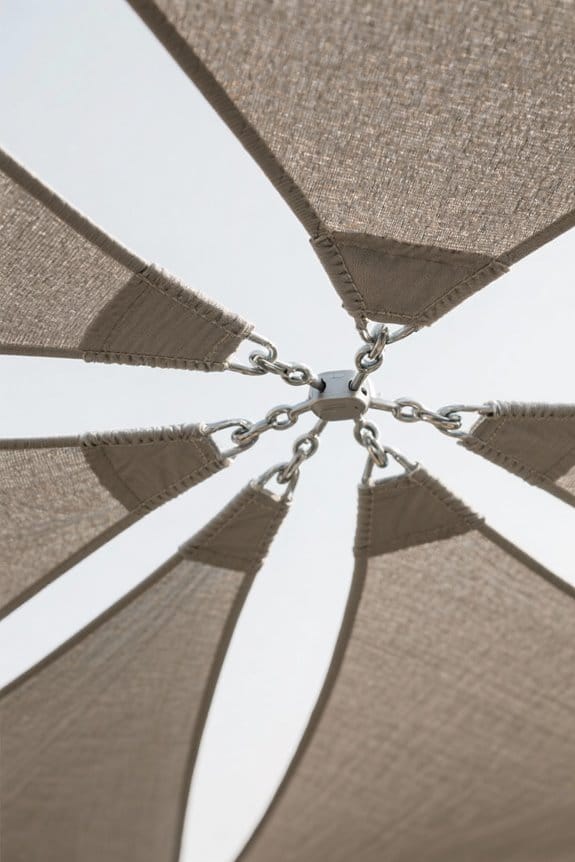
Layering creates dynamic, shaded environments by overlapping rectangular sails with precise measurements and secure mounting hardware. Measure the outdoor area accurately, allowing at least 2 feet overlap between adjacent sails to guarantee consistent coverage and stability. Install stainless steel pad eyes and turnbuckles on sturdy posts or walls, adjusting tension evenly to avoid sagging or flapping. Arrange overlapping rectangular sails at varying heights, creating layered designs that extend shaded spaces while maintaining airflow through small gaps. Use rich, UV-resistant fabric colors to enhance outdoor ambience and complement landscaping. Establish visual interest by aligning corners asymmetrically, defining distinct zones within patios or decks. Regularly inspect tension points and fabric condition, tightening hardware as needed to preserve structural integrity. This method maximizes shade and depth, transforming outdoor spaces into inviting, functional retreats. Additionally, opting for 95% UV-resistant HDPE fabric ensures effective sun protection while maintaining breathability for cooler environments.
Sculptural Appeal of Twisted Hypar Sails
Shift focus from overlapping rectangular sails by exploring twisted hypar sails, which introduce sculptural form and enhanced functionality. Begin by selecting appropriate anchor points at varying heights to achieve the twisted hypar geometry, ensuring opposite corners rest at different elevations, typically with a height difference of 18 to 24 inches. Secure heavy-duty stainless steel turnbuckles and galvanized steel eye bolts for tensioning the sail fabric, maintaining tautness to resist wind loads effectively. Confirm the shade structure’s pitch allows efficient water shedding, preventing pooling or sagging. Utilize twisted hypar sails to create creative installations on decks or patios, positioning them to maximize both shade coverage and visual impact. Monitor tension regularly, and adjust fittings to preserve the sculptural design, boosting outdoor aesthetics while delivering durable, functional sun protection. Choosing sails made from UV-treated materials ensures long-lasting sun-blocking performance and durability in outdoor environments.
Elevating Spaces With Multi-Level Shade Sail Arrangements
Enhance your outdoor area by installing multi-level shade sails, arranging them at varied heights to define separate zones such as dining and lounging. Begin by measuring your outdoor spaces carefully, then select sails of contrasting colors and sizes to create layered shade that offers both sun protection and aesthetic appeal. Use sturdy stainless steel hardware and adjustable turnbuckles to maintain tension, and attach sails at differing angles for effective water drainage. Position higher sails for sun exposure during midday, lower ones for afternoon shade, maximizing coverage and visual interest. Regularly inspect attachment points for wear or slack, tightening as needed to prevent sagging. This multi-level setup transforms flat patios into dynamic, inviting living areas, balancing function with modern design effectively and efficiently. Integrating modern outdoor solutions such as energy-efficient devices can complement the aesthetics and functionality of your backyard transformation.
Combining Shade Sails With Pergolas for Versatile Outdoor Areas
When integrating shade sails with pergolas, begin by evaluating the pergola’s dimensions and structural integrity to guarantee adequate support for additional attachments. Measure the pergola’s frame carefully, checking posts and crossbeams for stability, and confirm load capacity before proceeding. Select shade sails with appropriate size and shape—triangles or rectangles—to customize coverage effectively over outdoor areas. Use stainless steel hardware such as turnbuckles, pad eyes, and snap hooks for secure fastening. Arrange sails to allow airflow while maximizing UV protection, layering or overlapping to create visual interest and depth in versatile living areas. Monitor tension regularly to prevent sagging or damage. This combination enhances comfort and aesthetics, while reducing indoor heat by blocking direct sunlight, making outdoor areas more functional for dining, relaxing, and entertaining.
Enhancing Privacy Using Side Sail Panels
Install side sail panels to introduce vertical privacy and wind protection while maintaining openness in outdoor spaces. Measure the desired panel height carefully, typically between 6 to 8 feet for effective outdoor privacy, then select durable, weather-resistant fabric. Secure heavy-duty mounting hardware such as stainless steel eye bolts and turnbuckles on structural posts or walls, ensuring tension adjustments for preventing sagging. Position side sail panels to block prevailing winds and sightlines, creating semi-enclosed areas that provide visual seclusion without full enclosure. Customize panel dimensions and tension points to fit unique layouts, achieving tailored solutions that blend with landscaping. Regularly check tension and hardware integrity, tightening as needed to maintain enhancing comfort. Use side sail panels strategically to transform patios or backyards, improving both privacy and usability with minimal obstruction. Utilizing ratchet winches for tension adjustment allows for easier maintenance and longer-lasting panel performance.
Custom Polygon Shade Sails for Irregular Backyard Layouts
Accommodate irregular backyard layouts by opting for custom polygon shade sails designed to fit unique shapes and angles precisely. Measure all boundary points using a laser distance meter, note angles with a digital protractor, and draft scaled templates for accurate fabrication. Select custom shade materials made from high-density polyethylene (HDPE) for durable protection and UV resistance, blocking up to 95% of sunlight. Confirm measurements with mounting hardware placements, accounting for tension adjustments on stainless steel turnbuckles to prevent sagging. Choose from over 30 colors to blend polygon shade sails with landscaping seamlessly. Install anchor points with reinforced brackets or concrete footings, then attach sails ensuring even tension across all edges. Regularly inspect for fabric wear and tighten hardware seasonally to maintain peak shade effectiveness in irregular backyard layouts. When choosing materials, prefer fabrics with a thickness of at least 185 GSM to ensure durability and resistance to tearing.
Poolside Shade Sails to Extend Outdoor Enjoyment
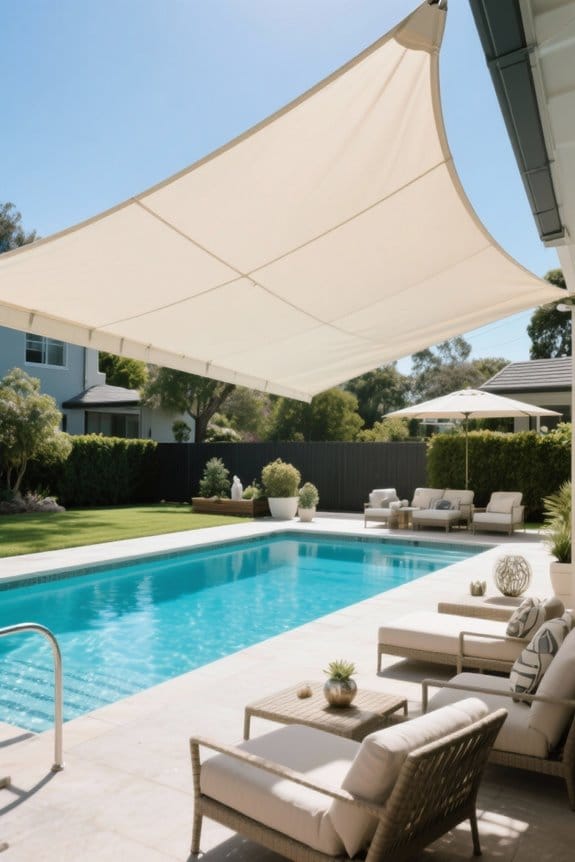
Select appropriate waterproof or semi-transparent mesh fabrics for poolside shade sails to balance splash protection, airflow, and UV blockage. Measure the pool area precisely, allowing at least 4 feet of overhang beyond the water’s edge for effective coverage. Mount anchors on sturdy posts or walls, using stainless steel turnbuckles and snap hooks to tension fabric tightly. Position sails to cover outdoor furniture, creating distinct shaded zones that minimize direct sun exposure, enhancing outdoor living comfort. Check for adequate airflow beneath sails to prevent heat buildup, maintaining a rejuvenating atmosphere. Inspect tension frequently, re-tightening as fabric relaxes. Choose colors that complement the backyard and reduce glare on water surfaces. Properly installed poolside shade sails lower surrounding temperatures, extend pool usability during hot weather, and create an inviting, resort-like outdoor living space for family and guests. For best results, use shade sails made from high-density polyethylene fabric to ensure excellent UV protection and durability.
Practicality Meets Style With Driveway and Carport Sails
Extend outdoor protection beyond pool areas by incorporating shade sails over driveways and carports, safeguarding vehicles from UV rays and harsh weather. Choose driveway and carport sails made from durable, UV-resistant fabric, ensuring long-term vehicle protection. Measure the driveway or carport dimensions accurately, allowing for customized coverage that fits specific areas, including overlaps for secure tensioning. Select neutral-toned rectangular sails to blend with existing landscaping for a stylish yet practical solution. Anchor sails using stainless steel turnbuckles and wall mounts, guaranteeing structural integrity against wind and rain. Use adjustable stainless steel wire rope to fine-tune tension. This setup offers a cost-effective alternative to traditional structures, requiring less material and quicker installation. Regularly inspect fittings and fabric to prevent sagging or damage, maintaining ideal protection and appearance. Additionally, consider materials with rust resistance to ensure longevity and durability in outdoor environments.
Creating Cozy Retreats With Hammock and Swing Shade Zones
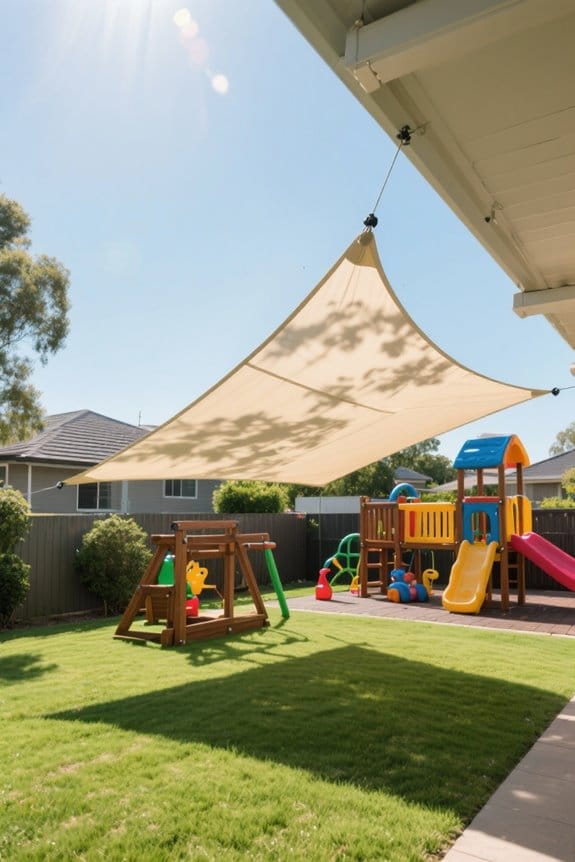
When creating hammock and swing shade zones, position small triangle or curve-edged sails to provide filtered light, allowing comfortable outdoor relaxation. Select shade sails block fabrics made from durable, UV-stabilized materials to guarantee up to 95% UV protection while maintaining airflow. Install sails above existing outdoor seating at heights between 7-9 feet, securing tension with stainless steel turnbuckles to prevent sagging. Arrange for cozy corners by suspending hammocks or swings within these shaded areas, allowing users to unwind without direct sun exposure. Incorporate vibrant colors to visually transform your outdoor space and enhance ambiance. Regularly inspect attachment points for wear and adjust tension seasonally to accommodate fabric stretch. This method effectively expands functional backyard zones, combining comfort and protection while maintaining aesthetic appeal and usability for relaxation or social use. For increased stability and durability, consider using steel posts with spiral grounding designs to securely anchor shade sails in place.
Adding Nautical Vibes Through Curved Sail Designs
How can curved sail designs transform a backyard into a coastal retreat? Install curved sail designs mimicking boat sails to infuse outdoor spaces with nautical vibes. Choose waterproof, UV-resistant fabric measuring between 10 to 15 feet per side for ideal coverage. Secure sails with stainless steel turnbuckles, attach to metal masts or reinforced posts spaced 12–15 feet apart, ensuring proper tension for durability and effective shade. Position sails to maximize airflow, allowing a relaxing outdoor ambiance under dynamic curvature. Anchor ropes with marine-grade cleats, tighten with ratchet straps to prevent sagging, and check for fabric wear regularly. These sails provide cooling shade near pools or patios, maintaining thematic appeal while resisting water splashes. Follow these steps to create inviting, seaside-inspired lounge areas, blending functionality with aesthetic charm efficiently and reliably. For maintenance near pools, consider using heavy-duty PVC hoses to manage water drainage efficiently and prevent damage to sail structures.
Frequently Asked Questions
How Do I Maintain and Clean Shade Sails Effectively?
Like guardians of shade, effective cleaning methods involve gentle washing with mild soap and water. Maintenance frequency should be quarterly to prevent buildup. Prompt stain removal, timely repair techniques, and UV protection guarantee the sail’s lasting durability.
What Materials Are Best for Durability in Different Climates?
Shade sail materials with high UV resistance, appropriate water permeability, and heavier fabric weight provide ideal durability. Climate impact dictates choices; breathable mesh suits humid zones, while coated acrylic fabrics excel in harsh sunlight and rainy conditions.
Can Shade Sails Be Installed on Uneven or Sloped Surfaces?
Shade sails can be installed on uneven or sloped surfaces through creative solutions and tailored installation techniques. Design considerations must address varying angles while support structures adapt, ensuring stability despite challenging terrain and uneven ground conditions.
Are Shade Sails Safe in High Wind Conditions?
Shade sails can be safe in high wind conditions with proper wind resistance fabric selection, secure installation techniques, and regular maintenance. Implementing safety measures like tension adjustments and timely inspections enhances durability and prevents damage during strong winds.
How Long Do Shade Sails Typically Last Before Replacement?
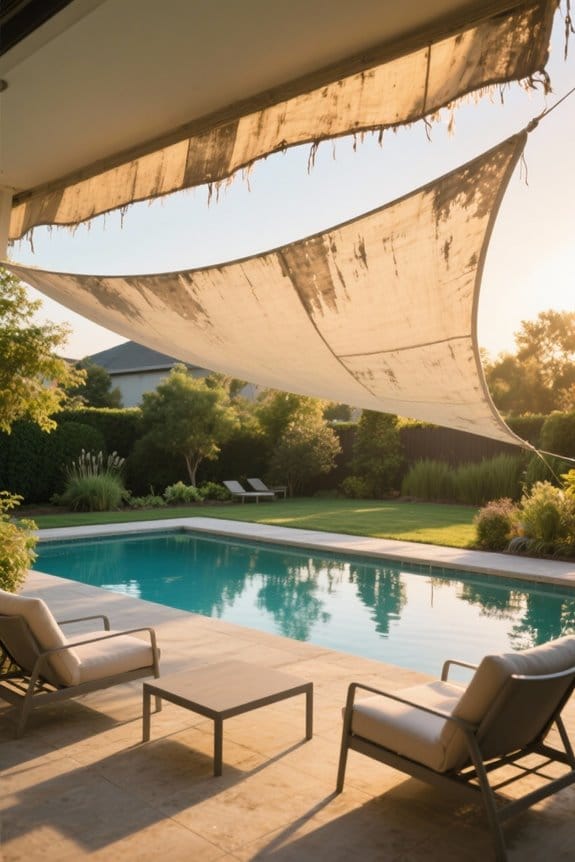
Shade sails typically last 5 to 15 years, their longevity factors dancing with weather exposure and maintenance tips. Replacement signs include fraying or fading, while warranty periods offer guidance on durability and expected lifespan before renewing protection.