As an Amazon Associate, we earn from qualifying purchases. Some links on this site are affiliate links at no extra cost to you. Our recommendations are based on thorough research and editorial judgment.

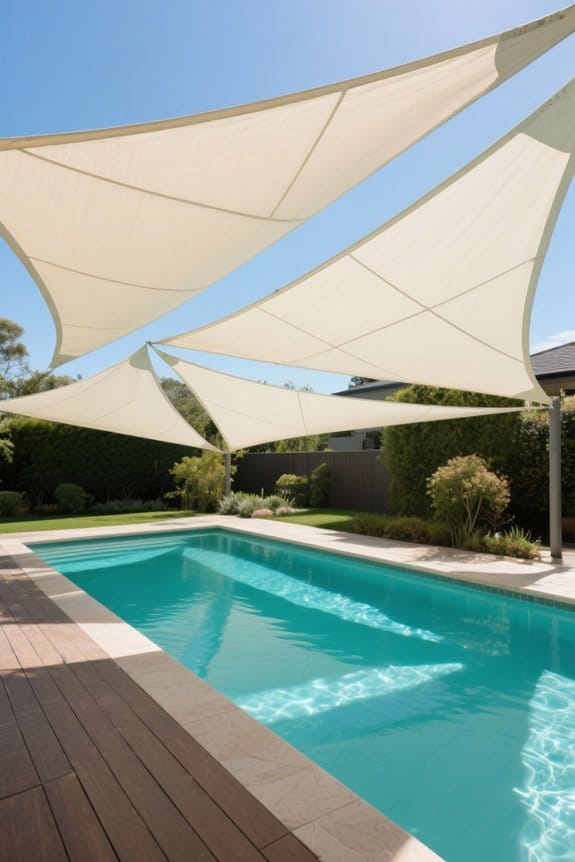
How Shade Sails Affect Pool Temperature

Install shade sails using UV-stabilized high-density polyethylene fabric, tension securely with stainless steel fittings, and position to cover up to 98% of pool surface sunlight. Monitor water temperature with a digital thermometer, aiming to reduce heat by 5-8°C, thereby limiting chlorine degradation and evaporation by up to 70%. Guarantee proper airflow through the porous material to prevent heat buildup. Maintain regular tension checks to avoid sagging and optimize cooling effectiveness. Explore further by examining placement strategies and fabric choices.
Key Takeaways
- Shade sails block up to 98% of UV rays, significantly reducing pool water temperature by 5-8°C (10-15°F).
- They lower ambient temperature around the pool, preventing excessive heating and promoting swimmer comfort.
- Shade sails reduce chlorine degradation by limiting sun exposure, maintaining water quality and clarity.
- By reducing water evaporation up to 70%, shade sails help keep the pool cooler and conserve water.
- HDPE fabric allows airflow, preventing heat buildup and promoting effective cooling beneath the shade sail.
The Impact of Direct Sunlight on Pool Water Temperature
You may be interested
Since direct sunlight causes pool water temperatures to exceed 29 degrees Celsius, monitor daily temperature readings using a digital pool thermometer. Place the thermometer in the pool’s deepest section for accurate results. Record the temperature each morning and afternoon to track fluctuations caused by UV rays. Note higher readings often align with peak sunlight hours, emphasizing UV rays’ role in elevating pool temperature. Understand that constant exposure to direct sunlight accelerates chlorine degradation, compromising water quality. To mitigate rising temperatures, consider installing shade sails to block overhead sunlight and reduce heat gain. Measure ambient air temperatures and compare shaded versus unshaded areas to assess shade sails’ effectiveness. Regularly inspect thermometer calibration to avoid misreading water temperature, and adjust pool maintenance schedules accordingly to maintain ideal swimmer comfort. Choosing shade sails made from High-Density Polyethylene fabric can enhance UV protection while allowing airflow to prevent heat buildup.
How Shade Sails Block UV Rays to Keep Pools Cooler
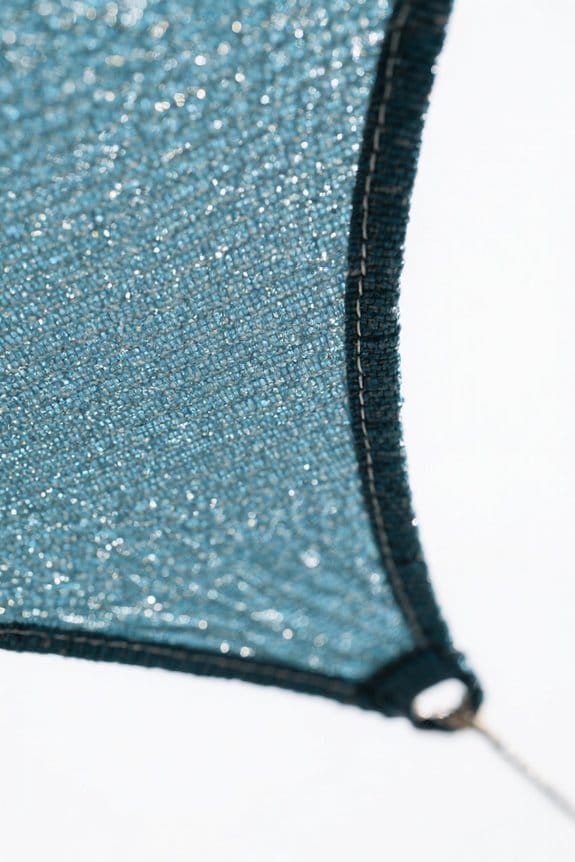
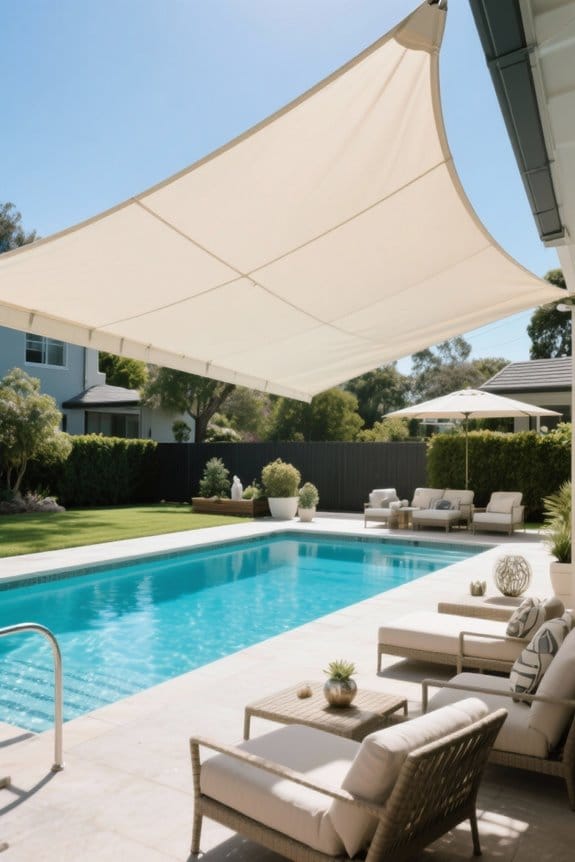
How do shade sails effectively reduce pool water temperatures? Position shade sails constructed from high-density polyethylene (HDPE) fabric above the pool to achieve up to 98% UV protection, blocking harmful rays that increase water temperature. Install the sails securely at ideal angles to minimize direct sunlight while maintaining structural stability. This UV filtering prevents chlorine breakdown, preserving sanitizing efficiency and water clarity. Reduce the ambient temperature by 10-15°F, helping to keep the pool cool during peak sun exposure. Regularly inspect tension and fabric condition to verify maximum UV blockage and adjust placement seasonally. By following these guidelines, shade sails deliver effective UV protection, reduce chemical degradation, and maintain cooler pool water, extending comfortable swimming hours while enhancing chemical use and pool maintenance. Choosing sails made of UV-treated materials ensures long-lasting protection and durability even under intense sunlight.
Recommended Products

【About Installation】Please refer to the diagrams before purchasing. To ensure you buy the correct shade sail, you need to leave 0.5-1 ft of space for accessories to avoid buying an oversized shade. In addition, due to the characteristics of this fabric, there may be a tolerance of ±4 inch from the outer edge of one D-ring to the outer edge of the other D-ring

【About Installation】Please refer to the diagrams before purchasing. To ensure you buy the correct shade sail, you need to leave 0.5-1 ft of space for accessories to avoid buying an oversized shade

Premium Material - Shade sail is made from 185GSM new high-density polyethylene material, the shade fabric is recycling which could protect our environment. UV treated to block 95% harmful rays to protect our family. Effectively decrease the temperature in covering area.
Breathability and Airflow Benefits of Shade Sails
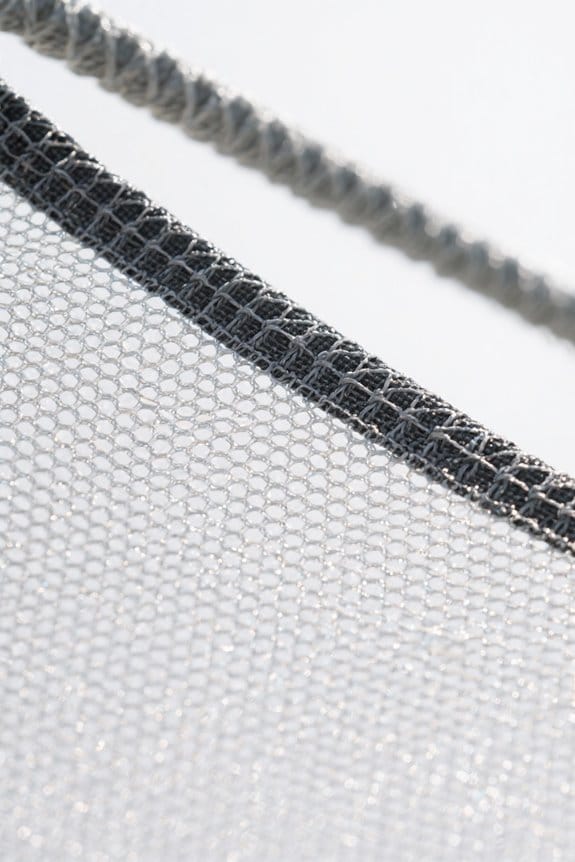
What advantages does the breathability of shade sails offer pool owners seeking efficient cooling? Utilize shade sails made from high-density polyethylene (HDPE), which combine breathability with effective UV blockage. Position sails overhead to allow continuous airflow, enabling warm air near the pool surface to escape, thereby enhancing the cooling effects. Avoid solid canopies, as shade sails’ porous design prevents heat buildup and maintains ambient temperatures 10-15°F (5-8°C) lower around the pool. Guarantee proper tension and angle during installation to maximize ventilation and to prevent sagging that restricts airflow. Monitor shaded areas for consistent airflow; if heat accumulates, adjust sail height or spacing for improved ventilation. By leveraging shade sails’ breathability and airflow, maintain a cooler, more comfortable swimming environment during hot weather efficiently and with minimal mechanical intervention. Selecting shade sails with UV stabilizers also ensures durability and sustained performance under strong sunlight exposure.
Recommended Products

50% Filtered Sunlight for Gentle Spring Protection: This shade cloth offers a 50% shade rate, which is ideal for the spring season. It filters direct sun while allowing 50% of vital light to reach your plants, helping them thrive as they establish growth without the stress of intense midday sun. A great choice as a garden shade cloth for new seedlings and cool-season crops.

【UV PROTECTION & COOLING】This sunshade sail is made of 200GSM high-density polyethylene (HDPE) fabric with UPF 50+ sun protection factor, providing cooling effect of 10-15℉ and protecting furniture and swimming pool areas from direct sunlight.

High-Quality Construction: Made with 185 gsm high-density polyethylene (HDPE) shade fabric; features well-stitched seams and sturdy stainless steel D-rings in each corner for lasting durability
Reducing Water Evaporation With Pool Shade Sails
Install shade sails strategically over the pool to block direct sunlight, reducing water evaporation by up to 70%. Position sails to maximize shade during peak sun hours, ensuring coverage without interfering with pool access or safety equipment. Regularly inspect tension and attachment points on poles or walls, adjusting to prevent sagging that diminishes effectiveness. Lower pool temperature by minimizing direct solar radiation, which greatly cuts evaporation rates. Focus on maintaining shade sails with UV-resistant fabric, cleaning debris promptly, and replacing worn areas to preserve performance. Utilize weather-resistant hardware such as stainless steel turnbuckles and marine-grade cables for secure installation. By reducing evaporation, shade sails help maintain stable water levels and reduce frequent chemical rebalancing. Implement these steps to optimize your pool’s shade sails for effective evaporation control and better pool temperature management. Selecting shade sails made from high-density polyethylene fabric ensures superior durability and UV protection for long-lasting pool shade.
Recommended Products

【UV Protection & Cooling】Made of 100% brand new High Density Polyethylene material and eliminate the use of splicing fabrics.Blocks up to 95% of harmful UV rays and direct sunlight exposure."Breathable" fabric allows air to pass freely and achieve a certain degree of cooling.

High-Quality Construction: Made with 185 gsm high-density polyethylene (HDPE) shade fabric; features well-stitched seams and sturdy stainless steel D-rings in each corner for lasting durability

Custom-made & Durable: We offer custom sizing to fit any outdoor space. Crafted from 185GSM HDPE material with tight stitches and stainless-steel D-rings at each corner, it's built tough to resist wind and sun.
Energy Savings Through Temperature Regulation
Because shade sails can lower pool temperatures by 10-15°F (5-8°C), start by selecting UV-resistant fabrics that block up to 98% of solar radiation. Install shade sails strategically to enhance energy efficiency by reducing heat absorption and lowering pool temperature consistently. Measure pool surface and secure sails at appropriate tension, ensuring airflow around the structure to prevent heat buildup. Monitor water temperature changes weekly, adjusting shade sail position if necessary to maintain peak cooling. Use the resulting cooler pool temperature to reduce reliance on mechanical cooling systems, thereby decreasing electricity consumption. Track energy bills before and after installation to quantify savings. Maintain sail fabric and mounting hardware regularly to sustain performance. Follow these steps systematically to achieve meaningful energy savings through effective temperature regulation with shade sails. Incorporating shade sails with UV-resistant fabrics and proper installation techniques enhances durability and long-term energy savings.
Choosing the Right Fabric for Optimal Cooling
Recognize that selecting the right fabric directly impacts the shade sail’s ability to cool pool water effectively. Opt for high-quality shade sails made from high-density polyethylene (HDPE), providing up to 98% UV-blocking capabilities while allowing air circulation. Choose lighter colors to reflect sunlight, reducing heat absorption and lowering water temperature by 10-15°F (5-8°C). Consider PVC-coated fabrics for enhanced waterproofing and UV resistance if the sail will face rain exposure. Prioritize fabrics with reinforced stitching and UV degradation resistance to maintain durability and sustained cooling. Measure the pool area accurately before purchasing; verify fabric size covers critical sun-exposed zones without sagging. Inspect sail tension regularly to avoid fabric stretch or damage, preserving ideal airflow and heat reduction. Maintain fabrics by cleaning with mild detergents, preventing accumulation that could compromise UV protection and cooling efficiency. Additionally, selecting fabrics with double-reinforced edges and sturdy grommets is essential to ensure long-lasting strength and secure installation.
Recommended Products
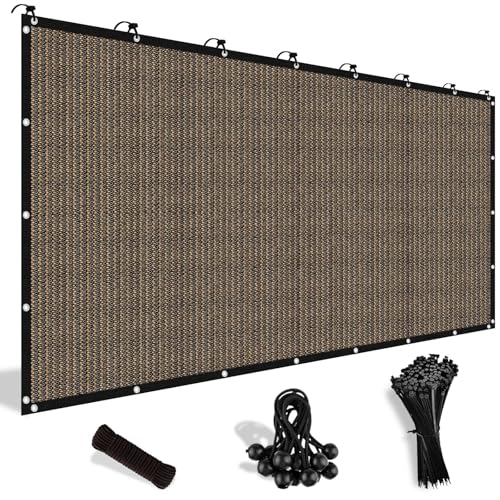
90% Sun Block: Shade&Beyond shade cloth with grommets provides 90% UV protection and resists UV fading. With excellent shading and heat insulation, you can get a shady retreat and keep your belongings away from the sun's harsh effects. By lowering the temperature under its shelter, these sunshades for patio always allow you to enjoy a cool and refreshing outdoor experience, making them ideal for patios, gardens, and more

【ADVANCED HEAT REDUCTION】 Crafted from premium 200 GSM High-Density Polyethylene (HDPE), this shade sail lowers ambient temperatures by up to 15°F. The permeable fabric allows refreshing breezes and rainwater to flow through freely, effectively preventing heavy water pooling and keeping your patio cool.
High-Quality Construction: Made with 185 gsm high-density polyethylene (HDPE) shade fabric; features well-stitched seams and sturdy stainless steel D-rings in each corner for lasting durability
Strategic Placement of Shade Sails for Maximum Effect
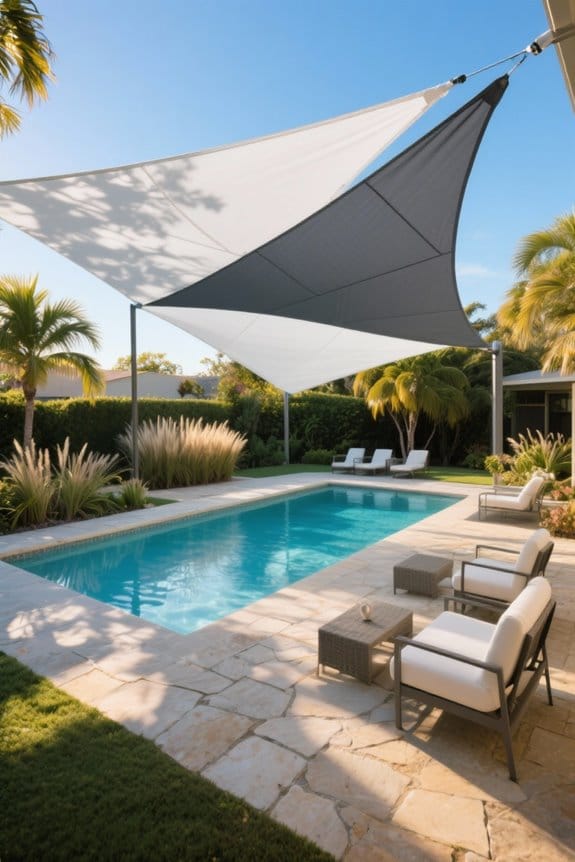
Where should shade sails be positioned to maximize cooling efficiency? Target areas exposed to midday sun, specifically between 10 a.m. and 4 p.m., to reduce direct sunlight on the pool water. Install shade sails at a height of 8 to 12 feet to guarantee maximum airflow while maintaining effective coverage. Angle the sails strategically at 15–20 degrees to facilitate rainwater runoff, avoiding water pooling and structural stress. Use overlapping shade sails to increase coverage along east-west sun trajectories, enhancing cooling effects across the pool surface. Position sails considering surrounding landscaping to augment shade and temperature control. Regularly check alignment and tension to maintain the strategic angle and airflow quality, adjusting as necessary to preserve the sails’ effectiveness. For durability and safety, use stainless steel hardware and perform seasonal retensioning to keep the shade sails functioning optimally. Follow these steps to optimize the shade sails’ cooling impact on pool temperature.
Recommended Products
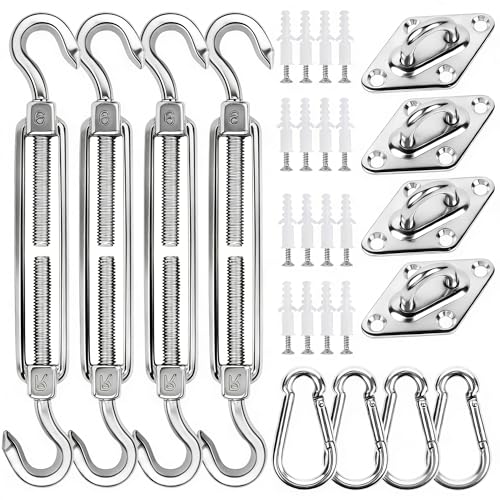
All-in-One Sun Shade Sail Hardware Kit: Our complete shade sail hardware kit includes everything you need for easy installation: 4 turnbuckles, 4 snap hooks, 4 pad eyes, 16 screws, and 16 expansion anchors. Ideal for sun shades outdoor patio, pergolas, awnings for patio, and outdoor sails for shade waterproof.

Heavy Duty & Premium 304 Stainless Steel: Our shade sail hardware kit is crafted from high-quality 304 marine-grade stainless steel, delivering exceptional strength, durability, and corrosion resistance. Every component—from turnbuckles to wire ropes—is built to withstand harsh outdoor conditions, ensuring long-lasting, rustproof performance. The sleek silver finish is neutral and versatile, blending seamlessly with any patio, garden, or outdoor decor.

Ultimate All-Weather Durability: Experience unmatched reliability with BUDONI's Shade Sail Hardware Kit, designed exclusively for outdoor use in every season. Crafted from premium 304 stainless steel, resistant to rust and corrosion. It's engineered to endure high winds and harsh conditions, making it a steadfast companion for your patio deck shade sail. Enjoy the safety and durability of BUDONI's Shade Sail Hardware Kit, ideal for any outdoor area and a top choice for reliable shade solutions.
Additional Health and Safety Benefits of Pool Shade Sails
While enhancing pool comfort, prioritize installing shade sails that filter out up to 98% of harmful UV rays, reducing skin cancer risk and sunburns. Secure pool shade structures firmly using stainless steel hardware rated for outdoor use, ensuring resistance to corrosion in wet environments. Position the sails to block direct sunlight over the pool, maintaining water temperatures below 29°C to inhibit bacterial growth. Monitor water temperature and surface glare regularly, adjusting sail tension if shadows shift due to wind or sun angle changes. Use UV-stabilized fabric with an openness factor between 5% and 10% to balance airflow and effective shading. Cover adjacent outdoor areas, reducing heat stress and dehydration risk for users, and encourage safe, extended pool activities regardless of sun intensity or season. Regularly inspect the installation for wear or sagging to maintain safety and durability. For long-lasting safety and corrosion resistance, consider using 304 stainless steel hardware in your pool shade installation.
Frequently Asked Questions
What Are the Disadvantages of Shade Sails?
Disadvantages of shade sails include installation challenges due to proper tension requirements, durability concerns from material degradation over time, and significant cost analysis needed for high-quality products, which may deter some homeowners despite potential long-term benefits.
Does Pool Heat up Faster With Solar Cover on or Off?
Like a cozy blanket shielding warmth, solar cover benefits include reducing pool evaporation rates and stabilizing water temperature variations. Consequently, a pool heats up faster with the solar cover on, efficiently retaining energy and enhancing heating speed.
Do Shade Sails Reduce Heat?
Shade sail materials, such as breathable HDPE, reduce sunlight exposure, effectively lowering heat absorption. This results in improved pool temperature regulation by minimizing solar heat gain, consequently maintaining cooler water temperatures and enhancing swimmer comfort.
How Much Will 40 Shade Cloth Reduce Temperature?
A 40% shade cloth offers a gentle retreat from the sun’s embrace, delivering a temperature reduction of approximately 10-15°F. Its shade cloth effectiveness greatly enhances outdoor comfort, making poolside moments considerably more enjoyable.