As an Amazon Associate, we earn from qualifying purchases. Some links on this site are affiliate links at no extra cost to you. Our recommendations are based on thorough research and editorial judgment.
Local Regulations for Shade Sail Installations

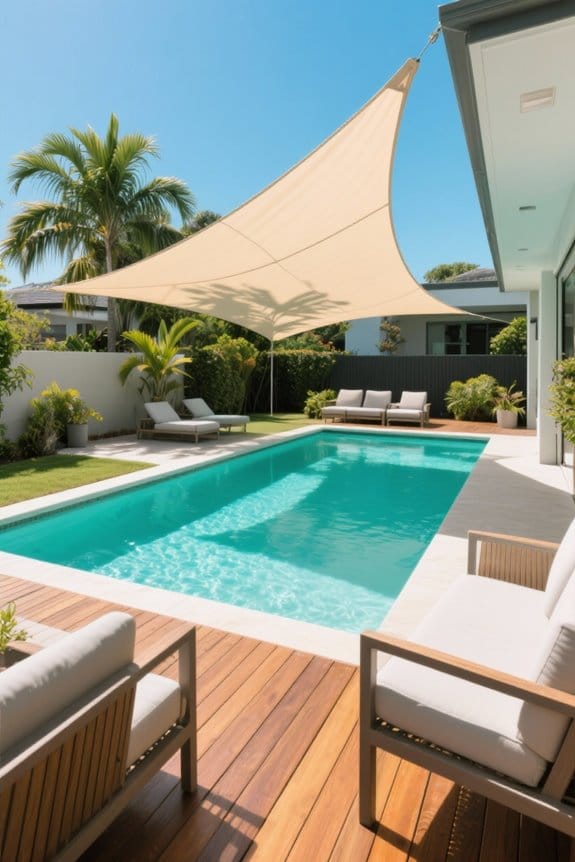
Consult local zoning ordinances to determine permit requirements, noting areas like Clark County, Nevada mandate permits for all shade sails, while Tucson, Arizona exempts installations under 400 square feet. Verify maximum height and size limits, and guarantee compliance with building codes requiring wind-resistant design and rust-resistant hardware. Inspect anchor points supporting over 300 pounds of tension regularly. Identify any exemptions for temporary structures, as found in Florida or Australia. Follow these steps carefully to avoid violations and improve installation success; further details can enhance understanding of regulations and standards.
Key Takeaways
- Permit requirements for shade sails vary significantly by region and must be verified with local authorities before installation.
- Clark County, Nevada mandates permits for all shade sails, while Tucson, Arizona allows installations up to 400 square feet without permits.
- Local zoning ordinances specify height, size limits, and allowable locations for shade sails, differing between residential and commercial zones.
- Building codes require permits to ensure design safety, wind resistance, and proper anchorage with rust-resistant hardware.
- Temporary shade sails may be exempt from permits in regions like Florida, Australia, and the UK, but local confirmation is essential.
Permit Requirements by Region
You may be interested
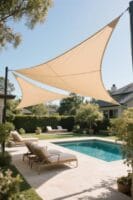
Where do you start when managing permit requirements for shade sail installations? Begin by reviewing local regulations thoroughly to understand specific permit requirements. For example, in Clark County, Nevada, building permits are mandatory for all shade sails, regardless of size or permanence. In Tucson, Arizona, you may install shade sails up to 400 square feet without a permit; anything larger demands approval. Consider safety standards carefully, especially for temporary structures like those in Florida, where fixed installations often require permits. Check municipal codes in Perth, Australia, where building permits are generally required, though some exemptions exist. In the United Kingdom, temporary or removable shade sails usually avoid permit requirements, depending on local council rules. Always verify local regulations before proceeding to guarantee compliance and avoid penalties. Additionally, ensuring proper installation with reinforced seams and stainless steel D-rings can be critical for meeting safety and durability standards often reviewed during permit approval.
Recommended Products
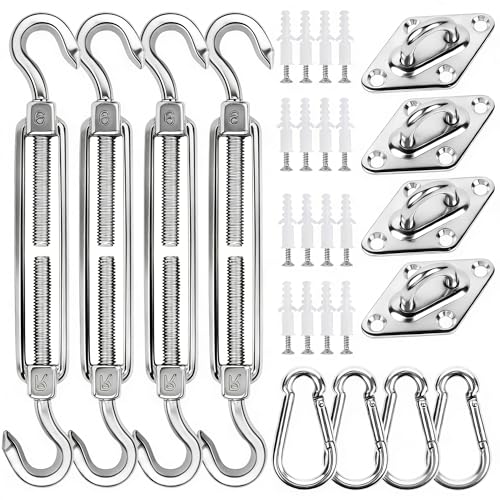
All-in-One Sun Shade Sail Hardware Kit: Our complete shade sail hardware kit includes everything you need for easy installation: 4 turnbuckles, 4 snap hooks, 4 pad eyes, 16 screws, and 16 expansion anchors. Ideal for sun shades outdoor patio, pergolas, awnings for patio, and outdoor sails for shade waterproof.

All-in-One Sun Shade Sail Hardware Kit: Our complete sunshade hanging kit includes everything you need for easy installation: 4 turnbuckles, 4 snap hooks, 4 pad eyes, 16 screws, and 16 expansion anchors. Ideal for sun shades outdoor patio, pergolas, awnings for patio, and outdoor sails for shade waterproof.

🛠️【60 Pcs Sun Shade Hardware Kit】Including 2 x Wall Mount, 2 x Ratchet Winches, 6 x Snap Hook, 2 x Pad Eyes, 4 x Double Rope Clamps, 20 x Screw, 20 x Plastic Expansion Bolts, and 4 x 6.6ft Wire Ropes.
Understanding Local Zoning Restrictions
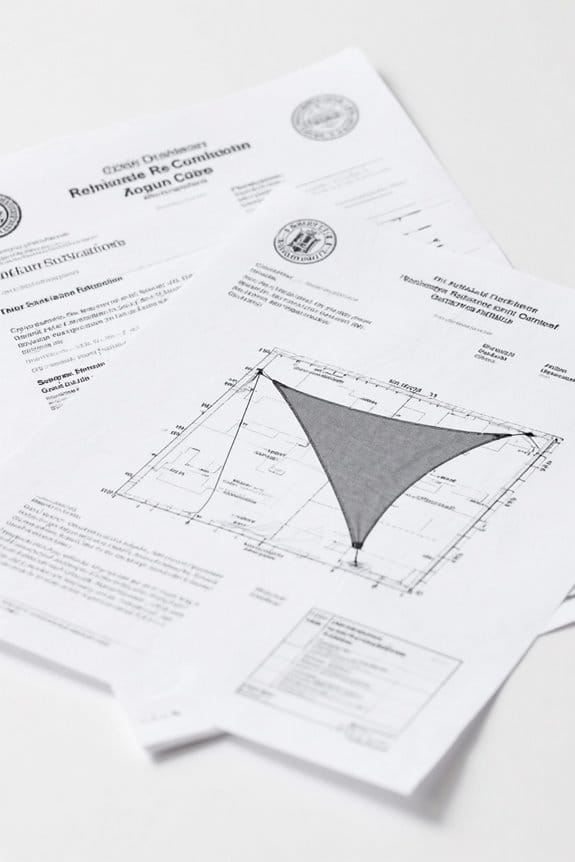
Before installing shade sails, examine the local zoning ordinances to determine allowable locations and restrictions. Review specific zoning laws to understand if your outdoor space qualifies for shade structures, noting distinctions between residential and commercial zones. Check if you need a permit, since some areas require permits for shade installations, especially in mixed-use or commercial sections. Confirm whether the development is classified as “by right” or “conditional use,” as this affects approval chances. Measure proposed sail dimensions against maximum height and size limits outlined in local zoning regulations. Contact local authorities to verify enforcement of zoning regulations in your area, facilitating compliance with structural and building regulations. Diligently follow these requirements to avoid fines and guarantee permits for shade sails meet all legal standards.
Recommended Products

❤Resistant Sun Sail - The shade sail protects your children, flowers, plants and cars safe from exposuring under the sun by blocking up to 95% UV rays. Our Square sun shade sails are made from 100% high density polyethylene UV protected fabric.

❤Resistant Sun Sail - The shade sail protects your children, flowers, plants and cars safe from exposuring under the sun by blocking up to 95% UV rays. Our Square sun shade sails are made from 100% high density polyethylene UV protected fabric.

❤Resistant Sun Sail - The shade sail protects your children, flowers, plants and cars safe from exposuring under the sun by blocking up to 95% UV rays. Our Square sun shade sails are made from 100% high density polyethylene UV protected fabric.
Building Code Compliance for Shade Sails
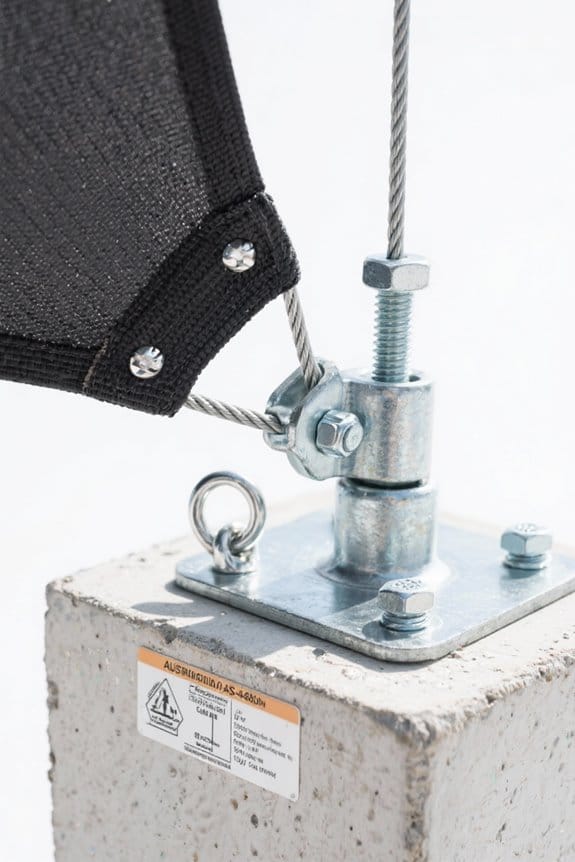
Confirm compliance with all local building codes when planning shade sail installations. Review local building regulations to determine necessary permits, especially for permanent or heavily anchored structures. Obtain permits before installation to guarantee adherence to standards that govern material quality, structural integrity, and safety. Verify that the design accommodates resistance to strong winds, matching load-bearing capacities specified by local codes. Check for restrictions on height and dimensions to prevent noncompliance. Consider adherence to energy efficiency rules if the shade sail contributes to sustainable design efforts. Document all inspections and approvals as required. Avoid proceeding without clearance, as failure to comply risks unsafe structures and costly penalties. Prioritize safety by selecting certified materials and following precise installation guidelines dictated by local authorities. This guarantees a reliable, code-compliant shade installation that endures variable weather conditions. Additionally, ensure that all safety equipment installed nearby, such as durable materials, meets regulatory standards to provide comprehensive protection.
Recommended Products

Sun Shade Hardware Kit Heavy Duty- This 6" rectangle outdoor shade sail installation kit is made of high quality 304 grade stainless steel. with maximum corrosion resistance and durability, The sun shade hardware kit triangle is extremely strong and resistant to the elements, High load-carrying capacity to keep your sails stable in wind, suitable for windy areas or large fixtures such as sun shade sail, canopy.
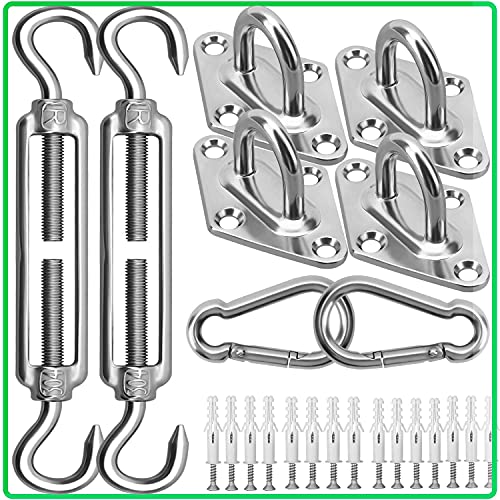
High Quality Shade Hardware Kit - This 6" rectangle outdoor shade sail installation kit is made of high quality 304 grade stainless steel. The hardware kit is extremely strong and resistant to the elements, This is can to support 141s of pounds. High load-carrying capacity to keep your sails stable in wind, suitable for windy areas or large fixtures such as sun shade sail, canopy

Heavy Duty & Premium 304 Stainless Steel: Our shade sail hardware kit is crafted from high-quality 304 marine-grade stainless steel, delivering exceptional strength, durability, and corrosion resistance. Every component—from turnbuckles to wire ropes—is built to withstand harsh outdoor conditions, ensuring long-lasting, rustproof performance. The sleek silver finish is neutral and versatile, blending seamlessly with any patio, garden, or outdoor decor.
Anchorage and Installation Standards
Identify robust anchorage points such as galvanized steel posts with a minimum diameter of 4 inches or reinforced concrete walls, validating they can withstand tension forces exceeding 300 pounds per connection. Use rust-resistant hardware, including turnbuckles, to secure the shade structure tightly and prevent fabric sagging. Follow local building codes carefully; these regulations require specific anchorage designs to ensure safety and durability. Obtain necessary permits before proceeding to installation to validate compliance with all building regulations. Regularly inspect the shade sail for loose fittings or frayed fabric, repairing or replacing components as needed. Proper anchorage and installation practices prevent structural failures and maintain compliance with safety standards, protecting both the shade structure and its users. Always consult local authorities or experts to verify adherence to regional building codes. For best results, select kits that include 304 or 316 stainless steel components to ensure long-lasting corrosion resistance and durability.
Recommended Products
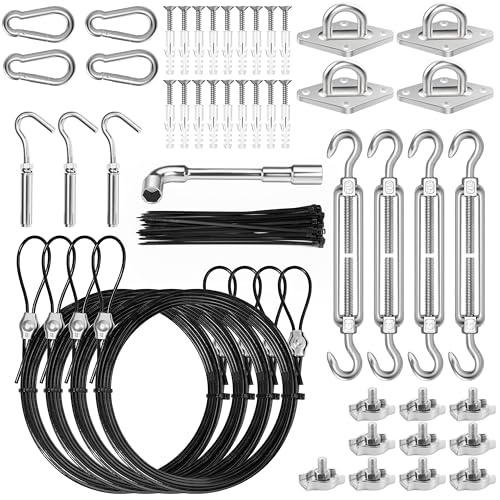
Complete Accessory Set: The Sun Shade Sail Hardware Kit includes 4 PCS 10ft nylon-coated steel wire ropes, 4 adjustable turnbuckles, 4 grommets, 4 snap hooks, 4 expansion hooks, 10 rope clips, 20 nylon expansion tubes, 1 socket wrench, and 28 tie straps. Everything you need for secure and flexible installation in various outdoor settings.

【Humanized Combination and Design】 Rope Clamp and Steel cable:The tightness of the sun shade sail can be greatly adjusted at any time, suitable for various sizes of shade sails or canopy such as rectangle, square, triangle, etc.Nylon Cable Ties: Make each connection stronger and not easy to fall off

【 High-Quality Material】:Our 6 inch/ M6 sun shade sail installation kit is made of high-quality 304 stainless steel for rust and corrosion resistance. The hardware kit is perfect for all square/rectangle/triangle sun shade sail and you can mount it between trees, wall to wall, wall to tree, wall to a pole or wherever you want it, suitable for windy areas or large fixtures such as sun shade, canopy.
Exemptions and Exceptions in Permitting
Local authorities’ permitting regulations often include specific exemptions and exceptions for shade sail installations. Identify if your installation qualifies as a temporary structure, as permits are required primarily for permanent shade or commercial shade projects. Check with local offices to determine exemptions from permitting based on size, height, or distance from property lines. For example, Florida allows some temporary shade sails without permits, while Australia exempts small freestanding sails but requires approval for larger ones. In the UK, temporary or removable sails usually need no permit, but permanent shade does. Always check local regulations before installing shade, since confirming the need for permits prevents violations. Document your findings, submit applications if necessary, and proceed confidently with exempt projects, ensuring compliance with relevant rules at every step. Additionally, understanding the importance of proper tension and installation guidelines can help avoid sagging and maintain the shade sail’s effectiveness.
Recommended Products
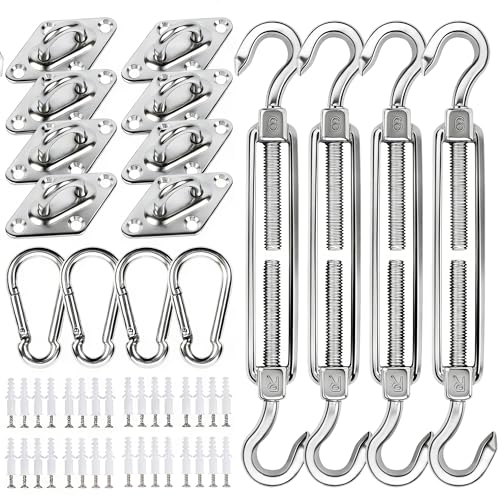
[One Kit for Any Design]: Conquer any shade sail project—rectangle, triangle, hexagon, or custom shapes—with one comprehensive 80-piece kit. Ditch the confusion of piecing together multiple sets. Plus, when installing common square or triangle sails, the extra hardware acts as your instant backup plan, saving you time and hassle if a replacement is ever needed.

Premium Craftsmanship Durable: BUDONI shade sail hardware kit is crafted from premium 304 stainless steel with an anti-rust black oxide finish, providing excellent corrosion resistance and long-lasting durability for extended outdoor use. This sun shade hardware kit withstands rain, UV solar exposure, and strong wind, making it an ideal choice for securing shade sail. This shade sail hardware delivers reliable performance while adding a modern, high-end look to sun shades outdoor patio setups.

Ultimate All-Weather Durability: Experience unmatched reliability with BUDONI's Shade Sail Hardware Kit, designed exclusively for outdoor use in every season. Crafted from premium 304 stainless steel, resistant to rust and corrosion. It's engineered to endure high winds and harsh conditions, making it a steadfast companion for your patio deck shade sail. Enjoy the safety and durability of BUDONI's Shade Sail Hardware Kit, ideal for any outdoor area and a top choice for reliable shade solutions.
Coordination With Local Authorities
Since shade sail regulations vary widely by location, begin by consulting planning and zoning departments to understand permit requirements and restrictions. Verify if your installation size or permanence mandates a permit. Review local zoning regulations closely, as they dictate allowable locations and dimensions. Contact local authorities to confirm compliance with applicable building codes, which specify safety measures and material standards. Engage with planning officials early to explore potential variances if your design conflicts with zoning rules. Maintain regular communication with authorities throughout the installation process to avoid delays or violations. Document all approvals and ascertain your shade sail meets safety and structural codes. Address any equipment needs or troubleshooting concerns promptly, adhering to local regulations, to guarantee a safe, compliant, and successful shade sail installation. Also, ensure that the shade sail fabric offers sufficient UV protection to meet safety standards and provide effective sun shielding for users.
Frequently Asked Questions
Can I Install My Own Shade Sail?
DIY shade sails can be installed following proper installation tips, using durable materials and secure attachment methods. Safety considerations and maintenance advice are essential, along with understanding design ideas and avoiding common mistakes. Consulting local guidelines is recommended.
Can I Attach a Shade Sail to My House?
Like a sailor’s anchor, attaching a shade sail to a house demands careful house attachment methods and shade sail materials selection to guarantee structural integrity, respect aesthetic considerations, address wind resistance factors, heed local building codes, and consider insurance implications.
Do You Need a Permit for a Retractable Awning?
Permit requirements for retractable awnings depend on local codes, zoning laws, and homeowner associations. Awning regulations often consider installation guidelines, retractable features, property lines, and safety standards, necessitating verification to guarantee compliance before installation.
What Post Is Needed for Shade Sail?
Strong, durable posts—such as treated softwood, hardwood, or steel—ensure effective shade sail materials support. Installation techniques include concrete anchors. Proper post height, tensioning methods, weather considerations, maintenance tips, and adherence to safety guidelines optimize performance.