As an Amazon Associate, we earn from qualifying purchases. Some links on this site are affiliate links at no extra cost to you. Our recommendations are based on thorough research and editorial judgment.

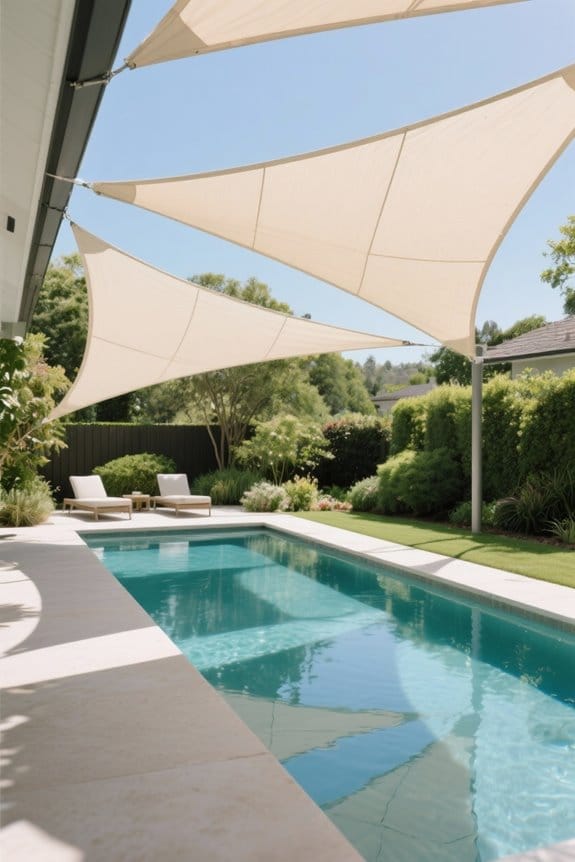
Eco-Conscious Patio Upgrades With Sails

Choose natural fiber shade sails made from sustainably harvested coconut fibers for superior airflow and UV protection. Measure your patio precisely, guaranteeing mounting points allow installation at least 10 feet high to optimize ventilation. Use stainless steel eye bolts and tensioners to maintain fabric tautness and prevent sagging or moisture buildup. Inspect regularly for frays or stretch, and clean quarterly with mild soap. These steps guarantee durable, eco-friendly shade. Additional strategies enhance environmental benefits and design integration.
Key Takeaways
- Use natural fiber shade sails made from coconut fibers for better airflow, UV protection, and eco-friendliness.
- Choose breathable, recyclable HDPE fabrics to block UV rays and promote outdoor comfort sustainably.
- Install sails at least 10 feet high with stainless steel hardware to ensure durability and prevent moisture retention.
- Select earthy or bold colors for stylish, low-maintenance designs that retain color and UV resistance over time.
- Regularly inspect and clean sails quarterly to maintain longevity, reduce waste, and support sustainable patio living.
Benefits of Natural Fiber Shade Sails
You may be interested
Begin by selecting natural fiber shade sails made entirely from coconut fibers to ensure superior air circulation and effective cooling. Prioritize eco-friendly shade sails that use sustainable materials sourced from responsibly grown coconut trees, minimizing environmental impact. Ascertain the woven design provides natural cooling by filtering sunlight while allowing breezes to pass through, which enhances comfort and maintains airflow. Confirm that the chosen sails offer UV protection, reducing harmful sun exposure during outdoor activities. Check for weather and rot resistance to secure longevity exceeding ten years with proper maintenance, such as routine cleaning and prompt removal of debris. Install with tensioned attachment points spaced according to manufacturer guidelines—typically 8 to 10 feet apart—to maintain structural integrity and maximize cooling efficiency. Follow these steps precisely to optimize the benefits of natural fiber shade sails. Additionally, ensuring proper tension during installation helps prevent sagging and extends the lifespan of your shade sails.
How Shade Sails Enhance Outdoor Airflow
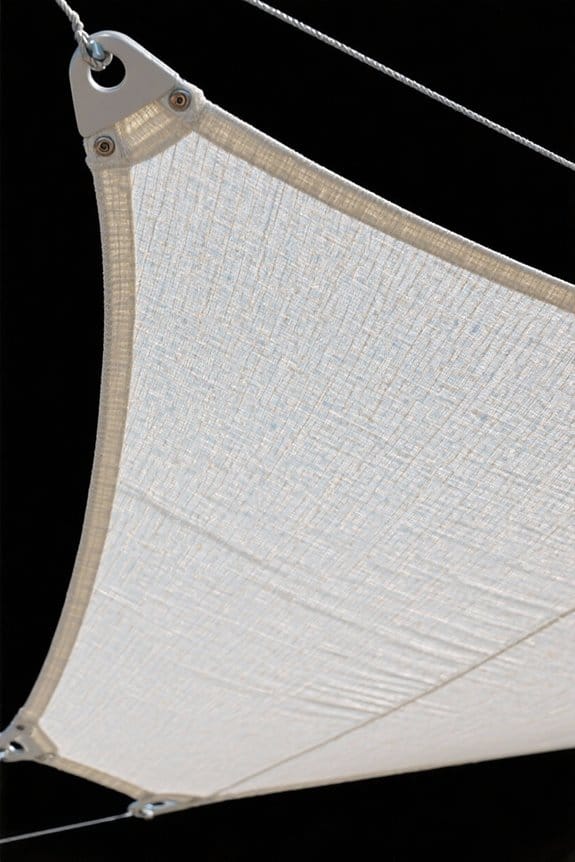
Install shade sails made from breathable fabrics to enhance outdoor airflow effectively. Select high-density polyethylene sails capable of blocking up to 95% of UV rays while allowing ventilation. Measure the patio accurately, then position sails in overlapping or triangular shapes to maximize shade and promote hot air escape. Mount the sails at least 10 feet above ground to increase airflow beneath. Use stainless steel eye bolts and tensioning tools to secure the fabric taut, avoiding sagging that impedes ventilation. Inspect frequently for fabric wear and adjust tension seasonally, ensuring airflow remains unobstructed. Strategically place sails where sunlight is strongest, maintaining balance between shade and breeze. This configuration cools outdoor surfaces, reduces surrounding heat buildup, and improves overall comfort without sacrificing UV protection. Using a shade sail tensioning kit with ratchet winches can make seasonal adjustments easier and enhance the longevity of your setup.
Weather Resistance and Longevity of Coconut Fiber Sails
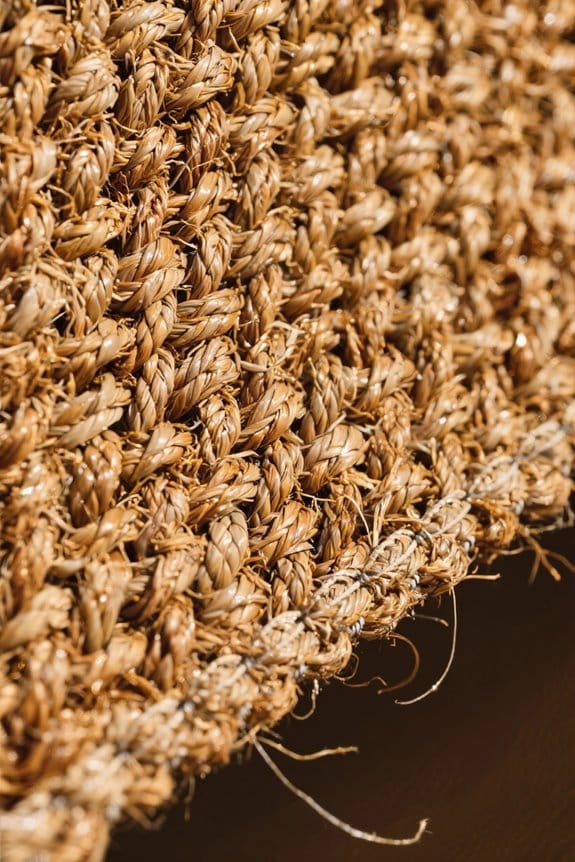
Although less common than synthetic options, coconut fiber sails offer exceptional weather resistance, making them ideal for year-round patio coverage. Inspect the sails regularly for signs of fraying or damage, especially after storms. Clean with a soft brush and mild soap biannually to maintain fiber integrity and prevent rot. Guarantee proper tensioning; a taut installation prevents sagging that encourages moisture retention. Expect longevity beyond 10 years when routine care is applied, reducing replacement frequency and waste. Their rot-resistant nature allows durability in humid or wet conditions, preserving function and form. Choose coconut fiber sails as sustainable solutions because they lower environmental impact through extended lifespan and biodegradability. Prioritize maintenance to enhance weather resistance and maximize lifespan, guaranteeing these eco-conscious sails remain effective for patio shading over the long term. Additionally, incorporating materials with durable construction can complement the longevity and resilience of coconut fiber sails in outdoor settings.
Recommended Products

High-Quality Construction: Made with 185 gsm high-density polyethylene (HDPE) shade fabric; features well-stitched seams and sturdy stainless steel D-rings in each corner for lasting durability

High Quality Guarantee: Our shade sail made from non-recycled HDPE (high-density polyethylene) 180gsm, industrial cross-weaving for superior support & long-lasting durability. Ready to hoist upon sturdy connections at all four corners. Easy to install, very thick & durably-enforced webbing. Our shade sail includes 304 Stainless Steel D-rings stitched seamlessly into its corners & comes with nylon ropes for convenience, length & width are measured from D-ring to D-ring

Thick Material: Compared to other sun shade sails on the market, our virgin HDPE fabric undergoes 20000 hours of laboratory testing and it is proven to be 80% more durable than low purity HDPE under sun exposure. The fabric surface has undergone special treatment, making it more durable in both sunlight and rain
Sustainable Materials in Modern Shade Solutions
When selecting modern shade sails, prioritize fabrics made from high-density polyethylene (HDPE) or recyclable materials to maximize sustainability. Choose high-density polyethylene for its durability, UV resistance, and ability to block up to 95% of harmful rays. Inspect eco-friendly fabrics carefully for weave density and tensile strength to ascertain longevity exceeding ten years. Confirm that the shade solutions incorporate recyclable fibers or blends to reduce environmental impact. Integrate sustainable materials like coconut fiber where natural airflow and weather resistance are essential. Use stainless steel hardware and UV-resistant coatings to extend lifespan further. Regularly check for tears, fraying, or discoloration, repair or replace components promptly to maintain performance. By selecting appropriate materials and maintaining them properly, reduce waste and support eco-conscious living through effective, long-lasting shade solutions featuring high-density polyethylene and other sustainable materials. Proper installation with turnbuckles for tension is crucial to prevent sagging and enhance the lifespan of shade sails.
Designing Your Patio With Eco-Friendly Shade Sails
Begin by measuring the patio dimensions accurately, including length, width, and any obstructions like beams or trees, to determine the ideal size and shape of the eco-friendly shade sail. Select shade sails made from high-density polyethylene fabric, ensuring durability and blocking up to 95% of harmful UV rays. Opt for recyclable materials to support sustainable solutions that reduce environmental impact. Plan installation points that allow for proper tension and airflow, enhancing ventilation in outdoor spaces while maintaining structural integrity. Use stainless steel hardware to prevent rust and secure the sail firmly. Check for potential shifting or sagging during mounting to avoid damage. Finally, consider how the shade sail’s coverage reduces indoor cooling costs, contributing to energy savings and sustainable living practices on the patio. For optimal longevity, regular inspection and maintenance of materials ensures continued durability and performance.
Custom Shapes and Sizes for Versatile Outdoor Spaces
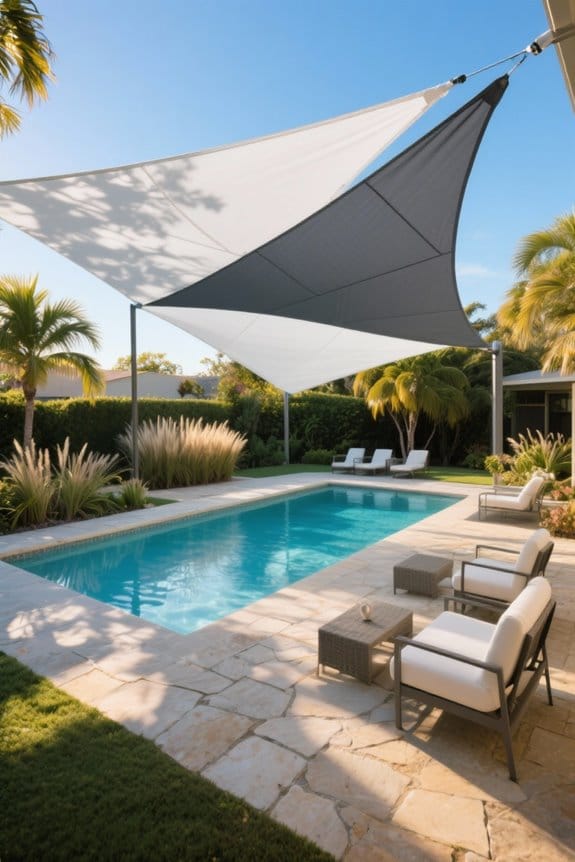
To fit a custom shade sail precisely, begin by sketching your outdoor area’s exact layout, marking irregular edges, corners, and any overhead obstacles. Measure each side carefully with a steel tape measure, noting dimensions in feet and inches for accuracy. Choose from custom shapes like triangles, rectangles, or curves, selecting a design that maximizes high-quality shade and complements your space. Use durable HDPE fabric, which supports environmental sustainability through long-lasting performance and UV rays protection up to 95%. Validate tension points with stainless steel pad eyes and marine-grade turnbuckles to prevent sagging. Account for wind load by leaving a small slack margin, about 2-3 inches per side. Check all measurements twice before ordering to confirm the shade sail fits perfectly and performs effectively over time. Additionally, opting for sails made with HDPE materials above 200 GSM ensures optimal durability and UV protection for your outdoor comfort.
Reducing Energy Consumption Through Effective Sun Protection
Although designing shade sails requires careful planning, installing them strategically can drastically reduce energy consumption by providing effective sun protection. Begin by selecting high-density polyethylene (HDPE) sails to block up to 95% of harmful rays. Position the sails to create shaded zones that reduce heat absorption on exterior walls, lowering indoor cooling demand. Measure outdoor dimensions accurately, and anchor the sails securely with stainless steel hardware to withstand wind loads. Maintain tension to prevent sagging, which compromises sun blockage. Choose sails made from recyclable materials to support sustainable solutions and minimize environmental impact over their 10+ year lifespan. Regularly inspect for wear and clean fabric using mild detergent to extend durability, reducing replacement frequency and the associated energy consumption tied to manufacturing. This method offers practical, eco-conscious energy savings for outdoor and indoor environments alike. Additionally, the breathable fabric design promotes airflow, preventing heat buildup and enhancing outdoor comfort.
Stylish Color Options That Complement Natural Settings
Select shade sail colors that integrate seamlessly with surrounding vegetation and natural elements. Choose earthy tones like olive and terracotta for sustainable solutions that provide stylish sun protection while blending into the outdoor area. For a bolder visual impact, incorporate deep navy or burnt orange sails as accent colors to enhance the space’s vibrancy. Opt for high-density polyethylene (HDPE) fabrics to guarantee UV stabilization, maintaining color integrity over time. Match custom sail shapes to architectural features, guaranteeing cohesive aesthetics and optimized shade coverage. Coordinate shade sails with complementary outdoor décor and string lighting to unify the environment visually. Prioritize color options that balance durability with style, facilitating eco-conscious patio upgrades that elevate comfort and appearance without sacrificing environmental responsibility or design coherence. Additionally, selecting sails made from 185 GSM fabric ensures superior durability and effective UV protection for long-lasting use.
Low-Maintenance Care for Long-Lasting Shade Sails
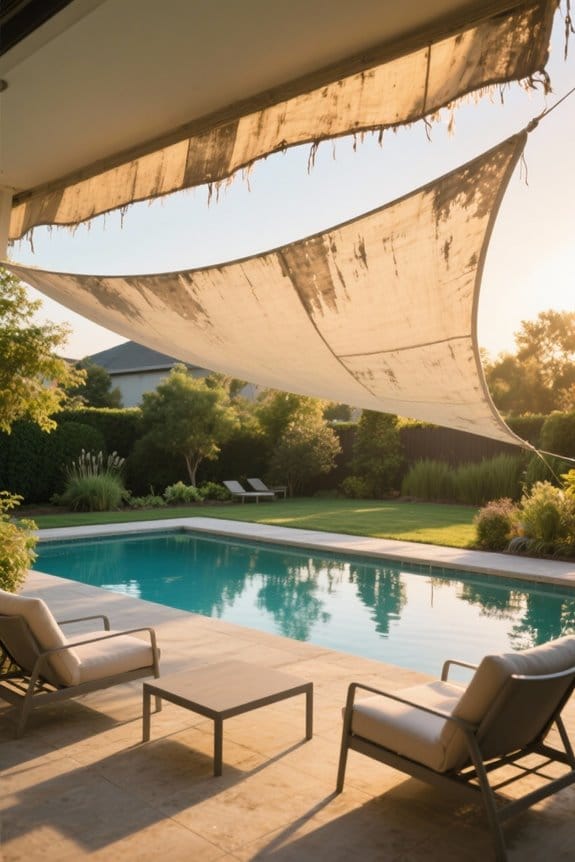
When maintaining shade sails, begin by performing regular inspections to identify loose fittings, frayed edges, or stretched fabric areas. Tighten anchors with a torque wrench, ensuring tension meets manufacturer specifications, usually between 30-50 pounds, to prevent sagging and wind damage. Clean sails quarterly using a soft-bristled brush and mild soap solution, avoiding harsh detergents that degrade polyethylene fibers. Rinse thoroughly to preserve the fabric’s UV resistance and promote air circulation, which minimizes dirt accumulation. Remove debris promptly to prevent staining and mildew. Schedule professional adjustments annually to confirm proper sail geometry and attachment integrity. These sustainable solutions extend the shade sails’ lifespan beyond ten years, reducing waste and maintenance frequency. Follow these low maintenance steps consistently to keep patios shaded efficiently and eco-consciously, ensuring long-lasting performance without excessive upkeep. Additionally, using covers with UV protection can help further protect outdoor fabric and prolong its durability.
Comparing Natural Fiber Sails to Synthetic Alternatives
How does one determine the best material for patio shade sails? Evaluate natural fiber sails made from 100% coconut fiber, sourced sustainably from Indonesian coconut trees, offering a low environmental impact alternative. Compare these to synthetic materials, which generally derive from non-renewable resources and involve extensive processing, increasing their carbon footprint. Inspect the woven design of natural fiber sails that promotes air circulation and heat escape, enhancing outdoor comfort. Note the weather and rot resistance of high-quality natural fibers, ensuring long-lasting durability. Prioritize materials with minimal processing and plastic-free composition to support eco-conscious outdoor living. Choose natural fiber sails for reduced pollution and superior breathability, rejecting synthetic options that can trap heat and degrade into microplastics over time. Select based on sustainability, longevity, and environmental footprint. Additionally, consider the UPF 50+ rating as an important feature to ensure adequate UV protection regardless of material type.
Recommended Products

【About Installation】Please refer to the diagrams before purchasing. To ensure you buy the correct shade sail, you need to leave 0.5-1 ft of space for accessories to avoid buying an oversized shade. In addition, due to the characteristics of this fabric, there may be a tolerance of ±4 inch from the outer edge of one D-ring to the outer edge of the other D-ring

【ADVANCED HEAT REDUCTION】 Crafted from premium 200 GSM High-Density Polyethylene (HDPE), this shade sail lowers ambient temperatures by up to 15°F. The permeable fabric allows refreshing breezes and rainwater to flow through freely, effectively preventing heavy water pooling and keeping your patio cool.
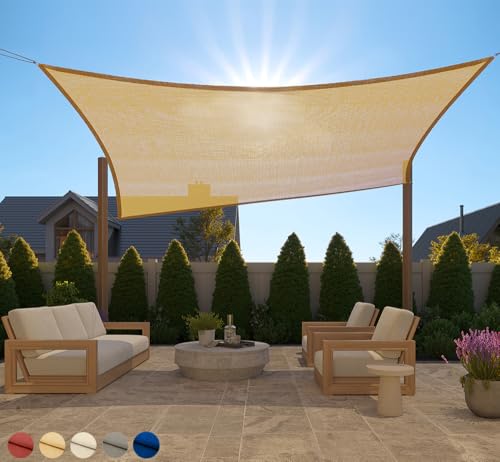
UP TO 87% SHADE AND UV RESISTANT: Gorilla Grip Shade Sails will transform your patio; the thick material is UV resistant and provides up to 87 percent shade; helps you stay protected and comfortable in bright sunlight
Supporting Environmental Goals With Patio Upgrades
Although upgrading a patio requires careful planning, integrating shade sails can effectively support environmental goals by reducing indoor cooling demands up to 30%. Choose shade sails made from high-density polyethylene (HDPE) or recyclable materials to guarantee low environmental impact. Measure your patio dimensions accurately, select sustainable solutions that blend durability with UV protection, and assess potential mounting points for secure installation. Use corrosion-resistant hardware compatible with the selected materials to extend lifespan beyond ten years, minimizing replacements and waste. Maintain fabric tension to prevent sagging and check seams regularly for wear. Opt for customizable designs within available color options to align with eco-friendly aesthetics. Prioritize low environmental footprint materials and functional benefits, incorporating these steps systematically to enhance energy efficiency and support responsible outdoor living initiatives.
Integrating Shade Sails Into Outdoor Entertaining Areas
Begin by evaluating the layout and dimensions of the outdoor entertaining area, measuring length, width, and height to determine ideal shade sail placement. Identify sun protection needs, noting peak sun angles and activity zones. Select HDPE fabric sails that fit the patio’s shape and size, guaranteeing custom cuts for maximum coverage and airflow. Install mounting points on sturdy structures, verify tensioning hardware compatibility, and allow slight sagging to prevent water pooling. Choose colors that complement existing decor while maximizing outdoor shade benefits. Account for weather exposure when positioning to maintain durability and sustained UV protection, blocking up to 98% of harmful rays. Integrating these sustainable solutions reduces ambient temperature, lowering energy costs during events. Regularly inspect attachments and fabric integrity, addressing wear to guarantee long-term performance and comfort in entertaining spaces.
Frequently Asked Questions
How Do I Install Coconut Fiber Shade Sails Safely?
Safe coconut fiber sail installation requires solid support structures, proper sail installation techniques like tensioning, and adherence to safety precautions including secure anchoring. Regular maintenance tips involve inspecting for wear and ensuring fasteners remain tight to prevent accidents.
Can Shade Sails Be Used in Winter or Cold Climates?
At the drop of a hat, shade sails can face winter if designed with weather resistance features. Their shade sail durability supports seasonal outdoor use, but harsh winter climate performance varies, requiring timely removal to prevent damage.
Are There Any Pests Attracted to Natural Fiber Shade Sails?
Natural fiber shade sails may attract pests like insects or rodents. Effective pest prevention strategies and regular shade sail maintenance enhance durability. Combining natural fiber benefits with outdoor pest management guarantees functional, eco-friendly protection in various environments.
What Is the Average Cost of Eco-Friendly Shade Sails?
The average pricing structures for eco-friendly shade sails typically range from $150 to $400, reflecting material cost analysis, shade sail durability, and environmental impact assessment. Premium sustainable fabrics increase initial costs but offer longer lifespan benefits.
Can I Recycle or Repurpose Old Coconut Fiber Sails?
Old coconut fiber sails can be repurposed for various eco friendly projects due to coconut fiber benefits like durability and biodegradability. Their sustainable materials enable creative uses in gardening, crafts, or erosion control, promoting environmental responsibility.