As an Amazon Associate, we earn from qualifying purchases. Some links on this site are affiliate links at no extra cost to you. Our recommendations are based on thorough research and editorial judgment.
How Shade Sails Protect Your Patio Space

Install shade sails using stainless steel fittings to guarantee stable, adjustable connections that withstand weather and tension. Measure patio dimensions accurately, track sun paths to optimize angle placement, and select robust attachment points like walls or beams. Choose high-density polyethylene fabric with UV-absorbing treatments for up to 99% ultraviolet ray blockage. Tension sails properly to prevent sagging and promote airflow, cleaning regularly with mild soap. Follow maintenance guidelines closely to maximize durability and comfort, enhancing patio usability and aesthetics efficiently. More insights await.
Key Takeaways
- Shade sails block 90-99% of harmful UV rays, preventing sunburn and reducing skin damage risks on your patio.
- Angled installation promotes water runoff, protecting the patio from rain and enhancing usability in various weather.
- High-density, UV-resistant fabrics maintain durable sun protection and allow airflow, keeping patio areas cool and comfortable.
- Stainless steel hardware ensures secure, adjustable installation, maintaining tension for durability and preventing fabric sagging.
- Custom shapes and colors enhance patio aesthetics while creating inviting, shaded outdoor relaxation spaces.
Benefits of Using Shade Sails for Patios
You may be interested
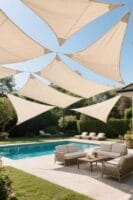
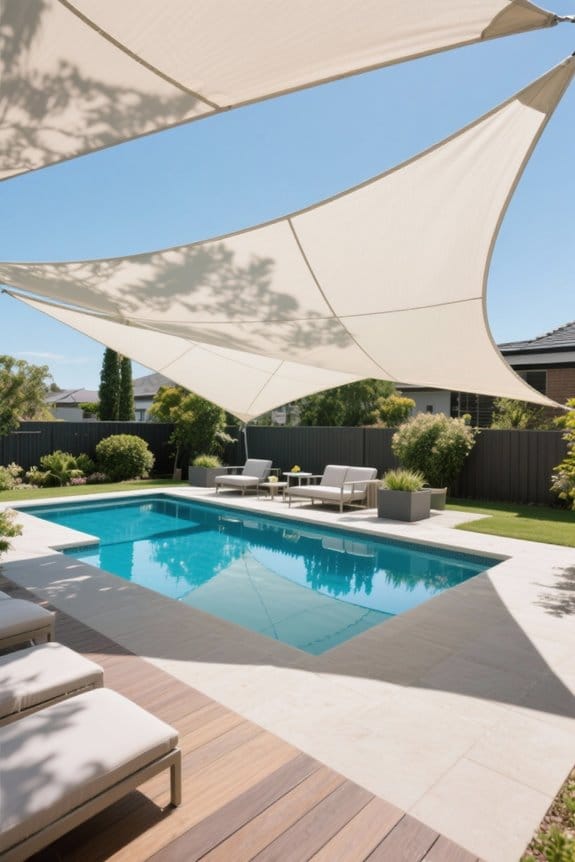
While planning patio shading solutions, prioritize installing shade sails to maximize UV protection by blocking 90-99% of harmful rays, thereby reducing risks of sunburn and skin damage. Choose shade sail structures in shapes and colors that complement your patio’s architecture. Measure your outdoor spaces carefully, mapping mounting points to maintain proper tension and prevent sagging. Use stainless steel hardware—such as turnbuckles, pad eyes, and snap hooks—to guarantee secure and adjustable connections. Install shade sails at angles to promote water runoff and optimize shade throughout the day as the sun moves. Regularly inspect attachments for wear to maintain safety. By following these steps, create comfortable outdoor environments that protect skin, furniture, and enhance aesthetic appeal without the expense or permanence of built structures. Selecting sails made from 185 GSM HDPE fabric ensures durability and effective UV protection over time.
Understanding UV Protection Capabilities
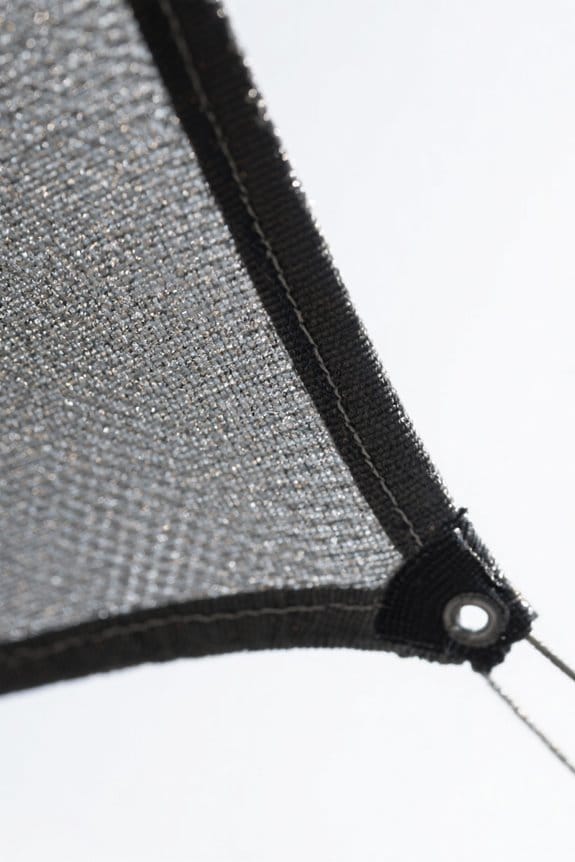
Because effective UV protection depends on fabric quality, select shade sails with high-density textile capable of blocking 90-99% of ultraviolet rays. Prioritize UV-resistant fabric treated with UV-absorbing chemicals to convert harmful UV rays into less damaging forms. Opt for darker colors and tighter weaves to maximize UV protection, reducing sun exposure risks like sunburn and premature skin aging. Install shade sails over the outdoor space where prolonged sun exposure occurs, especially during peak sunlight hours between 10 AM and 4 PM. Confirm the fabric’s UV blocking percentage before purchase to guarantee reliable defense. Regularly inspect the shade sail for wear or damage that can compromise UV protection capabilities. Combine shade sails with additional protective measures, like sunscreen and sunglasses, for thorough sun safety. Additionally, choosing a shade sail made from high-density polyethylene fabric can block up to 95% of UV rays while promoting air circulation for cooler environments.
Recommended Products

【UV Protection & Cooling】Made of 100% brand new High Density Polyethylene material and eliminate the use of splicing fabrics.Blocks up to 95% of harmful UV rays and direct sunlight exposure."Breathable" fabric allows air to pass freely and achieve a certain degree of cooling.

Premium Material - Shade sail is made from 185GSM new high-density polyethylene material, the shade fabric is recycling which could protect our environment. UV treated to block 95% harmful rays to protect our family. Effectively decrease the temperature in covering area.

【UV Protection & Cooling】Made of 100% brand new High Density Polyethylene material and eliminate the use of splicing fabrics.Blocks up to 95% of harmful UV rays and direct sunlight exposure."Breathable" fabric allows air to pass freely and achieve a certain degree of cooling.
Selecting the Ideal Location for Installation
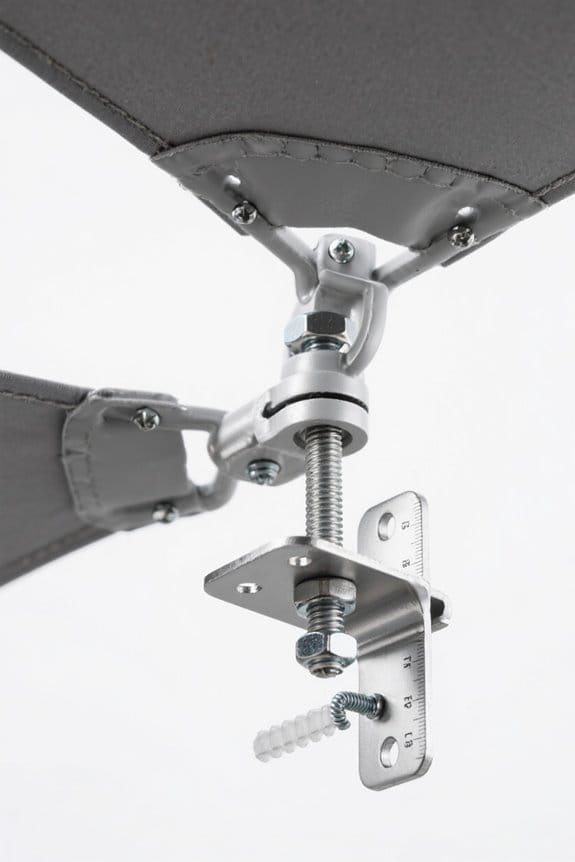
Begin by measuring the patio’s dimensions accurately, recording length and width to select a shade sail that provides extensive coverage without excessive overhang. Analyze the size of the area carefully, considering the patio’s shape to verify the chosen shade sails provide adequate coverage and enhance aesthetics. Track the sun’s path, identifying ideal shading angles, so the sail maximizes protection during peak sunlight hours. Account for environmental factors such as prevailing wind directions and local weather, positioning the installation to promote stability and durability. Avoid interference from trees or fences that may block sunlight or hinder setup. Review potential attachment points for their structural soundness but focus on location evaluation at this stage, preparing for proper shade sail installation with ideal sun protection and minimal obstruction. Additionally, understanding the installation guidelines will ensure the shade sail is mounted securely for optimal performance.
Recommended Products
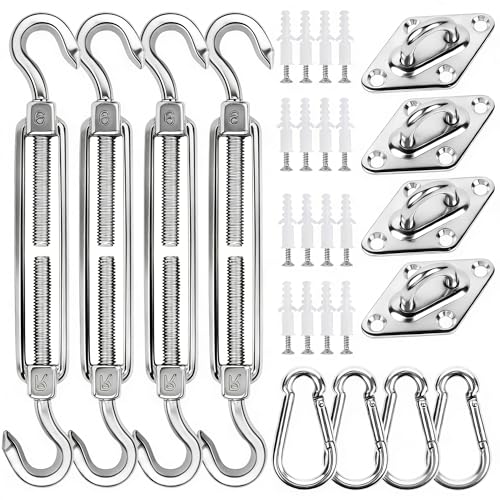
All-in-One Sun Shade Sail Hardware Kit: Our complete shade sail hardware kit includes everything you need for easy installation: 4 turnbuckles, 4 snap hooks, 4 pad eyes, 16 screws, and 16 expansion anchors. Ideal for sun shades outdoor patio, pergolas, awnings for patio, and outdoor sails for shade waterproof.

All-in-One Sun Shade Sail Hardware Kit: Our complete sunshade hanging kit includes everything you need for easy installation: 4 turnbuckles, 4 snap hooks, 4 pad eyes, 16 screws, and 16 expansion anchors. Ideal for sun shades outdoor patio, pergolas, awnings for patio, and outdoor sails for shade waterproof.
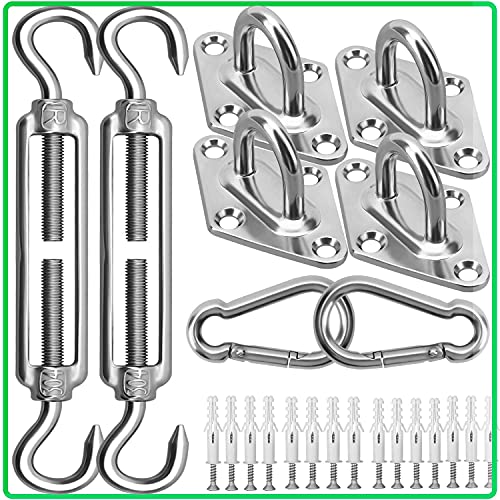
High Quality Shade Hardware Kit - This 6" rectangle outdoor shade sail installation kit is made of high quality 304 grade stainless steel. The hardware kit is extremely strong and resistant to the elements, This is can to support 141s of pounds. High load-carrying capacity to keep your sails stable in wind, suitable for windy areas or large fixtures such as sun shade sail, canopy
Choosing the Best Attachment Points
How can one guarantee maximum stability while selecting attachment points for a shade sail? Identify robust structures like walls, beams, or sturdy trees within the surrounding area, confirming they can withstand the tension without damage. Measure distances between points to maintain proper spacing, preventing sagging and maximizing shade sail size. Use stainless steel fittings and secure proper anchoring to enhance durability, especially against high winds or storms. Avoid attaching near obstacles such as tree branches or power lines to confirm a clean installation. Inspect each attachment point thoroughly for structural integrity before installation. Use heavy-duty fixings rated for outdoor use to maintain stability over time. Remember, precise placement and solid anchoring are critical to avoid premature wear or failure of the shade sail system. Additionally, using stainless steel D-rings can ensure structural integrity and secure installation points for better longevity.
Recommended Products

Heavy Duty & Premium 304 Stainless Steel: Our shade sail hardware kit is crafted from high-quality 304 marine-grade stainless steel, delivering exceptional strength, durability, and corrosion resistance. Every component—from turnbuckles to wire ropes—is built to withstand harsh outdoor conditions, ensuring long-lasting, rustproof performance. The sleek silver finish is neutral and versatile, blending seamlessly with any patio, garden, or outdoor decor.

Complete 44-Piece Shade Sail Hardware Kit: Everything you need for a secure installation! Includes 4 turnbuckles, 4 pad eyes, 4 snap hooks, 16 screws, and 16 plastic expansions. Perfect for hassle-free setup of your shade sail.

Premium Craftsmanship Durable: BUDONI shade sail hardware kit is crafted from premium 304 stainless steel with an anti-rust black oxide finish, providing excellent corrosion resistance and long-lasting durability for extended outdoor use. This sun shade hardware kit withstands rain, UV solar exposure, and strong wind, making it an ideal choice for securing shade sail. This shade sail hardware delivers reliable performance while adding a modern, high-end look to sun shades outdoor patio setups.
Material Options and Their Advantages
After securing robust attachment points, evaluate the various material options available for shade sails to suit specific environmental conditions. Choose high-density polyethylene for excellent UV protection—up to 98%—and effective air circulation, which reduces heat buildup. Opt for waterproof laminated PVC where rain resistance is necessary, ensuring patio activities continue during light showers. Prioritize durability by selecting commercial-grade fabrics rated to last 10-15 years; avoid cheaper materials that degrade quickly. Check for UV-absorbing treatments that maintain color and block sunlight effectively. Favor lightweight, flexible fabrics that simplify tensioning and adjustment during installation. Use compatible stainless steel hardware and ratchet straps to achieve proper sail tension without damaging material. Regularly inspect seams and mounting points for wear, adjusting tension to prevent sagging or overstretching, ensuring long-lasting, functional patio coverage. For optimal performance and durability, select sails made from high-density polyethylene fabric above 200 GSM, which offers superior protection and longevity.
Recommended Products
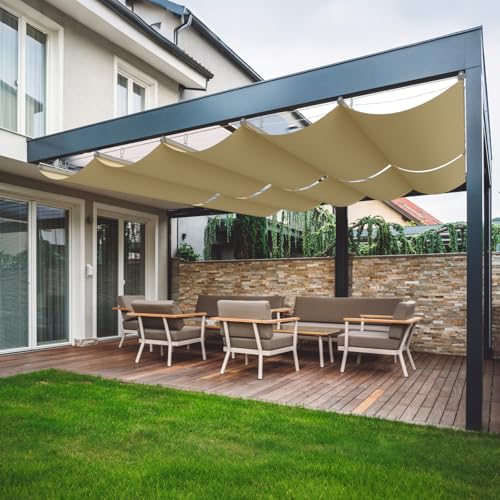
【UV PROTECTION & BREATHABLE COMFORT】Crafted from high-density polyethylene material, our canopy is highly breathable and offers a 93% sun-blocking rate. It effectively cools your outdoor areas while allowing rainwater to pass through, ensuring comfort and functionality.

【About Installation】Please refer to the diagrams before purchasing. To ensure you buy the correct shade sail, you need to leave 0.5-1 ft of space for accessories to avoid buying an oversized shade. In addition, due to the characteristics of this fabric, there may be a tolerance of ±4 inch from the outer edge of one D-ring to the outer edge of the other D-ring

【Efficient Sun Protection & Cool Comfort】 Crafted from high-density polyethylene (HDPE), this retractable canopy provides excellent UV protection, blocking over 93% of harmful sun rays. It creates a significantly cooler area for your patio, deck, or garden, allowing you to enjoy the outdoors in comfort. The breathable fabric also allows rainwater to pass through, preventing pooling and sagging.
Picking the Optimal Shape for Coverage
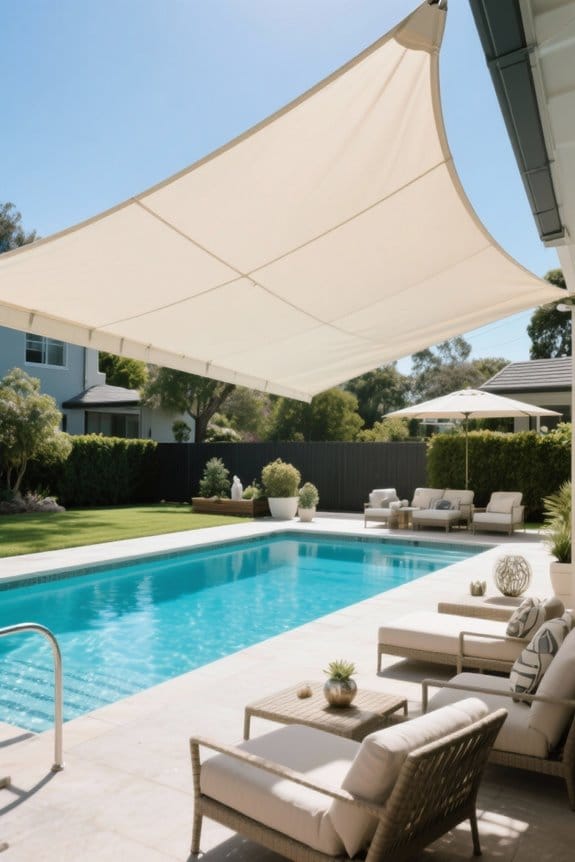
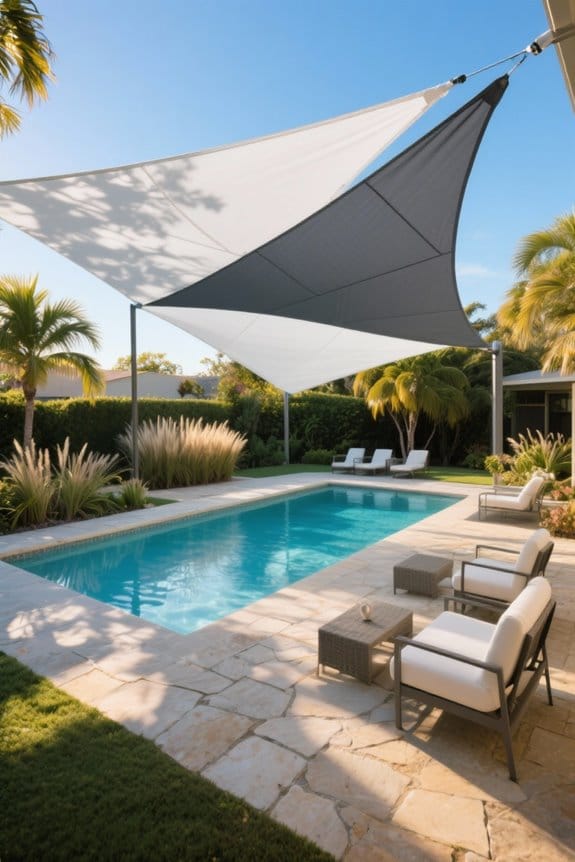
Why select a specific shape for your shade sail? Choosing the right shapes guarantees maximum shade and protection suited to the patio’s size and sun exposure. Use triangular sails for tight corners or smaller spaces to provide effective coverage without cluttering the area. Opt for rectangular sails to cover larger lounging zones efficiently, ideal for spacious patios. Align sails with the sun’s path, focusing on peak hours between 10 am and 4 pm, to optimize shade. Combine different shapes, such as two triangles with a rectangle, to customize coverage and enhance visual appeal. Match sail shapes to existing patio architecture to maintain harmony. Assess your desired shade area carefully, then select sails accordingly to achieve balanced coverage and consistent protection across the outdoor space. Additionally, securing your shaded area with stable umbrella bases can ensure durability and safety even in windy conditions.
Recommended Products

Sun Shade Hardware Kit Heavy Duty- This 6" rectangle outdoor shade sail installation kit is made of high quality 304 grade stainless steel. with maximum corrosion resistance and durability, The sun shade hardware kit triangle is extremely strong and resistant to the elements, High load-carrying capacity to keep your sails stable in wind, suitable for windy areas or large fixtures such as sun shade sail, canopy.

Heavy Duty 304 Stainless Steel with Ratchet Winch : HYASIA shade sail hardware kit ratchet winch set is constructed from high-quality 304 marine-grade stainless steel, featuring a robust ratchet winch design for effortless tensioning. Every metal component—from the winch to the rope clamps—is built to withstand harsh outdoor conditions, ensuring maximum strength, durability, and corrosion resistance for years of reliable use. for toldos para patio exterior waterproof applications.

High-Quality Construction: Made with 185 gsm high-density polyethylene (HDPE) shade fabric; features well-stitched seams and sturdy stainless steel D-rings in each corner for lasting durability
Accurate Measurement for Effective Shading
Several precise measurements are necessary before selecting and installing a shade sail. Begin by measuring the patio area accurately, noting any obstructions such as walls or trees that could impact placement. Determine the height for installation, aligning the sail to block the sun’s rays during peak hours, ensuring ideal shading. Measure distances between proposed attachment points meticulously; these measurements dictate the size and shape of the sail needed to maintain proper tension and avoid sagging. Use a tape measure for exact figures and record these carefully. Reference the manufacturer’s sizing guides to verify your dimensions match recommended standards. Proper accurate measurements prevent instability and enhance protection from the sun’s rays, making the installation process smoother and the shade sail more effective. It is also important to consider solid anchor points to ensure secure installation and maximize the sail’s durability.
Enhancing Patio Aesthetics With Color Choices
When selecting shade sail colors, analyze the overall patio design by comparing existing furniture tones, architectural elements, and landscaping features. Choose color options that harmonize with the outdoor area to enhance your outdoor aesthetic appeal effectively. Introduce bright or bold hues to create focal points that draw attention, or select lighter tones to reflect sunlight and maintain cooler temperatures. Consider darker shades when aiming to add warmth and coziness to the patio design. Combine multiple shade sails with complementary colors for dynamic visual interest and playful contrast. Prioritize cohesive color schemes that unify the furniture, building materials, and garden elements. Ascertain chosen hues complement rather than clash, maintaining balance while elevating the outdoor space’s overall visual harmony and inviting atmosphere through strategic shade sail selection. Additionally, choosing shades made from breathable high-density polyethylene fabric not only enhances comfort but also ensures durability and effective sun protection.
Maintenance Tips to Prolong Shade Sail Lifespan
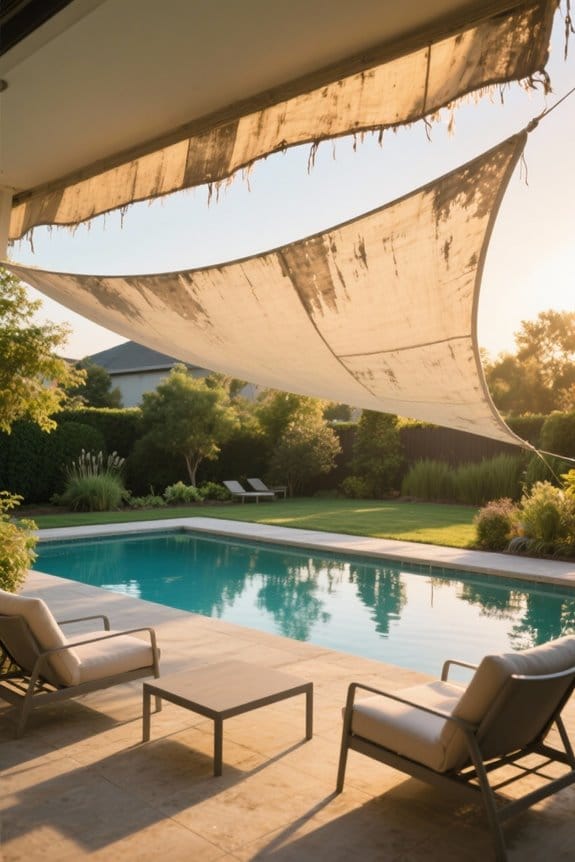
Initiate monthly inspections by examining the fabric closely for tears, fraying, or discoloration, then assess the support structures, including attachment points and poles, for rust, corrosion, or loose fittings. Perform periodic cleaning using a soft-bristled brush and mild soapy water to remove dirt and organic growth without damaging the fabric. Rinse thoroughly with low-pressure water to avoid wear. Maintain proper tension to prevent rainwater pooling, sagging, and tearing, adjusting fittings as necessary. Use stainless steel fittings and durable materials to resist corrosion and prolong functionality. Regular inspection recommended to identify issues early and protect from the sun’s rays, which degrade fabric integrity over time. Follow these maintenance tips diligently to extend the lifespan of shade sails and guarantee patio protection remains effective and safe. Additionally, choosing shade sails made from 260 GSM HDPE fabric ensures enhanced durability and weather resistance for long-lasting performance.
Frequently Asked Questions
Can Shade Sails Be Removed Seasonally or Are They Permanent Installations?
Shade sails allow seasonal removal due to installation flexibility, accommodating weather considerations. Proper maintenance tips enhance material durability, while aesthetic choices influence reinstallation frequency, balancing functional and visual appeal throughout changing seasons without permanent attachment constraints.
How Do Shade Sails Perform During Heavy Rain or Snow?
Shade sails manage rainwater drainage effectively through angled installations, preventing pooling. However, snow accumulation can strain fabric material, raising durability concerns. Proper tension and protective features are essential to maintain structural integrity during heavy precipitation.
Are Shade Sails Safe to Install Near Trees or Power Lines?
Installation safety blooms when shade sails avoid flirtation with tree branches and maintain respectful power line clearance. This minimizes electrical hazards, wind resistance, and foliage interference, ensuring secure placement without the threat of nature’s or utility’s unpredictable embrace.
What Tools Are Required for DIY Shade Sail Installation?
Essential installation tools for DIY shade sail projects include measuring tape, anchor kits, drill bits, and mounting brackets. Additionally, safety gear such as gloves and eye protection is vital to guarantee a secure and safe installation process.
Can Shade Sails Help Reduce Energy Costs for Nearby Indoor Spaces?
Studies show shade sails can reduce surrounding surface temperatures by up to 30%, improving thermal comfort and energy efficiency. This heat reduction supports indoor cooling, leading to notable utility savings and a positive environmental impact through reduced energy consumption.