As an Amazon Associate, we earn from qualifying purchases. Some links on this site are affiliate links at no extra cost to you. Our recommendations are based on thorough research and editorial judgment.

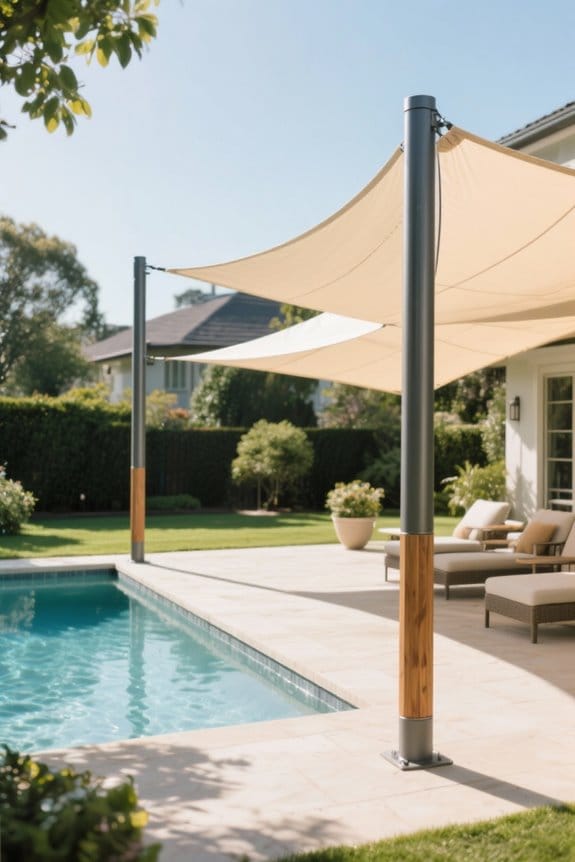
Metal vs. Wooden Posts for Shade Sails

Choose galvanized or powder-coated metal posts for superior strength, rust resistance, and longevity beyond 25 years, especially in humid or coastal areas. Dig 24-inch deep, 12-inch wide holes, set posts in concrete, and allow 48 hours for curing. For natural aesthetics, select cedar or oak wooden posts, 8 to 12 feet tall, anchored in concrete footings. Maintain wood with sealants and inspect for rot. Evaluate environmental exposure and design preferences before deciding. Explore further factors affecting your choice.
Key Takeaways
- Metal posts offer superior strength, corrosion resistance, and longer lifespan, ideal for humid or coastal environments.
- Wooden posts provide a natural, classic aesthetic but require regular maintenance and are less durable in moist or insect-prone areas.
- Installation for both requires deep concrete footings (24 inches) for stability and secure anchoring.
- Metal posts withstand extreme weather and temperature fluctuations better than wooden posts, reducing warping and damage.
- Choose posts based on climate, desired appearance, maintenance willingness, and structural demands for optimal shade sail support.
Benefits of Metal Posts for Shade Sails
You may be interested
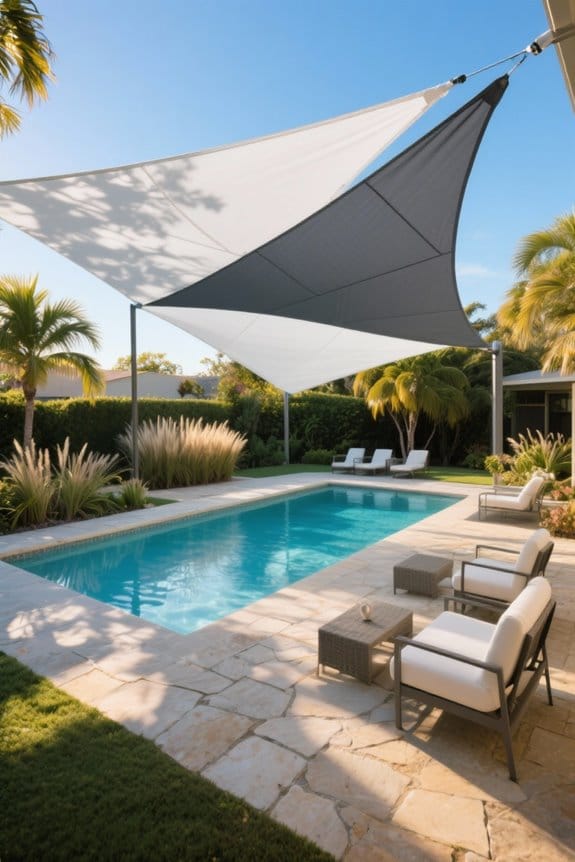
Durability plays an essential role when selecting posts for shade sails, so choose galvanized or powder-coated steel metal posts to secure superior strength and stability. Use steel posts designed to resist rust and corrosion, especially in moist or coastal environments. Measure twice, then dig post holes at least 24 inches deep and 12 inches wide to guarantee adequate support. Set each steel post in concrete, check vertical alignment with a level, and allow the concrete to cure for 48 hours. Inspect powder coatings regularly for damage, repairing scratches promptly to maintain corrosion resistance. Avoid wooden posts prone to rot and insect damage. Use corrosion-resistant fasteners to connect shade sails to avoid premature failure. Follow manufacturer load limits for steel posts, accommodating larger sails by installing thicker diameters or additional bracing for enhanced stability. For optimal performance, ensure at least 34 inches installation depth to enhance support and stability.
Advantages of Wooden Posts in Outdoor Spaces
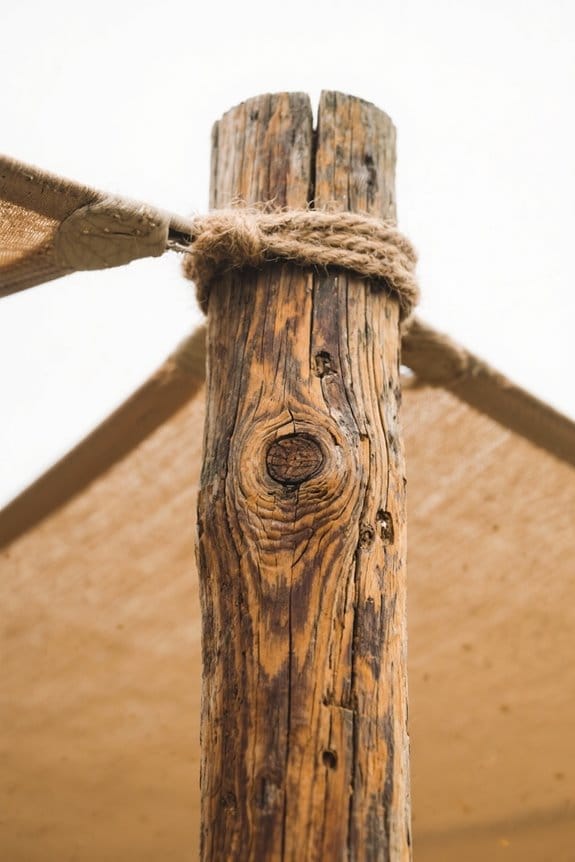
When selecting posts for shade sails, prioritize wooden options like cedar, teak, or oak for their natural aesthetic and structural strength. Choose wooden posts that blend with the outdoor environment, enhancing the properties of shade through their classic appearance. Measure the desired post height precisely, typically between 8 to 12 feet, to guarantee adequate canopy coverage. Secure posts firmly in concrete footings at least 24 inches deep, using galvanized brackets for stability. Wooden posts support heavy shade sails effectively, but verify the wood species for load-bearing capacity. Opt for sustainably sourced wood to maximize eco-friendliness. Install the posts with appropriate spacing, usually 10 to 15 feet apart, to maintain ideal tension on the shade fabric. Wooden posts offer reliable support and improve the overall visual harmony of outdoor spaces with their natural finish. Regular inspection and maintenance help ensure the longevity and structural integrity of wooden posts, similar to how routine checks maintain filtration efficiency in pool filter systems.
Recommended Products

Shade Sail Pole Introduction:12-foot adjustable height: Each sunshade pole is composed of 4 modular parts, allowing you to adjust the final height to a maximum of 12 feet. Additionally, the top of our poles is equipped with three fixed points, facilitating your free suspension of the sunshade pole, adding practicality and personalization to your outdoor space while ensuring the stability and reliability of the sunshade pole's support.

Sun Shade Hardware Kit Heavy Duty- This 6" rectangle outdoor shade sail installation kit is made of high quality 304 grade stainless steel. with maximum corrosion resistance and durability, The sun shade hardware kit triangle is extremely strong and resistant to the elements, High load-carrying capacity to keep your sails stable in wind, suitable for windy areas or large fixtures such as sun shade sail, canopy.

🛠️【52 Pcs Sun Shade Hardware Kit with Cable】Including 2 x Adjustable Turnbuckle, 6 x Snap Hook, 4 x Pad Eyes, 4 x Double Rope Clamps, 16 x Screw, 16 x Plastic Expansion Bolts, 4 x 6.6ft Wire Ropes.
Durability and Maintenance Considerations
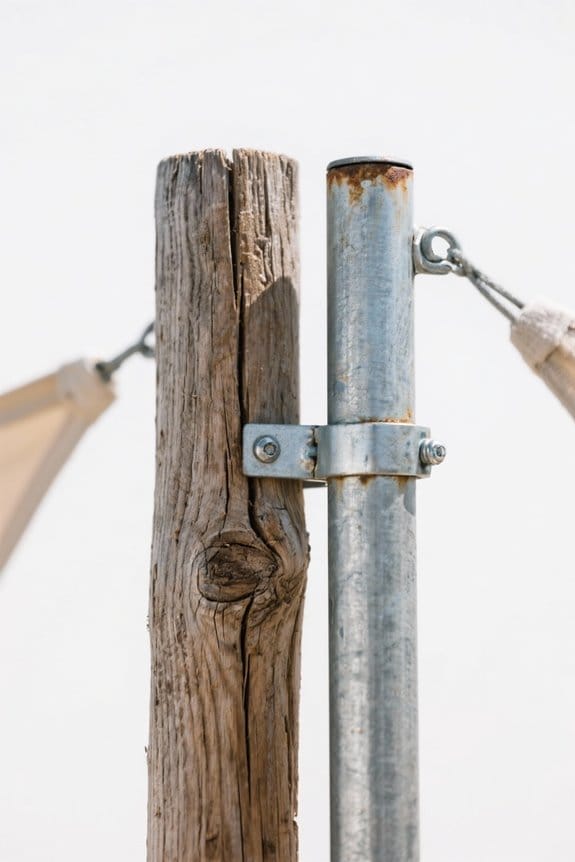
Although metal posts generally offer greater resistance to weathering, regularly inspect all posts for signs of damage or wear. Check metal posts for corrosion, especially in joints or the base, and clean with a wire brush to remove rust before applying a rust inhibitor. For wooden posts, examine closely for cracks, rot, or insect damage. Sand rough areas, apply waterproof sealant annually, and stain every two to three years to prevent moisture penetration. Confirm post stability by testing firmness within the ground; tighten any loose fittings on metal posts, and replace deteriorated wooden posts immediately. Metal posts, typically galvanized or powder-coated steel, require minimal upkeep but do not neglect routine checks. Wooden posts demand consistent maintenance to prolong lifespan, generally under 10 years without treatment, while metal posts often last beyond 25 years with proper care. Using 304 stainless steel hardware with metal posts helps enhance durability and corrosion resistance.
Environmental Factors Affecting Material Choice
Since environmental conditions directly impact material performance, evaluate site-specific factors like humidity, pest presence, and weather extremes before choosing posts. Select galvanized or powder-coated steel posts for shade in humid or coastal areas, ensuring resistance to rust and corrosion. Avoid untreated wooden posts where moisture and insects prevail; instead, apply rot inhibitors and insecticides when wood is necessary. In regions with severe weather conditions, opt for steel posts due to their superior strength against high winds and heavy rain, preventing warping or cracking common in wood. Consider temperature fluctuations and UV exposure as they degrade wooden posts faster than metal. Prioritize metal posts to reduce maintenance frequency and increase longevity. Assess soil drainage and exposure, then match post materials accordingly to maintain structural integrity and performance over time. Additionally, choosing materials with waterproof ratings similar to IPX8 can significantly enhance durability in outdoor environments.
Aesthetic and Design Preferences for Shade Sail Installations
How should aesthetic considerations influence the choice between metal and wooden posts for shade sail installations? Select metal posts for a modern, sleek look and use custom colors to blend or contrast with outdoor decor. Choose round or square steel posts to diversify design options and support larger, complex shade sails, enhancing an aesthetically pleasing appearance. Opt for wooden posts to achieve a classic, natural style, ideal for rustic settings, but plan for regular maintenance like staining and sealing to preserve their visual appeal. Confirm proper installation by using corrosion-resistant anchors with metal posts or treated bases for wooden ones, checking alignment and tension to avoid sagging. Prioritize material that complements the architectural style, balancing aesthetics with functional durability, and remember that precise securing details greatly influence the overall look and longevity of the shade sail setup. Additionally, incorporating corrosion-resistant materials can significantly enhance the durability and maintenance ease of metal posts in outdoor installations.
Cost and Long-Term Investment in Shade Sail Posts
Evaluate initial purchase prices against long-term maintenance costs when selecting posts for shade sails. Compare metal posts, often galvanized steel with powder-coated finish, to wooden posts that need regular staining and sealing. Opt for metal posts to reduce expenses related to rot, insect damage, and replacement. Factor in powder coating benefits that prevent rust, enhancing lifespan and minimizing upkeep. Calculate total lifetime cost by adding purchase price, maintenance frequency, and environmental exposure risk. Recognize metal posts’ higher upfront fee but weigh it against lower ongoing expenses for a reliable long-term investment. Choose wood only if preferring aesthetic flexibility and ready to commit to annual maintenance. Prioritize durability and cost-effectiveness in harsher climates, where metal posts deliver superior performance, ensuring shade sails stay secure with minimal intervention. Also, consider the importance of using high-quality stainless steel components in hardware kits to complement the durability and longevity of metal posts.
Frequently Asked Questions
What Is the Best Material for Shade Sail Posts?
Steel posts provide the best shade sail durability and post installation reliability, offering superior strength and rust resistance. These qualities guarantee long-lasting support, especially in harsh weather, making steel ideal for stable, secure shade sail structures.
What Post Should I Use for Shade Sail?
For a shade sail, metal posts are preferred due to superior durability and better cost effectiveness over time. Although initially pricier and heavier, their longevity and low maintenance outweigh wooden posts’ frequent repairs and weather-related damage.
What Poles to Use for Sun Shade?
For sun shade poles, metal offers superior durability and weather resistance, ideal for long-term use. Wooden poles provide appealing aesthetics but require regular maintenance due to susceptibility to rot and reduced structural reliability over time.
What Is the Best Steel Post for Shade Sails?
Strong steel posts, like towering sentinels, embody resilience and safety. The best steel qualities include galvanized or powder-coated finishes, 4-inch diameter, and schedule-40 thickness. Post installation tips emphasize 7’6″ height and robust anchoring for ideal shade sail tension.