As an Amazon Associate, we earn from qualifying purchases. Some links on this site are affiliate links at no extra cost to you. Our recommendations are based on thorough research and editorial judgment.

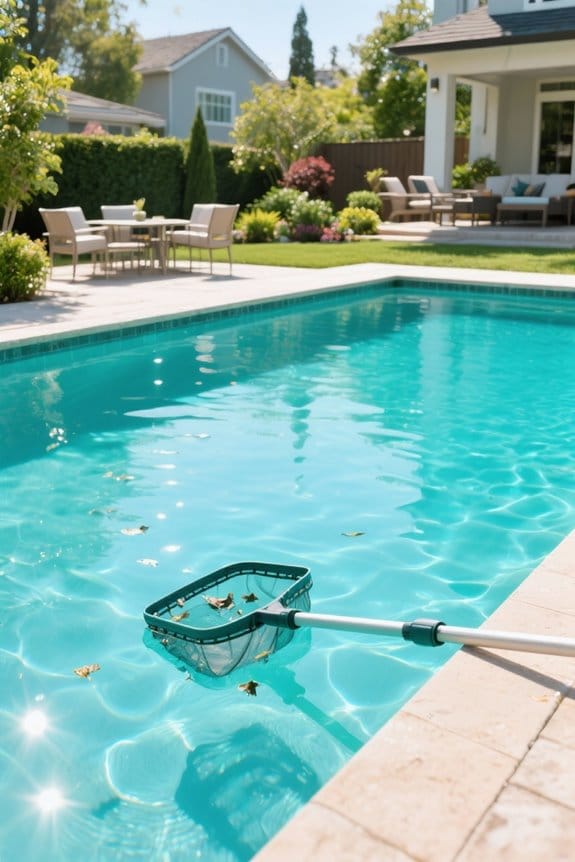
Simple Steps for Pool Skimming and Debris Removal

Select a fine-mesh skimmer net with an adjustable telescopic pole to reach all pool areas. Clear the pool’s perimeter of debris and check water levels for ideal skimming. Position the return jet at a 90° angle to enhance circulation, then systematically sweep the surface for 10 to 15 minutes using smooth, overlapping strokes. Empty the net frequently and inspect the skimmer basket afterward. Adjust filter settings to recirculate mode for better debris suspension. Continuing with these methods improves efficiency and water clarity.
Key Takeaways
- Use a fine-mesh skimmer net with an adjustable pole to capture both large and small debris efficiently.
- Sweep the pool surface with smooth, overlapping strokes from one side to the other.
- Empty the skimmer net frequently to maintain optimal debris removal during skimming.
- Position the return jet at a 90° angle away from the skimmer to concentrate floating debris.
- Check and clean the skimmer basket after skimming to ensure proper water flow and filtration.
Why Regular Pool Skimming Is Essential
You may be interested

Begin each day by thoroughly skimming the pool surface using a long-handled leaf skimmer with a fine mesh net. Perform regular skimming to remove surface debris like leaves, insects, and dust that settle on the water, which prevents debris from sinking and complicating cleaning. Remove organic matter daily to greatly reduce algae growth, ensuring healthier swimming and maintaining ideal water quality. Consistent skimming reduces strain on the pool’s filtration system, which extends its lifespan and lowers maintenance costs. Aim for clear water by frequently clearing visible contaminants, improving overall pool aesthetics and encouraging use. Additionally, regular skimming contributes to a safer swimming environment by enhancing water clarity and reducing submerged hazards. Stay diligent with this task to promote both pool longevity and swimmer safety effectively. Using durable nylon mesh bags with your pool vacuum helps efficiently trap debris and maintain a sparkling clean pool.
Choosing the Right Skimmer Net and Tools
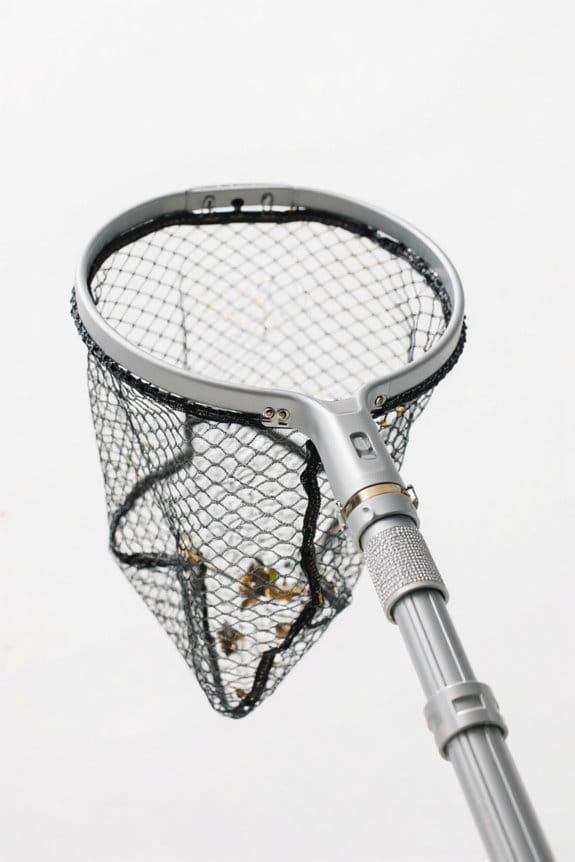
Maximize skimming efficiency by selecting a skimmer net with a fine mesh that captures both large leaves and microscopic debris. Choose durable skimmer nets made from materials resistant to pool chemicals and frequent use to extend tool lifespan. Opt for skimmer poles with adjustable handles to reach all corners comfortably and reduce user strain during debris removal. Incorporate a telescopic pole when working with larger pools to achieve thorough coverage without overextension. Prioritize mid-range skimmer nets to balance cost with efficient surface cleaning performance. Regularly inspect your skimmer net for tears or damage and replace it promptly to maintain effectiveness. Proper tool selection is essential for streamlined pool maintenance, ensuring faster, more effective skimming and preventing debris buildup that complicates cleaning later. Select nets constructed with reinforced frames and heavy-duty materials for enhanced durability during regular cleaning sessions.
Recommended Products

LIFETIME REPLACEMENT "490 PROMISE" (EVEN FOR PROS) – We stand by our products with a no-questions-asked, unlimited replacement or total purchase price restoration policy. Commercial users enjoy unlimited part/tool replacements at half of retail. Residential users receive replacements at no cost. Your investment is protected for life.

Cover collar allowing 1 1/2-inch vertical adjustment

Cover collar allowing 1 1/2-inch vertical adjustment
Preparing Your Pool for Skimming
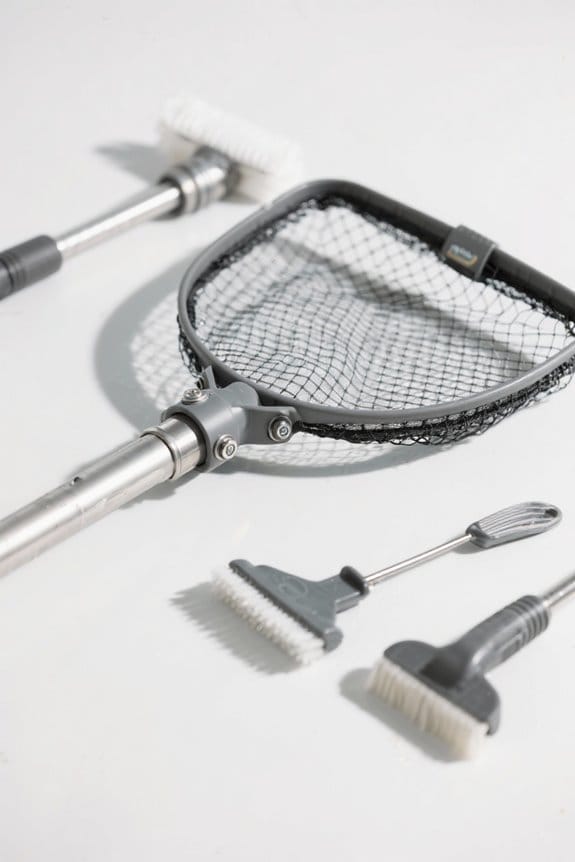
Although skimming may seem straightforward, proper preparation is critical for effective debris removal. Begin by checking the pool water level; it should sit near the midpoint of the skimmer opening to optimize surface debris capture without straining the pump. Clear the area around the pool of fallen leaves or branches to prevent additional contaminants during skimming. Next, clean the skimmer basket thoroughly, removing trapped debris to maintain unobstructed water flow. Inspect and select a skimmer net with a fine mesh bag, positioning it at a slight angle to improve debris collection. These maintenance steps guarantee the skimmer functions efficiently, facilitating smooth surface cleaning. Preparing the pool this way reduces effort during skimming and helps maintain clear, clean pool water consistently. Regular cleaning and timely replacement of skimmer baskets ensure optimal operation and prevent blockages during pool maintenance.
Step-by-Step Guide to Effective Skimming
Several essential tools are required for effective skimming, including a fine mesh skimmer net and an adjustable telescopic pole to guarantee efficient reach. Begin pool skimming by sweeping the surface of your pool methodically from one side to the other, using smooth, controlled motions to capture visible debris without dispersing it. Empty the skimmer net frequently to maintain peak debris removal. After skimming, inspect the skimmer basket carefully, remove any trapped debris, and clear obstructions to maintain water flow. Regular skimming helps prevent debris from sinking, reduces chemical usage, and enhances water clarity. Incorporate pool skimming into a consistent daily routine, dedicating 10 to 15 minutes each session. This disciplined approach removes visible debris promptly, improving overall pool cleanliness and efficiency. For best results, use a skimmer net with ultra-fine mesh to capture smaller debris and minimize filter clogging.
Best Techniques to Capture Floating Debris
Start skimming by holding the net at a 30-degree angle to the water surface, which helps trap floating debris effectively. Move the skimmer net in smooth, sweeping motions, capturing both large and small debris without pushing it aside. Focus on high traffic areas where wind and swimmer activity concentrate floating debris, improving your pool maintenance routine’s efficiency. After each pass, empty the skimmer net to confirm peak performance and prevent overload, which can reduce the skimmer’s ability to capture debris. Prioritize removing surface debris before vacuuming to avoid settling particles on the pool floor. Consistently practicing these techniques guarantees efficient collection of floating debris, maintaining clearer water and easing overall cleaning tasks, consequently enhancing the pool’s cleanliness and longevity. Incorporating a robotic pool cleaner with advanced navigation technology can further optimize debris removal and reduce manual maintenance.
Recommended Products

MAX POND SIZE: Up to 30’ x 30’ or similar

Made in USA with 100% Carbon Fiber for Strength and Lightweight Handling; Manufactured using Skimlite’s proprietary carbon fiber process, this pool pole combines structural strength with reduced weight. The material supports extended use across routine and heavy-duty pool cleaning tasks.
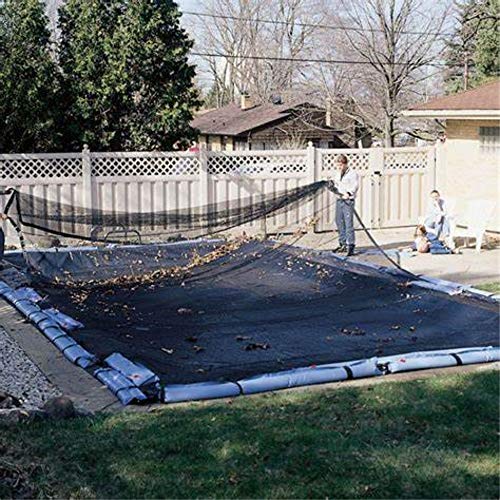
COMMERCIAL-GRADE LEAF NETS eliminate the “swamp-like” build-up that makes spring clean-up such a chore. Our multi-function leaf net covers prevent leaves and twigs from contaminating your pool water. At the end of the fall, remove the leaf net cover and store for the winter!
Cleaning and Maintaining Your Skimmer Basket
Since the skimmer basket plays a key role in filtering debris and maintaining water flow, remove it weekly to prevent clogs. Begin cleaning by lifting the basket carefully, discarding the collected debris, then rinsing thoroughly with water to remove stubborn dirt and algae. Avoid harsh chemicals, as residues can cause foamy water during use. Inspect the skimmer housing and surrounding area for residual debris to guarantee thorough maintenance. During peak debris seasons, increase cleaning frequency to maintain ideal water flow. For winter care, drain the basket completely to prevent ice formation, which may cause cracks and long-term damage. A diligent pool owner follows these steps consistently, preventing clogs, improving filtration, and extending skimmer basket longevity through proper cleaning and maintenance. For any cracks or damage found during cleaning, consider using underwater epoxy repair kits designed specifically to fix skimmer baskets without draining the pool.
Recommended Products

5-in-1 Cleaning Power — Effortlessly clean every pool surface, waterline, walls, floor, and clarify water, using one device. Save time and effort with innovative submarine propulsion. (Includes Clarifying Agent Kit)

Build Your Dream Pond - 20' x 20' liner approximately builds a 16 ft. x 16 ft. 2,800-gallon water garden or fish pond at a 1.5 ft. depth. Finished pond length, width, and depth can be tailored to your specific requirements.

This kit maximizes quality and affordability. 20' x 20' Pond Kit can build an 16' x 16' (2,900 gallon) fishpond or water garden at a 1.5' depth. Finished pond length, width, and depth can be tailored to your specific requirements.
Integrating Skimming With Weekly Pool Maintenance
Integrate skimming into your weekly pool maintenance routine by first removing all surface debris with a fine-mesh skimmer net, guaranteeing leaves, insects, and floating particles are cleared before vacuuming the pool bottom. Check the skimmer basket weekly, emptying it to maintain ideal filtration and prevent clogs. Inspect pool equipment concurrently for signs of wear or blockages that could impair water clarity or circulation. Perform skimming before testing and balancing chemicals to guarantee accurate readings, as debris can affect results. Adapt your skimming frequency and intensity according to seasonal changes, such as increased debris during stormy periods. Consistent debris removal and equipment checks support efficient maintenance, prolong equipment life, and sustain clear, healthy pool water. Stay diligent to avoid costly repairs by spotting issues early through integrated skimming and maintenance routines. Additionally, selecting skimmer baskets made from durable plastic and UV-resistant resin helps ensure long-lasting performance under harsh pool conditions.
Handling Common Pool Contaminants During Skimming
After completing initial debris removal and equipment checks, focus the skimming process on common pool contaminants to maximize water quality and system efficiency. Use a fine-mesh skimmer net to guarantee thorough removal of surface organic materials, including leaves and insects, preventing them from sinking and complicating further cleaning. Perform debris removal regularly, especially after windy days, to maintain a clear pool surface and prevent algae development. Skim all accessible areas systematically, overlapping strokes to avoid missing debris. Immediately follow skimming by testing chemical levels; adjust chlorine or algaecide to prevent algae and bacteria growth. Consistent pool care, combining skimming with proper chemical balance, guarantees water clarity and reduces filtration strain. This methodical approach optimizes both cleanliness and overall swimmer safety. Using compatible hose adapters ensures efficient debris removal and helps maintain suction during vacuum cleaning.
Recommended Products

Cover collar allowing 1 1/2-inch vertical adjustment

Longest lasting plastic rims in the industry

Standard 18” Net with Fine Mesh – Spartan SP300 Standard Rake by Skimlite. Large capacity 18” pool skimmer for easier and efficient pool cleaning. The fastest way to clean your above, inground pools, hot tubs, ponds, fountains etc.
How Return Jet Positioning Improves Debris Removal
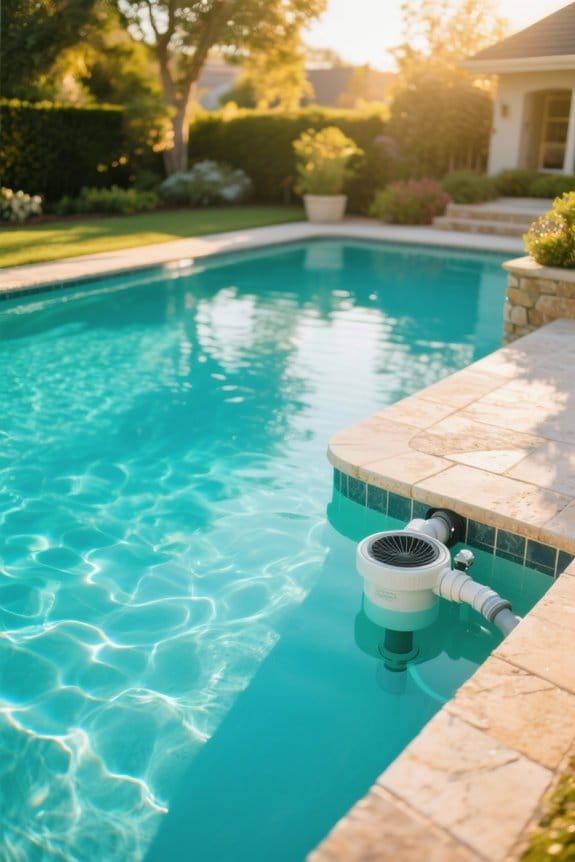
Position the return jet at a 90° angle away from the skimmer to enhance water circulation and direct debris toward the collection area. Proper return jet positioning creates a whirlpool effect, concentrating floating debris centrally, which simplifies collecting floating debris. Adjust the jet flow regularly to maintain steady water movement, preventing stagnant zones where debris may settle and reduce skimmer effectiveness. This ideal debris management reduces clogging in the skimmer basket, extending filtration efficiency and minimizing maintenance frequency. Regularly reassessing the return jet position according to pool usage and debris patterns is essential for sustained cleaner water. Monitor water circulation carefully, and reposition jets as needed to maintain thorough circulation. Effective return jet positioning is a foundational step to improving skimming performance and overall pool cleanliness. Combining proper return jet placement with regular vacuuming frequency maintenance ensures comprehensive debris removal and optimal pool hygiene.
Utilizing Filter Settings to Enhance Skimming Efficiency
When adjusting filter settings to enhance skimming efficiency, switch to “recirculate” mode to maintain debris suspension, preventing settling on the pool floor. Next, set the filter to lower flow rates to create gentle water flows that pull surface debris without dispersing it, improving debris removal. Regularly switching between “recirculate” and “waste” modes helps target both fine and larger debris, enhancing skimming efficiency. Use systematic skimming, combining these settings to keep water ideal and your pool clean. Adjustments should be performed throughout the cleaning session to match floating contaminant levels. Employing proper filter settings reduces maintenance effort, ensuring efficient debris removal and prolonging system effectiveness. Remember, fine-tuning settings alongside consistent skimming is key to achieving the best pool cleaning results. Additionally, monitoring and adjusting circulation regularly enhances filtration efficiency and supports overall water quality.
Cost Benefits of Consistent Pool Skimming
Recognize the financial advantages of consistent pool skimming by reducing algae-promoting organic debris that necessitates chemical treatments. Maintain the pool’s health by consistently removing debris to guarantee clear pool water and preserve water clarity. Prevent debris buildup to reduce strain on filters and pumps, effectively lowering energy consumption and decreasing utility bills. Regular skimming minimizes costly repairs by extending equipment lifespan, while cutting expenses on pool maintenance supplies like algaecides. Keep water clarity ideal to avoid frequent water replacements. Remember, diligent debris removal not only saves money but also enhances property value by maintaining a visually appealing pool. Employ daily skimming routines using a fine mesh net attached to a telescopic pole, inspect for stubborn debris near drain inlets, and guarantee efficient pump operation to maximize these cost benefits.
Professional Support and Maintenance Options
Although consistent pool skimming is manageable for many, enlist professional pool maintenance services to guarantee extensive debris removal and maximum equipment performance. Engage a reputable pool service offering tailored packages that address your unique pool’s needs. Schedule regular visits for thorough inspections of pumps, filters, and water chemistry, preventing costly damages. Demand the use of advanced techniques and industrial-grade tools to enhance skimming efficiency and maintain water clarity. Reduce your workload by relying on professional support to handle seasonal debris buildup and adjust treatments accordingly. Monitor their reports closely and request adjustments as environmental conditions change. Prioritize service providers who combine extensive debris removal with preventive maintenance, ensuring reliable pool function and consistent cleanliness. This approach safeguards your investment and elevates your pool care routine beyond basic upkeep.
Recommended Products
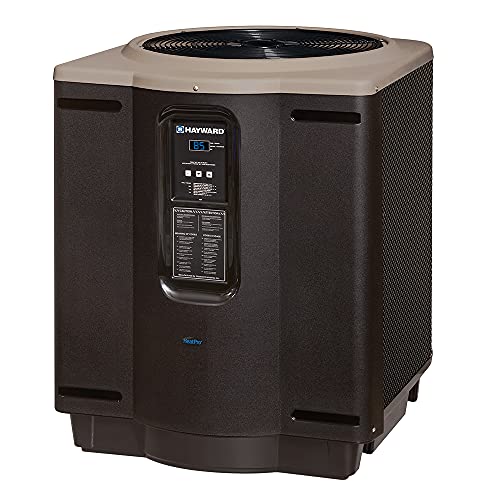
BEST FOR: This electric heater is for in-ground pools that are used regularly and benefit from maintaining an ideal, consistent temperature. Non-corrosive design makes it durable for coastal climates

80 streams of water through 59 stainless steel adjustable jets

EASY TO USE: Intuitive front control panel for easy operation, service, and maintenance on this propane water heater; the digital LED display maintains water temperature, monitoring the heater’s performance with self-diagnostic capabilities
Frequently Asked Questions
How to Properly Skim a Pool?
Catching debris like shooting fish in a barrel, proper skimming technique involves using efficient skimming tools to remove varied debris types. Pool maintenance tips emphasize seasonal skimming, pool surface cleaning, skimmer basket care, and promoting water circulation for longevity and clarity.
What Are the 3 C’s of Pool Cleaning?
The 3 C’s of pool cleaning encompass Clarity, Chemical balance, and Consistency, integrating essential pool maintenance tips, water chemistry management, cleaning methods, filtration systems, seasonal preparations, algae prevention, equipment options, and safety precautions for ideal upkeep.
How to Get Dirt and Debris Out of a Pool?
To remove dirt and debris, pool cleaning involves vacuum techniques and leaf removal, ensuring water clarity and chemical balance. Maintaining a regular schedule, algae prevention, efficient filtration system use, and emptying debris bags optimize cleanliness and pool health.
How to Clean Out Pool Skimmers?
Skimmer maintenance tips include regular skimmer basket emptying using pool cleaning tools. Effective skimmer techniques involve seasonal skimmer care, water level management, and eco-friendly skimming solutions. A skimmer troubleshooting guide helps resolve common skimmer issues efficiently.