As an Amazon Associate, we earn from qualifying purchases. Some links on this site are affiliate links at no extra cost to you. Our recommendations are based on thorough research and editorial judgment.

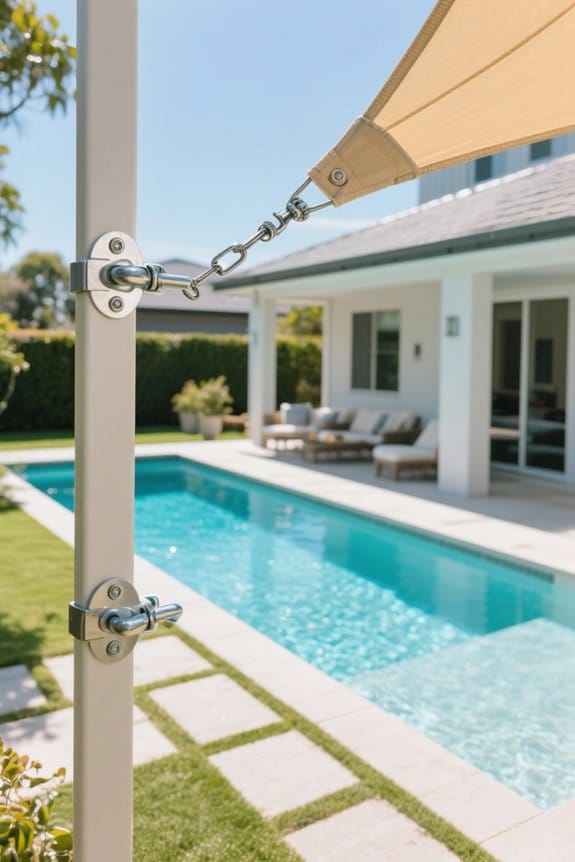
Safe Anchor Points for Shade Sails

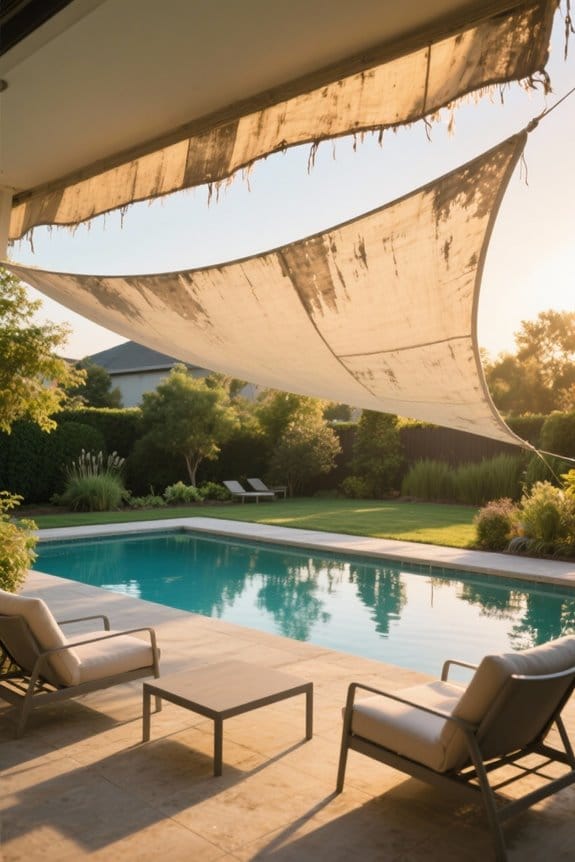
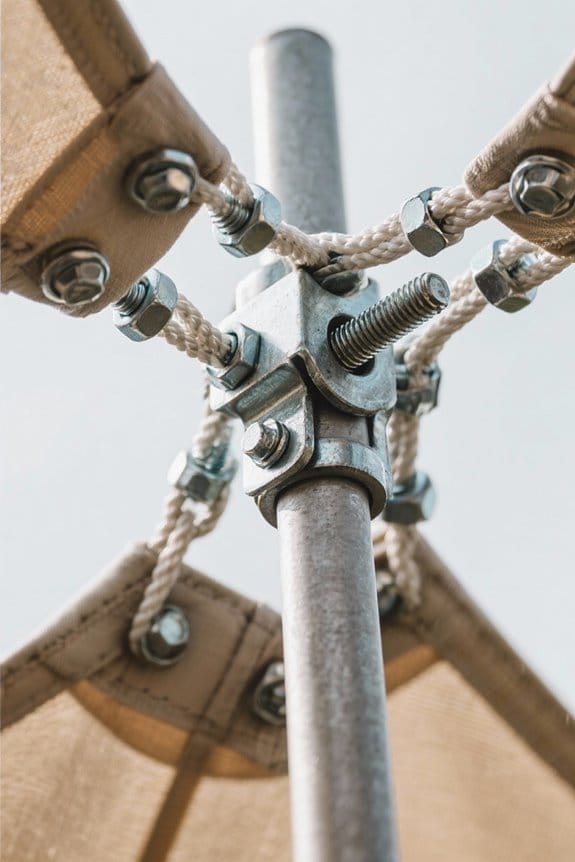
Identify anchor points in reinforced concrete or steel structures, guaranteeing they withstand forces up to 2,000 lbs in storms. Use steel poles at least 4 inches in diameter, embedded one-third their length in concrete footings below frost lines for stability. Install wall plates with welded loops on secure rafters or corners, avoid wood or brick anchors. Regularly inspect tension points for wear or damage, replace components promptly. Properly executed installations assure durability and safety; more details optimize your setup further.
Key Takeaways
- Anchor shade sails to strong materials like concrete or steel for maximum load-bearing strength.
- Use building corners or rafter beams as reliable attachment points for stability.
- Avoid using brick or wood anchors prone to stress failure under high tension.
- Install wall plates or corner brackets with welded loops to secure attachment points effectively.
- Consult an engineer to verify anchor location structural integrity and soil suitability if uncertain.
Understanding the Forces on Shade Sail Anchors
You may be interested
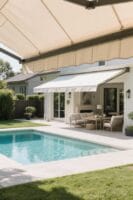
Begin by evaluating the typical anchor load, recognizing that a properly tensioned shade sail exerts around 200 lbs of force per corner under normal conditions. Secure each anchor point to withstand this baseline pressure. Anticipate storm conditions, as forces can escalate to 2,000 lbs, demanding robust anchor points made of concrete or steel. Utilize existing sturdy structures such as building corners and rafter beams whenever possible. For new support poles, select minimum 4” round schedule 40 steel, anchoring them in concrete footings to maintain stability. Assess soil type and sail size carefully, and consult an engineer if uncertainty arises, preventing structural failure. Prioritize reliability at all times; inadequate anchor points risk catastrophic sail damage or injury. Approach this step methodically, guarantee tension forces are accounted for, and prepare for variable load challenges accordingly. Regular inspection and maintenance, similar to practices recommended for solar covers, help ensure long-term anchor reliability and safety.
Selecting Structural Elements for Secure Attachment

Choosing appropriate structural elements for shade sail attachment demands careful inspection of existing materials and reinforcement methods. Identify anchor points in sturdy materials like concrete or steel, capable of withstanding tensions up to 2,000 lbs in storm conditions. Prioritize attachment to strong building areas, such as corners or rafter beams, for maximum load distribution. Install wall plates or corner brackets with welded closed loops to secure hardware effectively and evenly spread forces. Avoid unreliable anchors like brick, wood, or compromised structures, as they risk failure under stress. If unsure about structural integrity, consult an engineer, factoring in sail size and soil type. Follow these steps to select anchor points that guarantee safe, durable shade sail installation without compromising the building’s structural stability. Consider using posts made from high-grade or carbon steel with reinforced base plates to ensure optimal material quality and stability.
Recommended Products

Shade sail waterproof 220 GSM high density polyester. Suggestion avoid use sails in heavy rain and snowstorm.

【𝗦𝗨𝗣𝗘𝗥 𝗛𝗘𝗔𝗩𝗬 𝗗𝗨𝗧𝗬 𝗡𝗘𝗪 𝗣𝗔𝗧𝗘𝗡𝗧 𝗗𝗘𝗦𝗜𝗚𝗡】: Made of 260 GSM permeable extra heavy duty fabric, heavy duty stainless mounting rings, cable wires built-in edges, integrate into the mounting rings, all pulling strength goes to the cable wires, not only making the edges more durable, it also enhence the appearance of shade sail.

【𝗖𝗢𝗠𝗣𝗟𝗘𝗧𝗘 𝟰𝗫𝟰 𝗣𝗘𝗥𝗚𝗢𝗟𝗔 𝗞𝗜𝗧 𝗙𝗢𝗥 𝗖𝗢𝗥𝗡𝗘𝗥𝗦, 𝗖𝗘𝗡𝗧𝗘𝗥 𝗝𝗢𝗜𝗡𝗧𝗦 & 𝗣𝗢𝗦𝗧 𝗦𝗨𝗣𝗣𝗢𝗥𝗧】 This full pergola bracket kit includes 3-way corner brackets, 4-way center brackets, and post bases in one coordinated set, giving you a more complete hardware solution for square pergola builds from top frame connections to bottom post support.
Advantages of Steel Poles for Shade Sail Support
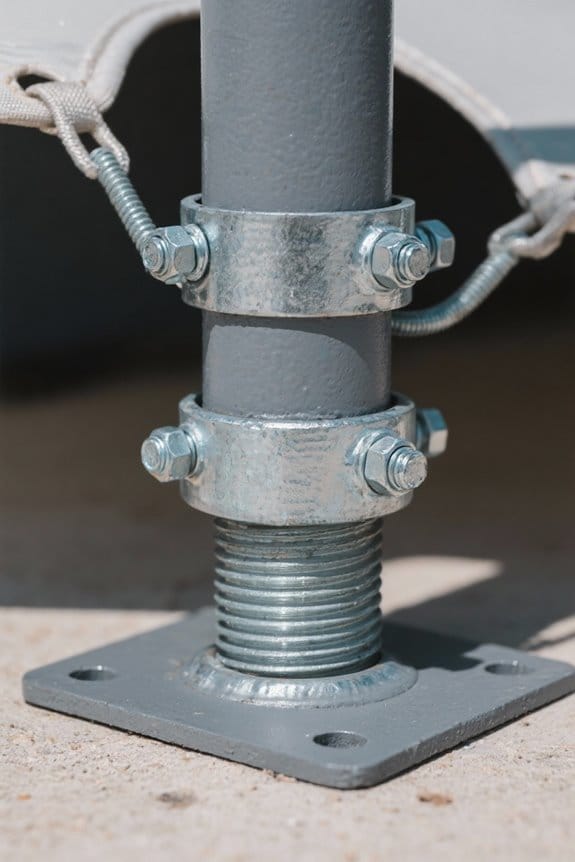
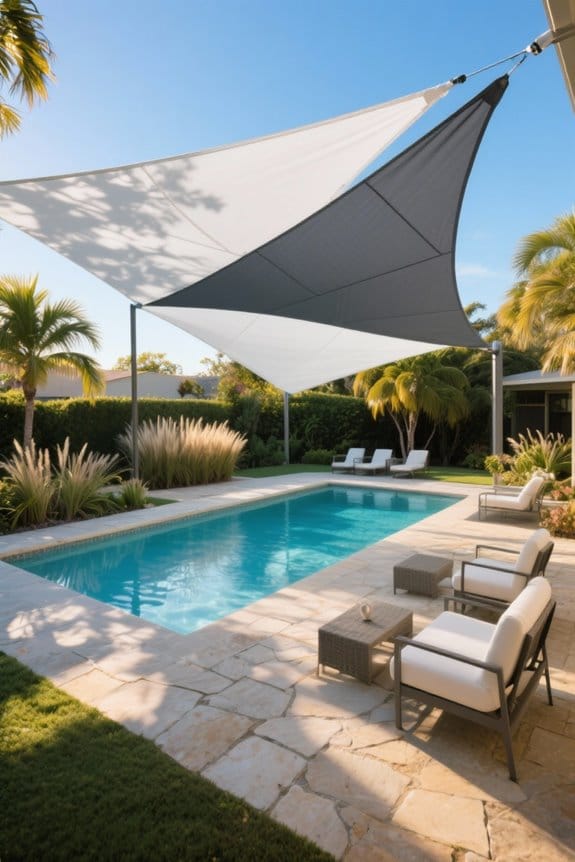
Several factors make steel poles the preferred choice for supporting shade sails; start by selecting poles with at least a 4-inch diameter and schedule 40 thickness to guarantee adequate strength. Choose steel poles to avoid bending or breaking that occurs with wooden posts under high tension, especially during storms where forces can reach 2,000 lbs. Paint or powder coat steel poles to match your outdoor décor, maintaining both aesthetics and durability. Install steel poles to resist pressure without compromising structural integrity, ensuring reliable long-term support. Steel poles provide consistent performance against strain, making them safer and more dependable for anchoring shade sails. Focus on appropriate pole size, material quality, and surface treatment when planning installations to maximize both functionality and visual appeal. Using high-quality 304 stainless steel components in the hardware kits further enhances corrosion resistance and overall stability of the installation.
Recommended Products

【Easy Installation】: 4-step installation in 15 minutes with threaded connection design for easy pole assembly, lightweight for single-person setup. Please refer to user’s manual and video guide.

【Simple Installation】: Experience quick and simple installation with our straightforward 4-step process. Designed for user convenience, the lightweight construction at 32 lbs enables easy setup by a single person. Please see the user's manual and instructional video guide for detailed guidance if needed.

Easy Assembly: Set up is a breeze with our straightforward 4-step process. Weighing just 32 lbs, the lightweight design allows for easy handling by a single person. For detailed instructions, please refer to the user manual and video
Importance of Concrete Footings in Stability
Guarantee steel poles anchor securely by embedding them in concrete footings that provide a stable foundation, preventing shifting or loosening under tension. Excavate holes at least one-third the pole length deep, guaranteeing proper depth for stability. Mix and pour concrete, positioning the pole vertically, and brace it until the concrete cures completely. Customize concrete footings to suit the shade sail dimensions and site conditions, adjusting shape and volume as needed. Take soil type into account; consult an engineer if unsure about footer sizing or ground stability. Bury footings below frost lines in colder regions to enhance durability. Concrete footings resist high winds and severe weather forces, maintaining tension and structural integrity. Proper installation of concrete footings is essential to secure shade sails effectively and guarantee long-term safety. Regular inspection and maintenance of the footing help ensure structural integrity over time.
Recommended Products

Upgraded version to strengthen the shade sail pole base: chassis directly welded to the tube. The chassis is three times thicker, and Four triangular steel plates are added to increase the support force. Even in a storm will not bend and tilt. Load-bearing effect as shown in the video, the video is true to life if the quality of the product purchased does not match the video. We will unconditionally refund you. Patented design and protection, infringement must be investigated.

Ultra-Strong Metal Construction: Made from high-quality metal, our shade sail poles feature a 2.4-inch diameter and 2mm wall thickness. Comprising 3 sections for a total length of 10 feet, with four M16 expansion screws for secure anchoring and reliable sun protection.

Product Includes: With this purchase, you will receive a concrete mounting base, a stainless steel base, two stainless steel shade sail poles, and a top pole with a circular connector. Each pole has a diameter of 2.36 inches, and the assembled structure reaches a height of 12 feet.
Evaluating Trees as Natural Anchor Points
Frequently, trees present a convenient option as natural anchor points for shade sails, but assess their health and stability thoroughly before use. Begin by choosing the right tree—select those with robust trunks and deep, firm root systems. Examine for decay, cracks, or damage that could compromise strength. Account for the forces involved: shade sails typically exert around 200 lbs at each corner, increasing to 2,000 lbs in storms. Verify the tree can withstand such loads without damage. Position the tree to minimize swaying, reducing undue stress on attachments and fabric. Avoid trees that move excessively in wind, as this motion may cause sail wear or instability. Confirm the tree’s location doesn’t interfere with sail structure. Prioritize safety by rigorously evaluating trees before anchoring shade sails. Remember that using heavy-duty reinforced seams and appropriate hardware is essential to ensure a secure and durable installation.
Recommended Products

A full-width soundbar shelf, unique media storage drawer, and a host of innovative home theater features ensures that this media console performs like no other. Features hardwood louvered doors for a distinct appearance.

Orders Will Be Automatically Upgraded to the Newest Shipwell Version Model 91028

Wind-Resistant Protection: Pro-Tect tested and proven to withstand up to 100 mph winds
Avoiding Unsafe Anchor Materials and Locations
When selecting anchor points for shade sails, exclude wood and brick due to their insufficient load-bearing capacity and vulnerability to tension-induced failure. Use only materials such as reinforced concrete posts or galvanized steel poles rated to withstand forces up to 2,000 lbs. Inspect proposed anchor locations carefully, verifying they resist movement and pressure from sustained wind load. Avoid walls or structures not specifically designed for tensile loads. If considering trees, confirm they are healthy, mature, and stable, noting that wind-induced sway can loosen connections. Always measure tension with a calibrated dynamometer during installation to detect unsafe stresses. Reinforce attachment points using heavy-duty stainless steel turnbuckles and eye bolts embedded deeply into solid substrates. In cases of uncertainty regarding material strength or site integrity, promptly consult a structural engineer before proceeding to prevent catastrophic failures in shade sails. Proper maintenance and regular inspection, similar to best practices for durability and wear in pool equipment, help ensure long-term safety and performance of shade sail anchors.
Recommended Products

Super Heavy-Duty Commercial Grade Design: Crafted from 280GSM extra-heavy-duty permeable fabric and reinforced with stainless steel mounting rings. The patented Artpuch design integrates steel cables into the edges, directing all pulling tension to the cables—enhancing both durability and appearance for commercial and residential use.

Premium Material: Our sun shade sail is made of 260 GSM high density polyethylene fabric. The fabric design effectively blocks direct sunlight and UV rays, while its breathable properties promote air circulation, enhancing comfort in outdoor environments.

【Spiral Grounding Structure】Our shade sail poles boasts an innovative spiral grounding design, ensuring deeper stability. In addition, the newly upgraded stainless steel avoids bending. We recommend embedding the Miveda sun sail poles in the ground at 34 inches.
Consulting Professionals for Complex Anchor Installations
Several critical factors necessitate consulting a structural engineer for complex shade sail anchor installations. Evaluate existing structures for load capacity, especially steel or concrete, and decide if reinforcements or custom footings are necessary. Request soil analysis to design concrete bases that resist uplift forces near 2,000 lbs during storms. Consulting professionals confirms anchor points meet safety requirements, preventing failure under dynamic loads. Determine if additional supports, such as steel poles, should supplement existing anchors based on site conditions and sail dimensions. Engage engineers early to develop a tailored installation plan, mitigating risks from improper anchoring. Follow their recommendations precisely, using specified fasteners and mounting hardware. Document all specifications and adhere strictly to engineering guidelines to guarantee stable, durable shade sail anchors suitable for long-term use in demanding environments. Additionally, selecting materials that meet industry certifications ensures reliability and safety for outdoor installations.
Frequently Asked Questions
What Is the Best Way to Secure a Shade Sail?
The best way to secure a shade sail involves utilizing strong anchor materials like concrete or steel structures. Employ welded brackets and steel poles with concrete footings to guarantee stability, resisting high loads and weather stresses effectively.
What Kind of Posts Should I Use for a Shade Sail?
Steel posts with a minimum diameter of 4 inches and schedule 40 steel are recommended post materials for shade sails, providing superior strength and durability compared to wooden posts, which tend to bend under tension and harsh weather conditions.
How Deep Should Post Holes Be for Shade Sail?
In a coastal garden, post depth of 3 to 4 feet for a 10-foot post guaranteed stability against strong winds. Post depth typically equals one-third of the post length, adjusted for soil conditions and structural requirements.
Can I Anchor Shade Sail to House?
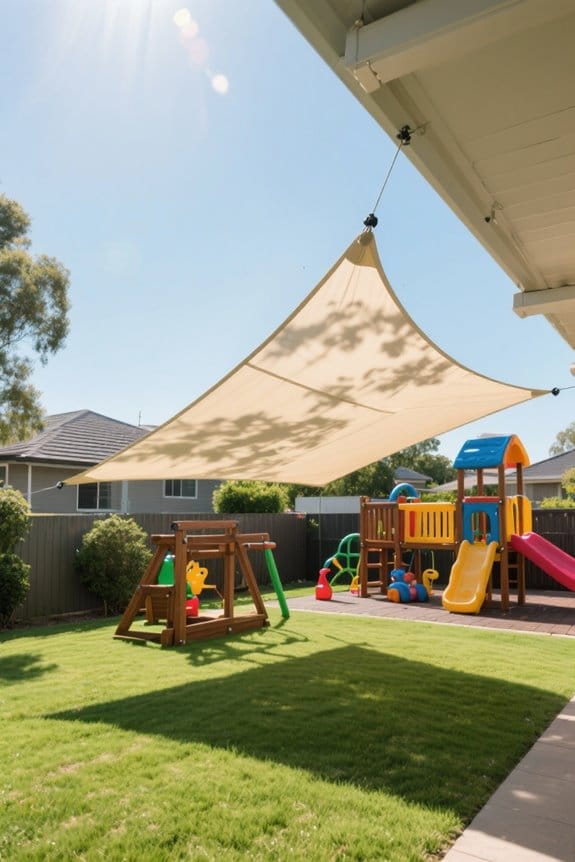
Shade sails can be anchored to a house using robust house attachment points such as structural walls and rafter beams. Proper hardware like wall plates and secure screws embedded in solid wood is essential for safe and stable installation.