As an Amazon Associate, we earn from qualifying purchases. Some links on this site are affiliate links at no extra cost to you. Our recommendations are based on thorough research and editorial judgment.

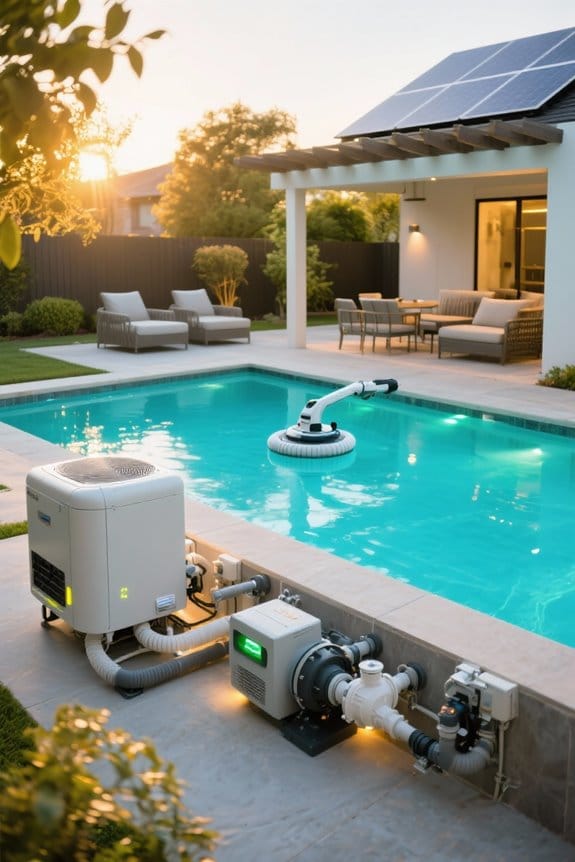
How Pool Equipment Affects Your Utility Bill

Monitor pool pump runtime closely; operating an 8-hour daily pump session typically costs about $41.40 monthly. Use timers to schedule off-peak hours and reduce expenses, inspect and maintain pump components regularly to avoid inefficiencies causing unexpected high bills. Consider ENERGY STAR variable-speed pumps to cut long-term costs over $300 and upgrade heating methods—solar heaters reduce electric load, while electric or gas heaters increase it. Employ proper equipment sizing and professional checks for ideal energy use; integrating these steps helps control utility bills effectively and reveals deeper savings strategies.
Key Takeaways
- Pool pumps running 8 hours daily significantly increase electricity bills, costing around $41.40 monthly for a one-horsepower pump.
- Using timers to schedule pump operation during off-peak hours can save up to $20 monthly on energy costs.
- Energy-efficient variable-speed pumps reduce power usage and can save over $300 in electricity expenses throughout their lifespan.
- Pool heaters, especially electric ones, drastically increase electric bills, while solar heaters help lower energy costs despite higher upfront expenses.
- Regular professional maintenance and prompt repairs prevent inefficiencies and excess energy consumption, reducing overall utility expenses.
Understanding Swimming Pool Electricity Usage
You may be interested
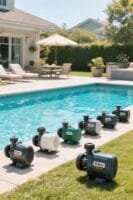
Begin by evaluating the pool pump’s daily run time, which typically spans about 8 hours, and identify its horsepower to estimate electricity consumption. Pool owners should note that a one-horsepower pump generally costs around $41.40 monthly in electricity during normal operation. Track pump specifications on the label, compare energy usage rates, and calculate projected expenses accordingly. Monitor your electric bill for unexpected increases that may signal inefficiencies. To control energy consumption, install timers to limit runtime during peak hours and maintain pump components regularly to prevent overwork. Understand that energy consumption considerably impacts the monthly electric bill, often accounting for $32 to $100 depending on pump size and utility rates. Document usage patterns precisely, adjust pump schedules, and upgrade to ENERGY STAR models to optimize efficiency and reduce costs effectively. Additionally, selecting durable materials and ensuring proper installation depth, such as a minimum installation depth of 2 feet, can enhance overall system stability and longevity, reducing maintenance costs indirectly.
Breakdown of Pool Energy Consumption
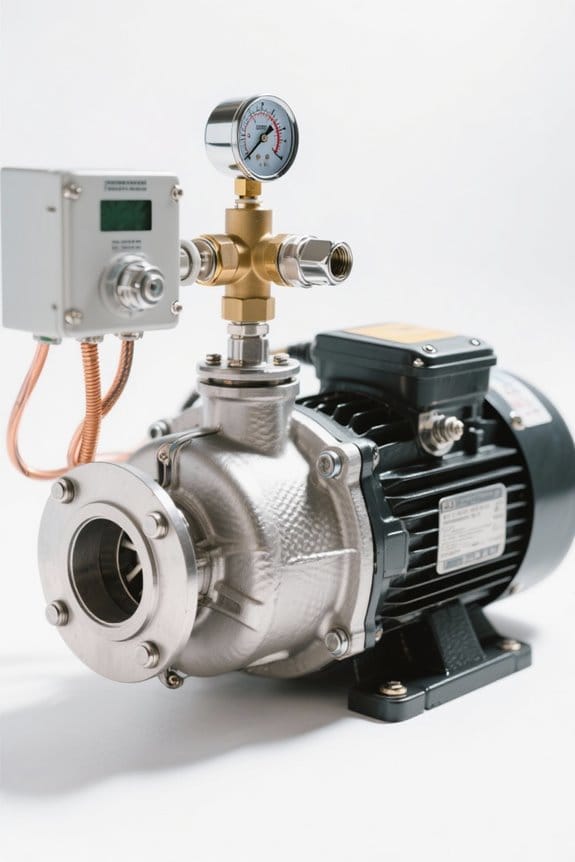
Calculate total energy consumption by analyzing each pool component’s wattage and operational hours, starting with the pool pump due to its significant power draw. Identify your pump’s horsepower and wattage; a typical one-horsepower pump uses about 1,725 watts. Multiply wattage by daily run-time hours to find daily consumption, then scale to monthly totals. For example, running the pump eight hours daily costs roughly $41.40 monthly. Review the pump’s energy efficiency, noting that older single-speed pumps consume more electricity, inflating your electricity bill. Assess whether timers or variable-speed models could reduce operational hours during peak electricity pricing. Don’t forget other equipment, but prioritize the pool pump, as it often accounts for the largest energy portion. Monitoring and adjusting these factors directly impacts your utility bill savings. Consider upgrading to a variable-speed 1HP pump to maximize energy savings and reduce noise levels during operation.
The Role of Pool Pumps in Energy Costs
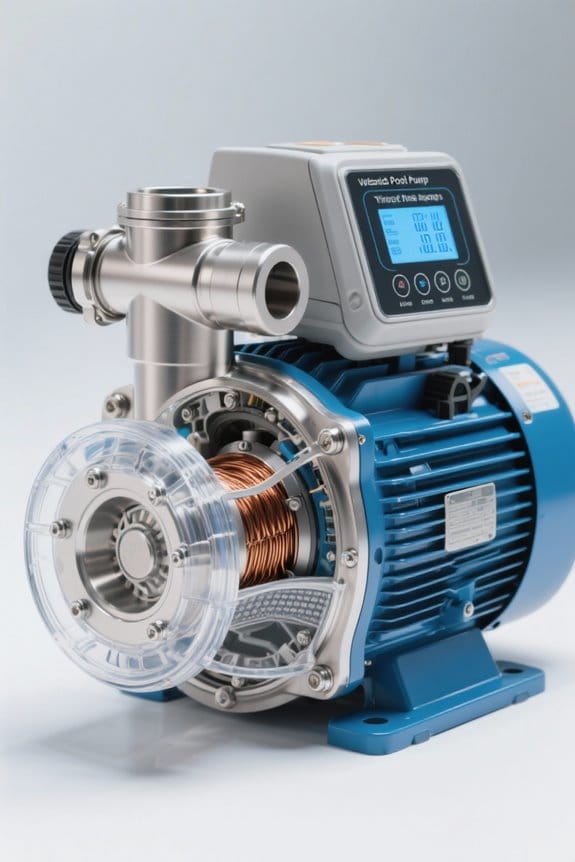
Although pool pumps are essential for water circulation and filtration, their energy consumption can substantially increase electricity bills. Monitor the specific pump size and usage to estimate monthly costs, which range from $32 to $100. Calculate operating expenses by noting that a one-horsepower pump running eight hours daily incurs about $41.40 monthly on your energy bill. Optimize energy use by installing timers to schedule pump operation during off-peak hours, reducing costs by approximately $20 monthly. Consider replacing older pumps with ENERGY STAR certified models featuring variable speed technology to achieve savings exceeding $300 over the pump’s lifespan. Regularly inspect pump components to prevent inefficiencies that inflate energy use. Accurate measurement and thoughtful adjustments guarantee pool pumps contribute to manageable energy bills without compromising water quality. Selecting a variable-speed pump equipped with a programmable timer can further enhance savings and operational efficiency.
Recommended Products

Powerful Performance: Our smart variable speed pool pump allows you to customize speeds from 1200 RPM(3566GPH) to 4000 RPM(10566GPH), ensuring efficient operation for pools of all sizes, offering precise control over your pool's circulation system.

3.0HP High Power for Large In-Ground Pools: Delivering up to 11,359 GPH flow rate and 79 ft max head, this pump is built for large in-ground pools, high-demand filtration systems, and multi-feature setups including waterfalls, heaters, and saltwater systems.

Dynamic Performance: Elevate your above ground pool experience with our 1.5HP dual speed pool pump. It's perfect for above ground pool owners, offering a maximum flow rate of 4750 GPH on high speed and 2100 GPH on low speed for efficient circulation
Effects of Continuous Pool Pump Operation
Evaluate the energy impact of running a pool pump continuously by tracking wattage and runtime carefully. Understand that an average pool pump with one horsepower consumes about 1,725 watts. Multiply this by 24 hours to estimate daily energy use, then calculate monthly consumption to forecast electric bills, which may exceed $270 annually. Limit pool pump operation to around eight hours daily to balance water quality with energy savings. Schedule pump runtime during off-peak electricity hours to reduce costs by up to $20 monthly. Avoid running the pump 24/7, as it does not greatly improve filtration beyond roughly six hours of daily operation. Regularly monitor runtime and wattage data, adjust schedules accordingly, and guarantee energy-efficient use of the pool pump to manage utility bills effectively without compromising pool maintenance. Additionally, selecting a variable-speed pump can significantly reduce energy consumption compared to single-speed models.
Heating Options and Their Impact on Electric Bills
How does heating your pool affect your electric bill? Select pool heaters carefully, balancing upfront costs and long-term expenses. Use solar heaters for lower electric bills despite higher initial investment. Choose electric heaters for rapid heating; limit frequent use to avoid significant increases in your electric bill. Consider gas heaters for fast heat, but expect higher energy expenses and environmental impacts. Always deploy a quality pool cover to retain heat when the pool is idle, lowering heater energy consumption. Measure pool temperature regularly; adjust heater settings to prevent overheating and unnecessary power use. Evaluate energy-efficient pool heaters for cost-effective heating options. By systematically applying these strategies, effectively heat your pool while managing electric bill impact and maintaining comfort. Additionally, selecting a heater with advanced energy efficiency technologies can significantly reduce long-term fuel costs.
Recommended Products

SpringBreath 1.0 Heating System with Quantifiable Results---Built to efficiently handle large pools up to 5,500 gallons. H5, centered on a corrosion-proof pure titanium heat exchanger, delivers an industry-leading the Max COP up to 4.1. This isn't just heating; it's high-efficiency engineering for rapid, reliable temperature rise.

All-Season Pool Comfort: Featuring innovative dual-mode temperature control, this heat pump precisely heats water between 59–104°F or cools it within 59–83°F. By maintaining consistent thermal regulation, it extends swimming seasons by up to 6 months while delivering year-round comfort for pool enjoyment.

Extend Your Swim Season: The pool heat pump features a dual-mode heating and cooling system that maintains optimal water temperatures year-round. Precision control ensures heating from 47–104℉ and cooling from 47–83℉, allowing you to enjoy extended swimming sessions through autumn’s crisp chill and spring’s cool mornings.
Strategies to Maximize Pump Efficiency
Optimize your pool pump’s operating schedule by using a timer to run it between 6 to 8 hours daily, cutting electricity costs noticeably. Maintain pump efficiency by cleaning filters monthly and clearing intake grates to reduce hydraulic resistance that forces the electric motor to overwork. Inspect piping; replace narrow pipes with larger diameters and install 45-degree elbows, minimizing flow restriction and decreasing energy costs. Consider upgrading to an ENERGY STAR certified pump with variable speed technology, enabling the electric motor to operate at low flow rates for filtration, appreciably saving energy over time. Avoid continuous pump operation, which can spike utility bills to $144 monthly, especially during summer. Regularly monitoring and adjusting the pump’s schedule and components guarantees peak performance, reducing wear while controlling energy consumption effectively. Dual-speed pumps operating at low speeds can typically reduce energy usage significantly compared to single-speed models, offering substantial energy-saving benefits.
Recommended Products

Energy-Saving Design: Utilizing variable speed technology, our pump reduces energy consumption by up to 80% compared to traditional pumps, providing significant long-term savings while maintaining optimal pool performance.

【Smart Variable Speed Pump】: Smart Life APP control, easy to set work schedule, speed (RPM), flow (GPM), independent 'Quick Clean' mode, quick mode switching.
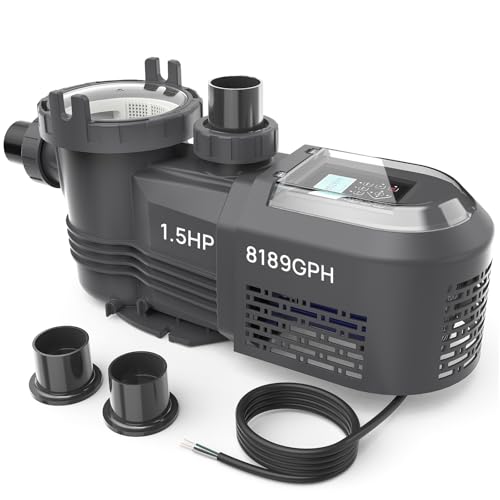
Energy-Saving Design: Utilizing variable speed technology, our pump reduces energy consumption by up to 80% compared to traditional pumps, providing significant long-term savings while maintaining optimal pool performance.
The Importance of Proper Pump Sizing
Although selecting the correct pump size might seem straightforward, choosing an oversized pump can drastically increase electricity expenses without improving performance. Prioritize proper pump sizing by matching the pump’s horsepower to the pool’s volume and hydraulic resistance; typically, a 0.75 horsepower or smaller pump suits residential pools. Consult a pool supplier’s design chart to identify the exact pump requirements based on piping diameter and flow demands. Reduce pipe resistance by installing larger diameter pipes or shortening pipe runs, which aids in improving efficiency. Avoid oversizing to prevent unnecessary energy costs; instead, focus on balancing flow rate with system resistance. These precise adjustments directly contribute to lowering energy costs and optimizing pump performance, making your pool equipment more cost-effective and energy-conscious. Additionally, consider a variable-speed pool pump, such as the VIVOHOME 1.5HP Variable Speed Self-Priming Pool Pump, to further enhance energy efficiency and reduce utility bills.
Recommended Products
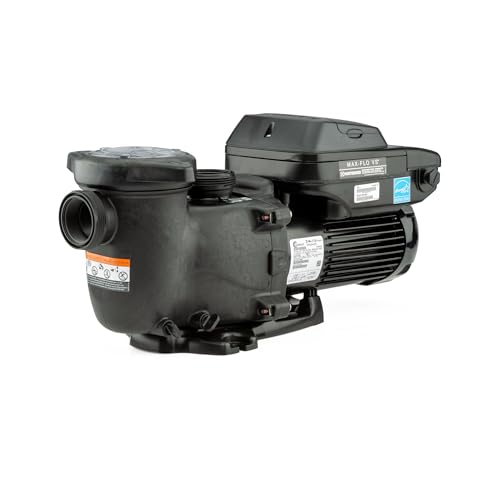
The Hayward MaxFlo VS Variable-Speed 1.65 HP, 230V Pool Pump is the most efficient pump of its kind, according to EPA ENERGY STAR third-party testing, and maybe eligible for local utility rebates

Genuine O.E.M. Product: Authentic Pentair replacement part ensuring quality and reliability

【Efficient Daily Circulation for Residential Pools】This variable speed pool pump delivers smooth, consistent water flow for small to medium residential pools. Designed for everyday filtration and circulation, it helps maintain cleaner, clearer pool water with energy-efficient performance.
Benefits of Professional Pool Maintenance
A well-maintained pool requires consistent professional attention to maximize equipment efficiency and reduce electricity costs. Schedule regular inspections by a professional pool technician to optimize electric pump operation and filtration systems. Monitor run times carefully, adjusting pump usage from the typical 8–12 hours a day to the minimum required for water clarity and sanitation. Address leaks, clogged filters, and worn-out parts promptly to avoid excessive electric consumption. Utilize professional services that apply advanced diagnostic tools, ensuring balanced water chemistry and reducing unnecessary pump cycles. Maintain clean pump baskets and backwash filters according to expert recommendations to prevent overworking equipment. Follow expert advice on timing equipment schedules, which can slash energy expenses by up to 75%, ultimately lowering your utility bill without sacrificing pool quality or safety. Incorporating energy-efficient devices such as cordless pool vacuums can also contribute to lowering power usage during pool maintenance.
Recommended Products

Size: 17.5 x 11.8 x 1.2 inches (44.50 x 30.00 x 3.00 cm)

Enhanced durability: Our aluminum poles feature a thickened interior wall, as well as a non-corrugated design, providing unparalleled strength and durability, preventing bending and breaking under heavy pressure or harsh environments.

[Keep your pool clean with ease] This kit includes a Professional pool net, semi-deep skimmer net,heavy-duty 17.5" round pool brush head, and a rotatable scrub brush.
Regional Factors Influencing Pool Energy Expenses
How do regional variables influence pool energy costs? Begin by evaluating local electric rates, which vary widely and directly increase your monthly bill. Measure the pool size accurately; heat pumps operate differently depending on the size, affecting energy consumption and expenses. Account for climate factors: hot regions demand longer pump operation to maintain water quality, raising power use. Track seasonal shifts closely—cooler months need increased heating, especially where solar availability is limited, influencing the choice between electric heat pumps and solar heaters. Review regional regulations and incentives; these can reduce costs by promoting energy-efficient equipment installation. Using energy-efficient filtration systems such as Hayward sand filters can also optimize power usage. Finally, analyze all factors together to optimize your pool equipment settings, balance running times, and select appropriate heaters, ensuring minimal energy waste and manageable utility bills regardless of your area.
Frequently Asked Questions
Why Is My Electric Bill so High With a Pool?
High electric bills with a pool often stem from low pool heater efficiency, continuous equipment use, and electric rate fluctuations. Implementing energy saving tips, such as timing pump operation and upgrading to efficient systems, can reduce costs considerably.
Does a Pool Pump Run up Your Electric Bill?
While a pool pump is essential, its pump duration can considerably impact costs; high efficiency models improve pool efficiency, balancing necessary operation with energy savings—reducing electric bills despite extended runtimes and maintaining water clarity.
What Runs Your Electric Bill up the Most?
The largest contributor to high electric bills is inefficient pool equipment, especially single-speed pumps. Energy efficient equipment like variable speed pumps and smart technology reduce consumption by optimizing run times and minimizing unnecessary energy use.
Does Your Water Bill Go up if You Have a Pool?
Water bills rise like a slow river’s tide due to pool size impact and water evaporation rates. Pool maintenance costs, including refilling and filter backwashing, also contribute, making regular upkeep essential to manage expenses effectively.