As an Amazon Associate, we earn from qualifying purchases. Some links on this site are affiliate links at no extra cost to you. Our recommendations are based on thorough research and editorial judgment.

Understanding Pool Vacuum Accessories

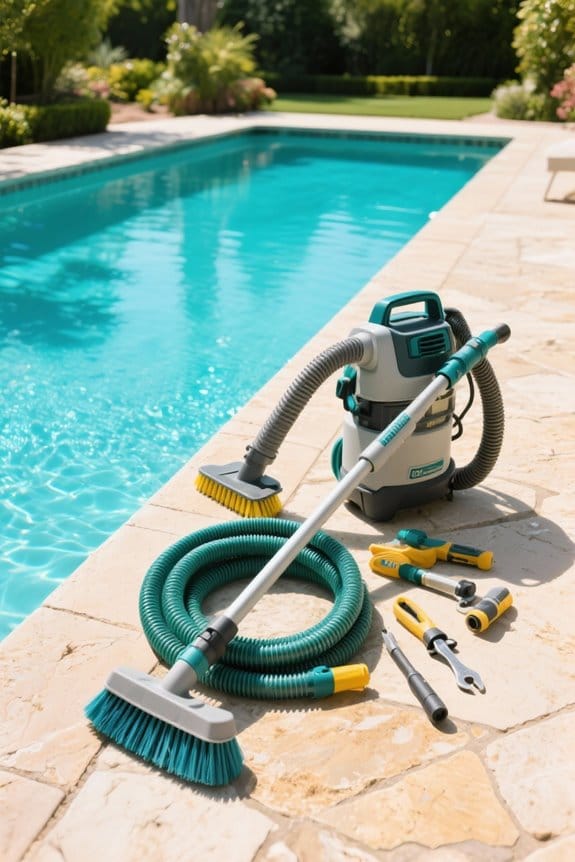
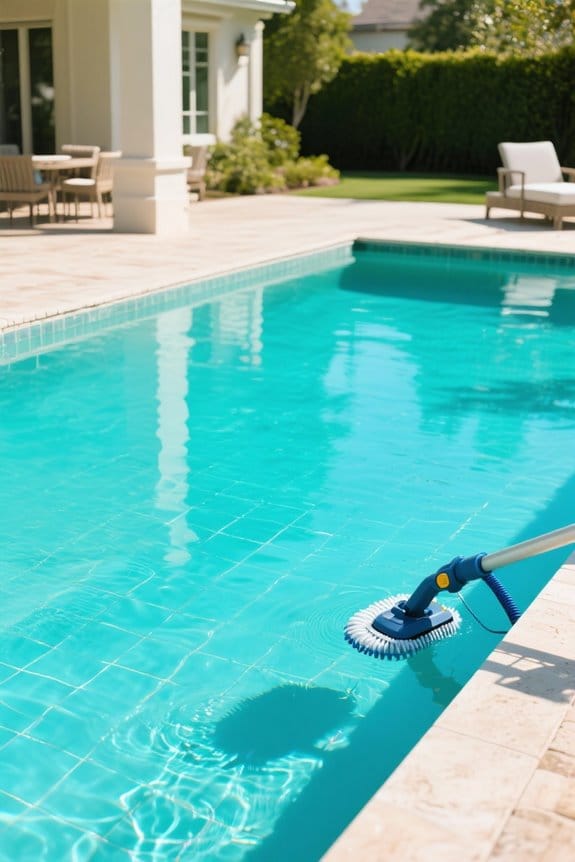
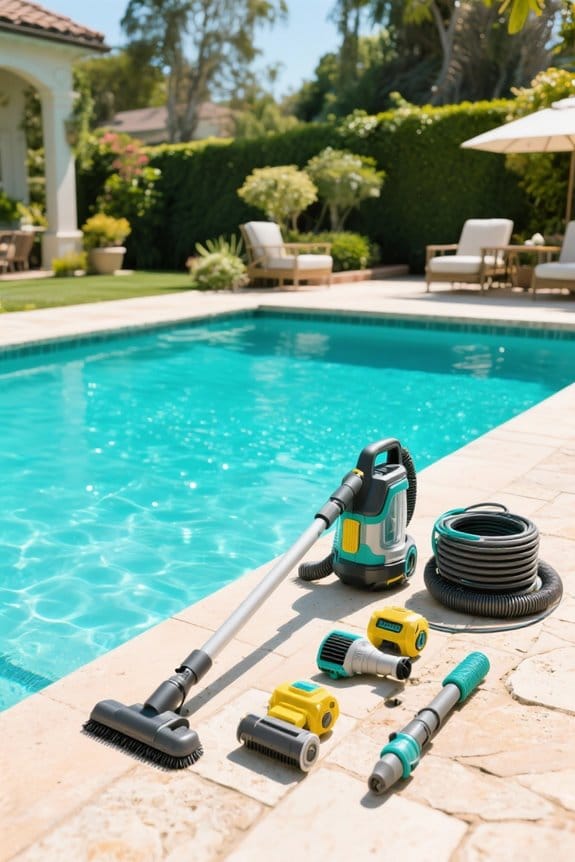
Select durable pool vacuum hoses between 30 and 60 feet, ensuring they match your cleaner’s diameter and use weighted or floating types as needed. Secure airtight connections with proper adapters and swivel connectors to prevent leaks and tangling. Attach specialized brushes suited for your pool surface—soft for vinyl, stiff for concrete—and maintain skimmer nets by removing debris regularly. Replace vacuum bags promptly and clean filters to uphold suction. Inspect hoses and accessories for wear to troubleshoot common issues. Further guidance covers compatibility and care techniques.
Key Takeaways
- Choose durable, compatible vacuum hoses with secure connections to maintain suction and prevent leaks during pool cleaning.
- Select brushes based on pool surface type, with soft bristles for vinyl and stiff bristles for concrete or plaster surfaces.
- Regularly empty or replace vacuum bags and clean filters to sustain suction efficiency and debris collection.
- Inspect hoses, fittings, brushes, and wheels routinely for wear or damage and replace parts promptly to avoid performance issues.
- Use UV- and chemical-resistant materials and verify accessory compatibility with your pool vacuum system to ensure longevity and reliability.
Types of Pool Vacuum Hoses
You may be interested
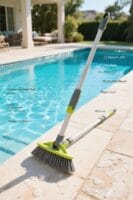
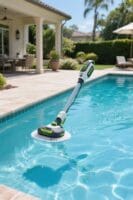
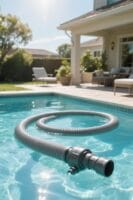
Start by selecting the appropriate pool vacuum hose length, typically between 30 and 60 feet, based on your pool’s size and depth. Choose pool vacuum hoses constructed from durable materials like vinyl or polyethylene to prevent kinks, twists, and UV damage. Utilize weighted hoses when possible; their added weight keeps the hose submerged, preventing coiling that disrupts suction cleaner operation. Verify compatibility between the hose and your suction cleaner model to guarantee peak performance and avoid leaks. Inspect hoses regularly for cracks or damages which can reduce cleaning efficiency, and replace compromised sections promptly. Proper hose selection and maintenance considerably impact the vacuum’s ability to reach all pool areas while maintaining steady suction, so prioritize these factors during setup for effective, hassle-free cleaning. Additionally, opting for hoses with a kink-free design improves maneuverability and extends the hose’s lifespan.
Vacuum Hose Connections and Adapters
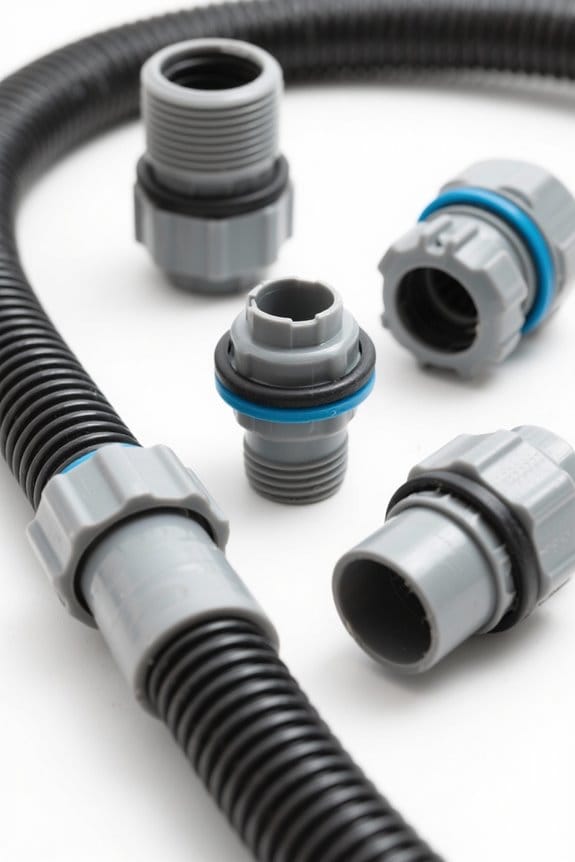
How should vacuum hose connections and adapters be properly handled for ideal suction? Always ascertain vacuum hose connections fit tightly to prevent air leaks that compromise suction power. Use adapters when necessary to match specific pool skimmer or vacuum inlet sizes, confirming compatibility before operation. Inspect all connections regularly for wear and tear, replacing cracked or brittle sections promptly to maintain efficiency. Utilize swivel connectors, if available, to reduce tangling and improve maneuverability during cleaning. Select adapter sizes precisely based on manufacturer specifications to avoid damage and suction loss. When assembling, push connections firmly until secure but avoid over-tightening, which may cause cracking. Routinely check for leaks by submerging fittings underwater while running the vacuum; bubbles indicate poor seals. Proper attention to connections and adapters optimizes cleaning performance and prolongs hose life. It is also important to consider hose size compatibility to ensure a snug fit and optimal suction power.
Specialized Brushes for Pool Surfaces
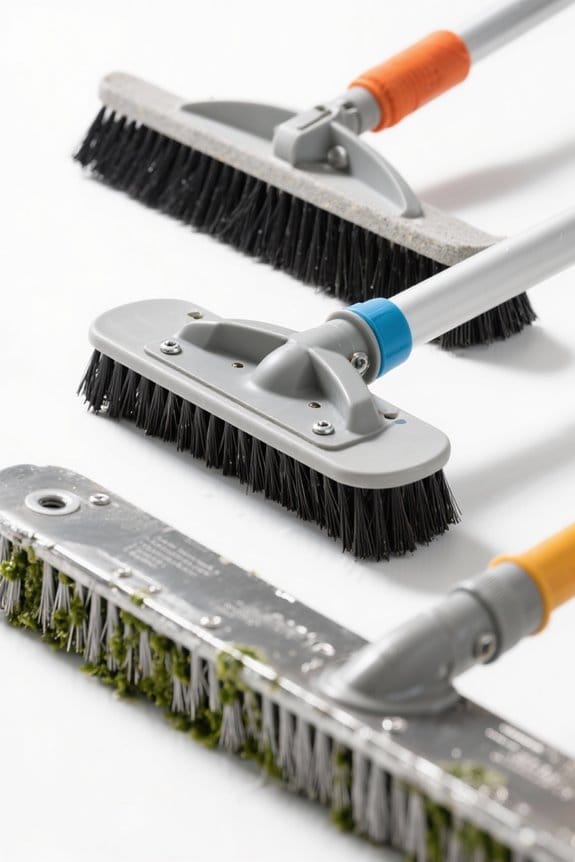
Regularly inspect and select specialized brushes tailored to your pool surface type. Choose soft-bristled brushes for vinyl liners to avoid scratching, and stiffer bristles for concrete or plaster surfaces to remove stubborn debris and algae effectively. Attach the brush securely to a standard telescopic pole using the clip mechanism for extended reach and control. Utilize brushes with adjustable swivel heads to improve maneuverability, enabling thorough cleaning around corners and steps. Scrub pool surfaces systematically, focusing on areas prone to debris buildup. Clean brushes after use to maintain their efficacy. Incorporate specialized brushes into routine pool maintenance to prevent surface damage and preserve water clarity. Adhere to these steps to guarantee long-lasting pool finishes and reduce the frequency of deep cleaning interventions while maintaining peak hygiene and appearance. For enhanced control and durability during cleaning, use brushes with telescoping aluminum poles featuring slip-resistant locking mechanisms.
Skimmer Nets and Debris Collection Tools
Although pool vacuums handle submerged debris, consistently employ skimmer nets to capture leaves, insects, and floating particles before they settle. Select skimmer nets with fine mesh, sized 15 to 18 inches wide, to reach corners and narrow areas effectively. Use debris collection tools like scoops and rakes for larger dirt and debris that vacuums may miss. Regularly clear surface contaminants to reduce strain on the pool vacuum and enhance cleaning efficiency. After skimming, inspect net integrity to prevent tearing and dirt escape. Combine manual debris collection with vacuuming for a thorough pool cleaning routine. Maintain a routine schedule, skimming daily or as needed, to prevent accumulation and protect filtration systems from clogging or damage. Proper use of these accessories optimizes cleaning efforts, extending pool vacuum lifespan. Choose skimmer nets with a reinforced frame and durable mesh for longer-lasting and more effective debris removal.
Vacuum Bags and Filter Accessories
Vacuum bags and filter accessories form essential components of pool vacuum maintenance and performance. Regularly empty or replace vacuum bags to sustain peak suction performance in pool vacuums; neglect leads to clogging and reduced efficiency. Clean or replace filter accessories, including cartridge or bag filters, according to manufacturer guidelines to guarantee efficient filtration of fine particles. Identify the correct filter type for the specific pool vacuum model before installation, avoiding compatibility issues. Use reusable filters when available by washing thoroughly and drying completely, or dispose of single-use filters after saturation. Maintain all components diligently to extend vacuum longevity and prevent operational problems. Schedule inspections biweekly during peak use, noting reduced suction, which signals cleaning or replacement needs. Precision in upkeep promotes reliable suction and filtration performance throughout the swimming season. Consider the filtration efficiency level of filter bags when selecting replacements to ensure effective debris capture and sustained vacuum performance.
Hose Maintenance and Storage Tips
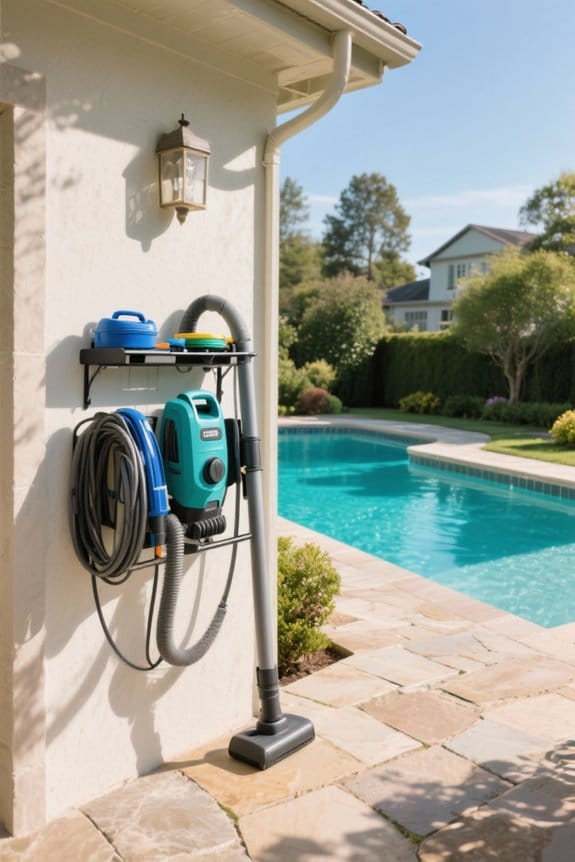
Store pool vacuum hoses by hanging them on a dedicated hose reel or loosely coiling them to avoid kinks and tangles. Regularly inspect hoses for cracks, leaks, or wear to maintain vacuum performance, and replace damaged sections immediately. Check hose floats for water saturation, as compromised floats reduce buoyancy and hinder hose maneuverability; replace faulty floats without delay. Clean the hose interior periodically to remove debris and prevent suction loss or clogging. Always store hoses in a shaded, cool area to avoid UV damage, which degrades hose material over time. Follow these hose maintenance and storage tips to extend your pool vacuum’s operational life, ensuring reliable vacuum performance during every cleaning session. Proper care improves efficiency and reduces costly repairs or replacements for pool vacuum hoses and accessories. For best results, use UV-resistant materials in hose cuffs and avoid over-tightening clamps to prevent damage.
Common Hose and Brush Replacement Signs
When should hose floats be replaced to maintain peak pool cleaning efficiency? Replace hose floats once they become waterlogged and lose buoyancy, causing the hose to coil and obstruct vacuum movement. Inspect brushes regularly; change them if bristles appear worn or frayed, as deteriorated brushes reduce surface cleaning effectiveness. Examine hose swivels for cracks or damage—any leakage here lowers suction, compromising vacuum power. Check hose connections for looseness or wear; secure or replace to prevent suction loss. Assess vacuum wheels and tires; if motion feels hindered or tires are smooth, replace to guarantee smooth vacuum navigation. Follow these guidelines to maintain ideal suction and functionality, making sure your pool stays clean without interruption from faulty hoses or brushes requiring replacement. Ensuring the use of UV- and chemical-resistant materials can significantly enhance the durability and longevity of your pool vacuum accessories.
Enhancing Vacuum Efficiency With Accessories
After checking hoses, brushes, and related components for wear or damage, improve cleaning performance by integrating targeted accessories. Attach hose floats to keep feed hoses buoyant, preventing tangles during operation. Use a fine mesh bag filter on suction-side vacuum systems to trap finer debris, enhancing water clarity. Incorporate a brush attachment to increase scrubbing power, removing algae and dirt more effectively from pool surfaces. Secure hose weights near the vacuum head to maintain contact with the pool floor, avoiding interruptions caused by hose lifting. Regularly inspect and replace worn parts using a maintenance kit, including skirts and diaphragms, to sustain suction and cleaning efficiency over time. Follow these steps precisely to maximize vacuuming effectiveness and reduce manual pool cleaning efforts. Additionally, selecting bags made from double-layered nylon mesh improves debris collection and bag durability.
Troubleshooting Vacuum Accessory Issues
Although vacuum accessory issues can disrupt pool cleaning, systematically inspecting components can quickly identify common problems. Check the suction cleaner for debris buildup and clogs preventing ideal flow. Inspect hoses carefully, listen for hissing sounds, or watch submerged sections for bubbles indicating hose connection problems such as leaks. Examine deflector wheels and skirts for damage; replace them promptly to guarantee smooth operation. Test hose floats for wear, which may cause tangling or erratic vacuum movement. Utilize maintenance kits to replace worn seals, o-rings, and small parts efficiently, preventing further damage. Overhaul kits address multiple vacuum accessories in one package, offering a cost-effective repair option. Regularly perform these steps to maintain your vacuum system’s performance and reduce downtime caused by accessory failures. It is also important to ensure the vacuum has sufficient suction power to maintain effective debris removal during operation.
Compatibility Considerations for Vacuum Components
Since vacuum components vary greatly across models, verify compatibility before purchasing replacements to avoid operational issues. Inspect pool cleaner parts, confirming hoses and heads match your specific vacuum model. For suction-side vacuum systems, affirm hose diameter and connection types, typically 1.25 or 1.5 inches, to prevent leaks or pressure loss. Consult manufacturer guidelines for proprietary accessories, especially with robotic vacuums requiring unique filters and brushes. Use only recommended replacement parts that align with your pool skimmer and filtration system specifications. Keep compatibility a priority during maintenance, as regularly updating compatible parts enhances performance and prolongs equipment life. Avoid mixing incompatible components, which causes reduced suction or mechanical failure. Always measure connections precisely, double-check specifications, and follow technical instructions carefully to secure peak vacuum efficiency with minimal downtime. Specific impellers required for different pool cleaner brands are essential to ensure optimal performance and prevent damage.
Regular Cleaning and Care for Vacuum Accessories
Numerous routine maintenance tasks enhance vacuum accessory longevity and cleaning efficacy. Perform regular cleaning by emptying the debris basket or filter after each use to maintain suction efficiency. Inspect hoses for blockages weekly, removing any debris to prevent suction loss. Examine brushes and wheels carefully, replacing worn parts promptly to avoid damaging pool surfaces. Monitor water chemistry consistently, keeping chlorine and pH balanced to reduce build-up on vacuum accessories. After cleaning, store all components in a shaded, dry location to protect against UV damage and material degradation. Adhering to a strict maintenance schedule preserves performance, ensuring vacuum accessories function effectively and last longer. Neglecting these steps often leads to reduced suction, increased wear, and costly replacements, so stay proactive and methodical in your care routine.
Frequently Asked Questions
What Are the Three C’s of Pool Cleaning?
The Three C’s of pool cleaning—Clarity, Cleanliness, and Comfort—form the cornerstone of pool maintenance tips. Their mastery enhances vacuum performance improvement, informs cleaning schedule essentials, guarantees ideal pool cleaning equipment use, and perfects proper vacuum techniques.
How to Use a Pool Vacuum Attachment?
A proper pool vacuum setup involves securely connecting attachments and filling hoses with water to maximize suction power. Addressing compatibility issues and performing regular attachment maintenance enhances cleaning efficiency and prolongs equipment lifespan.
What Are the Different Vacuum Attachments Called?
Various vacuum attachments include vacuum head types tailored to surfaces, hose lengths connecting to filtration, brush attachments enhancing suction side cleaning, and skimmer nets for surface debris capture. Each serves a distinct purpose in pool maintenance.
Does a Magic Eraser in the Pool Pump Really Clean the Pool?
The Magic eraser effectiveness in pool pump maintenance is minimal and potentially harmful, often causing clogging. Reliable vacuuming techniques and surface debris removal favor specialized cleaning product alternatives designed specifically for pool materials and filtration systems.