As an Amazon Associate, we earn from qualifying purchases. Some links on this site are affiliate links at no extra cost to you. Our recommendations are based on thorough research and editorial judgment.

Manual vs. Automatic Pool Vacuuming: What’s Better?

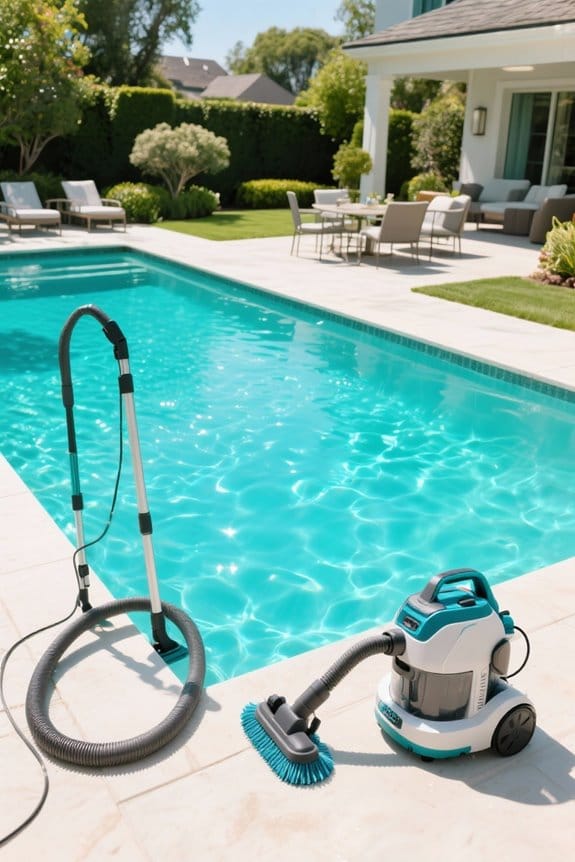
Choose manual pool vacuums for targeted cleaning on smaller pools, using a vacuum head, telescoping pole, and hose connected to the skimmer, ensuring suction power near 18 GPM. Expect labor intensity and regular hose checks. Opt for automatic cleaners with suction-side or robotic technology for consistent, programmable cleaning of larger pools, though budget $400-$1,500 and maintain filters frequently. Balance effort, debris type, and pool size carefully; further details clarify how to optimize your selection effectively.
Key Takeaways
- Manual vacuums are cost-effective, offering full control but require physical effort and time, ideal for smaller pools.
- Automatic vacuums reduce labor, provide consistent cleaning, and handle various debris types efficiently with programmable features.
- Manual vacuums consume no electricity, while automatic models have higher operational costs due to energy use.
- Automatic cleaners require regular filter maintenance and can be more expensive upfront but save time long-term.
- Choose based on pool size, debris level, budget, and desired convenience for effective maintenance.
Why Pool Maintenance Is Essential
You may be interested
Maintenance is the foundation of a safe, efficient pool environment. Prioritize pool maintenance by scheduling regular cleaning to prevent debris accumulation that fosters algae and bacteria growth. Monitor water clarity daily; poor clarity signals chemical imbalances requiring immediate attention. Reduce health risks by using balanced chemical treatments, including chlorine and pH adjusters, maintaining recommended levels—free chlorine at 1-3 ppm, pH between 7.2-7.8. Employ a hands-on approach: combine automatic cleaners for routine debris removal with manual cleaning for detailed spot treatments. Consistent upkeep extends the longevity of pool equipment by minimizing strain on pumps and filters. Inspect skimmers and strain baskets weekly, and clean filters monthly. Neglecting these tasks escalates repair costs and compromises swimmer safety. Maintain detailed records of cleaning schedules and chemical tests to optimize pool performance. Using 7-way test strips at least twice weekly can help ensure accurate monitoring of pool chemistry.
Overview of Manual Pool Vacuuming
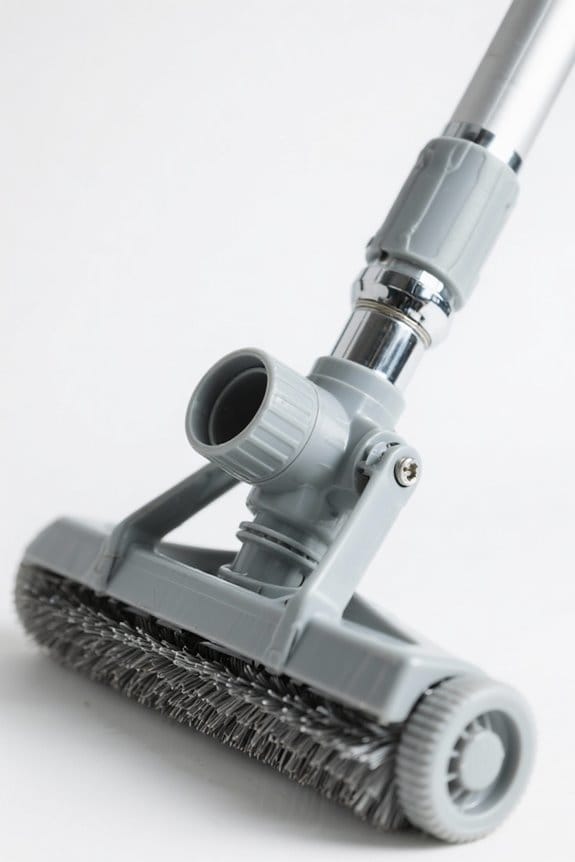
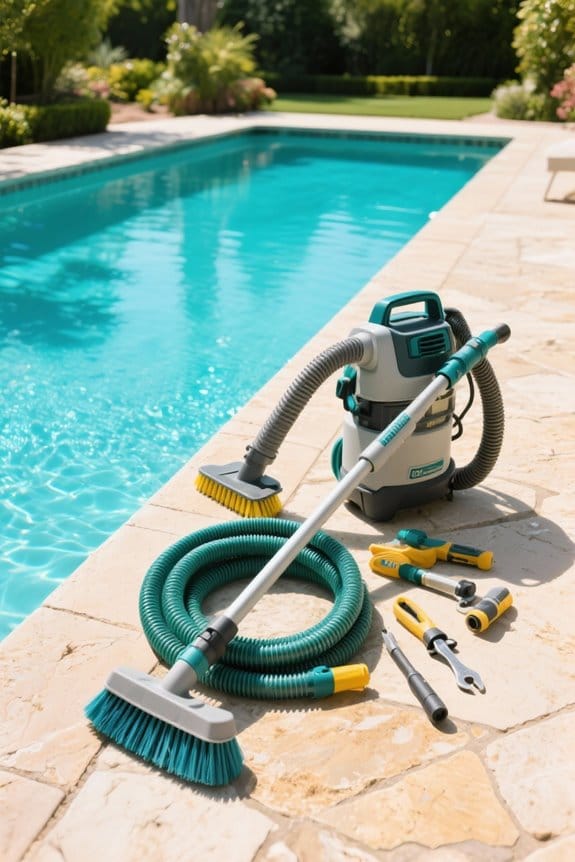
Begin by assembling a manual pool vacuum using a vacuum head and a telescoping pole; connect the vacuum hose securely, ensuring no leaks. Attach the hose to the pool’s skimmer or dedicated suction port for maximum suction. Employ manual pool cleaners to methodically move the vacuum head across pool surfaces, applying physical effort to reach corners and uneven spots. Control over the cleaning process allows targeting specific areas requiring attention, enhancing thoroughness. The lower upfront cost appeals to budget-conscious pool owners, typically between $20 and $200. Maintain the equipment regularly by inspecting hoses for cracks and replacing vacuum bags as needed to preserve suction efficiency. Manual vacuuming requires active user involvement throughout the cleaning process, making it labor-intensive but straightforward, with no electricity needed and minimal maintenance complexity. Many manual vacuums are compatible with standard garden hoses, simplifying their assembly and enhancing cleaning efficiency.
Recommended Products

Unique suction chamber concentrates vacuum velocity equally and full width flex strips guide debris into the suction chamber

Pool Vacuum Set: this pool vacuum kit includes your need for efficient pool cleaning: approx. 1-1/2" x 30ft flexible pool cleaning hose, approx. 13 x 7.5 inches/ 33.02 x 19.05 cm pool vacuum head with bristles and wheel, and approx. 14 inches/ 35.56 cm Pool brush and a 47.24 inches/ 120 cm connecting pole to attach various pool cleaning accessories

Pool Vacuum for Inground Pools with Hose package included: 1 * 1.5”x 40ft flexible pool hose, 1 * 14" rotating handle pool vacuum head with wheels
Benefits of Using Manual Pool Vacuums
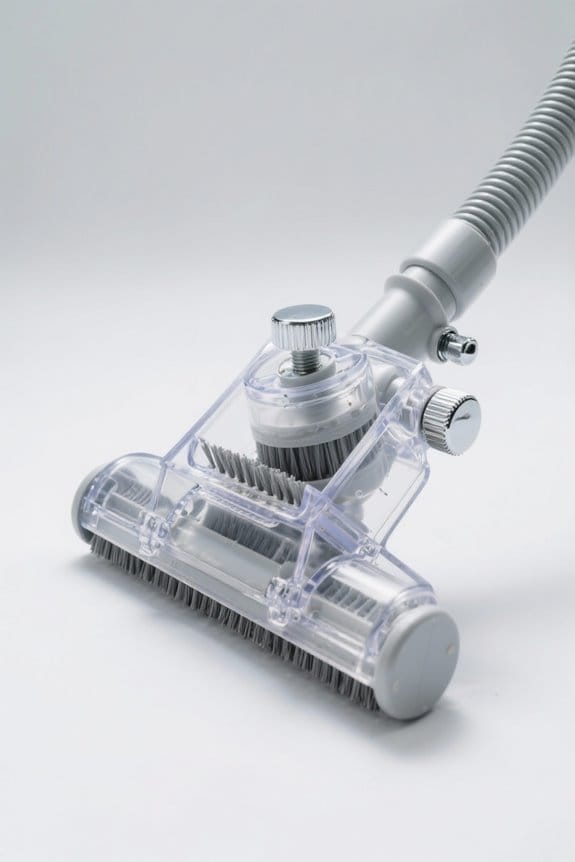
Several key advantages make manual pool vacuums a practical choice for pool maintenance. Choose a manual vacuum for its budget-friendly nature, with units typically priced between $20 and $200. Take complete control by directing the vacuum to specific areas, especially hard-to-reach corners, ensuring thorough cleaning. Opt for manual vacuums in smaller pools, where hands-on maintenance matches individual cleaning preferences effectively. Avoid electricity use to benefit from noticeable energy cost savings. Perform straightforward maintenance regularly—inspect hoses for damage, replace vacuum bags, and clean filters. Emphasize deliberate movements for precise debris removal. Trust that manual vacuuming delivers effective cleaning solutions without complex mechanisms. Use it to maintain your pool consistently, embracing hands-on care that adapts to varying dirt levels and pool shapes for ideal results every session. Additionally, selecting a vacuum head with features like weighted plates or swivel handles can enhance debris removal efficiency and ease of use.
Recommended Products
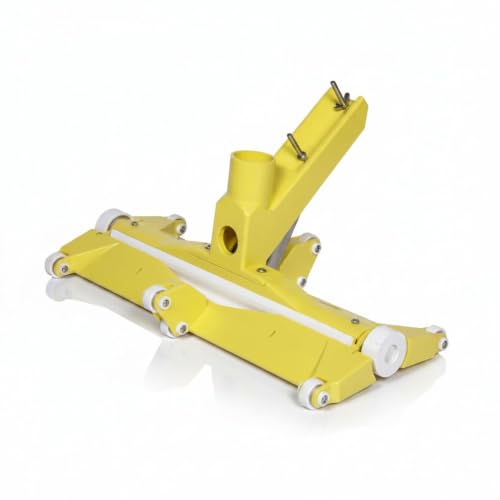
Fairlocks swimming pool vacuum head

POWERFUL & STABLE CLEANING PERFORMANCE: Designed for efficient pool maintenance. Aquatix Pro 22” weighted vacuum head provides strong ground contact to help prevent lifting or floating while cleaning. The wide cleaning path allows you to cover more surface area in less time, making routine pool care easier and more efficient.

Complete Pool Cleaning Kit: this 4 piece set includes everything you need for effective pool maintenance, featuring a 13" vacuum head with flexible wheels, a 17" skimmer net, 1-1/2 inch x 29.5 ft vacuum hoses, and a 13.7 ft long pole; Ideal for cleaning both above-ground and inground pools, it's a must-have for a pristine pool
Limitations of Manual Pool Vacuums
Understanding the limitations of manual pool vacuums is essential for effective pool maintenance. Prepare for a time-consuming and physically demanding task, especially with larger pools. Use manual pool vacuums regularly to avoid less frequent cleaning, but expect increased user effort as extensive debris accumulation can overwhelm these devices. Note the lack of self-cleaning capability requires constant manual operation, increasing labor intensity. Perform routine maintenance by inspecting hoses and replacing vacuum bags to prevent clogging. While manual options are budget-friendly upfront, account for hidden costs tied to labor and potential pool health issues due to inconsistent cleaning. Plan sessions carefully, monitor debris types, and adjust techniques to optimize manual vacuum efficiency despite these inherent constraints. Additionally, manual vacuums often have lower suction power compared to automatic models, which can affect their cleaning effectiveness.
Recommended Products

Effortless & Efficient Sweeping: This battery-powered sweeper dramatically reduces operator fatigue and increases productivity, with a battery-operated main broom, side brushes, and dust fan

AI Dual-Camera + Cognitive AI Navium Mode – Dual cameras and ultrasonic sensors detect 20+ debris types and optimize cleaning paths in real time for cleaning up to 10x faster. One tap activates autonomous cleaning based on pool conditions, weather, and cleaning history for effortless maintenance

Bionic AI Dual-Camera Vision with Smart Path Planning – 3D Mapping & Automated Route Optimization: Using dual AI cameras to construct a real-time 3D map of your pool, the iGarden K-AI 65 pool robot accurately identifies boundaries, obstacles, slopes, water lines, and visible debris. This visual intelligence enables the robot to understand the pool environment, automatically plan an optimized 3D S-shaped cleaning path, eliminate random movement, and deliver faster, more efficient daily coverage.
Overview of Automatic Pool Vacuuming
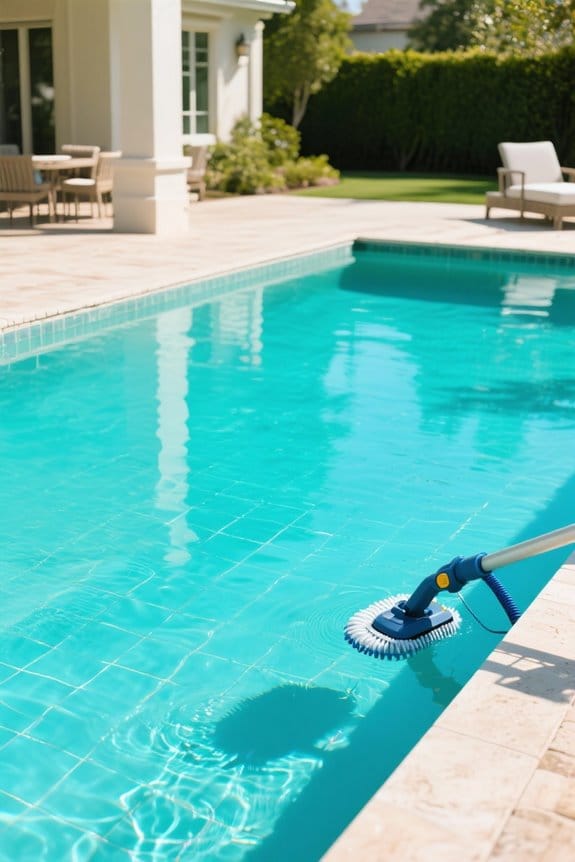
Many automatic pool vacuums operate independently, using suction, pressure, or robotic mechanisms to clean without manual effort. Understand the three main types: suction-side cleaners connect to the pool’s filter system, pressure-side cleaners use return water pressure, and robotic pool cleaners feature advanced navigation systems for systematic coverage. Select a model based on desired cleaning efficiency and upfront costs, which typically range from $400 to $1,500. Schedule regular maintenance, including cleaning filters and inspecting mechanical parts for wear, to maintain peak performance. Robotic pool cleaners often include built-in filtration, reducing debris load on the main filter. Integrate an automatic pool cleaner into your pool maintenance routine to save time and minimize manual labor. Monitor operation frequently and troubleshoot common issues such as suction loss or navigation errors. Many models now incorporate smart navigation technology to enhance cleaning efficiency and coverage.
Recommended Products
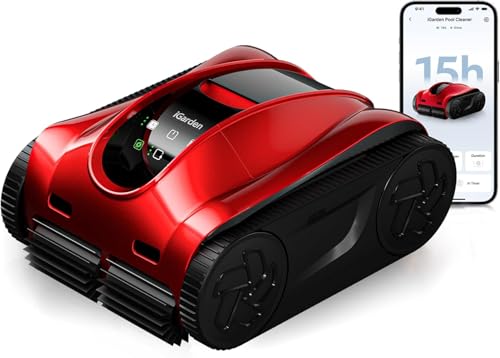
Unrivaled 15H Battery & 21-Day Cycle: Powered by industry-leading battery tech, enjoy up to 15 hours of continuous floor cleaning or 8.5 hours of full-pool deep cleaning. Maintain a spotless pool for up to 21 days on a single charge, perfect for busy homeowners.

With the Dolphin Wave 90i commercial robotic pool vacuum cleaner, schedule your pool cleanings from anywhere with always connected Wi-Fi. The Dolphin Wave 90i includes powerful wall climbing capabilities to clean the floor and walls of your pool with its dual active scrubbing brushes. Easily move and store your Dolphin with the included Caddy.

Conquer Complex Pools with AI Mapping: Achieve ultra-precise navigation, obstacle detection, and full coverage with AI Mapping. This pool robot cleaner maps complex layouts and lets you view routes in the app for total control. Ensure your data's safe with TÜV-Certified Privacy Protection.
Advantages of Automatic Pool Vacuums
Deploy automatic pool vacuums to reduce manual labor and improve cleaning consistency. Select robotic models with programmable schedules and smart navigation to maximize cleaning efficiency. Use vacuums that operate via suction or pressure, allowing independent debris collection without constant supervision. Leverage built-in filtration systems to capture dirt and reduce strain on the pool’s main filter. Prioritize units capable of handling various debris types across different pool shapes and sizes, ensuring thorough water circulation. Allocate time saved from manual cleaning to other maintenance tasks or leisure. Invest $400 to $1,500 initially, recognizing potential long-term savings through minimized manual effort and enhanced cleaning performance. Regularly monitor operation to confirm suction and navigation functions correctly, preventing blockages and maintaining ideal filtration for sustained debris removal. Additionally, choosing devices with multi-layer filtration systems can significantly enhance water clarity by capturing particles as small as 3 microns.
Recommended Products

5-in-1 Cleaning Power — Effortlessly clean every pool surface, waterline, walls, floor, and clarify water, using one device. Save time and effort with innovative submarine propulsion. (Includes Clarifying Agent Kit)

Complete All-in-One Cleaning: Engineered to actively clean every surface—from the pool floor and walls to the waterline and even the water surface—this robot ensures no corner is missed

360° LiDAR & AI Vision for Intelligent Debris Detection: High-speed 360° LiDAR scans your pool in real time, generating accurate maps and planning the most efficient S-shaped cleaning path. Combined with AI visual recognition that identifies debris types like leaves, sand, and hair, the pool cleaner robot automatically adjusts cleaning strategy for heavily soiled areas. Dual-position calibration delivers 95% coverage in just 30 minutes for 30 m² pools
Drawbacks of Automatic Pool Vacuums
Consider the higher initial cost of automatic pool vacuums, typically ranging from $500 to $1,500, compared to manual models priced as low as $20. Prepare for regular maintenance tasks, including cleaning filters and replacing worn parts, to avoid performance drops. Account for increased operational costs due to energy consumption driven by reliance on electrical power sources. Expect challenges with heavy debris; supplement automatic vacuums with manual cleaning or specialized attachments such as leaf canisters to maintain thorough cleanliness. Recognize that the complexity of automatic vacuums can lead to frequent repair needs, requiring technical troubleshooting. Plan accordingly by monitoring system functions closely, scheduling routine inspections, and being ready to handle occasional component failures that manual cleaning typically avoids. Balance convenience against ongoing expenses and maintenance demands when selecting an automatic vacuum. Additionally, selecting models with advanced navigation can improve efficiency but may increase overall system complexity and cost.
Key Factors to Consider When Choosing a Pool Vacuum
How should one approach selecting an appropriate pool vacuum? Assess pool size and shape carefully; choose manual vacuums for smaller or irregular pools, and automatic cleaners for larger, standard-shaped ones. Consider your budget next—manual options range from $20 to $200 upfront, while automatic models start around $400 and may exceed $1,500. Evaluate maintenance requirements, inspecting hoses and bags for manual vacuums, or cleaning filters and replacing parts for automatic ones regularly. Factor in cleaning frequency: automatic cleaners suit regular upkeep, manual vacuums fit occasional cleaning. Account for environmental conditions and debris levels; automatic cleaners handle heavy debris better, ensuring consistent pool cleanliness, unlike manual vacuums, which may strain under high debris. Additionally, paying attention to vacuums with suction power of at least 18 GPM ensures effective cleaning, especially for concrete pool surfaces.
Making the Right Choice Based on Your Pool and Lifestyle
When selecting between manual and automatic pool vacuums, weigh the pool’s dimensions and usage patterns carefully, match the vacuum type to cleaning frequency, and assess lifestyle demands related to time commitment and physical effort. Choose a manual or automatic pool vacuum based on pool size—manual vacuums are ideal for smaller pools and offer targeted cleaning control at a lower upfront cost. Automated vacuums suit larger pools and busy individuals, reducing time and effort through programmable schedules and smart navigation. Determine the best pool cleaner by evaluating how often the pool requires cleaning; manual vacuums work for occasional use, while automatic models provide a consistent cleaning solution. Pool owners should prioritize convenience balanced against budget and maintenance needs, ensuring the chosen device aligns with both pool shape and personal availability. Additionally, considering the pool size and type before selecting a vacuum ensures optimal cleaning performance and efficiency.
Frequently Asked Questions
Which Is Better Handheld or Robot Pool Vacuum?
Robot efficiency generally surpasses handheld convenience for cleaning speed and ease of use. However, handheld vacuums offer better portability and simpler maintenance. Cost comparison and user preferences depend on debris types, power sources, and long-term maintenance requirements.
What Is the Best Way to Vacuum a Pool?
When it comes to vacuuming a pool, the best way depends on pool maintenance tips, vacuuming frequency, and equipment comparison. Efficient debris removal and pool cleaning methods vary by pool surfaces, water chemistry, and seasonal care, balancing cost analysis and vacuum efficiency.
What Are the Disadvantages of Robotic Pool Cleaners?
Robotic pool cleaners face disadvantages including high cost, frequent maintenance issues, power dependency, and repair frequency. Programming complexity and navigation problems affect efficiency variations, while suction limitations, debris handling, and lifespan concerns also impact overall performance.
What Are the 3 C’s of Pool Cleaning?
The 3 C’s of pool cleaning are clarity, chemical balance, and consistency. They highlight water clarity, appropriate vacuuming techniques, and cleaning frequency, impacting pool maintenance, equipment efficiency, debris removal, cost analysis, time investment, and user experience across seasons.