As an Amazon Associate, we earn from qualifying purchases. Some links on this site are affiliate links at no extra cost to you. Our recommendations are based on thorough research and editorial judgment.

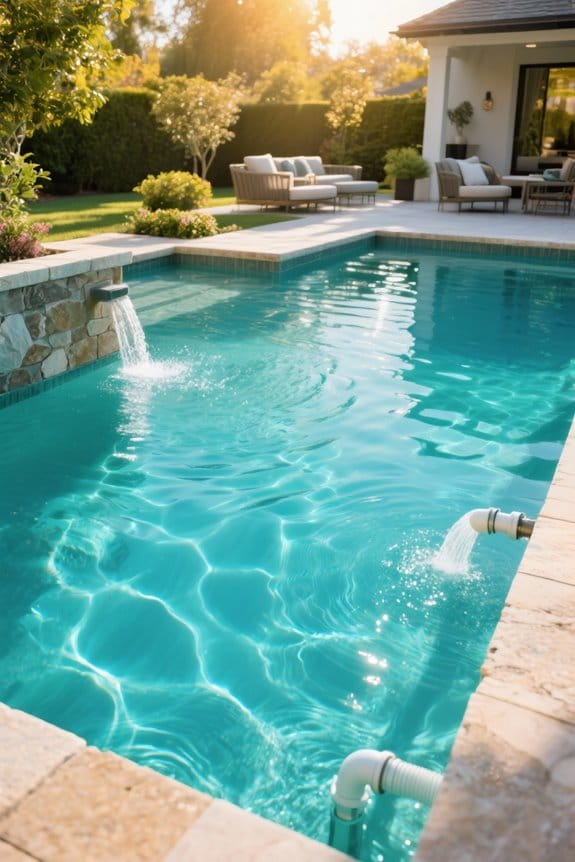
Why Water Circulation Matters for Clean Pools

Guarantee your pool pump runs at least 8 hours daily to maintain a turnover rate of 3–4 times per day, preventing stagnant zones that promote algae growth. Regularly clean skimmer baskets and maintain filters to support effective debris removal. Position return jets strategically to create circular flow, distributing chemicals evenly and avoiding cloudy water. Monitor pump pressure and flow rates to catch issues early. Address these steps to sustain clarity and safety; further guidance on optimizing circulation follows.
Key Takeaways
- Water circulation prevents stagnant zones that promote bacteria and algae growth in pools.
- It ensures even distribution of chemicals, maintaining balanced water conditions and preventing buildup.
- Proper circulation filters up to 98% of pool water by turning it over three to four times daily.
- Circulation enhances water clarity by enabling efficient debris removal through filters and skimmers.
- Continuous water movement helps maintain consistent temperature and reduces strain on pool pumps.
How Water Circulation Maintains Pool Cleanliness
You may be interested

Although maintaining a clean pool may seem straightforward, ensuring effective water circulation requires deliberate actions. Establish proper pool circulation by positioning return jets strategically to create circular water flows, eliminating stagnant zones that harbor bacteria. Maintain a turnover rate of three to four times daily, filtering up to 98% of pool water regularly, to keep water clean and healthy. Monitor chemical use closely; proper circulation promotes even distribution, preventing algae growth and chemical buildup. Regular maintenance is critical—clean filters and skim surface debris consistently to sustain ideal flow and equipment longevity. Inspect pumps and valves frequently for blockages or malfunctions. Act promptly to address uneven water flows or reduced filtration, as these issues compromise debris removal and chemical efficiency. Follow these procedures diligently for effective preventing algae and maintaining pristine pool water. Using quality aluminum pool poles can greatly improve debris removal and overall pool cleaning efficiency.
Recommended Products

Adjustable 3/4" diameter aluminum pole with skimmer length from 1.3 ft to 5 ft, Integrated the aluminum pole with skimmer,removing leaves, bugs, sticks, and other garden debris from the surface of your pool

CONNECT ATTACHMENTS -Most pool maintenance accessories like nets, skimmers, rakes, brushes and vacuum heads.Spend more time swimming and less time cleaning

TELESCOPIC POOL POLE - This pool cleaning pole is designed with a three-stage locking mechanism that allows you to easily adjust the length of the pole from 3.4 feet to 15 feet. Whether you have a ground or above-ground swimming pool, this pole is perfect for providing you with the extra range you need to clean your pool effectively.
Key Components in Pool Water Circulation
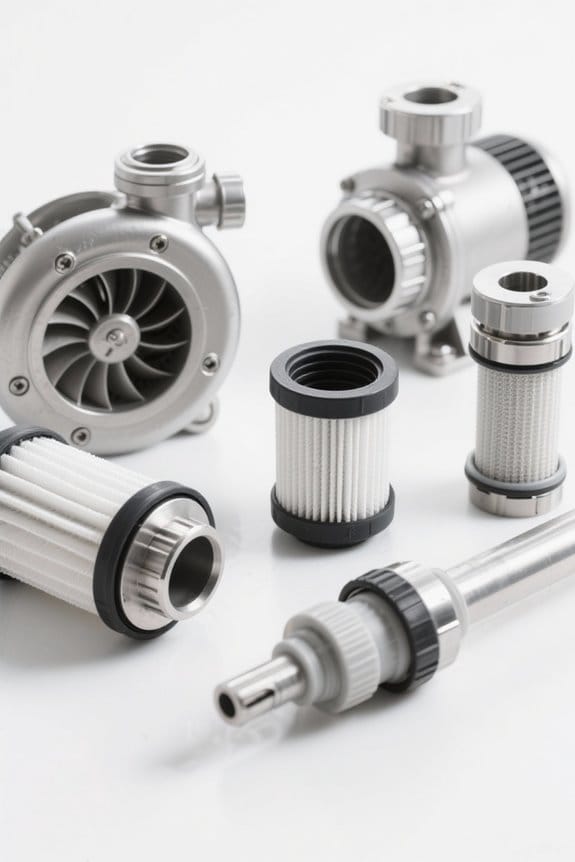
Several essential components work in unison to guarantee efficient pool water circulation. Begin with the pump; select a variable-speed model to optimize energy use and maintain continuous circulation at lower speeds. Next, make certain the filter is clean and functioning correctly, as it traps debris and contaminants, preserving water quality. Regularly check the skimmer, clearing surface debris before it sinks, to prevent buildup. Position return jets strategically, angling them to promote proper flow throughout the pool, avoiding stagnant areas prone to algae. Inspect each component for clogs or damage, and maintain recommended flow rates specified by manufacturers. Follow these guidelines precisely to sustain clean, clear water while maximizing the circulation system’s effectiveness. Maintaining these parts guarantees debris removal and contaminant control crucial for a healthy swimming environment. Additionally, choosing a pump with a permanent magnet motor can enhance efficiency and reduce energy costs over time.
Recommended Products

【Smart Variable Speed Pump】: Smart Life APP control, easy to set work schedule, speed (RPM), flow (GPM), independent 'Quick Clean' mode, quick mode switching.
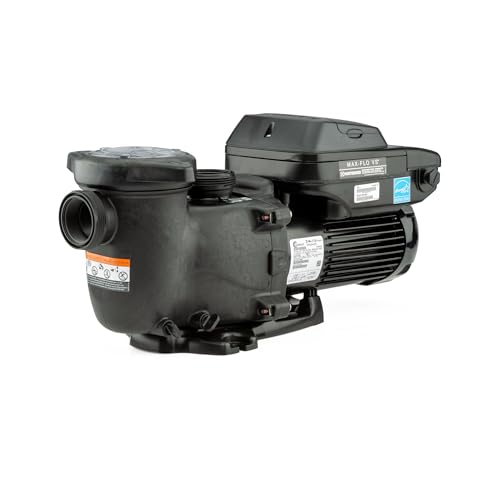
The Hayward MaxFlo VS Variable-Speed 1.65 HP, 230V Pool Pump is the most efficient pump of its kind, according to EPA ENERGY STAR third-party testing, and maybe eligible for local utility rebates

Genuine O.E.M. Product: Authentic Pentair replacement part ensuring quality and reliability
Consequences of Inadequate Circulation
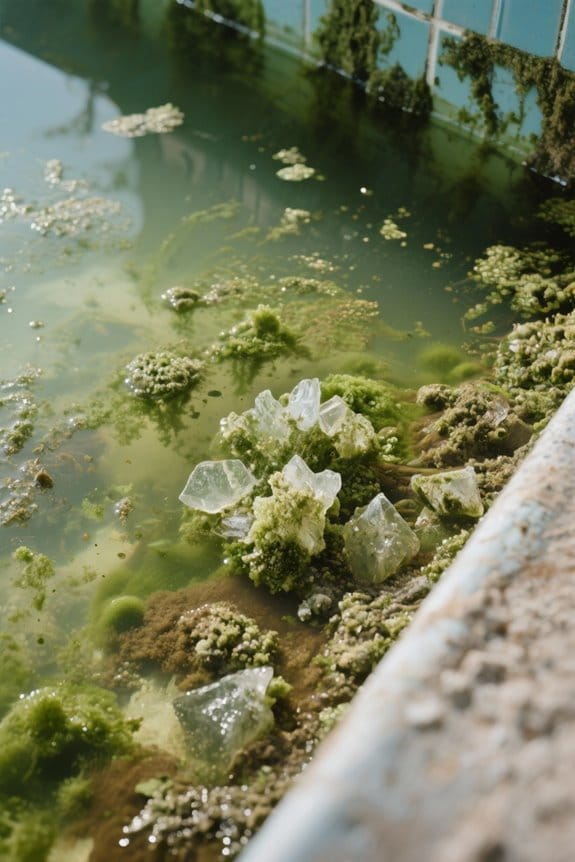
Many pools suffer from inadequate water circulation, which demands immediate attention to prevent serious consequences. Address stagnant water by ensuring pump flow rates meet manufacturer specs, targeting 300 gallons per minute minimum for standard pools. Monitor and eliminate algae growth in corners and steps through regular circulation checks. Prevent chemical imbalances by evaluating the even distribution of disinfectants, adjusting returns and skimmers to avoid dead zones. Observe cloudy water conditions as indicators of circulation failure; use turbidity meters for quantitative assessment. Manage temperature inconsistencies by balancing inlet and outlet flows, maintaining uniform thermal profiles. Inspect pump strain signs such as unusual noise or pressure drops, and schedule timely filter backwashes to reduce maintenance costs. Resolve circulation deficiencies promptly to maintain water clarity, comfort, and equipment longevity essential for a clean, safe pool environment. Using high-quality pool vacuum filter bags can also enhance debris removal and support effective water circulation.
Recommended Products

【Perfect Fit】This x-treme filter bag is perfectly compatible with Pool Blaster Max, Max CG, Catfish Ultra, iVac 250, iVAC C2 and compatible with Water Tech Volt FX-4 Pool Vacuum

Replacement Xtreme Multilayer Filter Bag for Pool Vacuums (part number P30X022XF / PBW022XF)

🌊 4PCS Fine Mesh Pool Vacuum Bags (24x18in / 60x45cm) Each pack includes 4 high-capacity nylon pool vacuum bag replacements with drawstrings. Compatible with most spa and pool leaf vacuum cleaners—great for keeping your pool crystal clear.
Identifying Problems in Your Pool’s Circulation System
Listen closely for signs that your pool’s circulation system is underperforming, starting with persistent cloudy water despite proper chemical levels. Inspect for algae growth in corners or stagnant areas, indicating poor circulation that fails to move water effectively. Check skimmers and drains for debris accumulation, which may suggest a clogged or malfunctioning filtration system. Measure temperature unevenness throughout the pool; large variations indicate inadequate water movement. Monitor chemical balance regularly—frequent imbalances can signal circulation issues requiring immediate attention to the pool pump and filtration system. Examine the pump’s pressure gauge and flow rate, watching for anomalies. Address these problems promptly to maintain water circulation critical for a clean pool, preventing costly maintenance and ensuring consistent filtration and chemical distribution. Using a heavy-duty backwash hose can aid in effectively cleaning your filtration system to improve circulation performance.
Recommended Products

【Universal Standard Size】The length of pool backwash hose is 30FT (9.2 Meters), and the inner diameter is 2IN. The pool drain hose is universally suitable for PVC pipe 2 inch or smaller. Please store in a dry place out of direct sunlight.

【Hassle-free Storage】: Our water discharge hose comes with a connector for easy pump connection and storage.

⛳ Industrial Grade Pool Hose - High pressure resistance, weather and chemical resistant, aging resistant, wear resistant, ideal for water transfer. Essential pool supplies as pool drain hose, pool pump hose, pool filter waste hose.
Techniques to Improve Water Flow and Filtration
Although maintaining your pool’s circulation system can feel demanding, consistently running the pump for at least 8 hours daily guarantees ideal water flow and improved filtration efficiency. Position return jets to create a circular water flow, which evenly distributes chemicals and prevents stagnant areas. Regularly clean skimmer and filter baskets to avoid clogs that disrupt proper pumps and filters function. Use energy-efficient pumps, such as variable-speed models, to optimize circulation keeps while reducing wear and maintaining a clean pool. Brush corners and steps prone to poor circulation to enhance water flow further. Understand the importance of these techniques for effective circulation, reducing chemical use, and maintaining clear water. Following these precise steps guarantees a properly filtered, inviting pool environment. Choosing a pump with dual-speed efficiency can significantly lower energy costs during routine circulation compared to single-speed models.
Recommended Products

Powerful Performance: Our smart variable speed pool pump allows you to customize speeds from 1200 RPM(3566GPH) to 4000 RPM(10566GPH), ensuring efficient operation for pools of all sizes, offering precise control over your pool's circulation system.

【Efficient Daily Circulation for Residential Pools】This variable speed pool pump delivers smooth, consistent water flow for small to medium residential pools. Designed for everyday filtration and circulation, it helps maintain cleaner, clearer pool water with energy-efficient performance.

Energy-Saving Design: Utilizing variable speed technology, our pump reduces energy consumption by up to 80% compared to traditional pumps, providing significant long-term savings while maintaining optimal pool performance.
Energy and Cost Benefits of Efficient Pool Circulation
Focus on integrating a variable-speed pump to maximize energy efficiency, reducing electricity use by up to 80% compared to single-speed models. Optimize your circulation system by maintaining the proper turnover rate of three to four times daily, which limits energy consumption and lowers operational costs. Guarantee your pump and filter receive regular maintenance to prevent premature wear, minimizing maintenance costs. Prioritize efficient pool circulation to enhance water clarity, reducing the need for frequent chemical treatments and conserving chemicals long-term. Monitor chemical use closely, adjusting treatments as water quality improves through better circulation. Check for system blockages or leaks that disrupt flow, as these issues increase energy demands. By systematically managing these areas, pool owners can realize significant savings on electrical bills and chemical expenses, while sustaining clean and clear water effectively. Using a multiport valve such as the Hayward SP0714T VariFlo enhances water flow control and filtration efficiency, contributing to overall system performance.
Frequently Asked Questions
Why Is the Water Circulation Important?
The importance factors of water circulation include optimizing water flow through filtration systems, preventing bacteria growth and algae, maintaining chemical balance, enhancing water clarity, enabling temperature control, supporting spa integration, and ensuring effective pool maintenance overall.
What Causes Poor Water Circulation in a Pool?
Clouds of debris swirl in stagnant corners where blocked skimmers, dirty filters, pump malfunctions, and improper placement hinder flow. Low water levels, chemical imbalance, tank overflow, outdated equipment, poor pool design, and debris accumulation collectively cause poor circulation.
What Are the Three C’s of Pool Cleaning?
The three C’s of pool cleaning are circulation, chemistry, and cleaning. These pool cleaning techniques involve effective maintenance through chemical balance, skimmer usage, filter efficiency, debris removal, water testing, seasonal care, pool sanitation, and algae prevention measures.
How Often Should Pool Water Be Circulated?
Like clockwork in the Industrial Revolution, pool water should circulate three to four times daily. Proper circulation frequency guarantees ideal pool pump efficiency, water turnover, chemical balance, filtration system function, skimmer operation, debris removal, and manageable energy consumption during seasonal maintenance.