As an Amazon Associate, we earn from qualifying purchases. Some links on this site are affiliate links at no extra cost to you. Our recommendations are based on thorough research and editorial judgment.

What Causes Pool Water Discoloration?

Test pool water regularly for metals like iron (<0.1 ppm) and manganese, maintain pH between 7.2 and 7.6, and control chlorine levels around 1-3 ppm to prevent oxidation and discoloration. Inspect filters, clean or replace media as needed, and vacuum debris promptly to avoid organic staining. Address algae growth by sustaining chlorine above 3 ppm and using algaecides for persistent cases. Monitor water age and TDS, replenishing water partially when stale. Further guidance covers optimized maintenance tactics ahead.
Key Takeaways
- High levels of metals like iron and manganese cause brown, rust, or black discoloration in pool water through oxidation and staining.
- Algae growth, especially mustard algae, can turn pool water brown or murky if chlorine levels are insufficient.
- Accumulated organic debris, leaves, and soil decompose and discolor pool water without regular removal and chlorination.
- Imbalanced pH and faulty filter systems reduce chlorine efficacy, allowing contaminants and algae to cause discoloration.
- Old, stale water with high total dissolved solids (TDS) loses clarity and may require partial draining and refilling.
High Iron Content in Pool Water
You may be interested
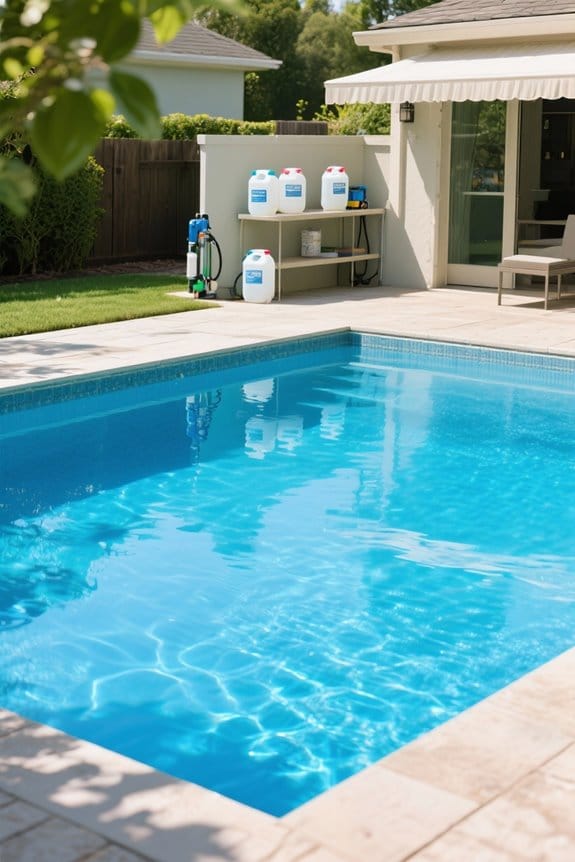
High iron content in pool water often originates from well water, corroded plumbing, or deteriorating pool components, causing unpleasant discoloration. Test water for high iron levels using a reliable pool test kit, especially after heavy use or rainfall. Monitor pH levels closely; maintain between 7.2 and 7.6 to prevent exacerbating iron oxidation. Add chlorine carefully, understanding it oxidizes iron, turning water brown or rust-colored. Remove oxidized iron by using products like Mega Maintain or CuLator Ultra 4.0, following label dosages precisely. Regularly clean filters to eliminate iron deposits and reduce organic contaminants that bind with iron, worsening discoloration. Test water weekly, adjusting chemical levels promptly to avoid surface stains. When brown water appears, backwash the filter, vacuum the pool, and shock treat to restore clarity effectively. Maintaining proper cyanuric acid levels with a chlorine stabilizer can help optimize chlorine efficiency and reduce chemical consumption.
Recommended Products

STAIN + SCALE CONTROL: Spa stain and scale control for hot tub and pool routines. Helps manage metal-related staining, mineral residue, and dull-looking water for a cleaner, more polished appearance.

Revolutionary Formula: Say goodbye to stubborn iron stains effortlessly with BioGuard Erase Iron Stain Remover. Specially formulated to combat iron stains with ease, Erase Iron Stain Remover restores surfaces to their original luster, without causing damage to the surface.

FAST EASY and SAFE USE--Naturally remove stains from pool linings and underwater surfaces without scrubbing. Completely safe for your pool, produced from citrus by-products. Works on fiberglass and vinyl pool surfaces.
Effects of High Manganese Levels
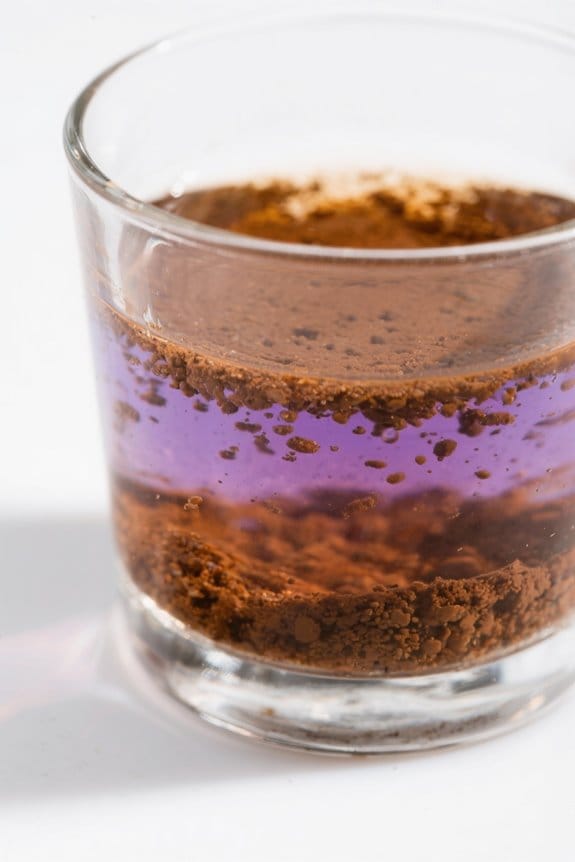
Manganese often enters pool water through well sources or aging pipes, similarly to iron, requiring close attention during water management. Test manganese levels regularly using a reliable water test kit, especially if well water is your source or you notice unusual water discoloration. High manganese levels cause brownish or black tint and can stain pool surfaces when chlorine reacts with manganese. To prevent staining and maintain clarity, dose metal sequestrants like CuLator Ultra 4.0 according to label instructions. Monitor total dissolved solids (TDS) concurrently, as elevated TDS complicates manganese control. Remove organic contaminants promptly to reduce manganese’s impact on water discoloration. Maintain consistent water balance and filtration, perform weekly manganese testing, and adjust chemical treatments accordingly to avoid persistent discoloration and staining issues. Using a pool vacuum with dual filtration can help manage particulate matter that exacerbates discoloration.
Role of Oxidation in Water Discoloration

Oxidation plays a critical role in pool water discoloration, especially when metals like iron, copper, and manganese dissolve under low pH conditions. Test metal levels frequently with a reliable metal test kit, aiming for iron below 0.1 ppm and copper under 0.2 ppm. Maintain pH between 7.2 and 7.6 to slow oxidation; use a pH meter or test strips for accuracy. If water turns brown or rust-colored, suspect oxidized iron and shock the pool with chlorine carefully, avoiding overdose that worsens discoloration. Use metal sequestrants to bind dissolved metals, preventing their oxidation and deposition on surfaces. Monitor sanitizer levels to guarantee effective oxidation control. Regularly clean filters and backwash to remove oxidized particles. Addressing oxidation promptly restores clarity and prevents staining issues caused by elevated metal levels. Additionally, keeping proper circulation by running the pump for 6-8 hours post-treatment helps distribute chemicals evenly and enhances oxidation control, as emphasized in application procedures.
Algae Growth and Its Impact on Water Color
Shift attention to biological causes when discoloration persists despite controlling metal oxidation. Inspect for algae growth, particularly mustard algae, which causes brown water and resists standard chlorine doses. Test chlorine levels, maintain concentrations above 3 ppm, and shock the pool using 1–3 pounds of chlorine per 10,000 gallons to eliminate algae effectively. Vacuum the pool thoroughly to remove dead algae particles that contribute to murky water. Use EPA-approved algaecides following manufacturer instructions, targeting persistent mustard algae with specialized formulations. Monitor water chemistry daily, adjusting pH within 7.2–7.6 to optimize sanitizers’ efficiency. Prevent recurring algae growth by maintaining proper filtration and circulation, running the pump 8–12 hours daily. Remember, neglecting these steps promotes algae proliferation, increasing chlorine demand and risking surface staining. Consistent, detailed maintenance is essential to restore and maintain clear, algae-free pool water. Additionally, using a pool vacuum with effective brush design can help remove algae more thoroughly from pool surfaces.
Recommended Products

POWERFUL MUSTARD & YELLOW ALGAE KILLER - Targets stubborn yellow and mustard algae blooms fast. Yellow Treat dissolves directly in pool water and works quickly to restore clarity without harsh side effects. Just 5 ounces treats 10,000 gallons.

Compatible with pools operating a chlorine generator

Pool Algae Treatment: Our Pool Algaecide and Clarifier is specially formulated to treat existing algae while providing long-lasting defense against stubborn growth, ensuring that your pool remains clear and algae-free for an extended period of time.
Influence of Debris and Organic Material
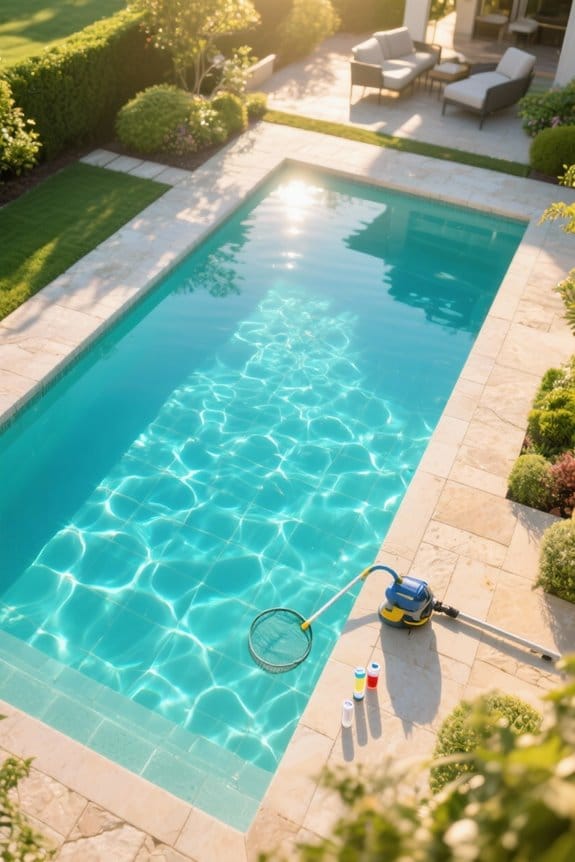
A significant contributor to pool water discoloration is the accumulation of debris and organic material. Regularly remove leaves, soil, and other organic debris using a skimmer net, then vacuum the pool floor with an automatic or manual pool vacuum to prevent decomposition. Decomposing organic matter releases contaminants that alter pH levels and reduce chlorine effectiveness, so maintain chlorine levels between 1-3 ppm to oxidize these substances efficiently. Test water chemistry daily, adjust pH to 7.2-7.6, and shock the pool weekly during heavier debris loads. Failure to remove organic material quickly fosters algae growth, worsening discoloration. Target debris removal before it sinks and decomposes to avoid a brown tint associated with high organic content. Use a pool brush to dislodge stubborn debris from surfaces, ensuring thorough cleanup and maintaining ideal water clarity consistently. Utilizing a pool cleaning kit with pole can significantly improve the efficiency of debris removal from difficult-to-reach areas.
Consequences of High Total Dissolved Solids
Monitor Total Dissolved Solids (TDS) levels regularly using a reliable TDS meter or test kit, making sure values stay below 1500 ppm to maintain water clarity and chemical balance. High TDS indicates excess minerals, salts, and organic compounds, which reduce water clarity and cause discoloration. Test your pool weekly, document readings, and adjust treatment protocols accordingly. When TDS surpass 1500 ppm, expect murky water and diminished chemical effectiveness. Address elevated TDS by partially draining and refilling the pool with fresh water, diluting mineral concentration. Avoid neglecting this step, as persistent high TDS promotes surface staining and impairs water clarity. Consistent monitoring paired with periodic water replacement sustains ideal pool conditions. For outdoor areas, consider using waterproof shade sails to protect pool surfaces from debris and excessive sunlight, which can contribute to water quality issues. Follow these procedures diligently to safeguard water quality and make certain your pool remains clear and visually appealing.
Impact of Low Chlorine Levels on Water Clarity
Because chlorine plays a critical role in controlling organic contaminants, test chlorine levels at least twice weekly using a digital chlorine meter or DPD test kit. Maintain free chlorine within 1-3 ppm to guarantee effective sanitation and preserve water clarity. Low chlorine levels below 1 ppm encourage algae growth and bacterial buildup, which cause cloudiness and discoloration. Monitor results carefully, and adjust chlorine dosing immediately if readings fall below the recommended range. Remember, insufficient chlorine also impairs the oxidation of metals, allowing them to remain suspended, further reducing water clarity. Regularly shock the pool to eliminate organic matter, and clean filters to remove debris that may trap contaminants. Consistent chlorine management prevents cloudy, discolored water, creating a safer and more visually appealing swimming environment. Using pool filter socks can help trap fine debris and reduce clogging in filters, enhancing overall water clarity maintenance.
How Incorrect Ph Levels Affect Pool Water
Shift attention to maintaining pH levels between 7.2 and 7.6, using a digital pH meter or accurate test strips twice weekly. Test water chemistry consistently, verifying pH and chlorine remain balanced for optimal disinfection. If pH falls below 7.2, chlorine effectiveness drops, allowing bacteria and contaminants to discolor pool water. Conversely, pH above 7.6 reduces chlorine activity, promoting algae growth and murkiness. Adjust pH using approved increasers or decreasers, measuring changes carefully to avoid overshooting. Monitor metals like copper and iron, as improper pH increases their solubility, causing brown or green stains. Keep records of test results, calibrate testing devices regularly, and respond promptly to deviations. Following these steps maintains clear, safe water, prevents staining, and guarantees chemical comfort. Proper water chemistry management prevents discoloration and extends pool usability. Additionally, using stabilized chlorine tablets can help maintain consistent chlorine levels and prevent algae growth.
Problems Caused by a Faulty Filter System
A properly functioning filter system serves as the backbone of pool water clarity. Inspect the filter elements regularly, and clean or backwash as needed to remove organic debris and prevent clogging. Replace damaged filter media promptly, as compromised components allow contaminants to bypass filtration, causing discoloration. Monitor water flow rates to guarantee efficient circulation; sluggish movement often signals a filter blockage or buildup of total dissolved solids (TDS). Flush the system thoroughly when TDS levels climb, restoring efficacy. Neglecting these tasks results in brown or murky water due to trapped particles and stagnant conditions. Maintain a consistent schedule for filter system upkeep, prioritizing debris removal and component integrity. This focused approach minimizes discoloration risks, preserving water clarity through dependable filtration performance. Additionally, ensuring the maintenance of key components such as the turbine and rebuild kits within your pool cleaner can further enhance water cleanliness and system efficiency.
Recommended Products

Efficient and Low Loss: Made from polyester fiber, our filter balls are reusable. They can be used as a replacement for filter cartridges in swimming pool filtration systems, offering exceptional filtration efficiency. They effectively adsorb suspended particles, sediments, and impurities in the pool. With excellent permeability, water can flow through the filter balls swiftly without causing clogging. This allows for faster water circulation and purification

2026 New Upgraded Cost-Effective: These pool filter media balls can efficiently replace traditional swimming pool filter sand. It is lighter, more eco-friendly, and more effective. What's more, filter balls won't clog your filter, high-quality fiber filter balls can extend the life of your sand filter pump for above ground pool. 4 pounds of filter balls are equivalent to 150 pounds of filter sand, which can meet your needs and replacement, provide a nice pool experience for you

【New Eco-Friendly Pool Filter Ball】These fiber filter balls can perfectly replace the traditional pool filter sand, it is lighter, more environmentally friendly, and more effective than traditional sand filters. Moreover, they won't clog your filters, high-quality filter balls extend the service life of the filter. 3.1 lbs filter ball is equivalent to 100 lbs of filter sand, which can meet your needs and replacement.
Issues Arising From Old, Stale Pool Water
Maintain awareness of water freshness by recording fill dates and scheduling partial drains, replacing 10-20% weekly to manage contaminant buildup. Inspect pool water regularly to identify early discoloration caused by organic debris, such as leaves and soil, which decompose and contribute to causes of brown pool water. Test total dissolved solids (TDS) levels with a TDS meter and replace water when readings rise above recommended thresholds, as high TDS accelerates murkiness. Verify chlorine levels remain adequate, since stale water reduces sanitizer effectiveness, encouraging algae growth that worsens discoloration. Use a submersible pump and garden hose for controlled draining; refill with fresh water and balance chemicals post-replacement. Maintain this routine to prevent prolonged stagnation, protect water clarity, and reduce organic debris accumulation that leads to unsightly pool water discoloration. Additionally, installing a floating pool fountain can help improve water aeration and circulation, reducing stagnation and preventing discoloration.
Frequently Asked Questions
How to Get Rid of Discoloration in a Pool?
To get rid of discoloration in a pool, one should apply maintenance tips such as testing for metals and pH, using metal sequestrants, shocking with chlorine, cleaning filters regularly, and maintaining proper chemical balance to address discoloration causes effectively.
What Color Is Pool Water With Too Much Chlorine?
When chlorine levels exceed the ideal 1-3 ppm range, pool water often appears greenish or murky due to poor water balance. This coloration results from chloramine formation and reactions with organic matter, affecting clarity and hue.
How to Tell if It’s Dirt or Algae in the Pool?
Algae identification involves observing greenish tint, slimy surfaces, or floating particles. Pool testing of chlorine levels aids distinction, as algae thrive in low chlorine, while dirt typically settles and doesn’t impact sanitation or cause sliminess.
Will Shock Remove Pool Stains?
Bright bursts of chlorine racing through water highlight shock effectiveness; while organic stains fade, stubborn metal stains linger like shadows. Shock alone may clear discoloration, but metal stains often demand sequestrants alongside for complete removal.