As an Amazon Associate, we earn from qualifying purchases. Some links on this site are affiliate links at no extra cost to you. Our recommendations are based on thorough research and editorial judgment.

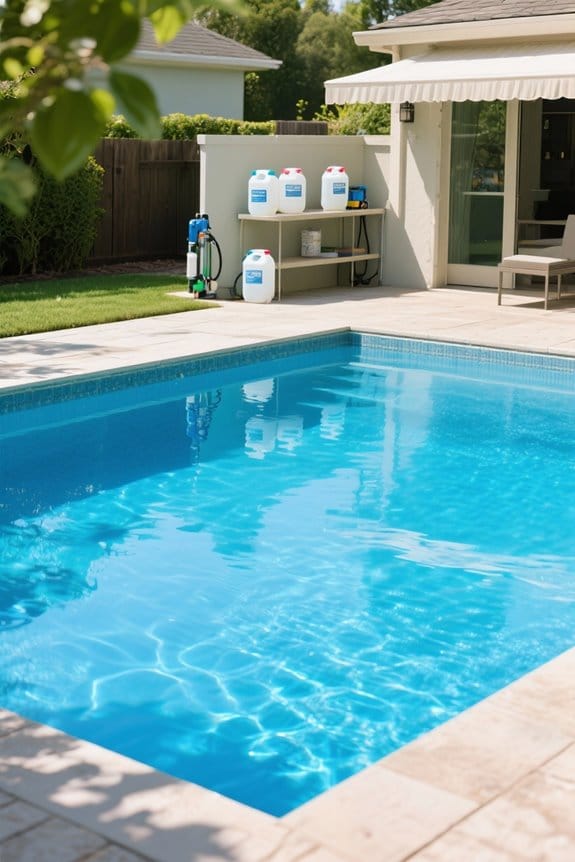
Safe Chlorine Handling Tips for Homeowners

Handle chlorine with chemical-resistant polyethylene gloves and safety goggles, ensuring proper ventilation with at least six air exchanges per hour. Store containers in cool, dry, well-ventilated areas, away from acids and ammonia. Inspect storage regularly for leaks and corrosion. Avoid mixing chlorine with other chemicals, use designated containers, and clean spills promptly using appropriate disposal methods. Train household members on hazard recognition and maintain emergency equipment nearby. Following these precise steps minimizes risk and prepares homeowners for safe chlorine use at home. Additional guidance enhances safety protocols and emergency readiness.
Key Takeaways
- Always wear chemical-resistant gloves and safety goggles when handling chlorine to protect skin and eyes from irritation and burns.
- Store chlorine in a cool, dry, well-ventilated area away from sunlight, acids, and ammonia to prevent dangerous reactions.
- Avoid mixing chlorine with other chemicals, especially acids or ammonia, to prevent releasing toxic fumes.
- Ensure proper ventilation during use to reduce inhalation risks and immediately exit if you detect strong odors or respiratory symptoms.
- Educate all household members on chlorine hazards, safe storage practices, and emergency response procedures for exposure or spills.
Why Chlorine Safety Is Essential for Homeowners
You may be interested



A diligent approach to chlorine safety is essential for homeowners managing pools or water treatment systems. Handle chlorine gas with extreme caution, since exposure to concentrations above 1000 ppm can be fatal. Always wear appropriate protective gear, including chemical-resistant gloves and safety goggles, before accessing chlorine storage or application sites. Store chlorine containers in a cool, well-ventilated area, away from direct sunlight and incompatible substances. Educate all household members about chlorine hazards, emphasizing the dangers of inhaling chlorine gas and direct skin contact. Regularly inspect equipment for leaks or damage that could release harmful chlorine gas. Keep children and pets away from chlorine storage zones. In emergencies involving chlorine gas release, evacuate immediately and contact emergency services. These stringent safety measures minimize risks and guarantee a secure environment when using chlorine at home. It is also important to store tablets dry and sealed in an airtight container to prevent moisture intrusion and maintain their effectiveness.
Identifying Common Chlorine Hazards
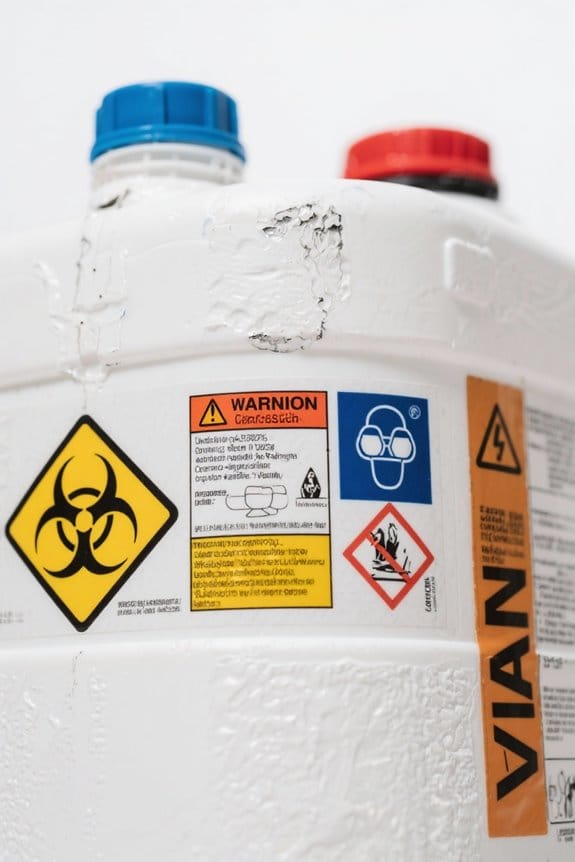
How can one accurately identify common chlorine hazards to guarantee safety? First, recognize that chlorine exposure can cause skin and eye irritation, marked by burning and redness, so inspect for direct contact or residue. Note any respiratory symptoms like coughing or difficulty breathing, which indicate chlorine gas inhalation, especially at levels exceeding the permissible exposure level (PEL) of 0.5 ppm. Avoid mixing chlorine with acids or ammonia, as this produces toxic gases. Monitor for fumes or strong odors, signaling hazardous conditions. Be aware that improper storage or spills can increase risk, given chlorine’s toxicity and the 13 million tons produced annually in the U.S. Stay alert to these indicators, act promptly to contain exposure, and maintain proper ventilation to mitigate inhalation hazards effectively. Proper use of protective gloves and goggles is essential when handling chlorine to prevent skin and eye damage.
Selecting Appropriate Protective Equipment

Several key pieces of personal protective equipment (PPE) must be selected to guarantee safe chlorine handling. Always wear chemical-resistant gloves, preferably made of polyethylene, to protect your skin from irritation and burns. Don safety goggles or a face shield to shield your eyes from splashes and fumes. Use a respirator or mask when working in poorly ventilated spaces to avoid inhaling chlorine gas. Verify all protective gear fits snugly and is specifically rated for chlorine exposure. Regularly inspect gloves, goggles, and masks for tears, cracks, or degradation, replacing them immediately if damage appears. Proper selection and maintenance of protective gear drastically reduce the risk of harmful exposure. Prioritize comfort alongside safety to maintain consistent PPE use, making chlorine handling safer and more manageable. Additionally, following manufacturer instructions for chemical handling and storage ensures safe and effective use of chlorine products.
Recommended Products

The waterproof cleaning gloves are made of high-quality premium Material. Reusable and thick rubber gloves can be used for many years.

【Excellent Chemical and Tear Resistance】High-grade natural latex gloves offer superior durability against chemicals and tears, making them ideal as chemical gloves or chemical resistant gloves.

CHEMICAL RESISTANT GLOVES: Durable PVC coating protects against harsh chemicals, adhesives, detergents, and diluted bases and acids, making them ideal chemical gloves
Best Practices for Storing Chlorine Safely
When storing chlorine, make sure the area is cool, dry, and well-ventilated to prevent gas accumulation and hazardous reactions. Confirm safe storage by keeping chlorine away from acids, ammonia, and incompatible chemicals, as these can cause toxic gases. Store chlorine in its original container with a tightly sealed lid to minimize spills and moisture exposure. Elevate containers on sturdy shelves at least 12 inches above the ground and consider using chemical-resistant cabinets for extra protection. Conduct regular inspections of the storage area, checking for leaks, corrosion, or temperature fluctuations that could compromise safety. Label storage locations clearly and maintain an organized setup to facilitate quick access and hazard identification. Follow these detailed protocols to maintain a secure environment and uphold effective safe storage practices for chlorine. Additionally, using a cyanuric acid stabilizer can enhance chlorine effectiveness and reduce chemical usage, contributing to safer pool maintenance.
Recommended Products

AMPLE STORAGE SPACE: Safely store cleaning and gardening supplies, pool towels and more

Storage Capacity--The size of outdoor cabinets for patio is 34.3"L*15"W*36.2"H in about 60 gallon storage capacity, suitable space to storage your outdoor tools,shoes,hot tub towels/chemicals/grill and pool items .
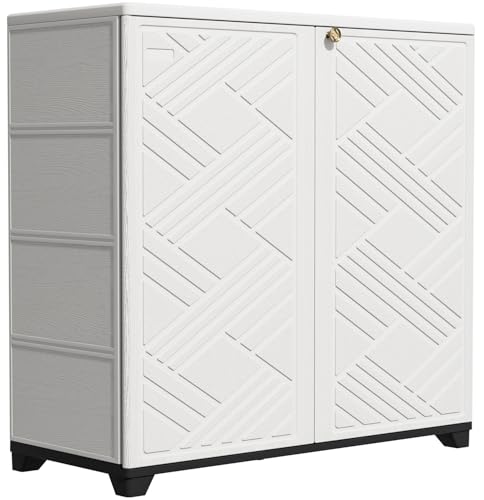
【Size of Outdoor Cabinet】The patio storage cabinet external dimension is 34.3in.W x 15in.D x 33.5in.H,internal dimension is 33.8in.W x 13.5in.D x 30.1in.H,ideal solution for storage small garden tools,furniture cushions,children’s toys,towels and other pool supplies.
Ensuring Proper Ventilation When Using Chlorine
Make certain that the workspace features continuous airflow by installing exhaust fans or air exchange systems rated for chemical vapors. Always use chlorine in a well-ventilated area to prevent toxic gas buildup, especially when handling large quantities or extended exposure. Check that ventilation systems function effectively, enabling constant air exchange to disperse chlorine vapors. Avoid enclosed or poorly ventilated spaces to reduce inhalation risks. In hot or humid environments, increase airflow to counter faster chlorine evaporation. Regularly monitor indoor air quality with gas detectors or anemometers to verify ventilation effectiveness. If chlorine odor intensifies or symptoms like coughing arise, increase airflow immediately or vacate the area. Maintain and inspect ventilation equipment routinely to confirm safe chlorine handling in all circumstances. Additionally, consider using chlorine test strips regularly to ensure pool water safety and balance during chemical handling.
Recommended Products

Powerful Airflow: Delivers strong airflow up to 130 CFM, efficiently enhancing ventilation and removing exhaust; Ideal for grow tents, greenhouses, basements, bathrooms, kitchens, attics, and workshops

Rapid Venting: This shutter exhaust fan delivers 2000 CFM to quickly expel stale air, floating dirt, heat, and smells, keeping indoor air fresh. Also works as a high-airflow exhaust fan for sheds and workshops

Durable Fan Material: Constructed from reinforced and corrosion-resistant metal for long-lasting reliability; The fan has a strong motor which features a permanently lubricated bearing that operates quietly and requires no maintenance
Guidelines for Safe Chlorine Handling and Usage
Begin by equipping yourself with chemical-resistant gloves, goggles, and a full face shield to prevent skin and eye exposure. Store chlorine in a cool, dry, well-ventilated area, away from heat sources and incompatible substances. Use only chemical-resistant containers marked explicitly for chlorine to avoid leaks and corrosion. Handle chlorine slowly, avoiding splashes, and never mix it with other chemicals. Keep a written emergency plan accessible, outlining first aid steps for accidental exposure or spills. Monitor for symptoms like skin irritation or respiratory difficulty; if observed, immediately follow the written emergency procedures and seek medical help. Always dispose of chlorine residues following local hazardous waste regulations. Regularly inspect storage conditions and equipment integrity to prevent accidental release or exposure during use. Additionally, regularly monitor free and combined chlorine levels to maintain safe and effective pool sanitation.
Avoiding Dangerous Chemical Mixing
Although handling chlorine requires careful attention, strict avoidance of mixing it with incompatible chemicals is crucial to prevent hazardous reactions. Always store chlorine separately from acids and ammonia to prevent toxic gases like chlorine gas and chloramines from forming. Use clean, designated scoops and containers exclusively for chlorine to avoid cross-contamination. Before use, meticulously read chemical labels to identify substances that can react dangerously with chlorine. Educate household members, especially older children, about these risks, emphasizing that even minimal mixing can cause severe health issues. When opening containers, ascertain the area is well-ventilated and avoid combining chlorine with any other cleaning agents. Following these steps mitigates risks associated with avoiding dangerous chemical mixing and maintains a safe environment for all household members. Additionally, maintaining proper storage conditions such as using waterproof containers with desiccant liners helps preserve chlorine effectiveness and prevents accidental reactions.
Recognizing Signs of Chlorine Exposure
After preventing hazardous chemical mixing, prioritize identifying symptoms of chlorine exposure promptly. Recognizing signs of chlorine exposure involves monitoring for skin irritation such as burning sensations and redness, and eye discomfort that may impair vision. Inhalation symptoms include coughing and difficulty breathing. Note that low-level exposure around 1 ppm can cause mild symptoms after hours, while concentrations approaching 1000 ppm are life-threatening. If any symptoms emerge, seek medical help immediately, especially with respiratory distress or eye pain. Regularly train household members on recognizing exposure signs and confirm ventilation systems function properly. Use personal protective equipment like gloves and goggles when handling chlorine to reduce risk. Remain vigilant, document any exposure incidents thoroughly, and always prepare to seek medical care swiftly to prevent severe health consequences or complications from chlorine exposure. For sensitive individuals, using non-chlorine pool shocks can help minimize exposure to harsh chlorine chemicals during pool maintenance.
Emergency Preparedness and Response Measures
When working with chlorine, establish and maintain emergency eye wash stations and safety showers within immediate reach, ensuring rapid decontamination following accidental exposure. Regularly inspect all emergency equipment, test water flow, and confirm unobstructed access to prevent delays during urgent situations. Develop a detailed emergency preparedness plan, including clear evacuation routes and communication protocols with local emergency services. Train all personnel to identify chlorine exposure symptoms and to promptly initiate emergency contacts if required. Document emergency procedures thoroughly and conduct routine drills to reinforce readiness, updating plans as necessary based on drill outcomes. Prioritize clear signage to mark emergency equipment locations. Adherence to these emergency preparedness and response measures will minimize risks, reduce exposure severity, and facilitate swift action during chlorine-related incidents, safeguarding all household members effectively. Additionally, always ensure proper ventilation during handling to reduce inhalation risks when working with chlorine.
Recommended Products

Security Certification: This eye wash station complies with OSHA standards and ANSI Z358.1-2014 certification. It features an eyewash flow rate of 9-16L/min and a shower flow rate of 120-180L/min, with water pressure of 0.2-0.4MPa. The 1-1/4 inch NPT inlet and outlet ensure efficient operation. Each unit is third-party rated and inspected, offering reliable quality

【2 in 1 comprehensive unit】A 2 in 1 safety apparatus that combines a high - volume eye wash with a full - body decontamination shower. The dimensions adhere to OSHA requirements and ANSI Z358.1 - 2014 specifications.

EMERGENCY EYE WASH: This kit is helpful for people to get the required eye wash timely during the emergency. Bottle holder securely fastens the bottle to prevent it from falling, while ensuring easy accessibility (you can also insert your own eyewash bottles).Please note: SOLUTION NOT INCLUDED.
Proper Cleanup and Spill Management
Proper cleanup and spill management begin by immediately ventilating the affected area with at least six air exchanges per hour to disperse chlorine gas and reduce inhalation hazards. Next, put on gloves and goggles to protect skin and eyes from irritation. Avoid using water or general cleaning agents, as these can cause hazardous reactions with dry chlorine. Instead, use a broom or scoop designated exclusively for chemical spills to carefully collect and contain the chlorine residue. Dispose of the collected material following product label instructions to prevent contamination. Finally, double-check the area for remaining particles and continue ventilation until no chlorine odor remains. This method guarantees safe, effective cleanup while minimizing risk, adhering strictly to manufacturer guidelines and recommended handling procedures. Additionally, regularly inspect and maintain safety equipment to ensure compliance with safety standards and considerations.
Recommended Products
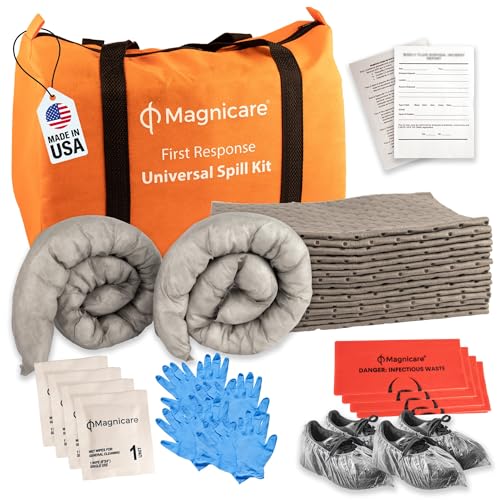
Universal Spill Coverage – Industrial-grade universal absorbent system absorbs oil, water, coolants, solvents, and most non-aggressive fluids; ideal for forklifts, manufacturing floors, loading docks, marine, and more.

Bodily Fluid Clean Up Pack|Use as a BBP Kit refill, addition to first aid kit or cabinet, or use as a stand-alone BBP kit

Oil Spill Kit: Be prepared for daily drips, leaks and accidental spills in your garage, workshop or truck. This universal spill kit absorbs oil, coolant, water and non-aggressive chemicals for fast, safe cleanup
Educating Family Members About Chlorine Safety
Extend safety practices beyond cleanup by educating family members on chlorine hazards and proper handling. Inform everyone about potential symptoms like skin irritation, coughing, or breathing difficulty, stressing immediate medical care if these occur. Require the use of the right equipment, including gloves and goggles, whenever chlorine is handled to prevent contact injuries. Instruct on secure storage practices: keep chlorine in a cool, dry, well-ventilated space, distant from other chemicals and heat sources. Emphasize that mixing chlorine with acids or ammonia is strictly prohibited to avoid toxic gas production. Schedule regular family briefings on correct handling techniques and emergency responses, including spill containment and exposure treatment protocols. Consistent training reinforces safe behaviors, minimizing risks and ensuring preparedness during chlorine-related incidents.
Frequently Asked Questions
What Are the Safety Precautions for Handling Chlorine?
Safety precautions for handling chlorine include wearing protective gear, storing it properly, avoiding mixing with other chemicals, recognizing exposure symptoms, and knowing chlorine first aid protocols to respond promptly to skin irritation, coughing, or respiratory issues.
Is It Safe to Store Chlorine in a House?
Chlorine storage in a house is safe when maintained in a cool, dry, well-ventilated area, away from incompatible chemicals, secured in original containers with tight lids, and kept out of reach of children to prevent accidents and exposure.
How Long Does Chlorine Gas Stay in Your House?
Chlorine gas duration in a house varies from hours to days, depending on ventilation quality. Studies show it can persist up to 48 hours in poorly ventilated spaces, increasing risks and necessitating thorough air circulation and decontamination measures.
What Are the CDC Guidelines for Chlorine?
The CDC guidelines for chlorine emphasize minimizing Chlorine Exposure by using it in well-ventilated, well-lit areas, wearing protective gear, avoiding mixing with other chemicals, and ensuring proper storage to prevent harmful gas accumulation and potential health risks.