As an Amazon Associate, we earn from qualifying purchases. Some links on this site are affiliate links at no extra cost to you. Our recommendations are based on thorough research and editorial judgment.

Eco-Friendly Pool Cleaning Routines

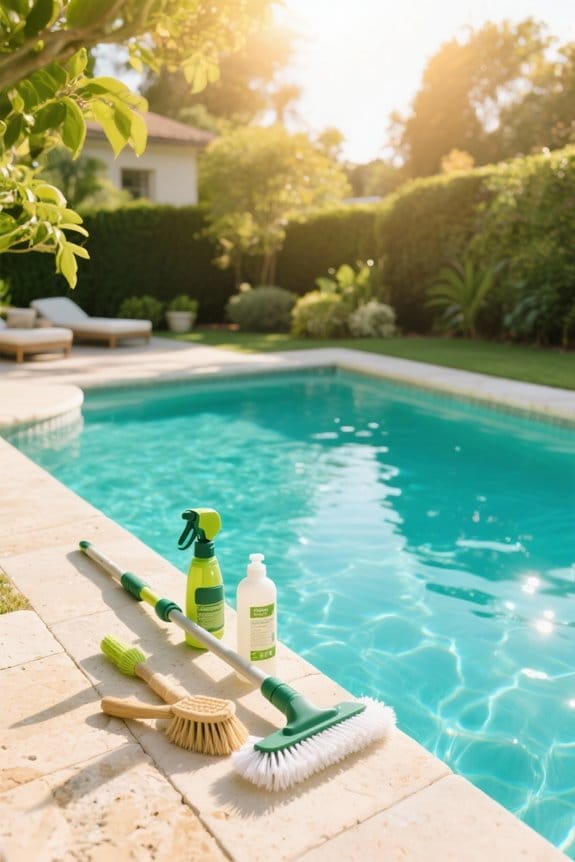
Implement eco-friendly pool cleaning by installing a salt chlorine generator, using enzyme-based clarifiers, and applying biodegradable cleaners. Select variable speed pumps, LED lights, and energy-efficient heaters for reduced consumption. Schedule robotic cleaner runs during off-peak hours and maintain water chemistry weekly using pH and alkalinity tests. Skim daily, brush walls biweekly, and vacuum manually. Employ tight-fitting covers to minimize evaporation and harvest rainwater for refills. Following these steps guarantees safer water and energy savings; further details allow optimized pool care precision.
Key Takeaways
- Use natural enzymes, mineral-based purifiers, and biodegradable cleaners to minimize chemical exposure and protect ecosystems.
- Employ robotic pool cleaners with smart navigation for efficient, energy-saving cleaning and reduced chemical usage.
- Conduct regular manual cleaning: daily skimming, biweekly brushing, weekly vacuuming, and filter maintenance to prevent algae and debris buildup.
- Maintain balanced water chemistry using salt chlorine generators, enzyme clarifiers, baking soda, and white vinegar for natural pH and stain control.
- Utilize energy-efficient equipment like variable speed pumps, LED lights, and tight-fitting pool covers to conserve water and lower energy consumption.
Benefits of Eco-Friendly Pool Cleaning
You may be interested
Although maintaining a pool can be complex, prioritize using natural enzymes or mineral-based purification systems to reduce chemical exposure for swimmers. Select eco-friendly products to minimize harmful residues, improve water quality, and establish a regular maintenance routine. Employ biodegradable cleaning agents and implement natural cleaning techniques to protect local ecosystems and lower environmental impact. Upgrade to energy-efficient equipment, such as variable speed pumps and robotic pool cleaners, which consume less electricity while enhancing filtration effectiveness. Monitor chemical levels consistently to reduce chemical use and avoid overdosing, maintaining balance without harsh additives. Incorporate sustainable practices by scheduling weekly inspections and cleaning, adjusting equipment settings for seasonal changes. These steps create healthier swimming environments, reduce maintenance costs, and promote long-term pool sustainability. Continually evaluate equipment performance and water clarity to troubleshoot inefficiencies efficiently. Additionally, consider installing an Intex Solar Mat Water Heater to naturally raise your pool’s temperature by 5 to 9 degrees, enhancing comfort without additional energy consumption.
Natural Alternatives to Traditional Chemicals
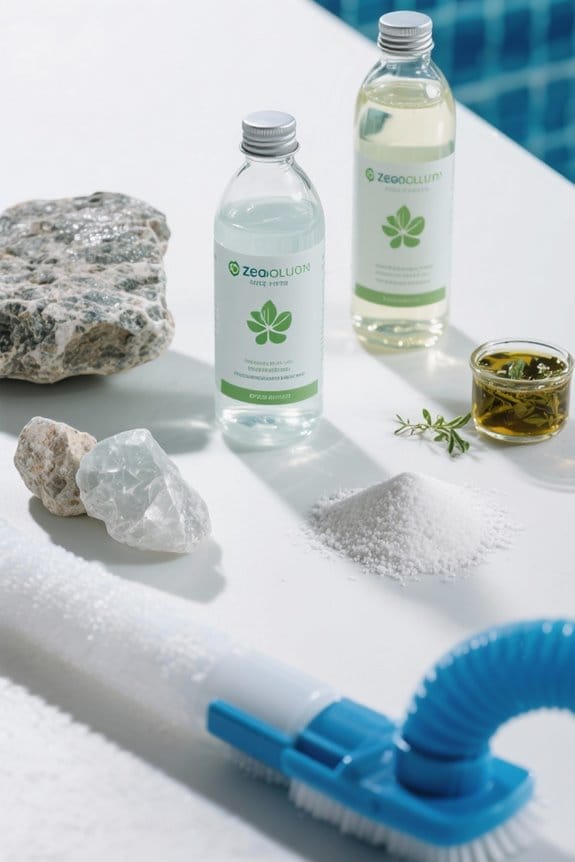
Begin by installing a salt chlorine generator, which converts salt into chlorine naturally, eliminating the need for storing hazardous chemical chlorine. Integrate enzyme-based water clarifiers to break down organic materials, reducing reliance on harsh traditional chemicals. Employ mineral-based purification systems that use copper and silver ions to control bacteria and algae; adjust ion levels regularly according to manufacturer guidelines. Use baking soda to maintain stable pH levels and gently clean pool surfaces without adding chemicals, applying 1.5 pounds per 10,000 gallons weekly. Address calcium buildup and stains on tiles with white vinegar, applying directly and scrubbing carefully to avoid damage. These natural alternatives optimize pool cleaning through eco-friendly methods, minimizing chemical exposure while maintaining water clarity and safety for swimmers. Monitor all treatments frequently, and balance them as needed to guarantee efficient, safe operation. Regularly testing phosphate levels with a LaMotte phosphate kit can help ensure that nutrient levels remain low, preventing algae growth and maintaining water clarity.
Choosing Energy-Efficient Pool Equipment
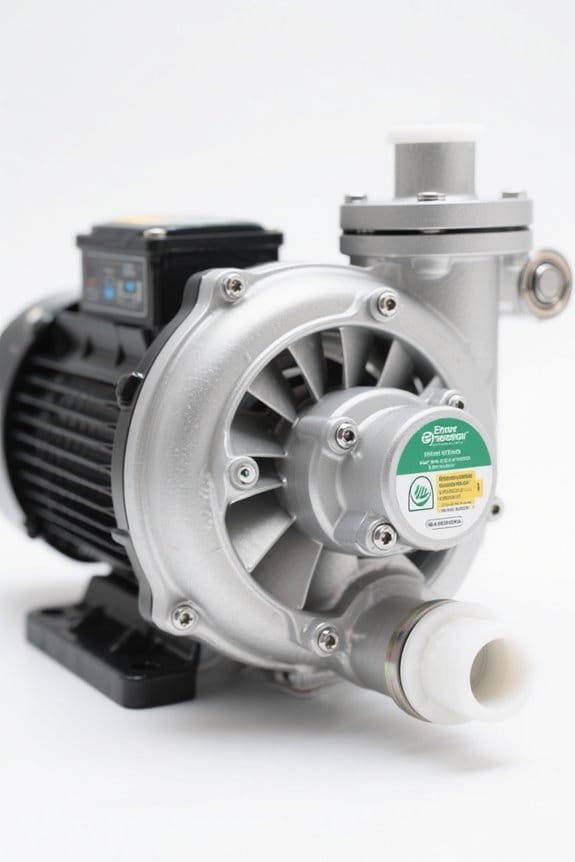
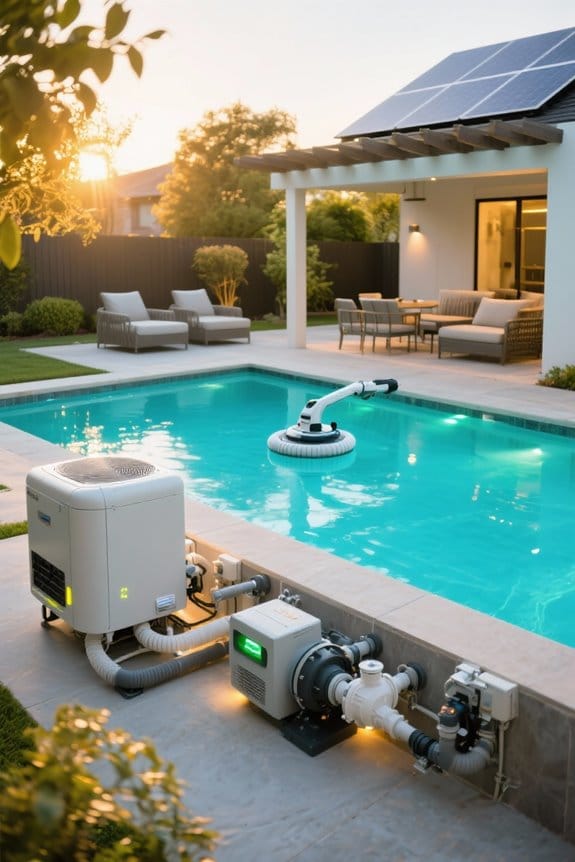
To enhance pool maintenance efficiency, prioritize selecting energy-efficient equipment that reduces power consumption and operating expenses. Install a Variable Speed Pump to cut energy use by over 80% compared to traditional models, markedly lowering electricity costs. Replace incandescent bulbs with LED pool lights, which consume up to 90% less energy, extend lifespan, and improve illumination. Opt for high-efficiency pool heaters to maintain ideal water temperature while minimizing energy consumption. Integrate smart pool controllers to schedule pump and heater operation based on real-time data, ensuring efficient, adaptive energy use. Although robotic pool cleaners operate independently and reduce energy use, save detailed consideration for them in dedicated discussions. Focus on these steps to reduce energy consumption effectively, contributing to sustainable, eco-friendly pool care with measurable cost savings and improved system performance. Choosing pumps with Energy Star certification can also qualify you for utility rebates, further enhancing savings.
Incorporating Robotic Pool Cleaners
Robotic pool cleaners offer an efficient solution to reduce energy consumption while maintaining thorough cleanliness. Select models with advanced technological features, including smart navigation systems, to enhance cleaning routes and minimize electricity usage. Program schedules to run during off-peak hours, ensuring efficient maintenance and energy conservation. Deploy robotic pool cleaners to scrub floors, walls, and waterlines autonomously, reducing chemical usage by preventing debris accumulation that causes water imbalance. Monitor performance regularly and clean filters after each cycle to maintain effectiveness. Use appropriate replacement parts to avoid malfunctions and verify power ratings match your pool size for peak operation. Incorporate these devices as a core component of eco-friendly pool cleaning routines to achieve consistent, thorough cleaning and significant reductions in both electricity and chemical consumption. Look for models that provide a minimum of 150 minutes of runtime to ensure adequate cleaning time for larger pools.
Effective Use of Pool Covers
Select a pool cover suited to your pool’s dimensions and climate conditions, guaranteeing a secure fit that minimizes gaps where debris can enter. Install the cover tightly to reduce evaporation, which conserves water and decreases the need for additional top-offs. Incorporate the pool cover into the maintenance routine by regularly removing leaves and dirt to prevent clogging and prolong its lifespan. Use safety covers where children or pets are present to prevent accidental falls, adding protection without compromising eco-friendly benefits. A proper pool cover helps maintain ideal water temperature, greatly lowering energy costs tied to heating. Choose a budget-friendly option with user-friendly installation features to simplify upkeep. Ascertain the pool cover remains taut and inspect for tears, as damaged covers reduce effectiveness, increasing cleaning time and water waste. Additionally, pairing the cover with winterizing pool chemicals can enhance protection during colder months by preventing waterline scum and algae buildup.
Utilizing UV Pool Systems
Incorporate a UV pool system as a secondary sanitation method to enhance water quality and reduce chemical usage. Install the UV light unit in the pool’s circulation system, ensuring water flows steadily through the chamber for continuous disinfection. Use sensors to monitor UV intensity and replace bulbs annually to maintain effectiveness. Regular use will reduce the need for harsh chemicals, decrease chloramine formation, and improve water clarity. Adjust chemical dosages based on water test results, allowing longer intervals between treatments to maximize cost savings. Embrace this environmentally friendly technology to support sustainable pool care by eliminating up to 99.9% of bacteria and viruses without direct chemical contact. Troubleshoot cloudy water by checking bulb condition and flow rates, sustaining ideal pool water quality with each maintenance cycle. For optimal maintenance, consider investing in maintenance tips for pool vacuums to ensure all cleaning equipment complements the UV system effectively.
Saltwater Chlorination Systems Explained
Install a saltwater chlorination system by first confirming your pool’s salt concentration reaches approximately 3,000 ppm. Add pool-grade salt gradually, then activate the chlorinator, which converts salt into chlorine via electrolysis, reducing the need for traditional chlorine chemicals. Monitor water chemistry weekly using test kits to maintain ideal performance and check salinity levels. Adjust salt content if chlorine output declines or swimmer comfort issues arise. Note that saltwater chlorination systems produce softer water, minimizing skin and eye irritation for a comfortable swimming experience. Expect long-term savings by lowering chemical expenses and maintenance frequency, although regular monitoring remains essential. If chlorine levels drop rapidly, inspect the electrolytic cell for mineral buildup and clean it accordingly to maintain continuous sanitization with minimal manual chemical additions. Regular cleaning and inspection of pool equipment help ensure system efficiency and extend the lifespan of components.
Best Practices for Manual Pool Cleaning
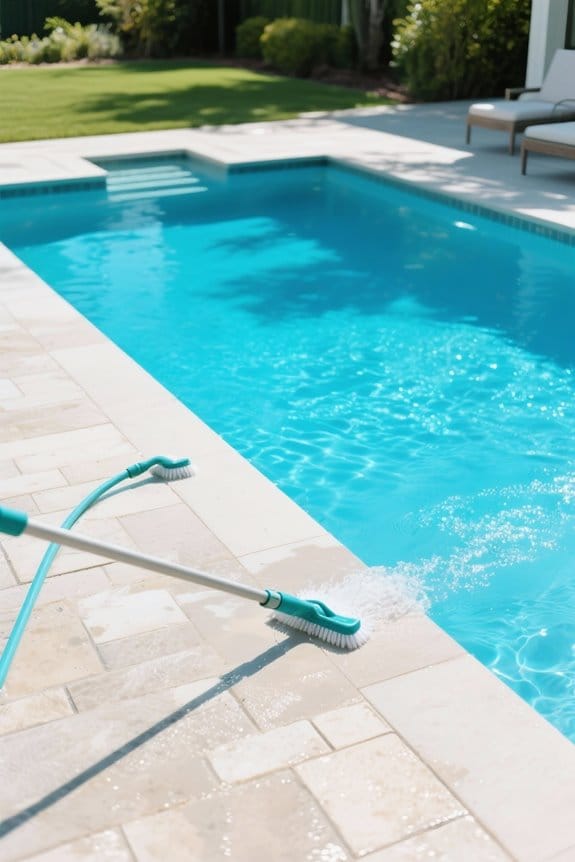
Effective manual pool cleaning begins with daily skimming of the water surface using a fine mesh skimmer net to remove leaves, insects, and floating debris. Brush the pool walls and floor biweekly with a nylon brush to prevent algae buildup and support the filtration system. Empty skimmer and pump baskets weekly to maintain proper water flow and reduce strain on equipment. Test water chemistry at least once weekly, adjusting pH to 7.2–7.6, alkalinity to 80–120 ppm, and chlorine levels to 1–3 ppm to maintain balance and reduce reliance on chemicals. Vacuum the pool floor manually once a week with a suction or pressure vacuum to remove settled dirt. Using a manual pool vacuum hose can enhance cleaning effectiveness and ensure smooth operation during manual vacuuming. These traditional practices help maintain clean water and markedly reduce chemical use, supporting eco-friendly pool care.
Eco-Friendly Cleaning Products for Pool Maintenance
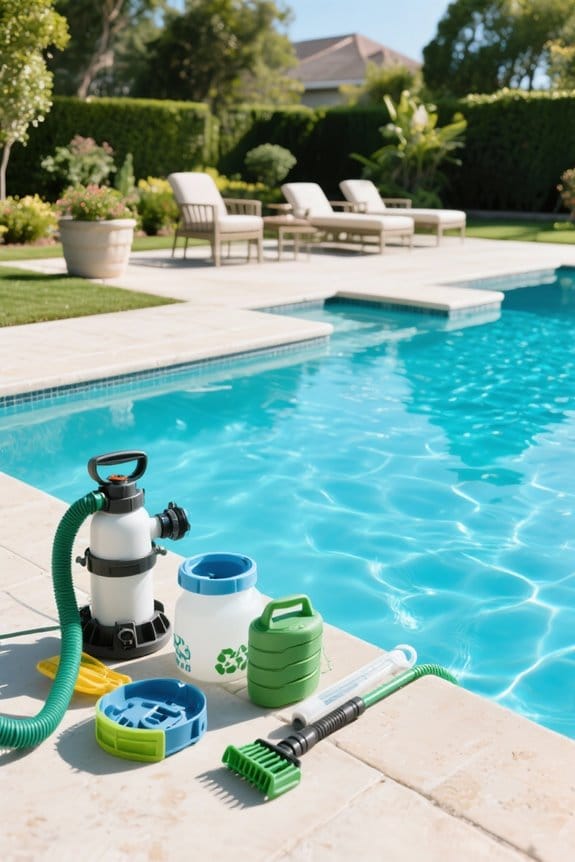
Although shifting to eco-friendly cleaning products may require initial adjustments, prioritize natural ingredients like baking soda and vinegar for scrubbing pool surfaces and balancing water chemistry. Use baking soda to neutralize acidity, apply vinegar for mineral stains, and rinse thoroughly. Incorporate enzyme-based cleaners to break down organic waste, reducing chlorine demand and supporting a clean pool. Select biodegradable pool cleaning products to minimize environmental impact, ensuring they safely decompose and protect local ecosystems. Avoid harsh chemicals; instead, rely on natural cleaning options aligned with sustainable practices to maintain pool hygiene effectively. Regularly test water, adjust saltwater chlorination systems, and monitor organic buildup. Perform pool maintenance by scrubbing walls, vacuuming debris, and filtering water consistently, ensuring clarity without harming aquatic life or surrounding habitats. For optimal pool health, maintain water chemistry balance by regularly monitoring pH, chlorine, and other key factors.
Strategies for Mindful Water and Energy Management
When managing a pool’s water and energy consumption, begin by regularly cleaning filters and skimming debris to maintain efficient circulation and reduce chemical imbalances. Install variable-speed pumps to cut energy use by over 80%, adjusting speeds according to demand for a sustainable pool system. Use tight-fitting pool covers to minimize evaporation, preserve water clean quality, and lower the frequency of chemical adjustments. Implement rainwater harvesting to refill pools, lessening municipal water dependence sustainably. Employ smart pool controllers to schedule pump and heater operation precisely when needed, optimizing energy efficiency. Monitor for leaks and maintain equipment carefully to avoid inefficiencies. These strategies, combined, reduce environmental impact, save costs, and keep the pool’s water clean without sacrificing performance, creating an eco-friendly approach to pool maintenance. Additionally, utilizing Energy Star variable-speed pumps can significantly reduce operating costs and energy consumption.
Frequently Asked Questions
How Often Should I Test Ph and Alkalinity Levels in My Pool?
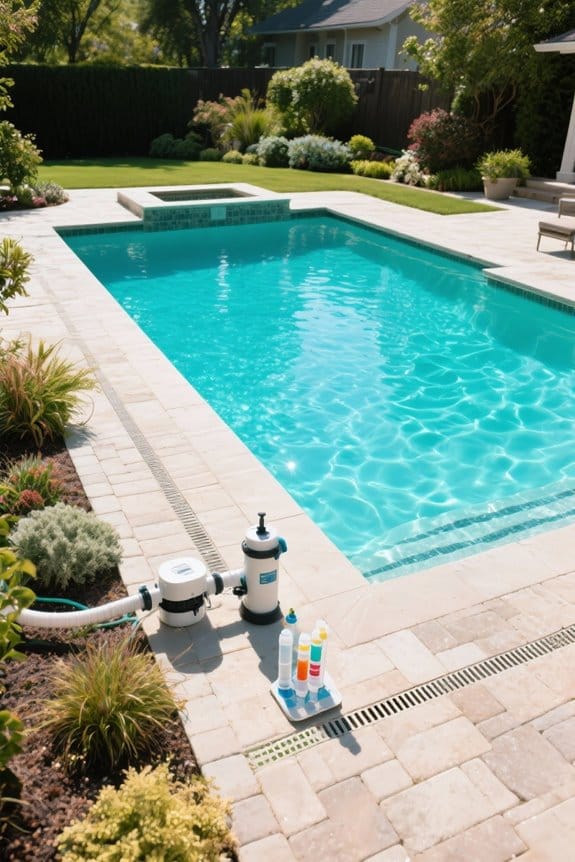
pH testing frequency and alkalinity testing schedule typically recommend weekly checks to maintain water chemistry importance. Seasonal testing recommendations may increase frequency. Test kit types and DIY testing methods vary; testing tools comparison helps avoid common testing mistakes within ideal pH range and alkalinity levels effects.
Can Plants Around the Pool Help Improve Water Quality Naturally?
A backyard pool surrounded by water lilies exemplifies plant benefits, enhancing water filtration and providing natural shade. This arrangement supports microbial activity, habitat creation, and algae prevention, promoting chemical reduction, ecosystem balance, biodiversity promotion, and aesthetic enhancement.
What Maintenance Is Required for Biological Pool Filters?
Biological filter maintenance involves regular filtration system cleanup, monitoring system performance, implementing algae control methods, replacing filter media, following a seasonal maintenance schedule, using bacteria removal techniques, and embracing chemical usage alternatives alongside eco-friendly products for ideal water quality preservation.
Are There Eco-Friendly Ways to Dispose of Pool Cleaning Waste?
A community in California adopted green disposal methods by recycling pool chemicals and using biodegradable pool products. This sustainable waste practice, combined with non-toxic cleaning agents and eco-friendly filtration options, exemplifies effective environmental pool strategies and natural waste solutions.
How Does Weather Impact Eco-Friendly Pool Cleaning Routines?
Weather considerably affects eco-friendly pool cleaning routines through temperature effects on algae growth, rainfall influence on chemical dilution, humidity levels impacting evaporation rates, wind speed dispersing debris, sunlight exposure promoting algae, seasonal changes, storm preparedness, and freeze protection needs.