As an Amazon Associate, we earn from qualifying purchases. Some links on this site are affiliate links at no extra cost to you. Our recommendations are based on thorough research and editorial judgment.

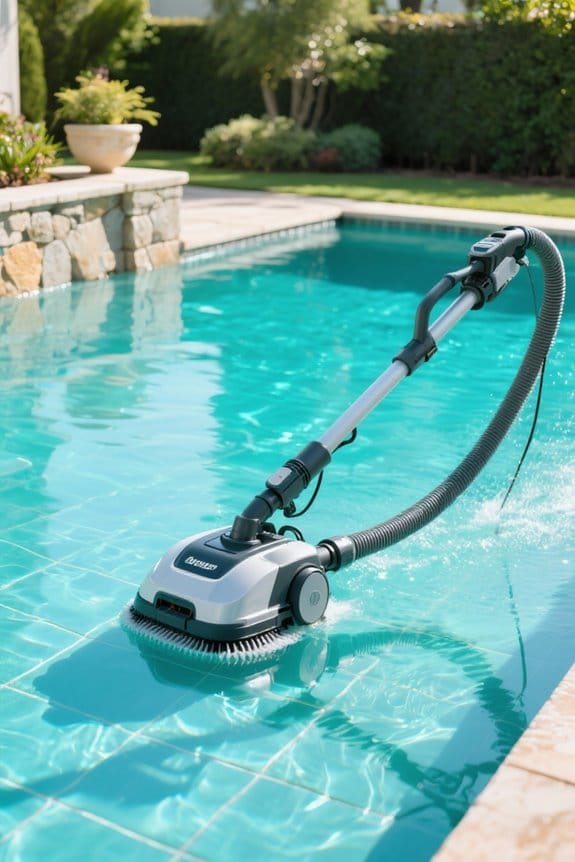
How Pool Vacuum Cleaners Actually Work

Connect the pool vacuum to the pump or activate its integrated motor to start suction, drawing debris like leaves, sand, and algae from pool surfaces. Guide the vacuum across floors and walls, ensuring sensors detect contours to optimize navigation. Monitor filter capacity to maintain suction power and prevent clogs. Regularly check brushes and filters for effective cleaning and bacteria control. This process improves water clarity and extends equipment life. Explore these functions further to enhance pool upkeep.
Key Takeaways
- Pool vacuums create suction to lift debris like leaves, dirt, and sand from pool surfaces into their filtration system.
- They connect to the pool pump or use integrated motors to power cleaning cycles and debris collection.
- Advanced models use sensors and mapping technology to navigate pool contours and avoid obstacles efficiently.
- Rotating brushes scrub surfaces, dislodging algae and dirt to improve cleanliness and water clarity.
- Maintaining clear filters and proper suction ensures effective debris capture and extends pool equipment lifespan.
What’s Your Ideal Pool Vacuum?
You may be interested
When selecting your ideal pool vacuum, prioritize ease of use and low maintenance, ensuring minimal time spent on upkeep. Choose a pool vacuum offering thorough cleaning for dirt, leaves, sand, and algae, covering floors, walls, and waterlines efficiently. Opt for automatic pool cleaners featuring advanced navigation systems, enabling autonomous movement around tight corners and steps. Focus on smart cleaning solutions that provide all-in-one capabilities, reducing manual scrubbing and complex tasks. Verify that your selected device supports efficient pool maintenance with energy-efficient operation, minimizing power consumption without sacrificing cleaning quality. Choose a model that is easy to use and requires minimal maintenance, allowing for a consistently clean pool with less effort. Considering the filter capacity ensures optimal debris capture and enhances overall cleaning performance.
How Does a Small Pool Vacuum Work?
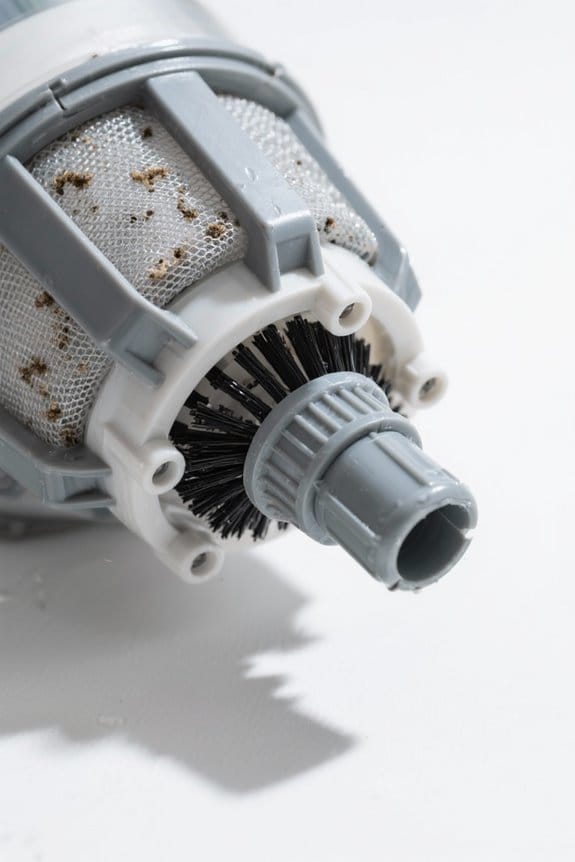
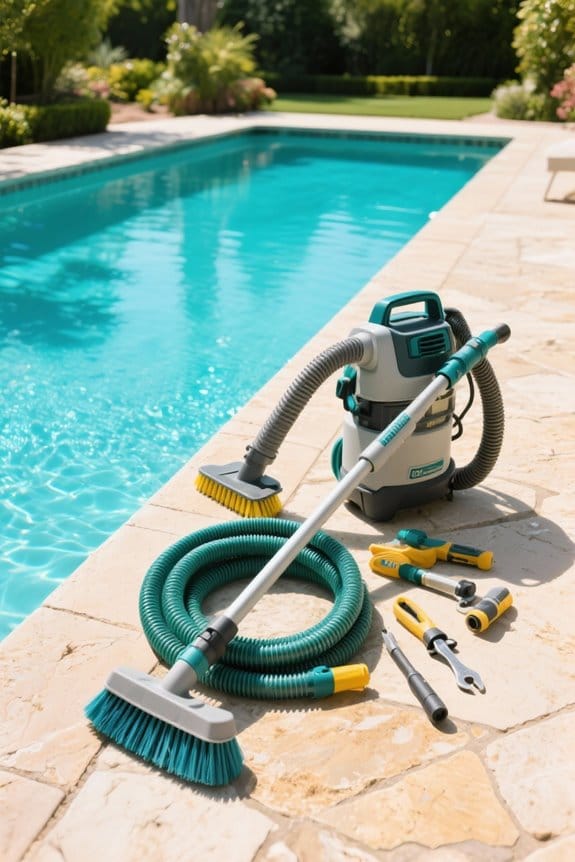
How exactly does a small pool vacuum operate to maintain water clarity? Small pool vacuums generate suction to collect debris like leaves, dirt, and sand directly from pool surfaces. Connect the vacuum to the pool’s pump or use an integrated motor to start efficient cleaning. The suction draws water and debris into the vacuum head, channeling the mixture through the filtration system or a canister where particles are trapped. Verify the filtration system is clear to prevent clogging and maintain maximum suction power. After filtering, clean water returns to the pool, supporting ongoing pool care with minimal effort. Use these devices regularly to reduce chemical buildup and extend pool equipment life, keeping water clarity intact through consistent, methodical debris removal. Adjust settings based on debris type for best results. It is also important to select a vacuum with sufficient suction power (at least 18 GPM) for effective cleaning of concrete pools.
Pool Vacuum Navigation and Movement
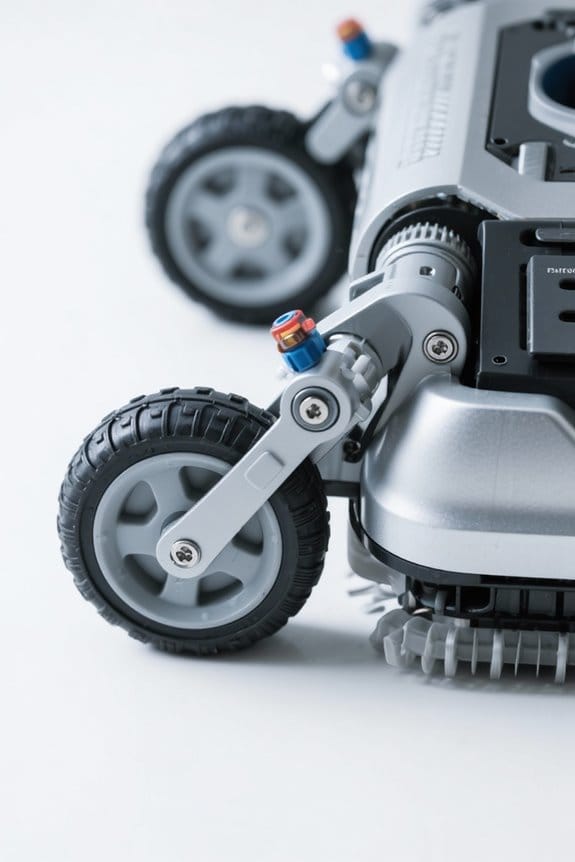
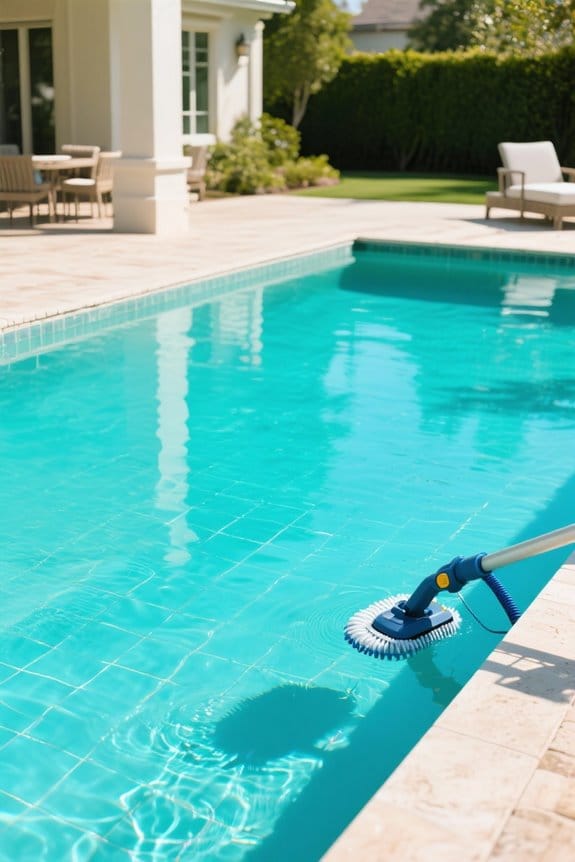
Several key technologies govern the navigation and movement of pool vacuum cleaners, particularly in advanced robotic models. Utilize sophisticated sensors to detect pool contours, obstacles, and elevation changes, ensuring efficient pool maintenance. Employ mapping technology to optimize cleaning paths and guarantee full coverage of surfaces. Program cleaning cycles to run automatically, saving time and maintaining a consistent schedule. Select a Robotic Pool vacuum that adapts to various shapes and sizes, allowing it to thoroughly clean complex designs. Verify the unit’s ability to climb walls for exhaustive cleaning, including vertical surfaces. Monitor the vacuum during initial use to confirm it follows programmed paths correctly, adjusting settings if necessary. These features collectively enhance advanced pool upkeep by automating thorough cleaning and improving operational efficiency. Many models now incorporate WavePath Navigation 2.0 to further improve route optimization and coverage.
Cleaning Functions of Pool Vacuums
Although cleaning functions vary across models, focus on selecting a pool vacuum with rotating brushes that thoroughly scrub all surfaces, including walls and floors. These brushes remove dirt, algae, and stains by brushing surfaces consistently during pool cleaning. Regular cleaning prevents bacteria buildup, safeguarding a clean and well-maintained pool environment. Monitor the filter system closely, clean or replace it as recommended, to maintain suction power and guarantee effective debris capture. Utilize specialized filters to trap particles ranging from fine dirt to larger leaves, enhancing water clarity. Confirm the cleaner operates correctly, inspecting brushes and filters before each use. Consistent maintenance of these components assures peak performance, maximizes debris removal, and reduces bacteria risks, supporting a healthier swimming space. Additionally, choosing models with multiple cleaning modes can optimize the vacuum’s effectiveness on different pool surfaces.
Introducing AquaSense Pro: The Future of Pool Cleaning
Expand your maintenance routine by integrating the AquaSense Pro, a pool vacuum with a 5-in-1 cleaning function designed for thorough coverage. Deploy this device to clean floors, walls, waterline, and surface, ensuring no area is overlooked. Activate its advanced sensor technology to enable precise navigation, allowing the vacuum to adapt to your pool’s contours automatically. Set up the AquaSense Pro easily using its user-friendly operation interface, eliminating complex manual controls. Employ its advanced filtration system, which efficiently removes debris, leading to clearer pool water with less chemical reliance. Maximize energy savings by relying on its energy-efficient design, paired with eco-friendly cleaning components that reduce environmental impact. Regularly inspect the filtration unit and sensors to sustain peak performance and prolong the vacuum’s lifespan. Its battery life supports extended cleaning sessions with run times of at least 150 minutes, ideal for comprehensive pool coverage.
Frequently Asked Questions
How Does a Pool Vacuum Cleaner Work?
A pool vacuum cleaner uses pool suction to draw debris through hose connections into filter systems. Automatic cleaners, including robotic options and manual vacuums, rely on water flow and scheduled cleaning, requiring regular maintenance for effective debris collection.
Do Pool Vacuums Really Work?
Pool vacuums generally deliver effective pool cleaning through strong suction power and filter efficiency. Cordless models enhance ease of use. User reviews and effectiveness testing confirm debris removal efficiency. Maintenance tips and cost comparison influence long-term satisfaction.
Does a Magic Eraser in the Pool Pump Really Clean the Pool?
A magic eraser’s effectiveness in pool pump maintenance is minimal and potentially harmful, debunking pool cleaning myths. Compared to vacuum cleaner types, it lacks cleaning efficiency. Eco-friendly alternatives and equipment safety precautions guarantee proper swimming pool upkeep.
Are You Supposed to Put Your Pool Pump on Waste When Vacuuming?
Using waste mode in pool pump settings during vacuuming techniques allows direct debris removal, bypassing the filtration system to enhance filtration efficiency. This aids pool cleaning and maintenance by preventing filter overload and ensuring ideal water circulation with the vacuum hose.