As an Amazon Associate, we earn from qualifying purchases. Some links on this site are affiliate links at no extra cost to you. Our recommendations are based on thorough research and editorial judgment.

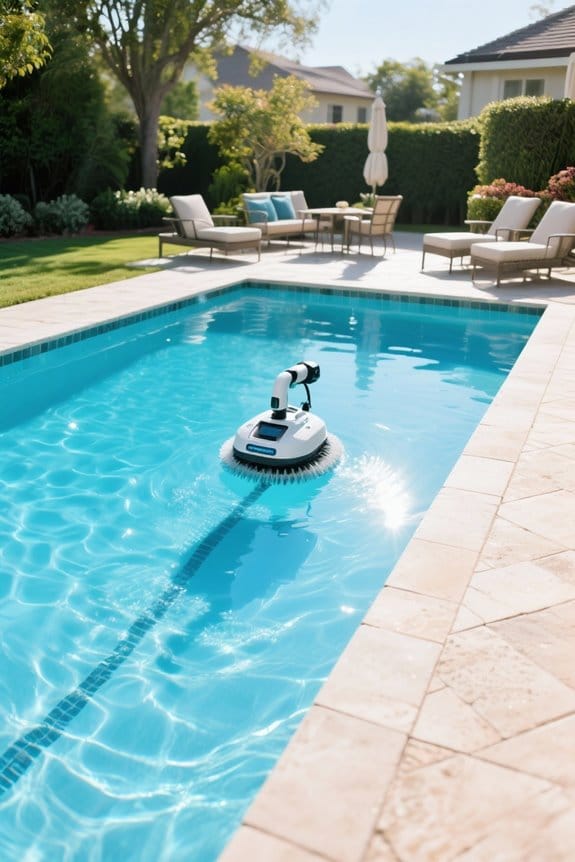
How to Minimize Pool Cleaner Wear and Tear

Inspect brushes, tires, and hoses weekly for wear and kinks, replace frayed parts promptly, and maintain water chemistry with pH at 7.4–7.6, alkalinity between 80–120 ppm, and chlorine at 1–3 ppm to protect cleaner components. Schedule cleaning cycles 2–3 times per week, increasing during heavy use, and perform daily skimming and weekly brushing before operation. Rinse thoroughly after use, store equipment shaded and dry, and monitor filter condition consistently to optimize function and lifespan. More detailed maintenance techniques follow.
Key Takeaways
- Match your pool cleaner type and size to your pool’s surface and debris load for optimal performance and minimal wear.
- Maintain proper water chemistry with pH 7.4-7.6, alkalinity 80-120 ppm, and chlorine 1-3 ppm to protect cleaner components.
- Perform regular inspections and cleanings of brushes, hoses, and filters to prevent damage and maintain suction efficiency.
- Schedule cleaning cycles based on debris levels and season, using programmable timers to reduce unnecessary run time and energy use.
- Store the pool cleaner in a dry, shaded area, rinse after use, and keep hoses detangled to prevent material degradation.
Understanding Your Automatic Pool Cleaner
You may be interested
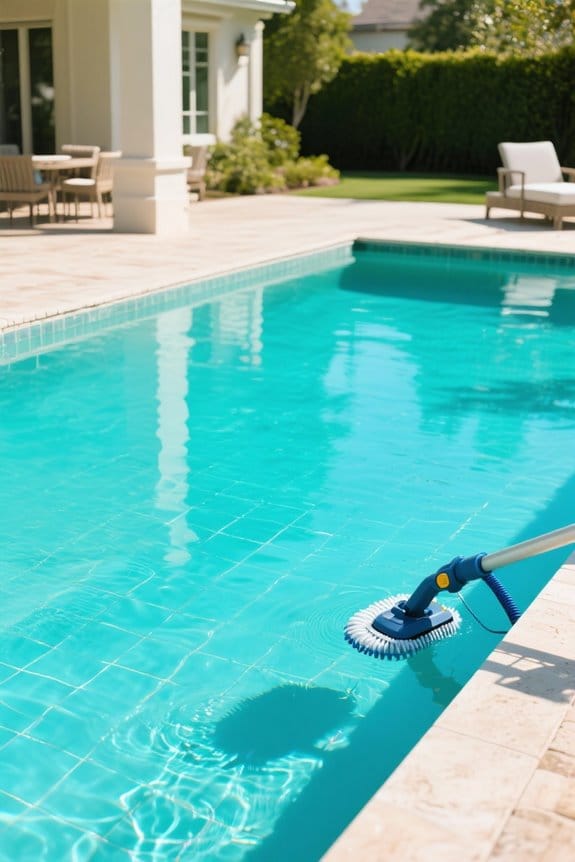
What type of automatic pool cleaner suits your pool best? Begin by understanding your automatic pool cleaner’s design and how robotic cleaners operate independently with their own filtration systems. Identify the three types of automatic pool cleaners: suction-side, pressure-side, and robotic. Evaluate their energy efficiency, noting that robotic cleaners use low voltage and offer superior performance. Establish a maintenance routine, inspecting brushes, filters, and hoses weekly to prevent common issues such as clogging or motor strain. Clean the filters regularly and check power sources for robotic models. For suction-side cleaners, verify the skimmer and pump function correctly to avoid loss of suction. Familiarize yourself with specific operational requirements to prolong device lifespan, reduce wear and tear, and maintain optimal cleaning effectiveness throughout pool maintenance cycles. Additionally, consider upgrading to energy-efficient LED lighting to reduce overall electrical load on your pool systems.
Selecting the Right Pool Cleaner for Your Pool
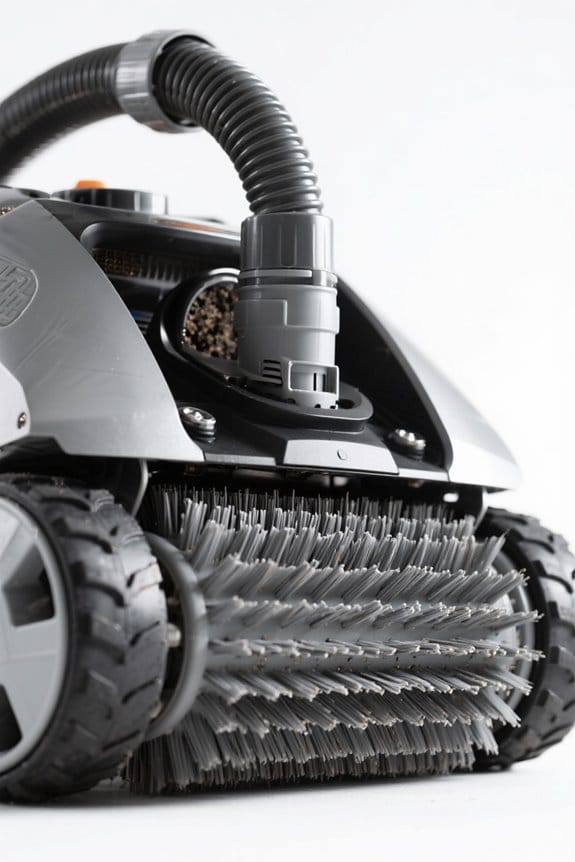
After thoroughly examining the types and maintenance requirements of automatic pool cleaners, focus on selecting a model tailored to your pool’s specifications. Begin by matching the cleaner size to your pool’s dimensions and shape to guarantee it operates efficiently and effectively, preventing unnecessary wear. Assess the types of cleaners based on debris encountered: suction-side models tackle fine particles, while pressure-side and robotic cleaners handle larger debris better. Evaluate the pool surface material; opt for robotic cleaners on delicate fiberglass or tile, and suction or manual versions on vinyl or above-ground pools. Consider operating costs, as robotic cleaners demand higher upfront expenses but reduce long-term maintenance and energy use. Choose models with programmable schedules to minimize routine maintenance and wear. Prioritize these factors when selecting the right pool cleaner for your pool to maximize longevity and performance. Additionally, ensuring the vacuum can accommodate long hoses appropriate for your pool size helps minimize frequent repositioning, reducing wear and tear on the equipment.
Recommended Products
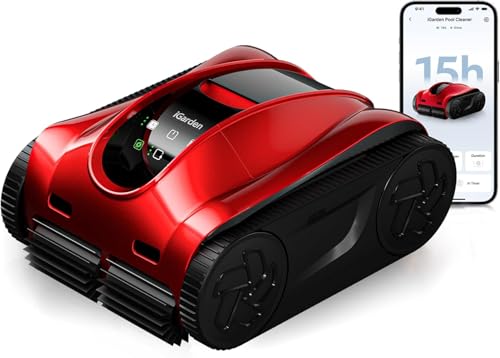
Unrivaled 15H Battery & 21-Day Cycle: Powered by industry-leading battery tech, enjoy up to 15 hours of continuous floor cleaning or 8.5 hours of full-pool deep cleaning. Maintain a spotless pool for up to 21 days on a single charge, perfect for busy homeowners.

5-in-1 Cleaning Power — Effortlessly clean every pool surface, waterline, walls, floor, and clarify water, using one device. Save time and effort with innovative submarine propulsion. (Includes Clarifying Agent Kit)

Ideal for condo, apartment, and hotel pools up to 68 ft in length, the Dolphin Wave 80 robotic commercial pool cleaner comes with a storage caddy and a remote control for manual operation.
Importance of Balanced Water Chemistry
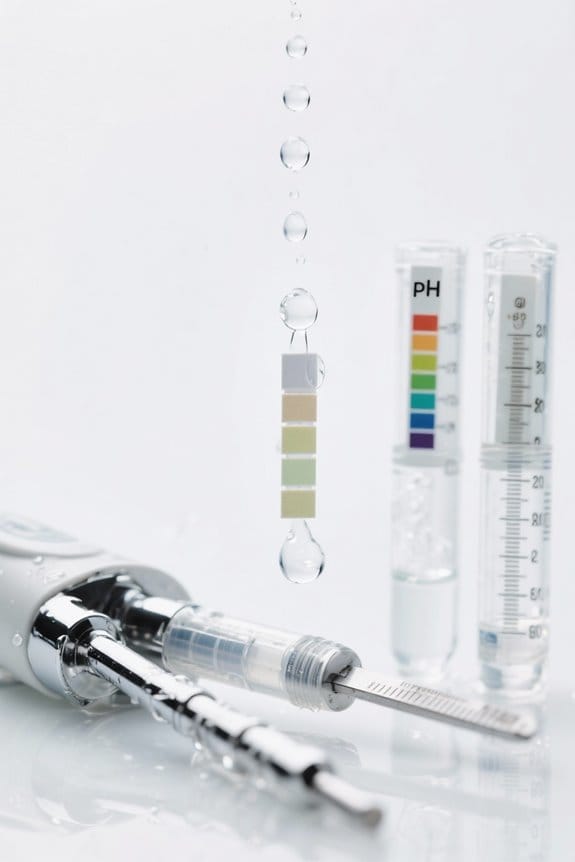
Balanced water chemistry plays a critical role in maintaining the efficiency and durability of pool cleaners. Regularly test water chemistry to verify pH stays between 7.4 and 7.6, preventing corrosion or etching on pool surfaces and cleaner components. Monitor alkalinity within 80-120 ppm to stabilize pH levels, reducing equipment wear. Keep chlorine levels between 1 and 3 ppm to avoid premature degradation of rubber and plastic parts. Maintain calcium hardness in the 200-400 ppm range to prevent scale buildup, which can impair the cleaner’s performance and increase maintenance needs. Consistently balancing these factors extends equipment life and reduces repair frequency. Adhere to a strict testing schedule, adjust chemicals as needed, and document changes to support ongoing pool cleaners maintenance and optimize operational efficiency. Additionally, regular inspection for wear on components such as ropes and seams is essential to preserve functionality and safety.
Routine Surface Skimming and Pool Brushing
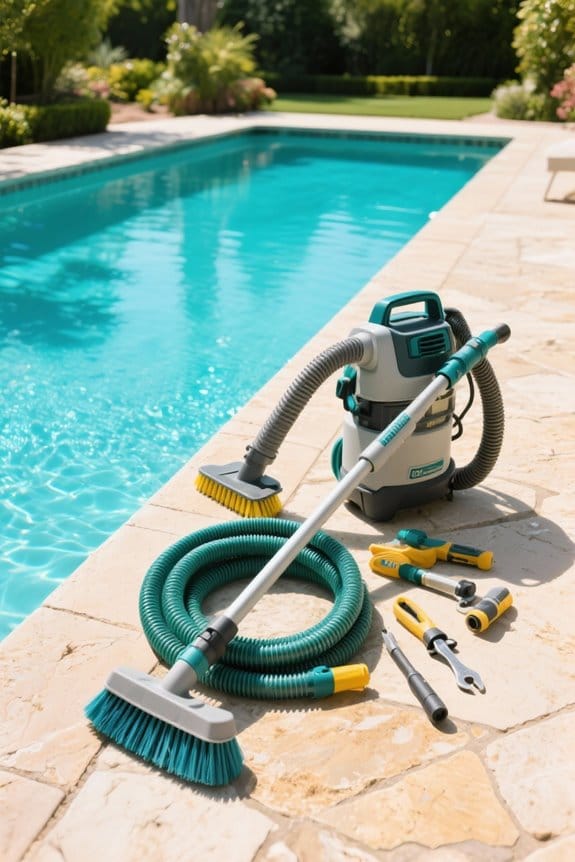
Several essential steps support pool cleaner longevity, starting with routine surface skimming and brushing. Perform skimming daily using a fine mesh net to remove leaves, insects, and debris, preventing blockages that cause wear and tear. Brush pool walls and floors weekly with a long-handled nylon brush, focusing on corners and steps. This dislodges dirt and algae, improving the pool cleaner’s cleaning performance and reducing strain on its components. Always complete skimming and brushing before running the pool cleaner to minimize its workload. Maintaining clean surfaces lowers the frequency of replacing parts like brushes and hoses, cutting maintenance costs. Consistent routine maintenance through skimming and brushing safeguards the pool cleaner, extending its lifespan while enhancing efficiency during cleaning cycles. Additionally, ensuring compatibility with your pool’s surface type helps reduce unnecessary wear and tear on the cleaner’s wheels and brushes.
Recommended Products

For In-ground Pools: Designed for all in-ground pools, the swimming pool vacuum robot adapts to any size, shape, and style, ensuring thorough cleaning of floors, walls, steps, and waterlines.

Premium-Quality Thickened PVC: Crafted from thickened drop-stitch fabric, pool lounger float offers exceptional strength and resilience. Reinforced seams and one-piece design ensure excellent air retention, making it wear-resistant and scratch-proof to be your reliable choice for water activities

ULTRA-EFFECTIVE CLEANING – This pool brush head for inground pools features sturdy bristles that tackle dirt, algae, and debris with ease. The curved edges and durable design ensure a thorough scrub for walls, floors, and corners, making it the ideal pool cleaning brush for both, inground and above-ground pools.
Maintaining Proper Filtration System Function
To maintain proper filtration system function, inspect and clean the filter cartridge or sand media at least once a month, removing accumulated debris that restricts water flow. Clear blockages from skimmer and pump baskets immediately to prevent reduced suction that strains the pool filter and causes the cleaner to remain inefficient. For suction-side cleaners, ascertain continuous water flow within filtration systems to avoid hose damage and premature component wear. Perform regular maintenance checks for leaks, cracks, or worn seals, as unnoticed issues may lead to expensive repairs. Routinely flushing or backwashing the filter maintains pressure levels, supporting the cleaner’s suction abilities. Follow these steps precisely to protect your pool cleaner, prolonging its functional lifespan and maintaining excellent performance while minimizing unnecessary replacement costs and wear. Additionally, installing a pool vacuum swivel one hose length from the vacuum head can significantly reduce hose tangling and improve suction efficiency.
Recommended Products

Valve sold seperately

HIGH-EFFICIENCY FILTRATION: This Hayward cartridge pool filter provides excellent filtration and hydraulic performance, supporting energy-efficient pool system operation, water circulation efficiency, and lower operating costs

Clean & Clear Plus pool and spa cartridge filter
Scheduling Optimal Cleaning Cycles
Although it may seem straightforward, scheduling your pool cleaner demands careful consideration of usage patterns, debris levels, and seasonal shifts. Schedule the Automatic Pool Cleaner to run 2-3 times weekly during heavy use for ideal cleanliness and maintenance without causing excessive wear. For pools requiring intense cleaning due to high debris or frequent use, increase cycles to daily. Adjust the program for seasonality, reducing runs to once or twice weekly during lighter periods. Use programmable features to set cleaning during off-peak hours, minimizing energy consumption and strain on the unit. Monitor debris levels regularly, modifying the cleaning frequency as needed to maintain efficiency. This precision in scheduling ideal cleaning cycles extends cleaner lifespan while ensuring pool water quality remains consistently high. For optimal results, select a pool vacuum with an automatic shutoff feature to prevent unnecessary wear during operation breaks.
Recommended Products

CLEANING ON YOUR SCHEDULE: With a programmable timer, you don't need to babysit your cleaning robot. Sit back and relax, after all you've earned it!

Efficient and Energy-Saving: The Waykar Large Commercial Dehumidifier with Pump is capable of removing up to 216 pints of moisture per day (at 95°F, 90% RH) in spaces up to 8,500 sq. ft. Its High-Efficiency Compressors make it energy-saving, ideal for large Basements, Warehouses, Gyms, Indoor Pools, Spa Areas, Grow Rooms, Factories, and more.

Small But Mighty with Cyclonic Vacuum Technology: The Polaris P724's compact and lightweight design makes it easy to handle while powerful Cyclonic Vacuum Technology captures debris and keeps it suspended to maintain suction throughout the cleaning cycle.
Weekly Inspection and Maintenance Tasks
Maintain pool cleaner effectiveness by performing weekly inspections and maintenance tasks. Start by examining hoses, wheels, and other components for visible damage such as cracks, leaks, or wear. Test wheels and brushes to verify smooth operation, preventing disruptions during cycles. Inspect the pool pump and skimmer baskets to confirm no blockages hinder suction to collect debris efficiently. Clean or replace the filter weekly, as a clogged filter reduces suction strength and cleaning performance. Check hoses carefully for kinks or holes, repairing or replacing damaged sections promptly to maintain ideal flow. These weekly inspections prevent minor issues from escalating, preserving cleaner efficiency and extending equipment life. Follow this routine consistently to reduce wear and tear on pool cleaners with minimal effort and reliable results. Additionally, choosing equipment with UV- and chemical-resistant materials can significantly enhance the longevity of your pool cleaning tools.
Seasonal Maintenance Procedures for Longevity
Every season demands distinct care to maximize the lifespan of pool cleaners. In spring, perform a thorough cleaning of all components, inspect hoses for cracks or leaks, and test the power supply. Increase cleaning frequency during summer, removing debris daily and maintaining filter cleanliness to preserve suction. In fall, conduct seasonal maintenance by deep cleaning the pool cleaner and its parts, then store it properly to shield against winter damage. Follow manufacturer guidelines in winter to winterize the unit, drain water, and store it in a temperature-controlled area to prevent freezing. Routinely inspect moving parts such as tires and belts after each season. Consistently applying these seasonal maintenance steps will effectively extend lifespan, reduce mechanical stress, and guarantee peak pool cleaner performance year-round. Additionally, paying attention to the filtration system quality during maintenance helps ensure efficient algae removal and prolongs the cleaner’s functionality.
Identifying and Addressing Common Wear Issues
How can one effectively detect early signs of wear on a pool cleaner to prevent costly damage? Begin by inspecting worn tires, as degradation reduces traction and strains the motor. Examine hoses meticulously for kinks or leaks, which diminish suction power and accelerate component wear. Check brushes for fraying or stiffness; replace them promptly to maintain ideal cleaning efficiency. Perform a deep clean after every use to remove chlorine deposits and debris, preventing corrosion that undermines structural integrity. While inspecting, note any irregular noises or movements indicating internal wear. Although proper storage plays a critical role in preservation, troubleshooting these specific parts guarantees early intervention. Address these issues immediately by replacing faulty components or scheduling professional maintenance to extend the pool cleaner’s operational life effectively. Additionally, regular maintenance of the vacuum’s filter system is crucial to prevent clogging and ensure optimal suction performance.
Recommended Products
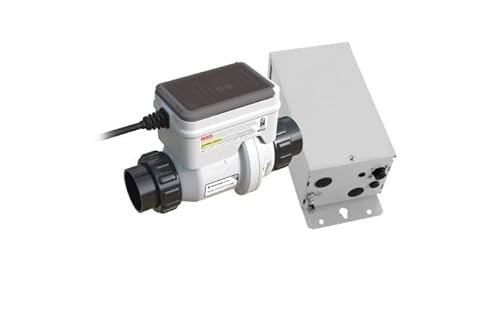
Provides an alternative to buying, handling, storing, and carrying chlorine.

Purchase comes with a 30 Day Warranty

Best Storage Practices to Prevent Damage
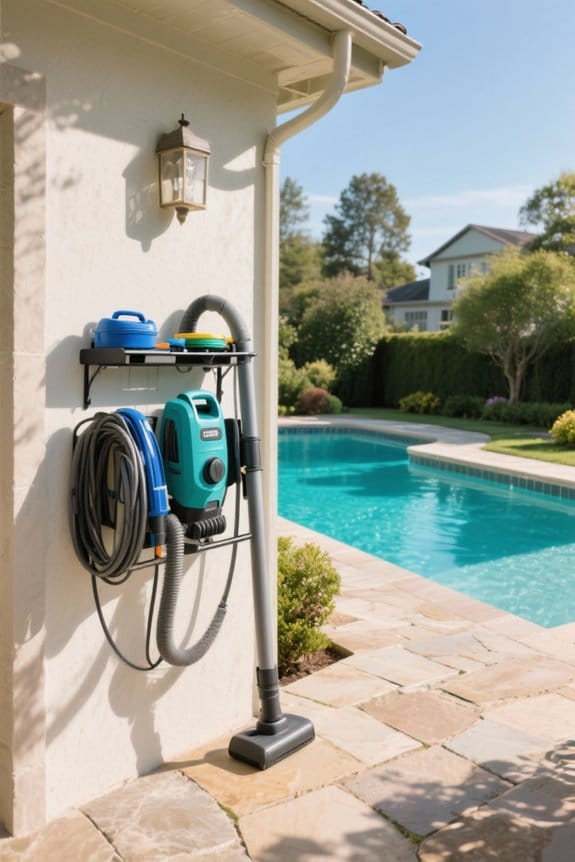
Where should a pool cleaner be stored to maximize its lifespan? Store the cleaner on a caddy or elevated surface to prevent unnecessary wear from rough ground contact. Rinse thoroughly after each use to remove chlorine and chemicals that cause material deterioration. Place the cleaner in a shaded area or dedicated storage facility to avoid prolonged sun exposure, which degrades plastics and rubber. Make certain storage occurs in a dry location to prevent moisture accumulation that leads to mold growth and internal corrosion. Properly detangle hoses, remove debris, and coil them loosely to prevent kinks or blockages that hinder future performance. Consistently following these storage steps prevents damage, maintains operational efficiency, and extends the cleaner’s functional lifespan, guaranteeing ideal pool maintenance results with minimal wear and tear. Additionally, using durable materials in cleaning equipment can significantly enhance longevity and performance.
Frequently Asked Questions
What Are the 3 C’s of Pool Cleaning?
The 3 C’s of pool cleaning are Consistency, Cleaning, and Conservation. Effective Cleaning Techniques, Equipment Maintenance, and managing diverse Debris Types enhance Vacuum Efficiency, protect pool surfaces, and optimize Water Chemistry for long-lasting pool cleanliness and performance.
How Long Do Pool Cleaners Last?
Pool cleaner lifespan varies by type, generally 3 to 10 years. Maintenance tips and monitoring wear factors improve cost efficiency. Replacement signs reflect environmental impact, emphasizing regular care to extend operational life and reduce overall expenses.
Does a Magic Eraser in the Pool Pump Really Clean the Pool?
The Magic Eraser’s effectiveness in pool pump maintenance is modest, as cleaning chemical reactions may limit stain removal. Alternative cleaning methods better preserve pool surface compatibility and eraser longevity, making Magic Erasers a less favorable choice.
Should I Leave My Pool Vacuum in the Pool All the Time?
Leaving a pool vacuum in the pool continuously negatively affects cleaner lifespan management. Ideal cleaning routine and pool maintenance tips recommend removing the vacuum after use to reduce wear factors, enhance energy efficiency practices, and guarantee pool vacuum placement preserves longevity.