As an Amazon Associate, we earn from qualifying purchases. Some links on this site are affiliate links at no extra cost to you. Our recommendations are based on thorough research and editorial judgment.

How to Prepare Your Pool Area for Extreme Weather

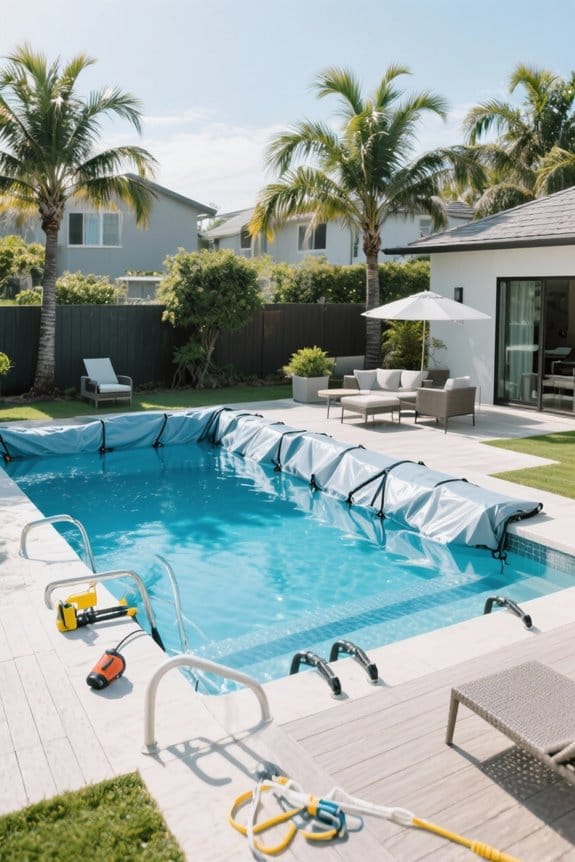
Clear the pool area by removing furniture, toys, and loose objects, storing metal items indoors. Trim tree branches and shrubs within 15 feet to prevent storm debris. Turn off electrical equipment at the circuit breaker, covering pumps and heaters. Maintain water levels—do not drain fiberglass or vinyl liner pools but lower levels below skimmers in freezing conditions, winterizing equipment. Secure the pool cover with durable clips to resist wind. After storms, inspect and treat water. Instructions continue for thorough preparation.
Key Takeaways
- Remove all loose objects and pool toys to prevent them from becoming storm projectiles and causing damage.
- Trim tree branches and vegetation within 15 feet of the pool to minimize falling debris risks.
- Turn off and secure all electrical pool equipment by switching off breakers and covering exposed parts.
- Maintain appropriate water levels to avoid structural damage, especially in fiberglass and vinyl liner pools.
- Use durable pool cover clips to secure pool covers against strong winds and reduce contamination risks.
Remove Freestanding Objects and Pool Toys
You may be interested
Begin by systematically removing all freestanding objects, including patio furniture, pool floats, and toys, from the pool area. This step is essential to remove freestanding objects that could become hazardous during heavy rains and strong winds. Next, secure or store indoors any loose items, particularly metal furniture, to prevent stains and damage. Protect your pool by avoiding debris contamination; debris can complicate post-storm water treatment and increase maintenance time. Store indoors bulky items like large pool floats and all toys in waterproof containers or sheds. Verify the storage location is secure to prevent wind damage. By removing these objects, you reduce the risk of injury, damage, and extensive cleanup after storms. Always double-check the area for overlooked items that might become projectiles, enhancing overall pool safety and integrity during extreme weather. Additionally, using durable and flexible hoses can help efficiently manage water drainage during storms, reducing the risk of flooding.
Turn Off Electrical Pool Equipment

Cut power to all electrical pool equipment at the circuit breaker well before the onset of extreme weather, preventing damage from power surges caused by lightning strikes. Turn off the power supply to pumps, heaters, and automated controls, ensuring no current flows during severe weather. Secure waterproof covers over exposed electrical equipment to guard against heavy rainfall and moisture intrusion. After storms pass, allow all pool equipment to dry fully before restoring power to avoid malfunctions and electrical hazards. Regularly inspect circuit breakers and power sources for weatherproofing integrity to support protecting your pool long-term. This proactive approach reduces repair costs and maintains safety near the pool area, mitigating risks linked to sudden power surges or flooding during severe weather events. For pools equipped with filtration systems, ensure that backwash hoses are securely connected and properly stored to prevent damage during storms, as improper storage can lead to hose kinks or breaks which compromise pool maintenance.
Recommended Products

Universal Fit – Outer dimensions measure 15.8*13*11 inches, fits most motors from 1/3 H.P. to 2 H.P, Small/Medium/Large motors from 4.25" to 5.25" in diameter

Twist-Lock Plug for Pool Safety: Equipped with a secure L5-20R twist-lock plug to prevent accidental disconnection. Rated 20A, 125V, 1HP—ideal for pool pumps, heaters, and outdoor equipment. Fully compliant with pool power standards for safe, stable operation

3 Layer insulated prevent: Pool heater cover crafted with high durability 600D waterproof oxford cloth, this pool pump enclosure cover offers triple layer defense against extreme weather, ensuring long-lasting durability
Avoid Draining Fiberglass and Vinyl Liner Pools
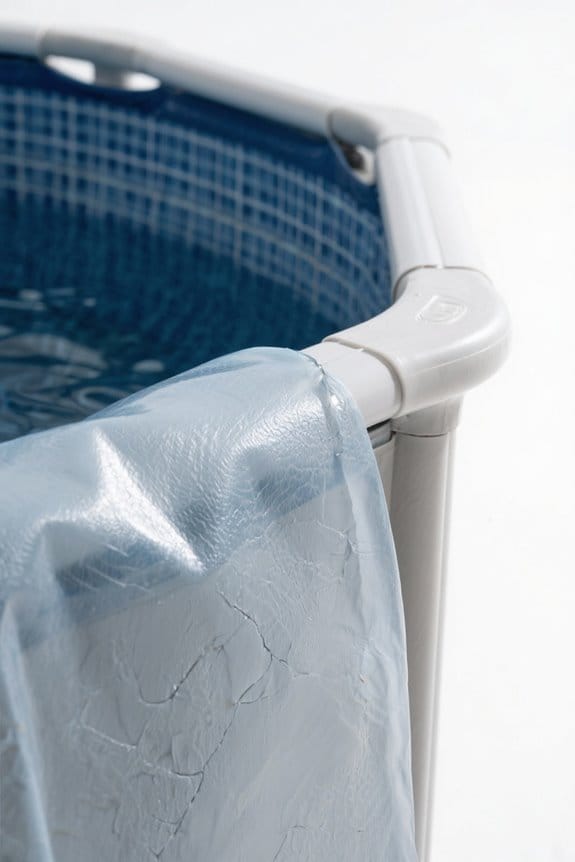
Many fiberglass and vinyl liner pools require maintaining water levels during extreme weather to prevent structural damage. To avoid draining fiberglass and vinyl liner pools, keep the water level stable before heavy rain, ensuring enough weight to counteract hydrostatic pressure. Do not lower the water excessively, as this increases the risk of buoyancy forcing the pool to float. Secure debris covers to prevent damaging weather conditions from impacting the empty shell. Regularly inspect for liner wrinkling or tears caused by fluctuating water levels. Maintaining water levels also simplifies cleanup post-storm and lessens contaminants infiltrating the pool. Use a submersible pump only if necessary, avoiding full drainage. Follow manufacturer guidelines on minimum water depth. Proper water level management protects pool walls and floors, preventing costly repairs and preserving structural integrity during extreme weather events. Additionally, using corrosion-resistant hardware for securing covers and anchors ensures durability against harsh weather conditions.
Lower Water Levels and Winterize Equipment for Cold Weather
Adjust the water level to below the skimmer intake, reducing the risk of freeze damage to plumbing and pool equipment. Lower water levels prevent ice expansion from cracking pipes and filters. Next, winterize equipment by draining all water from pumps, heaters, and valves; apply pool-safe antifreeze in lines prone to freezing. Securely cover pumps and heaters with insulated wraps or tarps, ensuring no gaps allow snow or moisture intrusion. Install a solid pool cover that fits tightly to block debris, minimize water evaporation, and provide thermal insulation. Maintain the proper level consistently to avoid structural strain during freeze-thaw cycles. Regularly inspect equipment and the pool cover for tears or displacement throughout winter. Using water bags or weight systems can help keep the cover securely fastened against wind and debris throughout the season, enhancing protection and cover stability. Implementing these steps will protect your pool area from costly freeze damage while supporting responsible pool care and preserving longevity.
Recommended Products

Enhance Winter Pool Security: This 12-pack of 10 x 0.94 FT double chamber pool cover water bags are designed to add reliable weight secure your pool cover during winter, preventing debris and wind entering. Ideal for in-ground pools, these pool cover water bags are easy to fill, drain, and store, saving you cleanup time in winter.
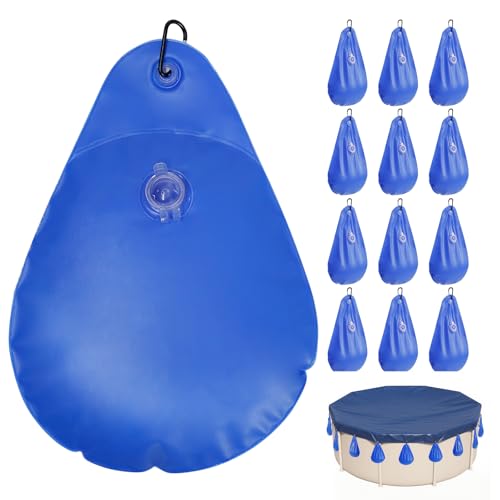
Ultimate Pool Protection: Our pool weights water bags for above ground pool act as an impenetrable barrier against strong winter winds, preventing the cover from being lifted up and blocking leaves, debris, and other hazardous materials, enjoy a cleaner pool and reduce summer cleaning and maintenance costs

Durable & Anti-freeze: Built from thick, high-quality PVC, these pool cover weights are designed to withstand harsh winters. They’re tear-resistant, durable, and won’t crack or leak, ensuring long-lasting use even in extreme weather. No need to worry about them breaking down over time!
Trim Nearby Tree Branches and Vegetation
A thorough inspection of all trees and shrubs within a 15-foot radius of the pool perimeter is essential before any severe weather. Trim nearby tree branches, focusing on dead, damaged, or overgrown limbs to reduce falling debris risks during storms. Use bypass pruners or pole saws, ensuring cuts are clean to promote healthy regrowth. Remove overgrown vegetation that impedes airflow or traps moisture, as this can affect pool clean conditions and encourage mold. Conduct seasonal trimming to maintain tree health and enhance pool area visibility, simplifying post-storm debris monitoring. Check for roots close to the pool structure and trim as needed to prevent foundation or plumbing damage. Regular maintenance minimizes extreme weather hazards and preserves pool aesthetics efficiently, making this task critical for storm preparation. Additionally, using angled handles on cleaning tools can help reduce strain during the cleanup process after storms.
Balance and Treat Pool Water Before Storms
Test pool water using a reliable kit, measure pH, alkalinity, and chlorine levels, then add chemicals to balance each parameter precisely. Aim for a pH between 7.2–7.6, total alkalinity of 80–120 ppm, and free chlorine around 2–4 ppm. Next, shock treat the pool by adding a chlorine-based shock product at the rate specified by the manufacturer, guaranteeing thorough circulation. Incorporate an algae controller to prevent algae growth during and after the storm. Properly balanced pool water chemistry before a storm hits reduces contamination from debris and rainwater, easing water treatment efforts and speeding up clean up afterwards. Address imbalances promptly to avoid staining and prolonged cloudiness. This preparation minimizes chemical use post-storm and guarantees a more manageable restoration process. Using a pool chemical dispenser can help maintain consistent chlorine levels during stormy weather for improved water quality.
Recommended Products

AFFORDABLE 7-IN-1 POOL TESTING KIT: Our 150 pool test strips provides an affordable, all in one pool water testing kit for various chemicals including Free Chlorine, Alkalinity, pH levels and more!
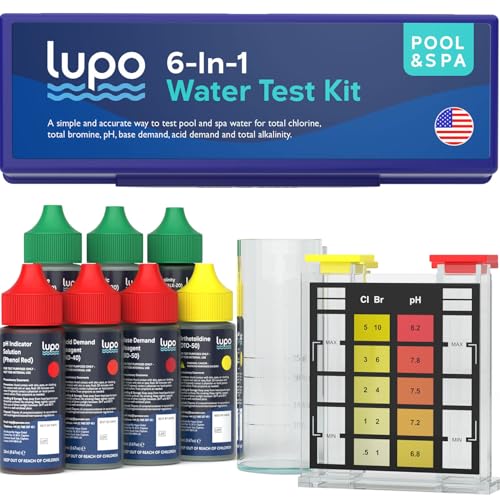
6-IN-1 POOL TESTING KIT: An easy-to-use, accurate pool test kit for testing six essential water quality parameters in residential pools and spas: Total Chlorine, Total Bromine, pH, Base Demand, Acid Demand and Total Alkalinity. Includes reagents for 100 tests, helping keep your water safe and balanced.

7 Way: These test strips for pools and spas read 7 different chemicals in the water. The pool strips test 7 way offer clear readings in daylight and come with detailed instructions
Secure Pool Covers and Protective Equipment
After balancing and treating pool water, turn attention to securing pool covers and protective equipment. Choose secure pool covers rated for extreme weather, fastening them tightly using straps or anchors designed to resist strong winds. Add water bags or sandbags along edges to reduce lift or tearing during gusts. Inspect and reinforce any weak spots before storms. Cover all protective equipment, including pumps and filters, with water-resistant tarps or enclosures to avoid water damage and electrical issues. Remove or store outdoor furniture and any loose items indoors to prevent debris from damaging covers or gear. Regularly check equipment seals and tightness throughout the season, improving stability as needed. Taking these preventative steps guarantees the pool area withstands harsh conditions while minimizing costly repairs. Additionally, using durable pool cover clips enhances the security of pool covers, especially against strong winds.
Recommended Products

Package content: you will receive 30 pieces of swimming pool cover clips, sufficient quantity and practical design to well meet your daily use and replacement needs, you can also share with your family and friends. They can hold your pool cover securely and protect your pool cover from strong winds and other bad weather.

✅【No Jaw Pads Falling off】 Unlike other designs, our modern spring clips jaw pads are securely held in place with strong grips preventing any annoying pad falls during use. The Jaw opens to 2 inches max
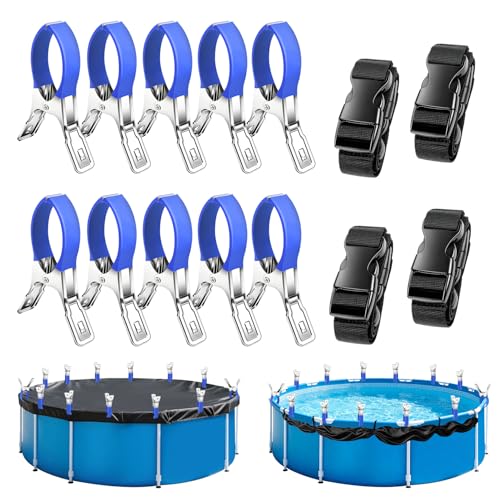
STRONGER GRIP THAT HOLDS UP IN THE WIND — If you have dealt with plastic pool cover clips that gradually lose their bite after sun exposure, you will notice the difference with these. Each clip features a heavy-duty stainless steel spring designed to provide noticeably stronger clamping force compared to most standard plastic clamps. This helps your pool cover stay more securely in place during windy conditions and overnight storms.
Plan Post-Storm Cleanup and Maintenance
Countless branches, leaves, and debris may accumulate in the pool area after severe weather; begin by promptly removing large objects using nets or rakes to prevent staining and contamination. Do not drain your pool, as water helps manage debris impact and stabilizes the pool against groundwater pressure. Next, shock the pool with a high-dose chlorination treatment to eliminate contaminants introduced by flooding and debris. Test and adjust the water chemistry, focusing on pH (7.2–7.6) and chlorine levels (1–3 ppm), to restore safe swimming conditions. Inspect all pool equipment, including filters and pumps, clearing any blockages and verifying proper operation before restarting. Prepare your pool methodically to avoid damage and delays—completing these steps guarantees effective post-storm cleanup and maintenance. For cleaning pool tiles and grout, use brushes with the appropriate bristle stiffness to avoid surface damage.
Frequently Asked Questions
How to Prepare a Pool for Heavy Rain?
To prepare a pool for heavy rain, one must guarantee proper water balance, perform debris removal, secure equipment protection, avoid using a pool cover for drainage solutions, and make chemical adjustments to minimize contamination and algae growth post-storm.
Why Do People Put Baking Soda in Their Swimming Pools?
In times when knights guarded castles, baking soda benefits modern pool maintenance by stabilizing alkalinity balance, ensuring consistent pH levels, enhancing water clarity, and reducing harsh chemical adjustments, ultimately creating a safer, clearer swimming environment.
At What Temperature Will Pool Pipes Freeze?
Pool pipes typically freeze at 32°F (0°C). Effective freeze protection involves winterization tips such as draining water, applying insulation methods, maintaining water temperature, and regular plumbing maintenance to prevent pipe damage during cold weather.
Is It Better to Put Sand or Dirt Under a Pool?
While dirt may shift and compact unevenly, sand offers superior pool foundation benefits with enhanced surface stability, efficient drainage considerations, and predictable soil type uniformity. Installation methods favor sand, ensuring easier long term maintenance and durability of the pool.