As an Amazon Associate, we earn from qualifying purchases. Some links on this site are affiliate links at no extra cost to you. Our recommendations are based on thorough research and editorial judgment.

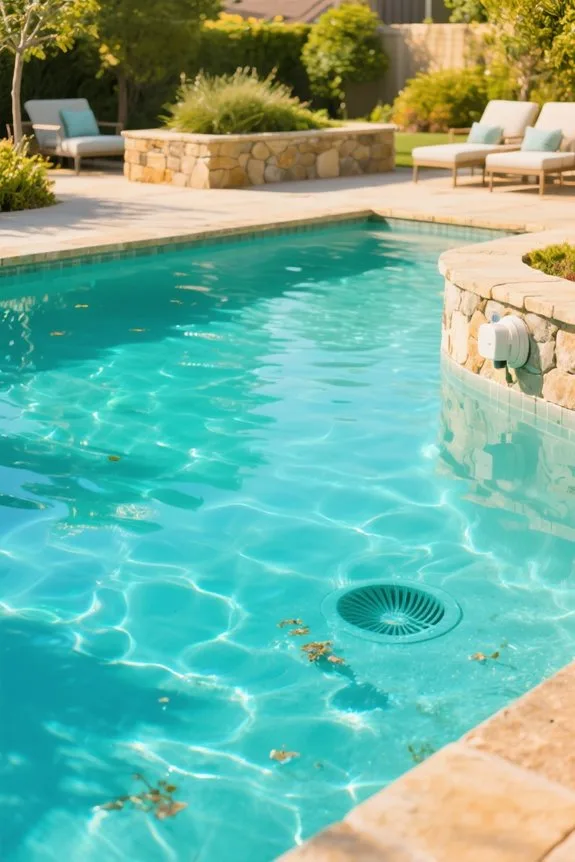
The Impact of Pool Debris on Water Quality

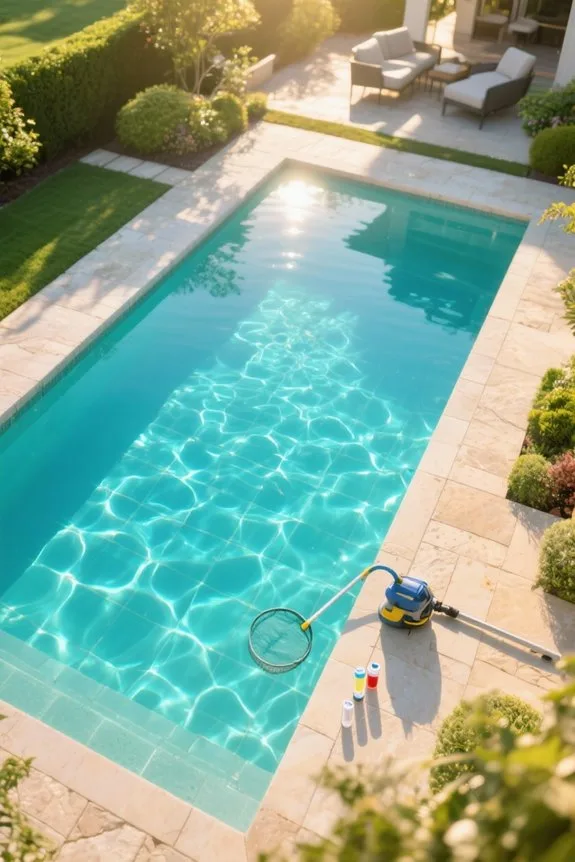
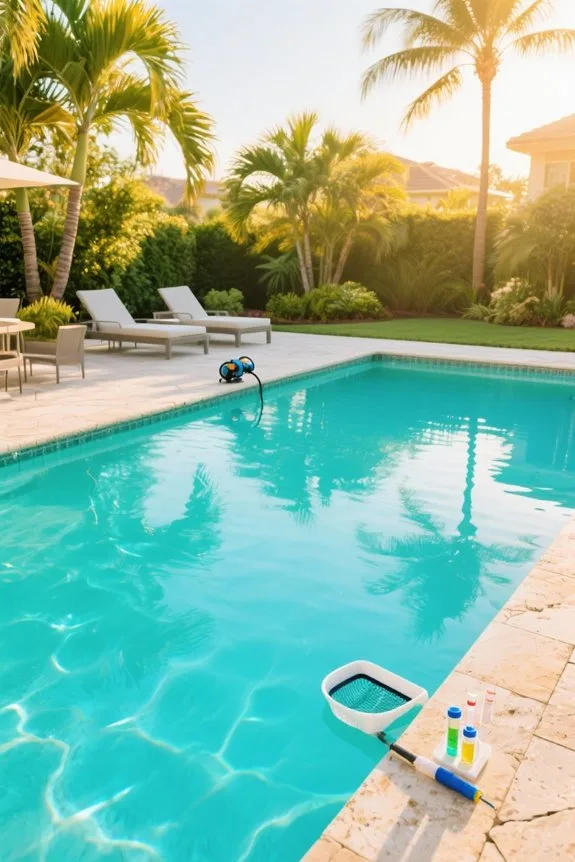
Remove leaves and debris daily using a skimmer or Water Tech™ Volt® Leaf Vac to prevent nutrient buildup and filtration clogs. Test chlorine and pH levels every day, maintaining pH between 7.2 and 7.8 to optimize sanitizer efficiency. Clean skimmer baskets and monitor pump pressure to avoid reduced flow and filter blockage. Address chlorine depletion promptly to inhibit algae growth, and use pool covers during heavy leaf fall. Follow these steps closely to maintain balanced, clear water, ensuring system longevity and swimmer safety. For further guidance, explore detailed maintenance strategies.
Key Takeaways
- Pool debris decomposition releases nutrients that alter water chemistry and increase microbial growth risks.
- Accumulated organic matter raises chlorine demand, requiring daily monitoring and dosage adjustments.
- Leaves and debris clog skimmer baskets and filters, reducing filtration efficiency and water circulation.
- Debris presence fosters algae growth, leading to rapid chlorine depletion and water cloudiness.
- Consistent debris removal and regular water testing maintain balanced pH and sanitizer levels, preserving water quality.
Sources of Pool Debris and Contamination

You may be interested

Identify and monitor the primary sources of pool debris and contamination to maintain ideal water quality. Remove leaves, branches, and other organic matter promptly, as they contribute to nutrient accumulation, encouraging algae growth and microbial activity. Conduct regular inspections using skimmers and pool vacuums to detect debris buildup and prevent contamination from dead wildlife or pet waste. Maintain water balance consistently, checking pH and chlorine levels to support routine maintenance efforts. Address contamination from swimmers by enforcing pre-swim showers to reduce introduced microbes. Clean filters frequently to avoid organic matter circulation and biofilm formation. Implement a schedule for debris removal every two to three days during peak leaf fall. Monitor surrounding vegetation to minimize debris ingress, ensuring pool water quality remains within safe parameters and reducing conditions favorable to bacteria and algae proliferation. Utilizing robotic pool cleaners can enhance debris removal efficiency and maintain crystal clear water quality.
Chemical and Biological Effects of Debris in Pools
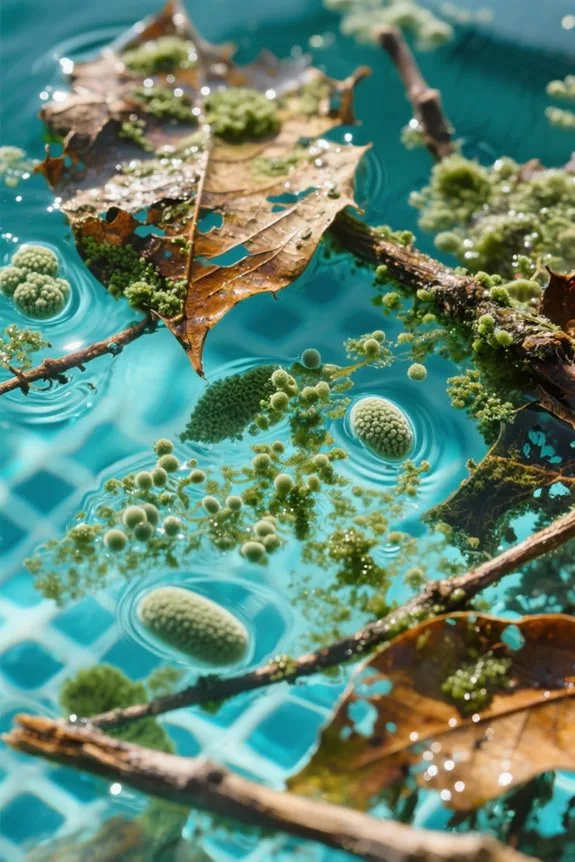
Organic debris decomposition greatly alters pool chemistry and microbiology. Monitor debris accumulation closely to prevent organic compounds from releasing nutrients that promote bacteria and algae growth, which degrade water quality. Test and adjust chlorine levels daily, as organic load increases chlorine demand and can quickly deplete disinfectants. Balance pH levels between 7.2 and 7.8 to avoid chemical imbalance, which causes skin irritation and reduces chlorine efficiency. Remove visible debris routinely to minimize tannins causing discoloration and unpleasant odors. Use a pool skimmer or automatic cleaner for effective removal. Inspect water chemistry regularly, focusing on chlorine, pH, and alkalinity. Promptly treat algae outbreaks with algaecide and shock treatments. Maintain consistent water testing schedules in swimming pools to guarantee ideal chemical balance and minimize microbial proliferation caused by persistent organic contamination. Regular vacuuming with high suction power pool vacuums is essential to effectively remove debris from concrete pool surfaces and maintain optimal water quality.
Impact on Filtration and Circulation Systems
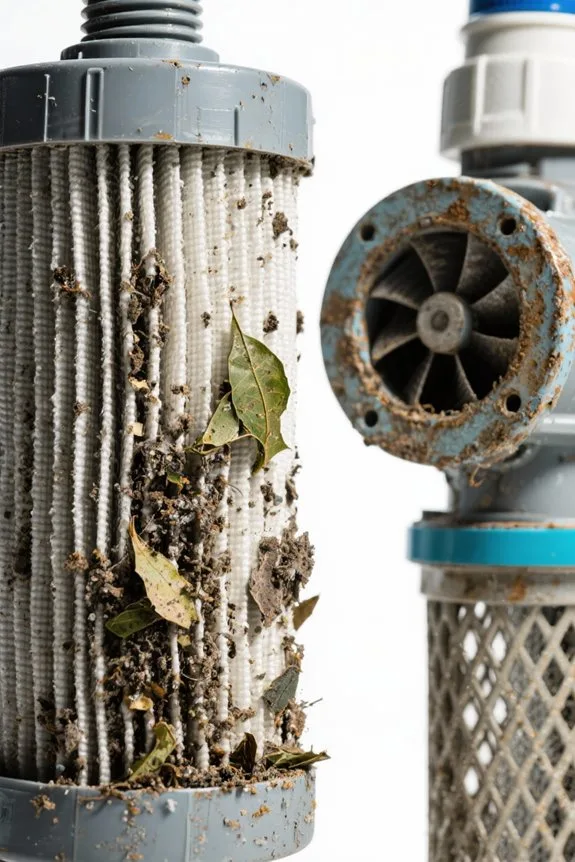
Keep skimmer baskets clear by removing leaves and debris daily to maintain excellent water flow through filtration systems. Debris buildup causes clogs in skimmer baskets, impellers, and filters, restricting circulation and reducing filtration efficiency. Regularly inspect and clean these components to prevent contaminants from accumulating, which degrades water quality. Use tools like leaf vacuums to efficiently remove surface debris before it reaches the pump. Monitor pump pressure gauges; rising pressure often indicates filter clogging requiring backwashing or cartridge cleaning. Neglecting maintenance increases pump workload, risking mechanical failure and costly repairs. Make sure circulation systems operate at manufacturer-recommended flow rates for peak performance. Consistent skimming, combined with routine filter checks and debris removal, sustains efficient filtration, preserves equipment longevity, and keeps pool water clean and safe for users. Prioritize these steps to avoid common circulation issues caused by debris-related blockages. For larger pools, consider investing in robotic pool vacuums to automate debris removal and reduce strain on your filtration system.
Algae Growth and Chemical Treatment Challenges
Although debris removal is often seen as routine, failing to promptly eliminate decomposing leaves and organic matter creates a nutrient-rich environment that accelerates algae growth, threatening swimmer safety. Prioritize skimming leaves and organic debris daily to maintain ideal water quality and reduce nutrient buildup that fuels algae. Monitor chlorine levels closely; expect rapid depletion as algae consume sanitizers, necessitating frequent chemical treatments to restore balance. Test water chemistry regularly to adjust pH and alkalinity, ensuring chlorine remains effective against microbial proliferation. Address cloudy water promptly by increasing chlorine doses and incorporating algaecides as needed, while avoiding overuse that destabilizes water chemistry. Consistent debris removal minimizes chemical challenges, cuts maintenance costs, and safeguards pool water, making precise testing and targeted treatments critical components of effective pool maintenance. Additionally, using a pool pump with self-priming technology can improve water circulation, promoting better filtration and reducing the buildup of harmful contaminants.
Preventative Maintenance and Cleaning Techniques
Begin by skimming pool surfaces daily, removing leaves and debris before they settle and decompose. Incorporate regular cleaning with tools like the Water Tech™ Volt® Leaf Vac to efficiently eliminate organic matter. Use a pool cover or leaf nets during heavy leaf-fall seasons to limit debris entry. Maintain water quality by testing the water weekly, focusing on chlorine levels and pH to adjust chemical balance promptly. Clean skimmer baskets and inspect pumps regularly to guarantee ideal water filtration and circulation. Address any clogs swiftly to prevent stagnant zones that degrade the pool’s water. Embrace preventative maintenance, integrating scheduled cleanings and water testing, to enhance water clarity, prevent algae growth, and reduce chemical use. This systematic approach minimizes contamination, sustaining a balanced aquatic environment. Additionally, conducting tests with 7-way strips provides crucial insights for optimal water chemistry management.
Environmental Implications of Pool Water Discharge
Since improper pool water discharge can severely impact local ecosystems, always verify chemical levels before draining. Pool owners must test total chlorine levels to guarantee ≤0.01 mg/L and confirm pH between 6.5 and 8.0 s.u. Stop adding chlorine and chemicals several days prior to disposing pool water. Avoid draining into storm drains or natural water bodies to prevent contamination and protect water quality. Slowly release water onto a vegetated lawn to allow natural filtration, reducing environmental impact. Follow local codes strictly, as violations may result in fines. Prioritize responsible water management by coordinating debris removal beforehand to prevent solids in discharge. Consistent adherence to these steps safeguards aquatic plants and animals, securing compliance while minimizing pollution risks from chlorine in the water, promoting a healthier ecosystem around pools. Additionally, regular monitoring of water chemistry is essential to maintain pool health and avoid environmental damage during discharge.
Frequently Asked Questions
How Long After Poop in Pool Is It Safe to Swim?
Swimming safety after fecal contamination requires closing the pool for at least 30 minutes or 24 hours for diarrhea-related incidents. Pool hygiene demands thorough sanitation practices, water testing, and chlorine levels within safe ranges before resuming swimming. Swimmer awareness minimizes health risks.
What Happens if You Don’t Clean a Swimming Pool?
If a swimming pool is not cleaned, pool hygiene deteriorates, promoting bacteria growth and algae blooms. Filter efficiency declines due to debris, causing chemical imbalance, reducing water clarity, risking swimmer safety, damaging pool equipment, and disrupting the maintenance schedule.
Is It Normal to Losing 1/2 Inch of Water a Day in a Pool?
Losing 1/2 inch of water daily is normal due to evaporation rates influenced by weather, humidity factors, and seasonal changes. Proper pool maintenance, a functioning filtration system, and controlling surface tension help manage water loss effectively.
How to Get Rid of Debris in a Pool?
To get rid of debris in a pool, employing leaf blower techniques, vacuum options, skimmer baskets, surface nets, and robotic cleaners is effective. Integrating manual cleaning, chemical treatments, and strict maintenance schedules supports algae prevention across varying debris types.