As an Amazon Associate, we earn from qualifying purchases. Some links on this site are affiliate links at no extra cost to you. Our recommendations are based on thorough research and editorial judgment.

Understanding Water Chemistry for Beginners

Begin by measuring water hardness with a reliable test kit, focusing on calcium and magnesium levels, keeping values within acceptable limits to prevent scaling. Next, check pH using digital meters or strips, maintaining a range of 6.5 to 8.5 to avoid corrosion. Assess total dissolved solids (TDS) with a meter, ensuring levels stay between 50 and 200 PPM. Monitor common contaminants and adjust alkalinity to stabilize pH. Follow these steps carefully to manage water chemistry effectively, and further guidance will clarify advanced techniques.
Key Takeaways
- Water hardness arises from dissolved calcium and magnesium ions, affecting scaling and soap efficiency.
- Maintaining pH near neutral (6.5–8.5) prevents corrosion and ensures good taste.
- Total Dissolved Solids (TDS) between 50 and 200 ppm indicate safe drinking water quality.
- Monitoring contaminants like lead, nitrates, and iron is essential for health and safety.
- Regular testing with meters or kits supports proper water chemistry and balance.
The Building Blocks of Water Chemistry
You may be interested


Begin by examining water hardness, primarily influenced by dissolved calcium and magnesium ions. Measure hardness accurately, as it impacts overall water quality and can cause scaling or reduce soap lathering. Test the pH level using a reliable digital meter or test strips, ensuring it stays near neutral (around 7) for best household use. Monitor alkalinity to evaluate water’s buffering capacity, stabilizing pH by neutralizing weak acids. Check Total Dissolved Solids (TDS) with a TDS meter to confirm levels between 50 and 200 PPM, appropriate for drinking water taste and safety. If hardness is excessive, install water softeners that replace calcium and magnesium with sodium or potassium ions, protecting plumbing and appliances. Consistently evaluate these parameters, balancing hardness, pH, alkalinity, and TDS to maintain ideal water chemistry conditions. Regularly testing and adjusting pH levels is essential for maintaining water balance and preventing corrosion or discomfort.
Importance of Water Hardness and Ph
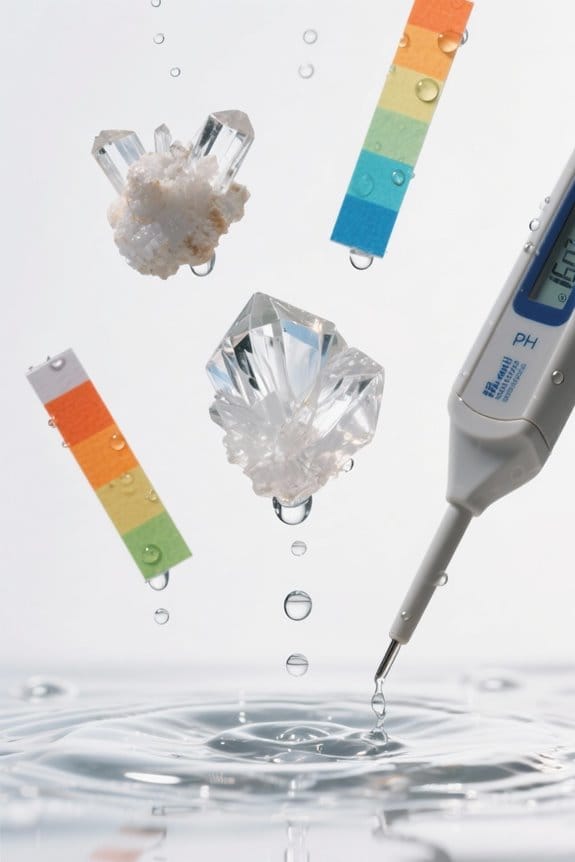
Although often overlooked, monitoring water hardness and pH is essential for maintaining ideal water quality. Test water hardness by measuring dissolved solids (TDS), focusing on calcium and magnesium levels, which cause hardness. Recognize 400 PPM calcium carbonate as a threshold where plumbing issues arise. Regularly perform water quality testing using digital TDS meters and pH testers. Maintain pH between 6.5 and 8.5 to prevent corrosion and optimize taste; adjust by chemical dosing or reverse osmosis systems if necessary. Distinguish soft water with low mineral content, which changes the pH differently than hard water. Track acidity or alkalinity to avoid damage to appliances and plumbing. Incorporate these practices to balance hardness and pH, ensuring water safety and prolonging equipment lifespan without guesswork or overcorrection. For pools using high-powered equipment, consider the Total Dynamic Head to ensure proper circulation and chemical distribution.
Recommended Products

Clear Range: This house water testing kit offers clear, easy to read results and acceptable ranges for all substances. The water contaminant tester delivers clear results on any type of water

DOUBLECHECK - Each strip has two identical color pads. If the color pad colors differ after testing, it indicates that the test may not be reliable it should be performed again.

All for health: with global water quality issues constantly threatening, it's important to protect your health by ensuring that your drinking water is free of harmful substances. Our water quality testing kits can quickly identify these problems, making it easier to protect your health and that of your family
Effects of Minerals and Contaminants in Water
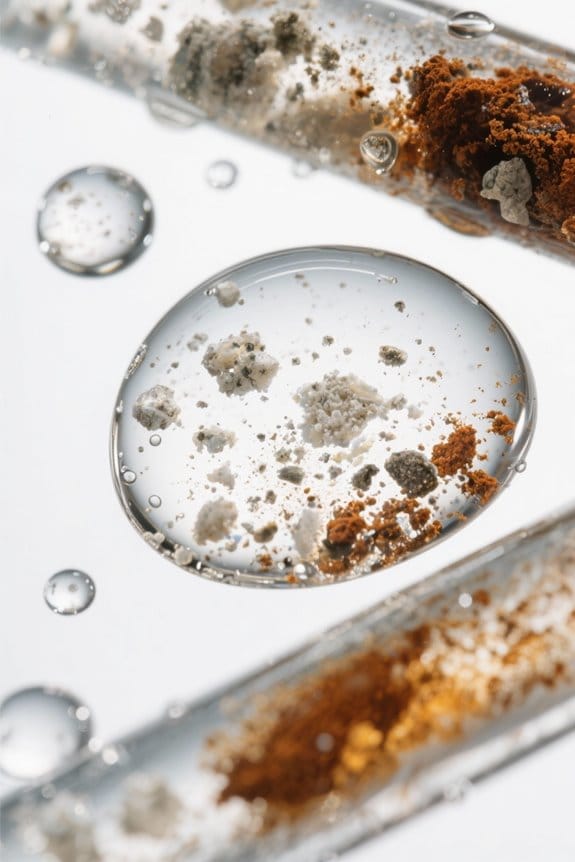
When evaluating water quality, pay close attention to mineral concentrations and contaminant presence, as they directly affect safety and functionality. Measure calcium and magnesium levels to assess hard water, noting scale buildup risks in plumbing and appliances. Check total dissolved solids (TDS) routinely; values above 500 PPM indicate potential contamination or taste issues. Monitor pH levels carefully, as imbalances can influence contaminant solubility. Identify contaminants such as lead, copper, nitrates, iron, and manganese, common in aging water supply systems, to prevent health risks. Nitrates require special attention due to dangers like methemoglobinemia in infants. Use precise water testing kits designed for these parameters, following manufacturer instructions for accurate readings. Address detected issues promptly with filtration or treatment solutions to maintain safe, reliable water quality. Regular testing using chlorine test strips helps ensure balanced and sanitized water conditions.
Recommended Products

17 IMPORTANT PARAMETERS: The Varify Premium Drinking Water Test Kit offers an unrivaled, complete analysis of your drinking water by testing for 17 essential parameters. This includes crucial tests for chlorine, fluoride, lead, iron, bacteria, and more, ensuring that you're fully informed about the quality of your water. With this extensive range of testing capabilities, you can detect contaminants and imbalances that could affect your health, providing a holistic view of your water's safety.

【22-Parameter Water Testing】We provide a complete testing range of 22 essential water quality indicators including Nickel, Zinc, Tin, Copper, Fluoride, Aluminum, Total Chlorine, Nitrite, Nitrate, Iron, Total Hardness, Free Chlorine, Sodium Chloride, Carbonate, Total Alkalinity, pH, Cobalt, Sulfite, Chromium, Cadmium, Lead, and Bacteria. It offers a thorough and professional overview of your water condition

Accurate and Reliable TDS Meter: Equipped with a premium quality titanium alloy probe and an intelligent chip, our TDS meter, Electric Conductivity Meter, digital water tester ensures stable performance and exceptional accuracy for reliable water quality testing. Ideal for testing drinking water, filter water, bottle purified water, RO filters, aquariums, and hydroponics.
Methods for Testing Water Quality
To assess water quality accurately, select appropriate testing methods based on the parameters of interest and available resources. Use a basic test kit to measure pH of water, total dissolved solids (TDS), alkalinity, and hardness, focusing on calcium and magnesium levels. Record pH values, aiming for a range between 6.5 and 8.5, and measure alkalinity to evaluate the water’s ability to neutralize acids, ideally between 80 and 120 parts per million (PPM). For precise results, send samples to professional laboratories for detailed analysis of metals, nitrates, and microbial contaminants. Monitor chlorine concentrations in water treatment, maintaining 1.0 to 3.0 ppm in pools. Regularly check TDS to track dissolved mineral content, which influences overall water chemistry. Follow instructions carefully when using test kits to avoid contamination or inaccurate readings. In pool maintenance, frequent testing using 7-way strips or handheld testers is essential to ensure balanced water chemistry and prevent issues such as algae growth or equipment damage.
Recommended Products

AFFORDABLE 7-IN-1 POOL TESTING KIT: Our 150 pool test strips provides an affordable, all in one pool water testing kit for various chemicals including Free Chlorine, Alkalinity, pH levels and more!
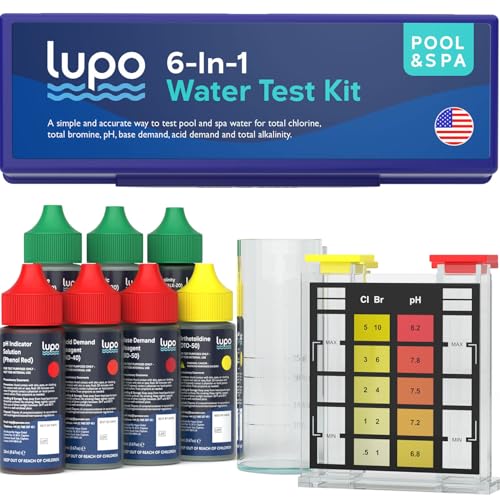
6-IN-1 POOL TESTING KIT: An easy-to-use, accurate pool test kit for testing six essential water quality parameters in residential pools and spas: Total Chlorine, Total Bromine, pH, Base Demand, Acid Demand and Total Alkalinity. Includes reagents for 100 tests, helping keep your water safe and balanced.

7 Way: These test strips for pools and spas read 7 different chemicals in the water. The pool strips test 7 way offer clear readings in daylight and come with detailed instructions
Practical Solutions for Common Water Chemistry Issues
Begin by testing water at least once a month, focusing on pH, hardness, and alkalinity levels, using calibrated digital meters or reliable test kits. Track pH carefully, remembering the pH scale is logarithmic, so small changes represent significant shifts. Measure hardness in parts per million (PPM) to evaluate calcium and magnesium concentrations in tap water. To remove calcium and magnesium, employ water softening techniques or install a reverse osmosis (RO) system, which also lowers dissolved solids (TDS). Adjust alkalinity for better water’s ability to neutralize acids by adding sodium bicarbonate as needed. Perform routine water changes to prevent buildup of contaminants and maintain balanced chemistry. In planted aquariums, cautiously use CO2 injection to modulate pH without stressing aquatic life. These steps guarantee stable, safe water for plumbing and biological systems. Additionally, maintaining proper water temperature through efficient pool heater technology can enhance chemical stability and aquatic health.
Frequently Asked Questions
How Does Water Temperature Affect Chemical Reactions in Aquariums?
Like a conductor directing an orchestra, temperature effects in aquariums influence reaction rates, with warm water accelerating fish metabolism, pH fluctuations, oxygen levels, and nutrient availability, while cold water slows these essential processes in aquarium biology.
Can Aquarium Substrate Influence Water Chemistry Over Time?
Aquarium substrate influences water chemistry long term by affecting pH through mineral leaching and buffering capacity. Different substrate types impact nutrient release, bacterial activity, and organic matter decomposition, especially within substrate layering, altering overall chemical stability over time.
What Role Do Plants Play in Stabilizing Water Parameters?
Like a natural filter, plants stabilize water parameters through plant absorption and nutrient cycling, producing oxygen, stabilizing pH, controlling algae, enhancing biodiversity, absorbing carbon dioxide, creating habitats, and their root structure supports these processes effectively.
How Often Should Water Parameters Be Tested for Best Results?
Frequency recommendations suggest testing water parameters weekly using reliable test equipment and kits. Ideal parameters fluctuate with seasonal changes, making consistency important. Combining DIY solutions with laboratory testing and expert advice guarantees peak water quality management.
Are Natural Water Conditioners Safer Than Synthetic Ones?
Natural conditioners generally exhibit better safety profiles and lower environmental impact than synthetic conditioners. However, effectiveness studies, long-term effects, and user experiences vary, requiring cost analysis and adherence to regulatory standards for extensive safety comparisons.