As an Amazon Associate, we earn from qualifying purchases. Some links on this site are affiliate links at no extra cost to you. Our recommendations are based on thorough research and editorial judgment.
How Pool Cleanliness Impacts Local Wildlife

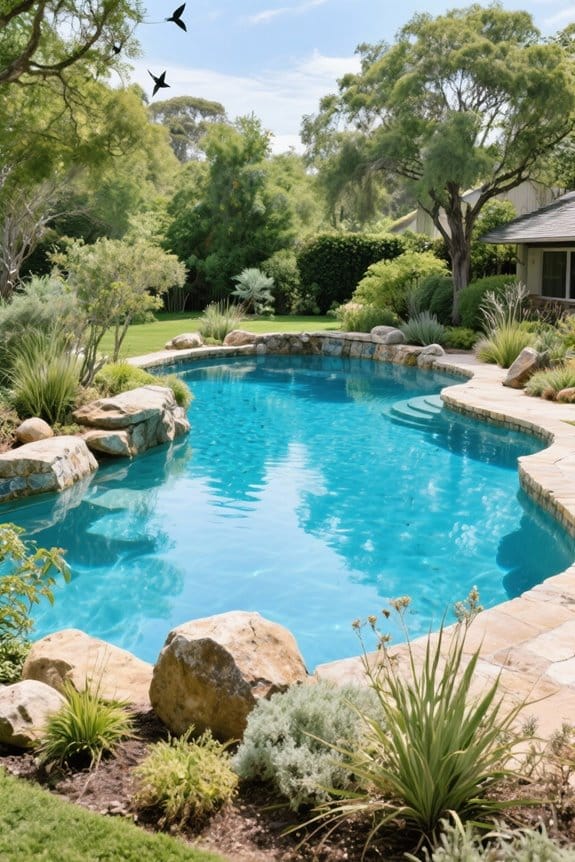
Maintain pool cleanliness by skimming leaves and debris daily, vacuuming weekly, and testing chlorine levels at 2 ppm with pH below 7.5 for effective bacteria control. Inspect for wildlife signs like frog activity or raccoon tracks, remove droppings promptly to prevent E. coli and Salmonella risks, and secure pool covers and fencing to limit animal access. Backwash filters after contamination, monitor ammonia levels, and repair entry points regularly. Following these steps protects water quality and supports local wildlife health, ensuring safer coexistence. Further strategies and tips enhance these protective measures.
Key Takeaways
- Regular pool maintenance reduces harmful bacteria and parasites that can impact both wildlife and human health.
- Clean pools with balanced chlorine and pH levels deter wildlife from contaminating water sources.
- Removing debris prevents chemical imbalances that harm amphibians, birds, and other animals around pools.
- Secure fencing and covers reduce wildlife access, minimizing contamination from animals like raccoons and turtles.
- Monitoring and promptly addressing wildlife intrusion helps maintain water quality and protects local ecosystems.
The Relationship Between Pool Cleanliness and Local Wildlife Health
You may be interested


Begin by inspecting the pool regularly for debris and signs of wildlife activity, such as frog presence or bird droppings, which often indicate contamination risks. Prioritize maintaining pool cleanliness through routine skimming and vacuuming to remove dirt and organic matter that attract local wildlife. Monitor chlorine levels closely, aiming for 2 ppm and a pH below 7.5, to guarantee effective bacteria elimination and water disinfection. Implement consistent pool maintenance schedules, including checking filtration systems and chemical balance, to reduce bacteria and parasites harmful to both wildlife and humans. Prevent uncontrolled wildlife access by installing secure fencing and using pool covers during inactivity. These measures support a safer aquatic environment, protecting pool users and local wildlife by minimizing pathogen transmission and preserving ecological health. Regular pool filter cleaning every 30 to 90 days is essential to ensure filtration systems function efficiently and maintain water clarity.
Common Wildlife Encounters in Residential Pools
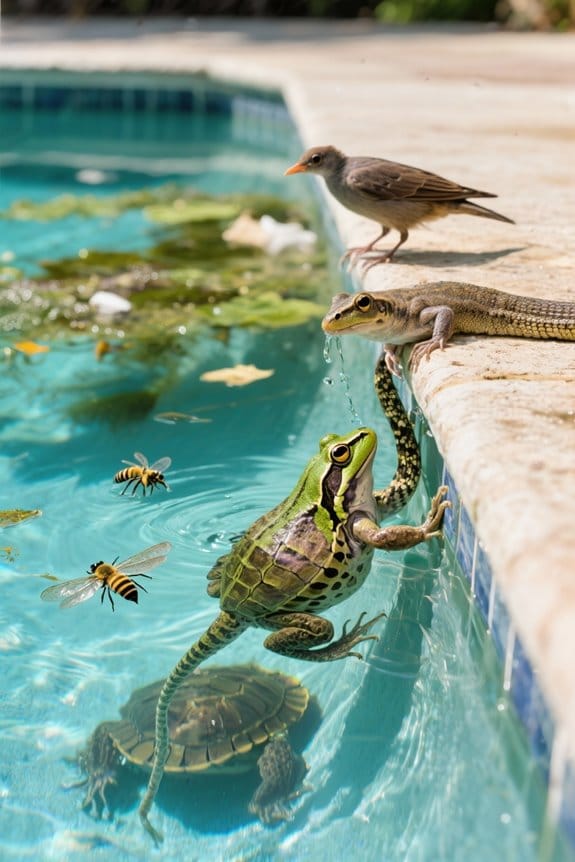
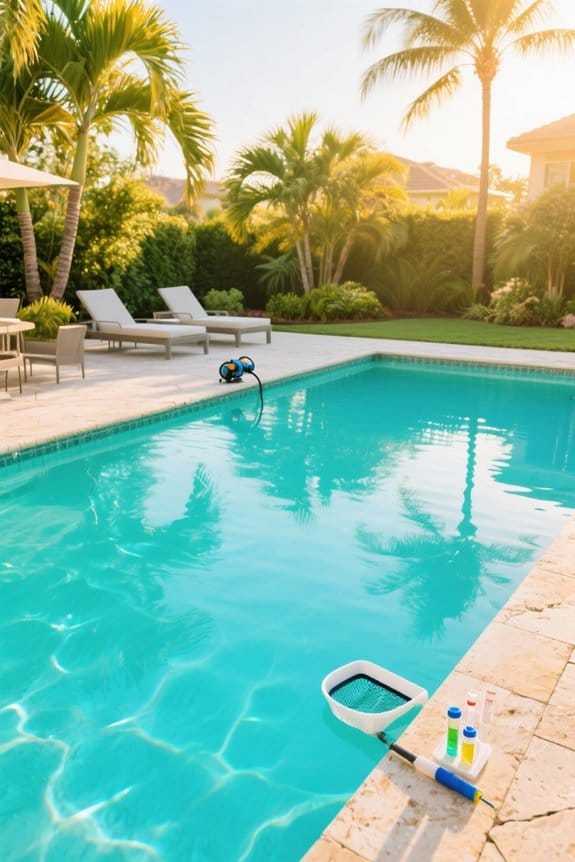
Identify common wildlife species around residential pools such as frogs, toads, birds, raccoons, turtles, and mosquitoes. Inspect pools regularly for animal activity to maintain ideal water quality. Remove debris left by amphibians and birds, including droppings and feathers, to prevent chemical imbalances. Secure pool covers at night to deter raccoons and turtles, known to contaminate water with fecal matter. Employ fine mesh screens on drains and skimmers to limit mosquito breeding, a key step in effective pest control. Pool owners must clean your pool weekly using a pool vacuum and chemical test kits to monitor chlorine and pH levels. Implement routine inspection for animal tracks and habitat signs, adjusting maintenance frequency accordingly to reduce wildlife encounters and preserve pool hygiene efficiently. Choosing a pump with the appropriate flow rate and head performance can also help maintain optimal water circulation, deterring wildlife from lingering in the pool area.
Risks of Contamination From Wildlife to Pool Water
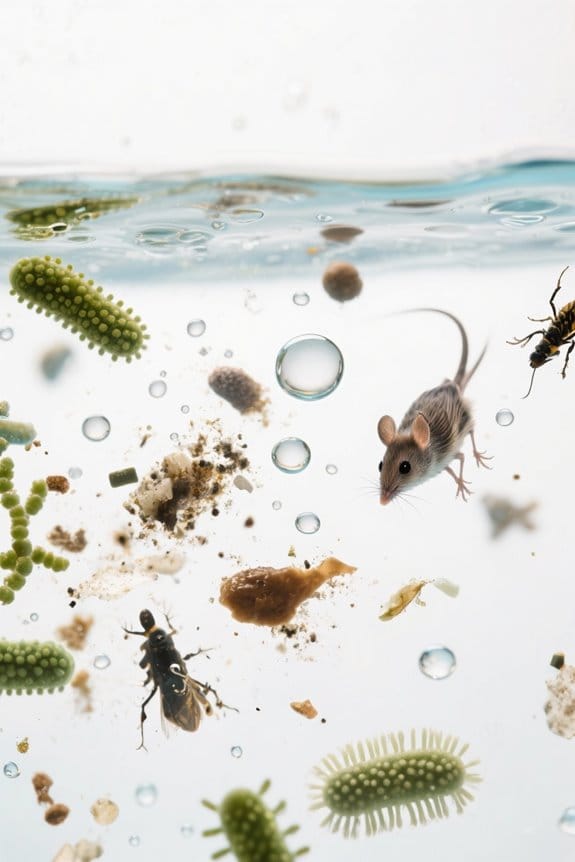
Although maintaining proper chlorine levels at 2 ppm effectively kills most pathogens, promptly remove bird droppings and raccoon feces to reduce risks of E. coli, Salmonella, and Baylisascaris procyonis contamination. Inspect swimming pools regularly for wildlife presence, especially after dusk when raccoons are active. Use a pool net and protective gloves to remove debris and animal waste immediately, minimizing bacteria introduction into pool water. Monitor ammonia and nitrate levels with test kits, as these indicate contamination from organic matter. Maintain sanitation by backwashing filters after wildlife intrusion, preventing bacteria accumulation. Remove dead amphibians or other animals following CDC guidelines to avoid further contamination. Act quickly after spotting contamination, as untreated bacteria can persist despite chlorine, compromising swimming pools’ hygiene and swimmer health. Incorporating a routine water testing schedule helps catch contamination early and maintain water quality.
Best Practices for Maintaining a Safe and Clean Pool
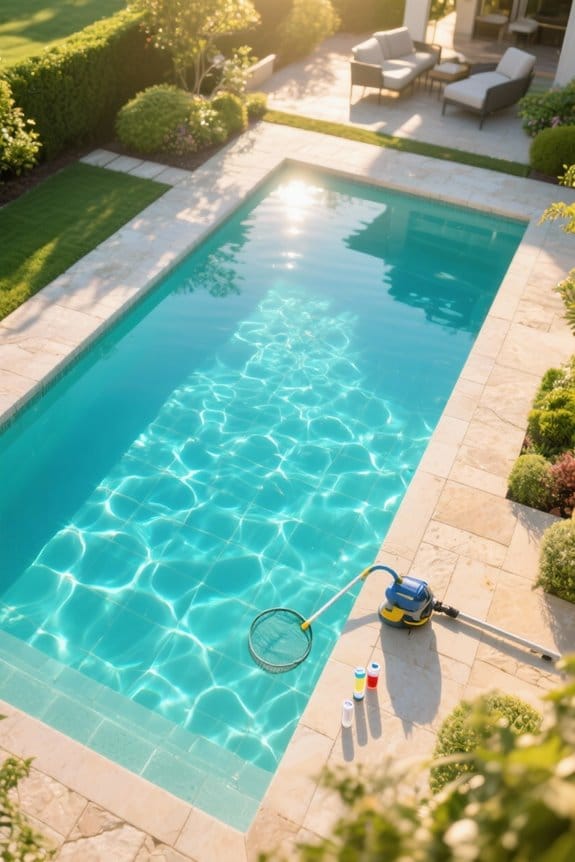
Maintain a routine schedule for skimming the pool surface using a telescoping pool net to remove leaves, insects, and organic debris that encourage bacterial growth. Employ a pool service quarterly to inspect and maintain the filtration system, enhancing water clarity and reducing contaminants. Conduct weekly water testing for chlorine and pH levels, adjusting chemicals promptly to prevent algae and bacteria proliferation. Use a durable pool cover when the pool is not in use to minimize debris and help keep animals away. Regularly clean the pool’s filters, backwash if necessary, and vacuum the pool floor to remove settled particles. Inspect pool surroundings for potential wildlife entry points, but avoid physical barriers here—those will be addressed in later guidance. Consistent attention to these practices guarantees ideal hygiene and prolongs pool equipment lifespan. For optimal debris removal on concrete surfaces, it is recommended to use pool vacuums with at least 18 GPM suction power.
Strategies to Prevent Wildlife Intrusion in Pools
When preventing wildlife intrusion, consistently maintain chlorine levels at 2 ppm to guarantee effective pool disinfection, reducing contamination risks from animal presence. Install pool fencing at least 4 feet high, with mesh small enough to block raccoons and deer, to physically prevent animals from accessing the pool area. Use secure pool covers when the pool is unused, minimizing water exposure and deterring wildlife intrusion. Surround pools with aquatic plants known to repel insects and small animals, such as lavender or citronella. Remove edible plants and avoid placing bird feeders near pools, as birds can compromise pool cleanliness through droppings. Regularly inspect barriers and cover integrity to maintain their effectiveness. These proactive steps effectively prevent animals from contaminating pool water, reducing dependency on professional pool services for wildlife-related issues. Additionally, ensuring the use of durable and high-quality pool vacuum bags can help maintain water cleanliness by effectively trapping debris and contaminants brought in by animals.
The Role of Professional Pool Services in Wildlife Management
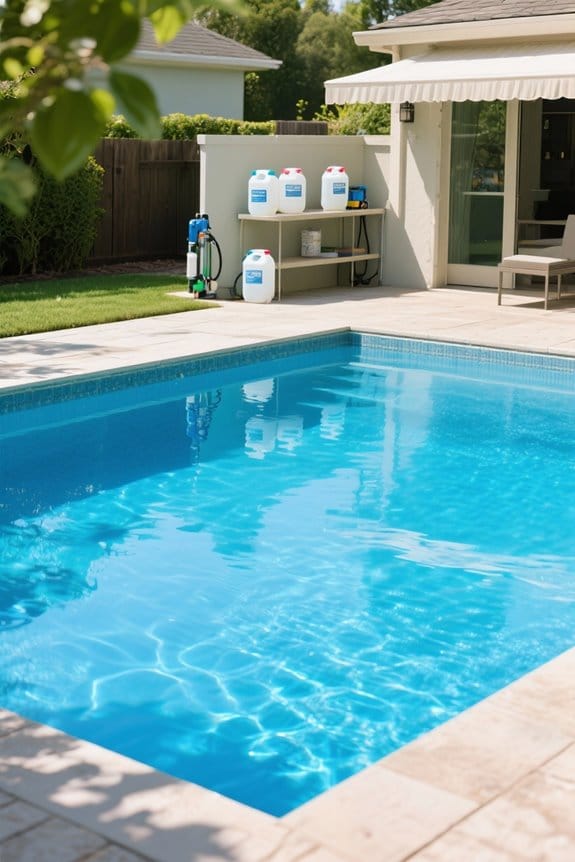
To assure effective wildlife management around pools, engage professional pool services that conduct thorough cleaning and disinfection protocols, targeting germs and bacteria introduced by animals. Demand regular water quality testing to maintain chlorine levels between 1-3 ppm and a pH of 7.2-7.8, essential for pool hygiene. Insist on tailored deterrent strategies, such as ultrasonic repellents or fencing, designed to keep local wildlife away without harming them. Make certain professionals remove dead animals and droppings safely, following CDC guidelines to prevent contamination. Verify the use of advanced filtration systems to reduce organic debris. Schedule maintenance at least biweekly during peak wildlife activity to avoid bacterial buildup. Trust in professional pool services to monitor water clarity, address algae growth, and uphold safety standards, thereby protecting both pool users and local wildlife effectively. Additionally, applying winterizing pool kits can prevent algae and contaminant buildup during colder months, reducing the risk of harmful effects on surrounding wildlife habitats.
Frequently Asked Questions
Does Emptying a Pool Into a Nearby Lake Harm the Wildlife in the Lake?
Emptying a pool into a nearby lake harms aquatic ecosystems by introducing pool chemicals, altering water temperature, and causing runoff pollution. These changes disrupt habitat, negatively influence wildlife behavior, and threaten the ecological balance within the affected environment.
How Do Swimming Pools Affect the Environment?
Swimming pools affect the environment by disrupting ecosystem balance through chemical runoff, altering water temperature, and degrading wildlife habitats. These impacts reduce aquatic biodiversity and challenge environmental sustainability, emphasizing the need for eco-friendly pool management practices.
Why Is It Important to Keep a Swimming Pool Clean?
Keeping a pool clean guarantees water quality impact, health hazard prevention, and wildlife safety assurance. While some may view pool maintenance as tedious, its benefits include chemical balance importance and aesthetics appeal advantages that enhance enjoyment and safety.
Do Pools Attract Animals?
Pools do attract animals, causing animal attraction that may disrupt local fauna and ecosystem balance. Proper use of pool chemicals supports wildlife safety by reducing habitat disruption and minimizing risks to animals drawn to these artificial water sources.