As an Amazon Associate, we earn from qualifying purchases. Some links on this site are affiliate links at no extra cost to you. Our recommendations are based on thorough research and editorial judgment.

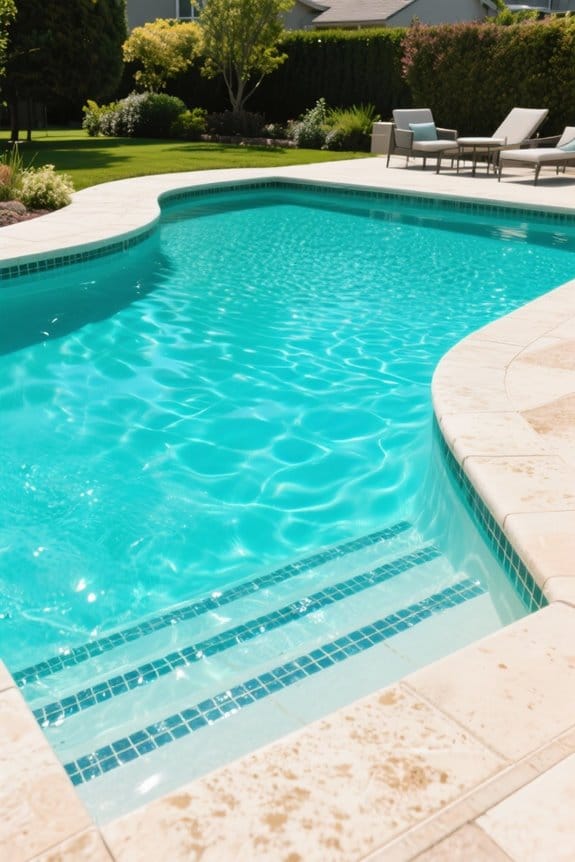
Identifying and Removing Pool Stains Safely

Identify pool stains by color—green or brown suggests algae, reddish-brown indicates iron, blue-green points to copper. Test water for pH (7.2–7.6) and metal levels under 0.3 ppm. For organic stains, shock with chlorine, brush thoroughly, and run the pump 24 hours. Use ascorbic acid for iron stains and specialized removers like Suncoast Stop Stains for copper. Maintain balanced chemistry and clean regularly. Detailed guidance on stain types and treatments follows for successful stain management.
Key Takeaways
- Identify pool stains by color and source: green/brown for organic, reddish-brown/blue-green for metals like iron or copper.
- Test pool water regularly to maintain balanced pH (7.2-7.6) and low metal content below 0.3 ppm for preventing stains.
- Remove organic stains by shocking the pool, brushing stains, and running the pump continuously for 24 hours.
- Use ascorbic acid for iron stains and specialized products like Suncoast Stop Stains for copper-related discolorations.
- Consult professionals for stubborn stains, and maintain consistent cleaning and water chemistry to prevent recurrent staining.
Common Causes of Pool Stains
You may be interested
Understanding the common causes of pool stains is essential for effective prevention and removal. Start by identifying organic stains caused by algae, leaves, and natural debris; these typically create green or brown blotches on surfaces. Metal stains, on the other hand, originate from corroded pipes or metals like iron and copper, causing reddish-brown or bluish-green discoloration. Test pool water frequently for pH levels and metal content, aiming to maintain a pH between 7.2 and 7.6 and metal concentrations below 0.3 ppm. Establish a regular pool maintenance routine that includes skimming debris, brushing surfaces, and vacuuming to prevent organic buildup. Use sequestrants or metal removers if metal stains develop. Consistent monitoring and early intervention reduce the risk of stubborn, hard-to-remove stains forming on pool surfaces. Employing an effective pressure pool cleaner can also help reduce the accumulation of debris that contributes to staining.
Recognizing Organic Pool Stain Colors
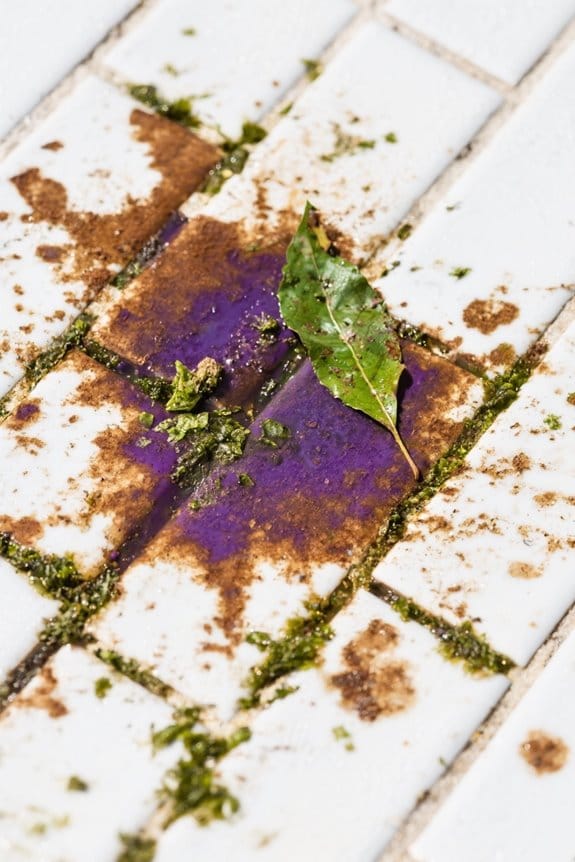
Identify organic pool stains by examining their color and location on pool surfaces. Look for green, brown, or yellow blotches typically caused by algae growth, leaves, or debris accumulation. Green stains usually indicate algae presence, with mustard algae presenting a yellowish hue, signaling the need for stronger cleaning measures. Brown or reddish-brown discolorations arise from organic materials like leaves and berries left uncleaned. To confirm an organic stain, apply a chlorine solution directly on the stain; if it fades within minutes, it is organic. Regularly brush pool surfaces using a nylon-bristled brush, and perform frequent skimming with a leaf net to prevent organic stains from forming. Maintain chlorine levels between 1–3 ppm to inhibit algae growth and guarantee water clarity. Address stains promptly to avoid deeper, harder-to-remove discolorations. Using UV protection materials around your pool area can also help minimize algae growth and organic debris accumulation.
Identifying Metallic Stains by Color
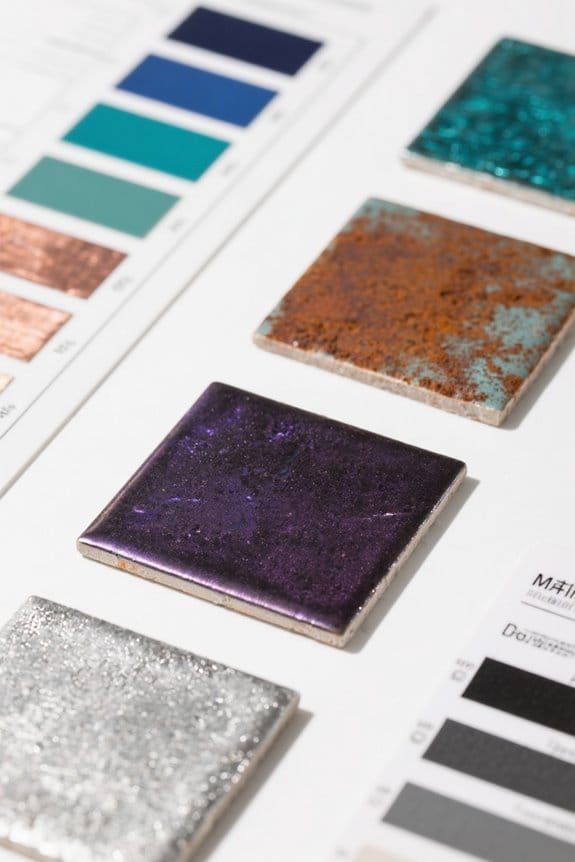
Frequently, metallic stains manifest in distinct color patterns—observe reddish-brown hues indicating iron deposits, bluish-green shades signaling copper presence, and gray or black areas revealing oxidized copper. Identify metal stain location carefully, noting if iron stains cluster near plumbing or well water sources. Recognize copper stains by their characteristic bluish-green tint, often caused by copper pipes or algaecides. Inspect stained surfaces closely, using a flashlight to discern subtle color variations. Record findings meticulously to guide stain removal choices. Remember, iron stains respond well to ascorbic acid treatments, while copper stains require specialized chemical removers. Avoid guessing stain origin based solely on appearance; instead, combine color identification with environmental clues. Following these steps guarantees safe, effective stain management without damaging pool surfaces or equipment. It is important to select the appropriate brush material, such as stainless steel for concrete, to avoid damaging pool surfaces during stain removal.
Testing Methods to Determine Stain Origin
How can one accurately determine the origin of stubborn pool stains? Employ specific testing methods to identify the cause efficiently. First, apply chlorine to the stained area; if the stain fades, organic material is likely responsible. Next, target metal stains by treating a small test spot with ascorbic acid—if it lifts, metals like iron or copper are present. Observe stain colors carefully: green or brown hues usually signify organic debris, while red, blue, or gray indicate metal involvement. Perform these tests on visibly affected sections to guarantee accuracy. Additionally, regularly test pool water for pH, alkalinity, and metal content using a reliable test kit to prevent recurring stains. Follow these steps diligently before proceeding with removal to address the correct stain type safely and effectively. Choosing the appropriate UV protection features can also help reduce pool surface damage caused by harmful sun exposure.
Step-by-Step Removal of Organic Pool Stains
Begin by testing pool water to verify pH is between 7.4 and 7.6, and total alkalinity measures 100-150 ppm; balanced water guarantees maximum stain removal efficiency. Next, shock the pool with chlorine, adjusting dosage based on stain size—regular amounts for small stains, triple for larger ones—to effectively remove organic contaminants. Thoroughly brush stained areas with a stiff brush to dislodge debris and enhance treatment contact. After shocking, run the pool pump continuously for at least 24 hours to circulate water, aiding the removal of dislodged organic matter. Finally, maintain pool water balanced by regularly monitoring water chemistry, super-chlorinating as needed, to prevent organic stains from recurring. These detailed steps guarantee reliable removal of organic pool stains without damaging surfaces. Additionally, regular cleaning of your pool filter using an effective filter cleaner enhances water clarity and assists in preventing stain development.
Recommended Products

BENEFIT: Shock treat, sanitize, clarify, and help prevent bacteria and algae in your swimming pool water, all with this convenient, easy-to-use product

Shockingly Quick Sanitation: Enjoy crystal-clear, swim-ready water faster with Champion Pool Shock’s powerful and potent 12.5 percent sodium hypochlorite formula, providing rapid sanitation for your pool.

6 in 1 Formula: Kills bacteria and algae to maintain a clear swimming pool. Our algae-fighting formula prevents algae for crystal-clear water. Destroys contaminants to aid filter performance and clear dull, cloudy water
Effective Treatment for Metal-Related Pool Stains
Identify the type of metal causing stains by testing pool water with ascorbic acid; observe if stains temporarily disappear, indicating iron or copper presence. For rust-colored iron stains, apply Suncoast Iron & Cobalt Stain Remover according to the label, ensuring pool water temperature exceeds 65°F to optimize effectiveness. For blue-green copper-related stains, use Suncoast Stop Stains, designed specifically to target copper corrosion discoloration. Always test for metals before treatment to confirm the stain source, preventing misuse of chemicals. After removing existing metal-related stains, incorporate a metal sequestrant regularly in the maintenance routine, which binds free metals and prevents future deposits that cause staining. Follow dosing instructions precisely, monitor metal levels frequently, and adjust treatments as necessary to sustain clear, stain-free pool surfaces. Additionally, maintaining proper phosphate levels using phosphate removers can help reduce metal staining by limiting nutrients that promote algae growth and metal precipitation.
Recommended Products

STAIN + SCALE CONTROL: Spa stain and scale control for hot tub and pool routines. Helps manage metal-related staining, mineral residue, and dull-looking water for a cleaner, more polished appearance.

Metal & Stain Control: Clorox Pool&Spa Swimming Pool Scale, Metal & Stain Control is your solution to preventing unsightly metal stains and scale formation in your pool. Maintain the cleanliness of your pool surfaces with our dependable formula.

FAST EASY and SAFE USE--Naturally remove stains from pool linings and underwater surfaces without scrubbing. Completely safe for your pool, produced from citrus by-products. Works on fiberglass and vinyl pool surfaces.
Maintaining Proper Water Chemistry to Prevent Stains
Although maintaining balanced water chemistry can seem challenging, consistently test pH levels and adjust them to stay between 7.4 and 7.6 using a reliable digital pH meter or test strips; also verify total alkalinity remains within 100-150 ppm by adding alkalinity increaser or reducer as necessary, ensuring stabilized pH that reduces staining and scaling risks. Maintain chlorine levels between 2-4 ppm, especially above 70°F water temperature, to combat organic stains effectively. Regularly apply metal sequestrants during refills or when metal concentrations rise, preventing metal particles from settling and causing stains. Prioritize accurate water chemistry monitoring as a core pool maintenance task to prevent stains before they form, maintaining water clarity and surface integrity, thereby extending pool lifespan and reducing costly repairs linked to staining and scaling. Using pre-measured chemicals can simplify maintenance tasks and ensure accurate dosing for effective stain prevention.
Best Practices for Regular Pool Cleaning and Upkeep
Maintain an effective cleaning schedule by skimming debris and vacuuming the pool at least once weekly to prevent organic stains from developing. Brush pool surfaces regularly, especially along the waterline, to dislodge buildup and avoid scaling. Test pH, alkalinity, and sanitizer levels every one to two weeks, keeping chlorine levels between 2-4 ppm to inhibit algae growth when temperatures exceed 70°F. Apply a sequestering agent monthly in well-balanced pools to prevent metal and mineral deposits that cause stains. Address minor discolorations early to simplify stain removal efforts. Consistent pool cleaning and balanced water chemistry work together to maintain clear water and extend surface life. Follow these best practices to prevent pool stains effectively, reduce costly restorations, and guarantee safe swimming conditions year-round. Additionally, applying non-foaming algaecides can help prevent algae without causing foam or swimmer discomfort.
Recommended Products

Aggressively prevents scale, stain, and scum buildup
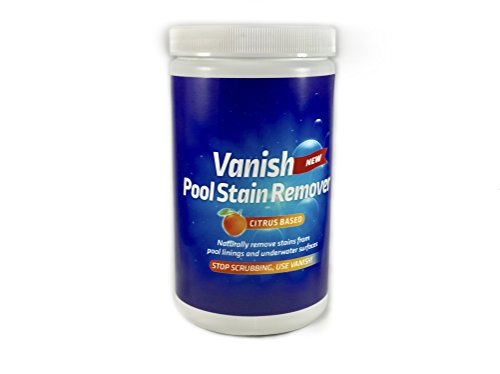
✅ FAST EASY and SAFE USE--Naturally remove stains from pool linings and underwater surfaces without scrubbing. Completely safe for your pool, produced from citrus by-products. Works on fiberglass and vinyl pool surfaces.

Non-hazardous and environmentally safe
Choosing the Right Stain Removal Products
Choosing the correct stain removal product is essential for effective treatment. Identify the stain color first: for yellow, brown, or reddish-brown stains caused by iron and manganese, apply Suncoast Iron & Cobalt Stain Remover. Use Suncoast Stop Stains for blue or blue-green stains resulting from copper. For gray or black stains, typically oxidized copper, O2 Safe Shock is most effective. Always test spot on an inconspicuous area before full application to avoid surface damage. Check the pool water temperature; it must be above 65°F to guarantee chemical efficacy. Read and follow manufacturer instructions precisely for each product, including dosage and safety warnings. Proper selection and careful adherence to guidelines maximize stain removal success while protecting pool surfaces. Also, regular maintenance and monitoring of your pool equipment, such as using high-quality seal kits, can help prevent conditions that lead to staining.
Recommended Products

All Natural Stain Eliminator: Natural Chemistry Stain Free Extra Strength is ideal for treating metal staining on all pool surfaces. This natural stain remover contains a blend of industrial strength ascorbic acid to quickly remove metal staining without adding phosphates to your water.

Optimized Pool Cleaning Solution - Achieve maximum value with our pool cleaner, designed for efficiency at 1 use per 10,000 gallons. Each container offers 2 uses, with 2 containers provided. Versatile across pools, spas, and hot tubs, this cleaner guarantees optimal performance. With one bottle treating up to 20,000 gallons, enjoy extended cleaning benefits with minimal effort.

Stain Prevention: Effectively controls iron, copper, and minerals to prevent staining and surface discoloration.
Professional Support and When to Seek Help
When stain removal efforts stall despite correct product use and water balance, seek professional evaluation promptly. Contact pool experts for professional support to diagnose persistent stains accurately. Request free water testing from local services like Leslie’s to assess chemical imbalances or contaminants causing stain recurrence. Provide technicians with detailed information about prior treatments and water parameters. Allow professionals to conduct advanced procedures, such as acid washing or specialized chemical applications, when DIY methods fail. Schedule ongoing maintenance consultations to prevent future staining, leveraging expert recommendations. Partner with experienced companies like J Designs, whose knowledge since 2008 guarantees tailored solutions. Act swiftly to minimize pool surface damage and reduce costly repairs. Remember, persistent stains often require precise diagnosis and treatment beyond common household chemicals. Do not hesitate to involve professional support for safe, effective stain removal. Additionally, understanding UV protection levels can help prevent some types of staining caused by prolonged sun exposure.
Recommended Products

1 quart per 10,000 gallons of water
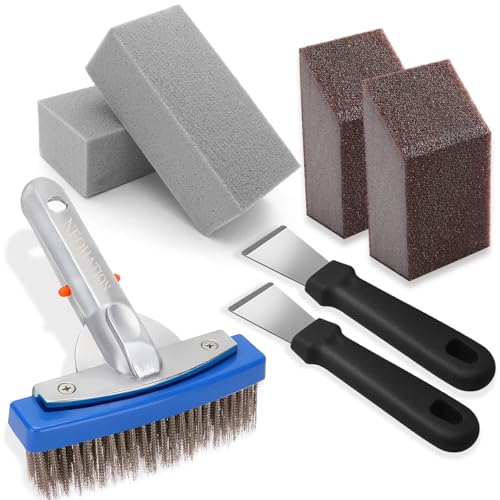
[Effective Stain Removalt]: Our 5-inch steel wire brush is designed with stainless steel bristles and an aluminum back, making it perfect for loosening stubborn stains on concrete or gunite pool surfaces, border tiles, and coping.

Underwater acid wash works with a continuous feed of acid from a bottle above water
Frequently Asked Questions
How to Identify Pool Stains?
Approximately 60% of pool owners misidentify stain types, delaying treatment. Color identification reveals causes: green or brown denote organic matter, red or blue indicate berries, and reddish or blue-green stains suggest metal corrosion on pool surfaces, guiding proper care.
How to Remove Stubborn Pool Stains?
Stubborn pool stains require targeted chemical treatments, combined with thorough surface cleaning and consistent stain prevention practices. Proper water temperature and regular scrubbing enhance removal, while ongoing maintenance minimizes recurrence and preserves pool aesthetics effectively.
How to Remove Pool Stains Without Draining?
Like a painter restoring a faded canvas, one employs chemical treatment options and diligent pool maintenance tips to revive water clarity, blending stain prevention strategies with precise applications to remove stains without draining, preserving pristine aquatic beauty.
How to Remove Brown Algae Stains From a Pool?
Brown algae stains require balancing pH between 7.4 and 7.6, using chlorine-based cleaning products to shock the pool. Scrubbing and continuous filtration reduce algae growth, promoting stain prevention and maintaining clear, algae-free surfaces effectively.