As an Amazon Associate, we earn from qualifying purchases. Some links on this site are affiliate links at no extra cost to you. Our recommendations are based on thorough research and editorial judgment.
Tips for Maintaining Crystal Clear Pool Water

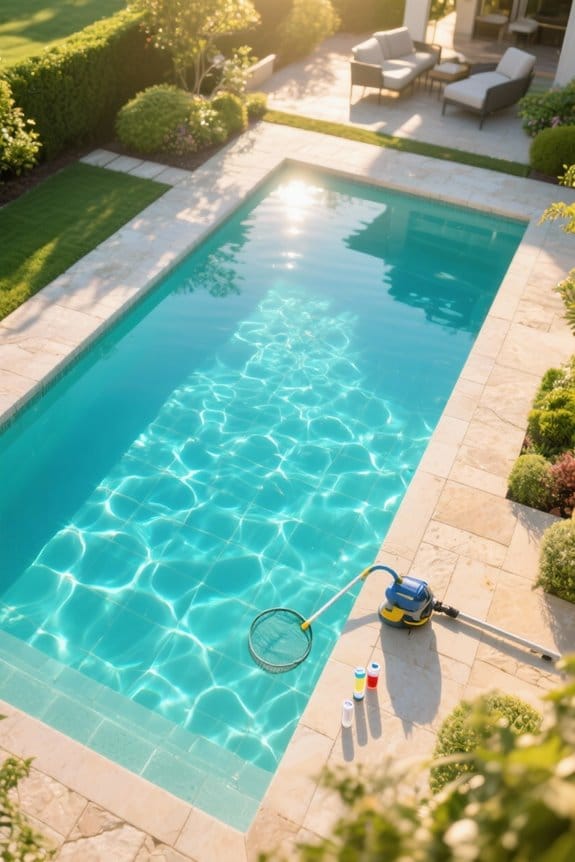
Maintain crystal clear pool water by testing pH levels twice weekly, keeping between 7.2 and 7.6 to prevent irritation and damage. Adjust alkalinity within 80 to 120 ppm for pH stability, and maintain free chlorine at 1 to 3 ppm for sanitation. Skim daily to remove debris, brush walls weekly to prevent algae, and vacuum promptly afterward. Run filtration systems 8 to 12 hours daily, clean filters regularly, and monitor calcium hardness levels. Following these steps guarantees balanced water chemistry and clarity; further guidance explains advanced maintenance and seasonal care strategies.
Key Takeaways
- Maintain pH levels between 7.2 and 7.6 to prevent skin irritation and equipment damage.
- Keep free chlorine levels between 1 and 3 ppm for effective sanitation and clear water.
- Skim the pool surface daily and empty skimmer baskets to remove debris and prevent clogging.
- Brush pool walls weekly and vacuum immediately after to eliminate algae and improve water clarity.
- Run the pool filter 8 to 12 hours daily and clean or backwash it regularly for optimal circulation.
Understanding the Importance of Water Chemistry
You may be interested
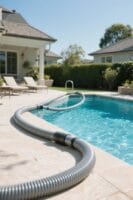
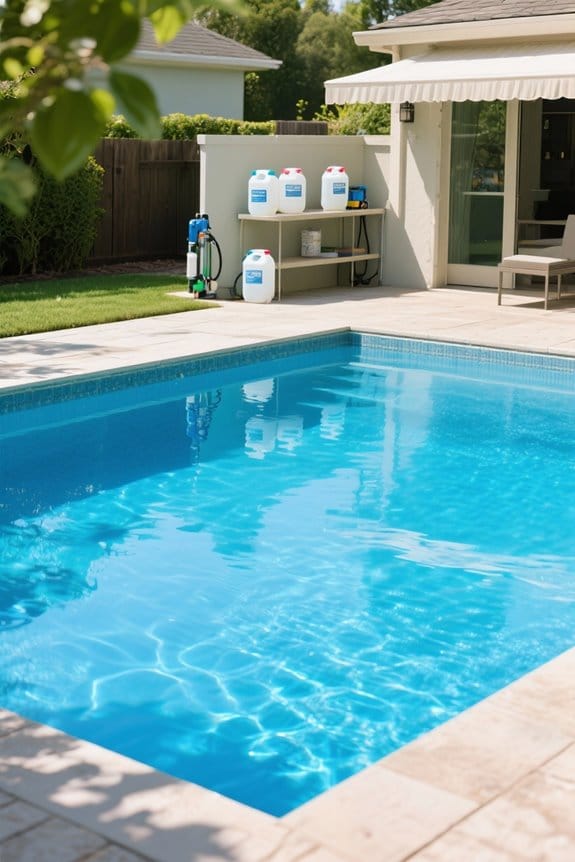
Water chemistry forms the foundation of effective pool maintenance, so routinely test pH, alkalinity, chlorine, and calcium hardness levels using a reliable test kit. Maintain balanced water chemistry by keeping pH levels between 7.2 and 7.6 to avoid skin irritation and equipment damage. Monitor alkalinity within 80 to 120 ppm to stabilize pH and prevent cloudy water conditions. Regularly measure free chlorine levels, ensuring they remain between 1 and 3 ppm to eliminate bacteria and algae effectively. Perform regular testing at least once a week to detect and correct chemical imbalances promptly. Adjust chemicals carefully to prevent scaling or plaster damage by controlling calcium hardness between 200 and 400 ppm. Consistent monitoring and precise adjustments maintain water clarity and prolong pool equipment life. For best results, test water twice a week or after heavy use using strips stored in a waterproof PopTop bottle to ensure accuracy.
Ideal Ph and Chlorine Levels for Clear Water
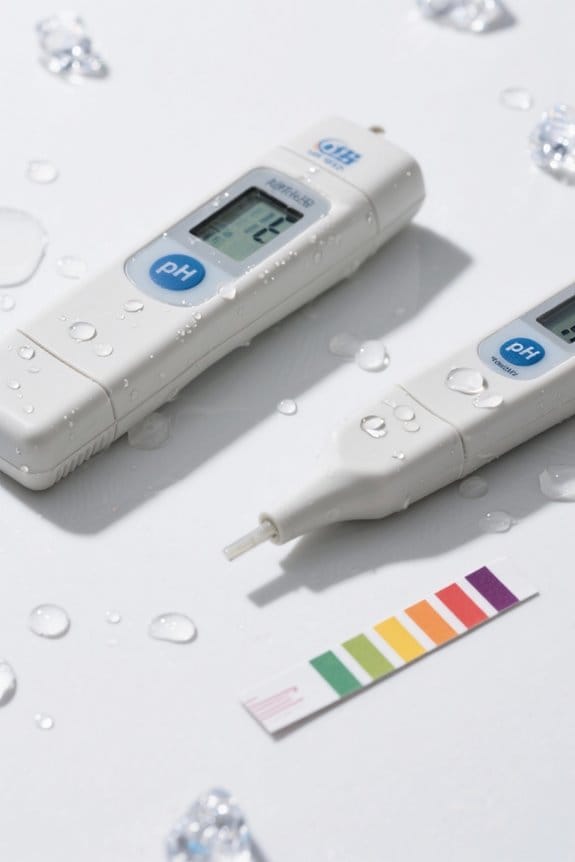
Maintaining ideal pH and chlorine levels is essential for clear, safe pool water. Test pH twice weekly using a digital tester or pool test kit. Keep pH between 7.2 and 7.6, making sure water balanced to optimize chlorine efficiency and reduce skin irritation. Monitor chlorine levels closely, maintaining 1 to 3 ppm for effective sanitation and to prevent algae growth. Adjust chemical balance with pH increasers or decreasers and chlorine tablets or liquid, following manufacturer instructions carefully. Avoid pH below 7.2, which causes corrosive water damaging surfaces, and above 7.6, leading to scaling and cloudy water. Conduct thorough testing more frequently during hot weather or heavy use to maintain clear pool water. Consistent chemical balance prevents algae, maximizes clarity, and guarantees a safe swimming environment. Additionally, regular monitoring of copper levels is important to avoid staining and maintain overall water quality.
The Role of Alkalinity and Calcium Hardness
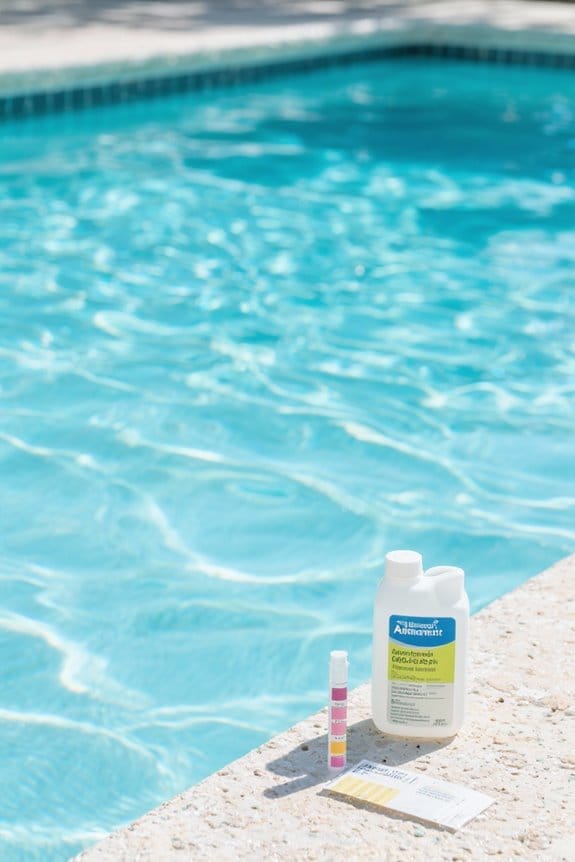
Begin by testing the pool’s alkalinity using a reliable test kit or digital meter, aiming for a range between 80 and 120 ppm. Maintain alkalinity levels within this range to stabilize pH levels, preventing fluctuations that cause cloudy water. Next, measure calcium hardness, targeting 200 to 400 ppm to prevent scaling and corrosion. Low calcium hardness can create a corrosive environment, damaging pool surfaces, while high levels promote scale buildup and reduce water clarity. Regular testing of both alkalinity and calcium hardness guarantees balanced chemistry, helping maintain crystal clear water. Adjust chemicals accordingly to prevent issues. Monitor these parameters weekly, especially after heavy rain or pool use, to keep water clarity at its best. Consistency in testing and corrections will help prevent cloudy water and protect pool equipment. Enhancing pool maintenance with an energy-efficient variable-speed pump can further improve water circulation and clarity.
Daily Skimming and Debris Removal Techniques
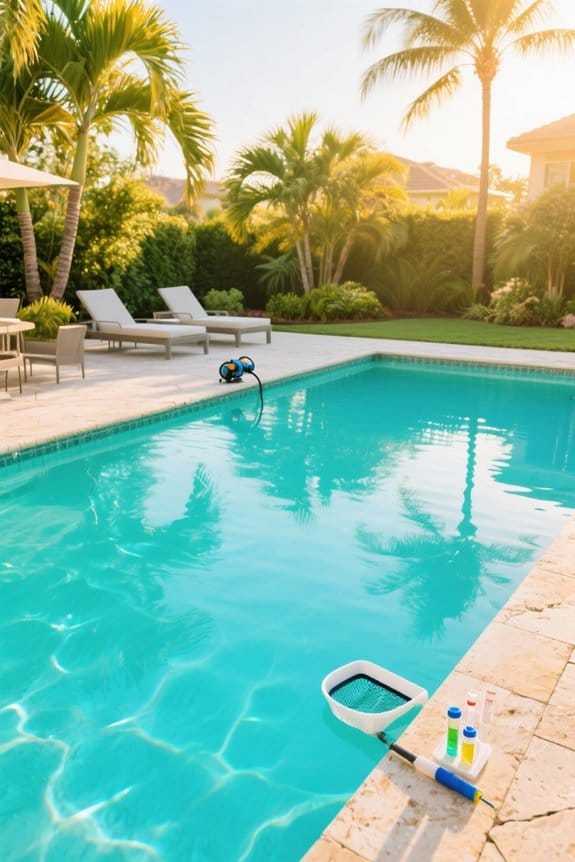
Skim the pool surface daily using a durable skimming net equipped with fine mesh to capture leaves, insects, and small debris before they sink, reducing strain on the filtration system. Remove floating debris promptly to maintain clear pool water and minimize chemical usage. Use a long-handled skimmer to access corners, steps, and hard-to-reach areas where debris accumulates. Regularly empty the skimmer basket, ideally every day, to prevent clogging and maintain ideal water flow through the filter. Incorporate daily skimming into your regular cleaning routine to consistently maintain clear water. Consistent removal of debris not only enhances pool appearance but also supports effective filtration, improving overall pool health and swimmer satisfaction. Don’t overlook this vital, straightforward step when aiming for pristine water. Pairing daily skimming with ergonomic pool scrubber brushes can further enhance overall pool cleanliness by efficiently removing stubborn dirt and algae from pool surfaces.
Weekly Brushing and Vacuuming Best Practices
Although it might seem tedious, perform weekly brushing using a nylon pool brush with firm bristles to eliminate algae from walls and floors. Focus on areas with poor circulation, such as corners and behind steps, to prevent algae buildup and maintain water clarity. Schedule vacuuming immediately after brushing, using a manual or automatic vacuum compatible with your pool type. This removes loosened debris and sediment effectively. Move the vacuum slowly along pool walls and floors for thorough cleaning. Regular weekly brushing and vacuuming reduce strain on the filtration system by minimizing debris accumulation. Consistency guarantees smooth surfaces and improves overall water clarity, extending the filtration system’s efficiency. If algae persist, increase brushing frequency or inspect water chemistry to enhance results. Stay diligent to preserve a crystal clear swimming environment. Using an automatic pool cleaner with advanced navigation technology can further enhance cleaning efficiency and reduce manual effort.
Maintaining and Cleaning Pool Filters
Multiple components require regular attention to maintain pool filter efficiency. First, monitor the filter pressure gauge closely, noting when it climbs 8-10 psi above normal, signaling a cleaning need. Perform backwashing or cleaning every few weeks, or sooner if the water turns cloudy. Regularly inspect and clean skimmer baskets and pump baskets weekly, preventing debris buildup that impairs filtration. Utilize premium filter cartridges for better water clarity. Replace cartridge filters every 2-3 years to sustain ideal performance and avoid cloudy water issues. Cleaning keeps the system functioning properly, reducing strain on pool equipment. Consistent pool maintenance routines centered on filter care guarantee crystal-clear water, enhancing swimmer safety and enjoyment. Don’t delay these essential tasks; thorough filter upkeep directly impacts overall water quality and maintenance success. Additionally, choosing filters with NSF/ANSI certification ensures verified contaminant reduction for safer pool water.
Recommended Products

【NSF/ANSI 50 Certified Safety】TOREAD pool filter cartridges are tested and certified by IAPMO to meet NSF/ANSI 50 standards. Made from certified safe materials, they ensure clean, clear, and healthy water, providing long-term protection for your family and pool.
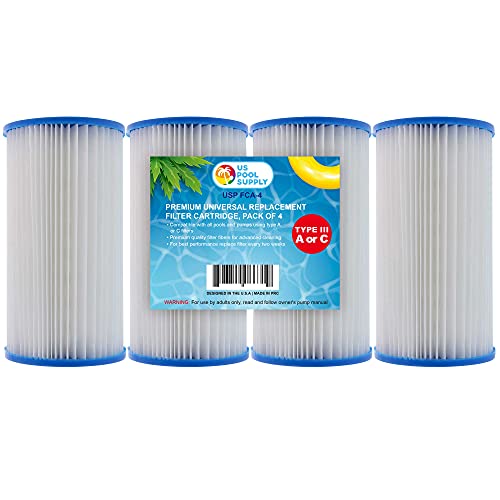
Pack of 4 Premium Quality Universal Replacement Filter Cartridges that are compatible with all above-ground pools and pumps that use type A or C filters, as well as type III filters. Filter cartridges replace Intex 59900E and 29000E filter cartridges

In The Swim Standard Replacement Filter Cartridge CCP420 4-Pack Set is designed for the Pentair Clean & Clear Plus 420 Pool Filter.
Effective Use of Pool Covers to Reduce Contamination
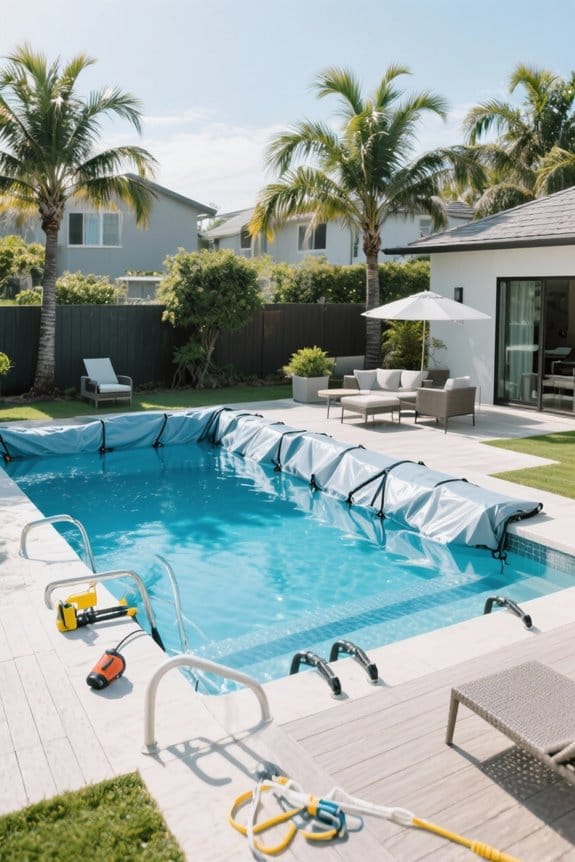
After ensuring pool filters are clean and functioning effectively, focus attention on using pool covers to limit contamination. Choose a pool cover that fits securely, preventing debris from entering and reducing contamination by up to 90%. Fasten safety covers tightly to avoid displacement by wind, maintaining a well-maintained pool environment. Use solar covers to retain heat while also keeping dirt out. Regular cleaning of the pool cover is essential; remove accumulated debris and wash it with mild detergent to prevent algae growth, which can degrade water quality. Inspect covers monthly for tears or wear, replacing damaged covers promptly. Proper handling and storage between uses also extend cover life, ensuring consistent performance. These steps enhance water quality while minimizing maintenance effort over time. Additionally, selecting a cover made from durable polypropylene material can significantly improve the cover’s longevity and effectiveness.
Recommended Products
![QH.HOME 18ft Round Pool Cover,[Ultimate Windproof & Tear-Resistant Fabric],Snug Fit with Patented Ratchet & Weight Rings,Solar Pool Cover for Above Ground Pools, Blocks Leaves &Waterproof](https://m.media-amazon.com/images/I/41J3FURJ0ML._SL500_.jpg)
【Choose The Right Size And Style For A Snug Fit】This 18ft pool cover is designed for 18ft round above-ground metal-framed pools from major brands such as Intex, Bestway, Coleman,and Summer Waves. Note: If your pool is a 18ft round steel-walled above-ground pool, please select "20'(Round)"Size. (Steel-walled pools have widened rims and require a larger size),or you can consult customer service for a recommended size for the best fit.

Note: Our pool cover is compatible with Fast Set, Easy Set Inflatable Pool, not suitable for metal frame pool

1.VEVOR Inground Pool Safety Cover - Winter Pool Care Made Easy: Pool Cover Size: 20x38 ft, Suitable Pool Size: 18 x 36 ft. Center Step Size: 4x8 ft. The actual cover size is 2ft larger than the ordered pool size, ensuring no stretching and perfect covering. Before ordering, please measure your pool dimensions first and always select a cover based on your pool size. Ideal for most types of pools at home, garden, hotel.
Preventing and Treating Algae Growth
Begin by regularly shocking the pool water at least once a week or following heavy use to eliminate contaminants and target existing algae. Perform a pool test to check chlorine levels, maintaining them between 1-3 ppm, and guarantee the pH remains within 7.2-7.8 for peak water chemistry. Use algaecide preventively during warmer months or after heavy rainfall to further prevent algae growth. Brush pool walls and tiles weekly to disrupt algae colonies and improve cleanliness. Cover the pool when not in use to reduce sunlight exposure and limit debris entry. Prioritize maintaining proper circulation to distribute chemicals evenly, supporting pool water crystal clear. Vigilant monitoring and timely interventions are essential for keeping your pool algae-free and visually appealing. Utilizing 7-way test strips can help ensure accurate and routine chemical level assessments for optimal water balance.
Recommended Products

BENEFITS: Fight a severe algae bloom and transform your swimming pool water from green to blue in 24 hours with this easy-to-use system

Pool Algae Treatment: Our Pool Algaecide and Clarifier is specially formulated to treat existing algae while providing long-lasting defense against stubborn growth, ensuring that your pool remains clear and algae-free for an extended period of time.

Proudly American-Made Effortless Pool Opening: Trusted for over 50 years, Doheny’s family-owned brand delivers a complete Pool Start-Up Kit that takes the guesswork out of spring prep for a clean, swim-ready pool.
Managing Water Circulation and Filtration Systems
Although maintaining clear pool water can be challenging, running the pool filter for 8 to 12 hours daily is essential to guarantee proper circulation and effective filtration. Monitor the pool’s water level carefully, keeping it at the skimmer mid-point to improve water circulation. Clean or backwash the pool filter regularly to prevent clogs and maintain efficiency, ensuring consistent filter performance. Inspect the filtration system periodically; cloudy water often signals poor filter performance, so check for damages or worn components. Replace filter media as needed, and choose premium filter cartridges to enhance filtration quality and extend equipment lifespan. These steps collectively support maintaining clear pool water by maximizing filtration efficiency and sustaining ideal water movement throughout the system. Additionally, coupling proper filtration with a properly sized propane pool heater BTU can enhance overall water quality and comfort.
Recommended Products

🍀SPECIFICATIONS: Length: 31 1/8"; Outside Diameter: 10 1/16"; Top: 6" open; Bottom: 6" open; Filtration Area: 200 Sq.ft; Filter Material: Trilobal Filtration Fabric.

𝐔𝐧𝐢𝐯𝐞𝐫𝐬𝐚𝐥 𝐂𝐨𝐦𝐩𝐚𝐭𝐢𝐛𝐢𝐥𝐢𝐭𝐲 & 𝐏𝐫𝐞𝐜𝐢𝐬𝐢𝐨𝐧 𝐅𝐢𝐭: Designed specifically for Bestway Flowclear Type II systems, this replacement cartridge is fully compatible with filter pump models 58094, 58094E, and 58093, 58383, 58386 filter pumps, ensuring a leak-proof, snug fit for your above-ground pool or hot tub filtration system.

✔ CONVENIENT MAINTENANCE – A must have cartridge to the INTEX Krystal Clear Cartridge Filter Pump, this filter cartridge is made with easy-to-clean Dacron paper for the ultimate filtration
Seasonal Tips for Water Clarity and Maintenance
Maintain precise water chemistry by testing pH, alkalinity, and chlorine levels regularly, targeting pH between 7.2 and 7.6, alkalinity from 80 to 120 ppm, and chlorine within 1 to 3 ppm. During the swimming season, shock the pool weekly or after heavy use to eliminate contaminants and maintain water clarity. Skim the pool surface daily to remove debris, preventing buildup and promoting cleanliness. Brush pool walls and vacuum weekly to prevent algae growth effectively. In off-season months, use a quality pool cover to reduce debris accumulation and evaporation, which helps keep water clear. For pools in hot, dusty climates, increase chemical testing frequency and cleaning to twice weekly, addressing additional contamination risks proactively. Regularly test and balance water chemistry while maintaining a clean pool to guarantee superior seasonal clarity and long-term maintenance. Additionally, deep clean your pool filter every 30 to 90 days using a pool filter cleaner to enhance filtration efficiency and extend filter life.
Choosing the Right Pool Maintenance Tools and Equipment
When selecting pool maintenance tools, prioritize a high-quality skimmer net to remove daily debris, preventing filter overload and cloudy water. Use a pool vacuum weekly—choose between manual units with adjustable suction or robotic models programmed for floor coverage—to maintain water clarity efficiently. Clean walls and tiles bi-weekly with a durable pool brush featuring stiff bristles to combat algae buildup and enhance hygiene. Regularly test chemical levels with a reliable test kit or strips, performing checks at least once a week to facilitate timely adjustments. Invest in a pool filter matching your pool’s size and type; ascertain correct flow rate and backwash frequency to optimize filtration. Combining these pool maintenance tools methodically guarantees effective debris removal and sustained water clarity, reducing chemical dependency and equipment strain.
Recommended Products

Size: 17.5 x 11.8 x 1.2 inches (44.50 x 30.00 x 3.00 cm)

Enhanced durability: Our aluminum poles feature a thickened interior wall, as well as a non-corrugated design, providing unparalleled strength and durability, preventing bending and breaking under heavy pressure or harsh environments.

[Keep your pool clean with ease] This kit includes a Professional pool net, semi-deep skimmer net,heavy-duty 17.5" round pool brush head, and a rotatable scrub brush.
Frequently Asked Questions
How Do I Keep My Pool Crystal Clear?
Maintaining crystal clear pool water requires consistent pool filtration, precise water balance through chemical testing, regular shocking to eliminate contaminants, effective vacuuming techniques, seasonal maintenance, and proactive algae prevention to guarantee clarity and swimmer safety.
What Are the 3 C’s of Pool Cleaning?
The 3 C’s of pool cleaning are Chemical Balance, Clarity, and Cleaning. Pool maintenance basics include chemical balancing tips, algae prevention strategies, water testing importance, cleaning equipment types, filter system efficiency, and seasonal pool care to guarantee peak results.
Why Do People Put Baking Soda in Their Swimming Pools?
Approximately 80-120 ppm is the ideal alkalinity balance. People add baking soda to maintain water pH, ensuring swimming pool chemistry stability. Baking soda benefits pool health, making regular testing essential for effective pool maintenance tips and clarity.
Can You Put Too Much Clarifier in a Pool?
Yes, excessive clarifier dosage in a swimming pool can negatively impact clarity levels and water chemistry. Overuse effects include foam buildup, increased Total Dissolved Solids, and filter inefficiency, complicating pool maintenance with clarifying agents.